
Do We Understand Hot and Cold?
We often have conversations about the weather, regarding how cold or how hot it is going to be — this short article on temperature might interest you.

British spelling.
Arguably, the highest recorded temperature on the surface of our planet was in the Lut Desert of Iran, at an unbelievable 70 degrees Celsius.
When we fry potato chips, the oil can reach 180 degrees Celsius, which to us seems very hot.
The average temperature on Venus, the hottest planet in the Solar System, is 462 degrees Celsius.
The core of the sun can reach 15 million degrees Celsius, but even that temperature is very low compared to the higher temperature scale.
An experiment at the Large Hadron Collider recorded a temperature of 5.5 trillion degrees Celsius; a trillion is 1 followed by 12 zeros!
But the highest temperature is thought to have occurred a split second after the creation of the universe, which we sometimes call the Big Bang. That was way back, 13.8 billion years ago.
But of course, we also use the word cold.
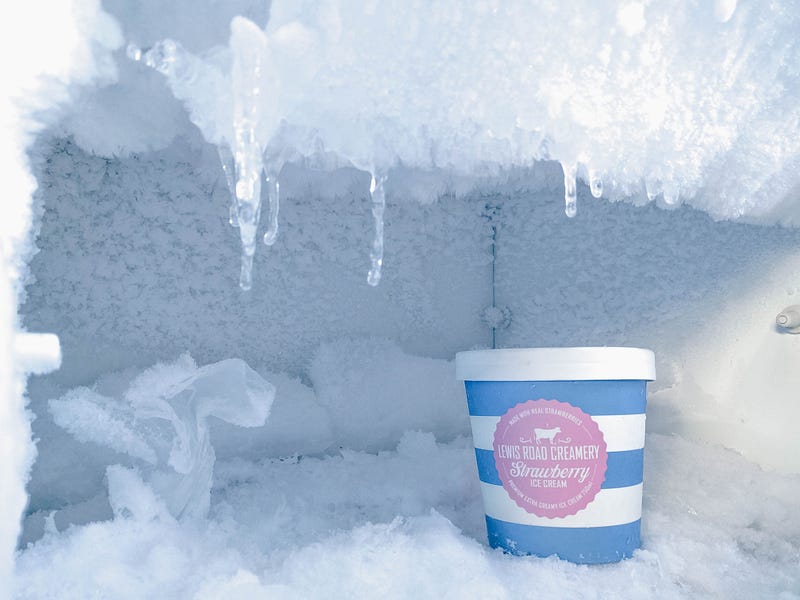
The temperature inside our domestic refrigerators is 3 or 4 degrees Celsius; the temperature inside our domestic freezers should be roughly -18 degrees Celsius.
Arguably the lowest recorded temperature on the surface of our planet was at the Soviet Vostok Station, Antarctica, at a very cold -89.2 degrees Celsius.
But it can get a lot colder in the far reaches of outer space. The dwarf planet Pluto is much farther away from the Sun than any of the planets in the Solar System.
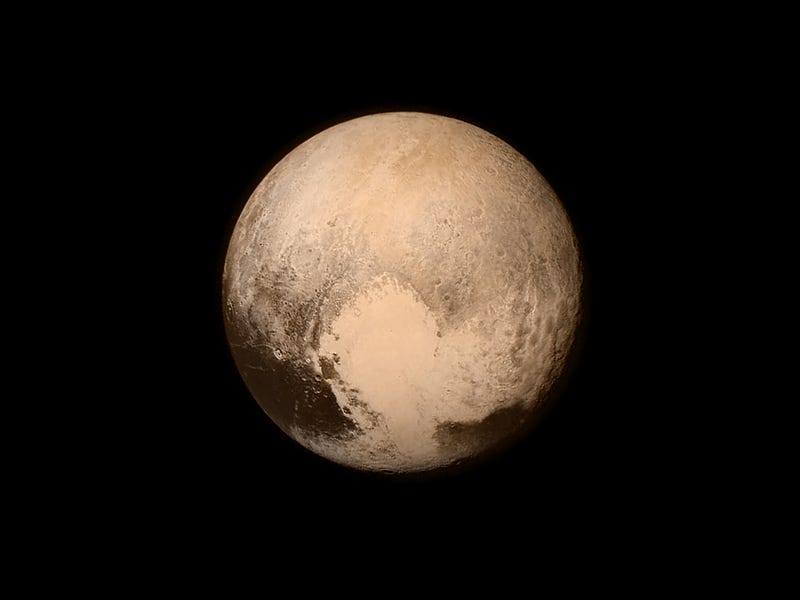
At its farthest point, it can be almost 50 astronomical units, which is 50 times the distance between the Sun and the Earth. That massive distance from the Sun is the reason Pluto’s surface temperature can be as low as -240 degrees Celsius.
That very low temperature doesn’t end there — absolute zero is the lowest temperature possible at -273.15 degrees Celsius or -459.67 degrees Fahrenheit.
Absolute zero is the lowest limit of the thermodynamic temperature scale, which is when all particles stop moving.
Our magical planet has an average temperature of 16 degrees Celsius, which means that water can be in three states: solid, liquid, and gas, perfect for the existence of life as we know it.
Our orbit around the sun is called the Goldilocks zone; if the earth were closer to the sun, the water would boil away; if it were farther from the sun, the water would be frozen solid.
Consider yourself very special and unique; the odds against your existence are astronomical and very close to zero.
The end
To be honest, I am not an astronomer, cosmologist, or biologist, but my interest in the universe and life goes back many years. The information in my articles is, to the best of my knowledge, accurate.
You may find some of my easy-to-understand stories about the universe and life interesting and educational. Enjoy


