
2020 accentuates the need for a place like the Hostel.
The abrupt halt of global travel due to national quarantines makes me long for the hostels I haunted for the past four years.
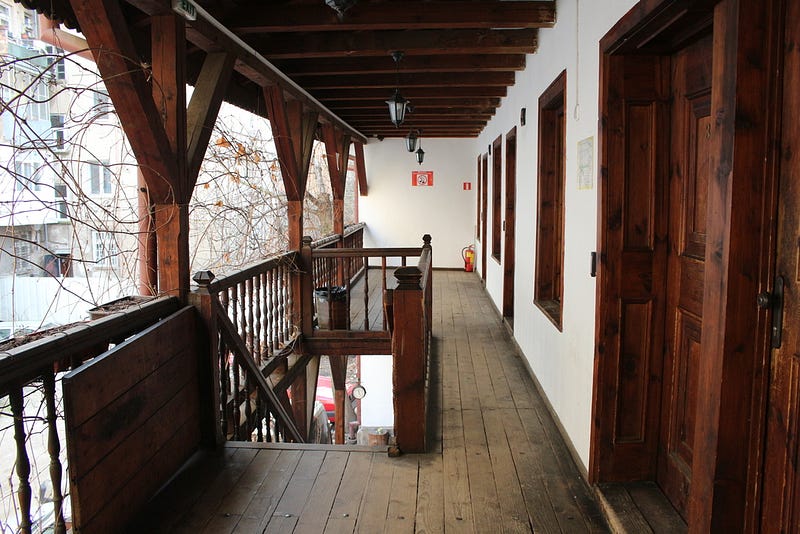
What is the best part of traveling? You ask as you sit in the same state you’ve been in since March of this year. Is it the snow-capped mountains, cities with old, winding streets, the ring of foreign, seemingly nonsensical but assuredly elegant languages, the taste of the local foods and wines, sounds of buzzing cafés tucked in alleyways, the Bosnian or Albanian or Spanish or Ugandan countryside dotted with the rustic, decrepit, or opulent family homes perched alongside hills and within valleys, the feelings of excitement one gets when entering a new place or crossing a border and receiving a stamp on a passport, the discomfort that brings forth aspects of your personality you had only ever faintly known or feebly attempted to discover, the giddy stumble home after a drunken night in a local pub?
The answer is none of ‘em.
The answer is the people you meet, of course — the people you talk to and share connections with that were highly unlikely to be formed in any other place or mindset than a foreign, unfamiliar, and uncomfortable one. It is the brotherhood and sisterhood of the traveling person that is not only the best “part,” but the pillar of travel.
One moving cog in this pillar is an institution that has been around for just over a century, but is based on the communal inns of old. It is a storied, energetic, churning, tumultuous, and fabled institution that produces butterflies in the stomachs of many like-minded individuals I know personally and have spent short, flashing, brief amounts of time with. Where I have met individuals for a single night who still haunt my dreams. This institution is the hostel.
Now, as I have said, the hostel is merely a moving cog in the pillar. But, nevertheless, it is a flawless, thoroughly good, and diverse cog. A case study in the brotherhood and sisterhood of the traveling person, if you will.
When I say flawless, I do not count menial things as flaws. You may say, as someone who does not know much about the hostel or has had “bad” experiences at one, that it does indeed have flaws. Name these flaws. Did you get bed bugs? I have. They are not fun. I have spent weeks scratching at nearly every inch of my body because of a bed bug infestation in a hostel room. Oh, but the room that you share with maybe fifteen other people, stacked in bunks. That must be negative! No, it is not. That is a perceived inconvenience that you can fix with an extra hot dryer session.
Try again!
Take the snoring man that always seems to get placed in the bed next to you (me). No, that is still only an annoyance, another perceived inconvenience. None of these are flaws in the grand scheme of things.
By flawless, I mean in the human sense. The societal and cultural sense. The existential sense. The sense of connection. What makes all of us human? Our desire to gain a better understanding of who we are as people. A better understanding of why we are here. What our purpose is. Our desire to form bonds and connections with other humans. To share our love, passions, and curiosities. To open ourselves up to the world, to discover every nook and cranny on Earth, to grow, learn, seek, move, laugh, and share.
In that sense, the institution of the hostel is quite flawless.
Rather objectively, the best way to learn more about yourself and the world is to travel. It is to live in places and meet people that you are not used to being in or around. Why? Because it makes you act and think differently. It does so by simply placing you in a different place. I am from a small town in West Central Indiana. I grew up there, graduated high school there, and went to college in southern Indiana. That is what I know best and, as much as I do not want to say it, where I am most comfortable. Now, I would not say that –I am most comfortable where I am uncomfortable. That may seem like a paradox, but it is not. I crave being uncomfortable because I can feel myself becoming better. Being comfortable does not produce anything that is worth a dime in this world. It does not inspire you to create anything of value, it does not allow you to form meaningful connections with people, it does not force you to learn, it does not make you change for the better. When I am uncomfortable I can feel myself doing these things. I can feel these changes taking place. That is why I crave discomfort. Traveling –not going to the beach in South Florida or the resort in Cancun –really, truly traveling, to places that force you to find your way, speak to people you have never met, figure out how to just exist and live a day, be uncomfortable in ways you wouldn’t in your hometown or air-conditioned bedroom –is the simplest way to seek discomfort and uncover its essential positive qualities.
And there lies the hostel. A place where discomfort seekers congregate, poor as can be, exploring the world, like-minded individuals with only a few clearly-defined goals –to see the world, connect with others, grow in their own lives, and be good humans. Some would walk into the lobby of a hostel on a Thursday night and see twenty-somethings drinking wine out of a bottle, loud and slapping each other on the back, playing chess in the corner, untied boots and backpacks strewn among the floor, and say that these people are aimless and searching. And they would mean this negatively. To that, I would say: searching, yes! Aimless, no. Never aimless. You just have yet to reveal their aims.
There are no constraints on travel even when you are poor. Especially when you are ‘poor’. If you focus all you have on the idea that you will go, then you will go. I put all of my energy towards two things: writing and traveling. Within six months, I was making barely enough money to go. That is synonymous with going places and existing. To travel you need not live outside your means. You need not spend more money than you would to rent a studio in a midwestern city like St. Louis or Indianapolis. Living within your means is directly related to experiencing more because it forces you to live with the other backpackers and communicate with the locals and eat from the grocery stores and food stands. And spend the extra money on beer and wine.
I have met the eighty-year-old Austrian-American in Dublin, staying at the Gardiner House, a former employee of the United Nations in its early years. I have met the nineteen-year-old chef from Portland, reluctant to admit she is American, on a four-day stopover in Edinburgh, Scotland before flying to Bangkok, Thailand, a young alcoholic throwing all her might toward halting her binge so that her immune system could be at full strength when she headed to Asia. I have met a Canadian who was nearly a mirror image of me in every aspect, aside from being ten years older: a writer who enjoyed the same music, had traveled to much the same places, had a similar philosophy on life, wanted the same things out of life. A guy from China who had been traveling for months but had experienced intense discrimination in his most recent weeks in Europe because of the looming spread of the Coronavirus. Two Indian friends who had fallen in love with the U.K. and planned on staying there for the ‘remainder of their lives’. The list could go on and on. The only thing that I can give myself credit for is this:
I have sought and relished discomfort at every turn. I will continue to do this for as long as I am breathing.
Help save hostels: https://www.adoptahostel.com/