
Hospitals are Not Good Places to Heal
Patient recovery and readmission rates suffer greatly amid all the prodding, poking, noise and lousy food. It doesn’t have to be like this.
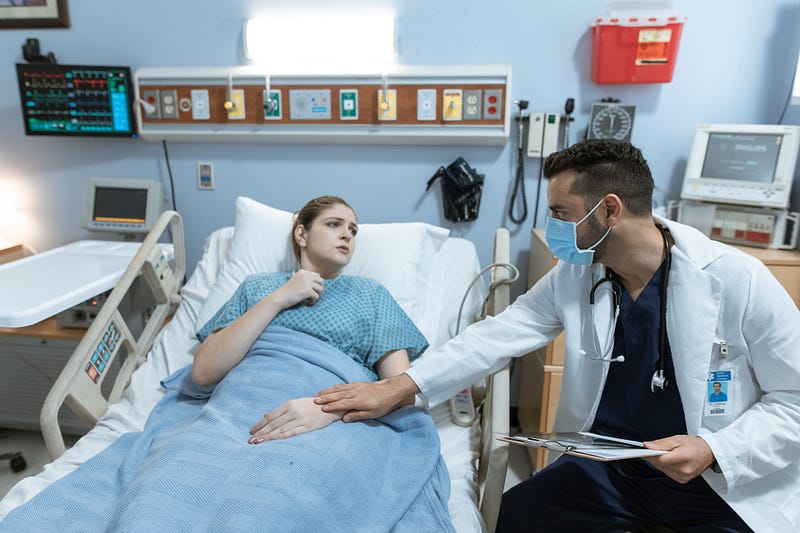
When a woman was admitted to my hospital for feeling like her heart was fluttering, she was found to have an arrhythmia — her heart rate kept fluctuating. The decision was made to keep her overnight for observation. This meant monitor on, beeping every time there is an abnormality in the heart rate, blood pressure, breathing rate or movement out of the bed.
“How are you feeling?” I asked at one point.
“I feel worse than when I came into the ER,” she said. “I did not sleep a wink. These beds are not comfortable and I am woken up constantly.”
I replied with a line I’d told many people who had the same complaints about their night: “I completely understand. The hospital is not a great place for rest. But I can assure you everything we are doing is to make sure you are safe and able to go home.”
But did I believe it myself? Is it necessary to deprive people of sleep in the hospital setting and how does that contribute to health outcomes? What about the food, the noise and the overall environment?
“The hospital itself and its barrage of stress can become a toxic place — a place actively causing harm,” argues Yale cardiologist Harlan Krumholz, MD.
Hospitals are where we care for the sickest and the most vulnerable. Yet the way hospitals are designed, and how they operate, is in many ways not conducive to healing and recovery. Everything from persistent beeping of monitors to loud staff conversations to early-morning blood draws interferes with the benefit a patient would receive if they were instead able to rest. While changing the systems would take investment from hospital systems themselves, I think it is important for both medical staff and patients to be aware of the negative effects of prolonged hospital stays.
Bad timing is to blame
The way we time things in the hospital can be improved. A simple task we do all the time is drawing blood. This is necessary and has to happen daily, or with changes in the clinical picture. Sometimes blood draws occur more than once in a day, depending on the reasons for the hospital stay.
A study earlier this year in JAMA showed that morning blood draws are done between 4 a.m. and 7 a.m. 40% of the time. In the minds of the medical team, this makes sense, as we need objective data to treat a person that day and hopefully send them home safely. But nobody knows the value of that data compared to the rest that would take place if we gathered it at a more sane time.
In another study each additional hour of in-hospital sleep was associated with an 11% reduction in sugar spikes in diabetics.
Delirium, a transient change in a person’s mental state which causes confusion but also possible hallucinations, often occurs in the hospital setting. When time is blurred and sleep is constantly interrupted, the brain is more prone to delirium. Coupled with illness and a weakened immune system, the chances go up. Delirium happens in 70–80% of ICU patients.
Noises never stop
Increasing levels of noise impair physical and psychological recovery, and has been shown to slow wound healing, increase complication rates, and lengthen hospital stays.
The World Health Organisation (WHO) recommends that average overnight noise levels in hospitals should not exceed 35 dB. In one study looking at noise every five minutes overnight in an adult and in a pediatric unit, the average recorded was 42.27 dB and 43.91 dB, respectively, with peak noise levels of 93.65 dB and 97.01 dB. In every five-minute recording, there was at least one sound louder than 67 dB, almost double the WHO recommendation.
The major noise sources identified vary from ventilator noise, ventilator alarm, suctioning, heart monitor alarm, nebulizer, pulse oximeter tones and alarm, telephones ringing, air conditioning, television, radio, banging, rubbish bin or trolley noises, intercom, staff bleeps, visitors, and fellow-patients.
Staff conversations and alarm sounds seem to be the most disturbing noises for ICU patients’ sleep.
You gonna eat that?
Food also tends to be horrible at hospitals, both in taste and nutritional quality. A study that looked at 14 different children’s hospitals in California found only 7% have food that qualifies as healthy. A study by the Physicians Committee for Responsible Medicine in 2015 showed that of the hospitals they surveyed, 20% had at least one fast-food restaurant on site.
In another study, albeit an older bit of research, one-fifth of hospitalized patients 65 years and older had an average nutrient intake of less than 50% of their energy requirements. It is common to have people to take “nothing by mouth” for the 8–12 hours preceding a procedure or the possibility of one. Cancellations and rescheduling of procedures or tests often extends the frequency of these periods.
The same study showed loss of weight and decreased protein in the blood after discharge to be strong predictors of readmission within 30 days. Additionally, malnutrition can affect every system in the body, impair wound healing, increased risk of infections, decreased respiratory and cardiac function, and poorer physical function.
In general my advice to patients and their families is to talk to your medical team about bringing your own food. If a patient is fresh out of a procedure, the process of introducing food will usually be slow over the next few days depending on the surgery. If there are no procedures and a patient is mostly stable, then most foods are okay to eat. Take special care if diabetic as your medical team will be very concerned as to why your sugar is spiking when you snuck in that candy bar (yes it has happened to me). Simple foods are usually easiest and since the goal is to get calories in, along with making sure a patient can hydrate well, protein shakes are usually a good go-to.
You’re outta here! (See you soon!)
Noise, poor nutrition and other shortcomings affect more than recovery time in the hospital. For 30 days after a hospitalization, a person is more prone to a number of health issues in what Krumholz, the Yale cardiologist, calls “post-hospital syndrome.”
“At the time of discharge, the physiological systems are impaired, physiological reserves are depleted, and the body cannot effectively avoid or mitigate health threats,” Krumholz writes.
After hospitalization, people often have impaired stamina, poor coordination and reduced strength, which places them at a higher risk for a fall and an injury that’ll send them right back to the hospital.
All this causes a snowball effect, as physical deterioration leads to having a harder time following post-discharge instructions (like daily weights or physical therapy exercises). Ultimately, the capacity to resume basic activities or be able to attend a follow-up appointment can be affected. This can also lead to readmission for a different reason than the initial presenting one. Among people admitted for treatment of heart failure, pneumonia, or chronic obstructive pulmonary disease (COPD), the cause of readmission is the same as the initial admission for only 37%, 29%, and 36% of cases, respectively.
Things can be better
It is clear that hospitals can do better. The picture below is of a hospital in Barcelona called Sant Pau. It was designed not only as a masterpiece of art and architecture, by Lluís Domènech i Montaner, but also as a place for healing. I was lucky enough to have seen it before it stopped taking care of people in 2009.

The design emphasized light and nature to make people feel like they were not in a medical facility. People would often be taken outside to the gardens to rest and heal. Doctors and nurses would use underground walkways (you can see the stairs leading to them in the photo) so as to not disturb people who were resting outside. The main façade and many of the patient rooms also faced the sunrise so people would be bathed in light in the morning.
The design had a profound effect on me when I first saw it, before I even got into medical school. It showed me that a hospital could be beautiful in function and form. Healing did not only consist of ridding disease from our bodies but it was also grounded in nature, in light, and in peace. Without those things, can a person truly heal?
But hospitals, by and large, do not provide people with anything remotely resembling this type of healing philosophy.
As a physician, I understand, because in the hospital setting, health can deteriorate rapidly. We poke and prod because we are truly trying to help, but we have no idea if this is the “right” way, because not enough research has been done comparing standard methods to alternatives. Even without that research, I believe a happy medium can be obtained. We can give people a bit more sleep while caring for all their medical needs. When doctors and their patients understand more of the detrimental effects of the hospital environment on healing, they can ask better questions related to their care, and prevent the negative effects that can happen from a hospital stay.


