
Horses that heal: Equine assisted therapy develops body, mind, and spirit
“ When I am bestride him, I soar; I am a hawk; he trots the air.”
-Shakespeare, King Henry V
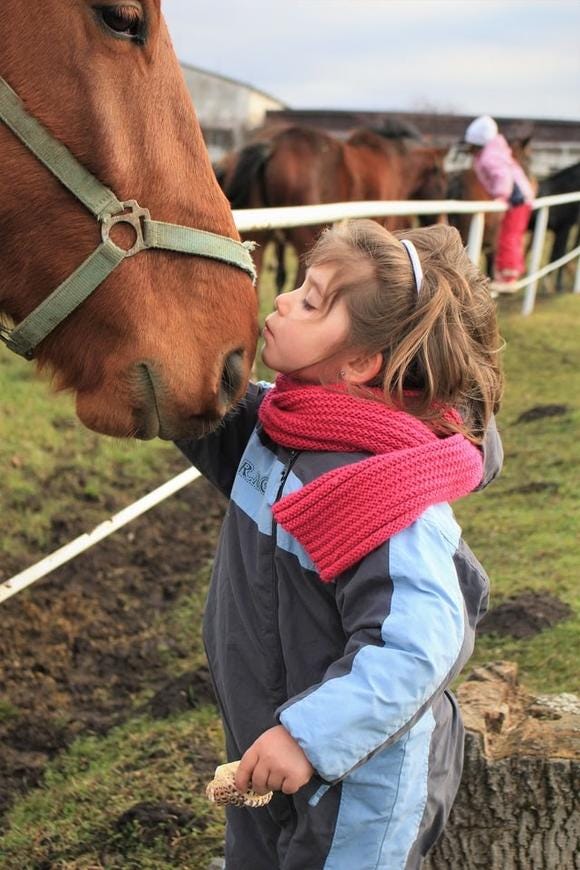
When six-year-old Kayla (not her real name) rushes up to kiss Butterball on the nose, she isn’t thinking about the fact that he was selected because he is an unusually gentle horse. Once she is happily in the saddle, she isn’t aware that she is improving her core strength. As she chats away to her instructor, Kayla doesn’t notice that she is producing words more easily than at other times. During the time that she spends at her therapeutic riding lesson, Kayla’s disabilities can fade into the background. When she is riding, Kayla is first and foremost a child enjoying a bond with a horse.
Equine-assisted therapies can help people develop in many ways, both physical and mental. As the Professional Association of Therapeutic Horsemanship, International PATH International) states, the term “hippotherapy” refers to speech, occupational or physical therapy that is done using horses.
“Hippotherapy refers to the use of the movement of the horse as a treatment strategy by physical therapists, occupational therapists and speech/language pathologists to address impairments, functional limitations and disabilities in patients with neuromotor and sensory dysfunction.”
The motion created when we ride mimics the motion our hips make when we walk, so riding increases mobility in those joints. Other physical benefits of riding include enhanced strength and balance, improved motor skills, and coordination.
An article from Michigan State University reports that:
“The movement of the horse as a person is riding at a simple walk gives them balance, coordination and self-confidence. The movement and unique walking gait of a horse or pony most closely resembles that of a human. Therefore, when a person is riding a horse, the rhythm and motion is therapeutic; the body gains strength through its adjustment to the horse’s gait.”
Jan Brinn, Michigan State University Extension — January 16, 2013
Therapeutic riding has also been shown to enhance social and emotional well-being. A 2011 master’s thesis demonstrated a positive effect on children’s self-esteem:
“The major theme highlighting the positive and supportive interactions with horses and people is the unconditional acceptance of the child. It is this sense of personal worth and acceptance that can lead to an increase in self-esteem and self-efficacy (Rutter, 1987).”
For a program to be effective, knowledgeable instructors must design and teach the sessions. PATH International certifies instructors in seven different areas, including , equine specialist in mental health and learning, , and other areas.
However, even a good therapeutic riding instructor can’t accomplish much without the right horse. A good therapy horse is really a “saint in horse clothing” — in other words, a horse that seems to embrace its role in the process. Good therapy horses actually seem to have a sense of purpose. For example, one therapy horse the author has seen stops without being directed if its rider gets off balance,
Therapeutic riding often involves one person on the horse, and many people on the ground. For safety reasons, many of the riders require people to walk next to them on both sides of the horse. These are usually volunteers who have been trained to be alert to the horse and the rider’s movements at all times. One college student who is a volunteer “walker” enjoys helping with the program so much that he spent his entire spring break there.
There is a sense of freedom that comes from riding, as well as the fun of sitting up high and being able to direct the horse’s movements. Limitations seem to drop away. As one young lady in a wheelchair said “when I’m at school people see me in my chair, but when I’m on the horse I’m just like everybody else.”
Originally published at https://www.newsbreak.com on April 5, 2021.


