
Hope Springs Eternal, Right out of my Potted Geraniums
Some Thoughts on Hope
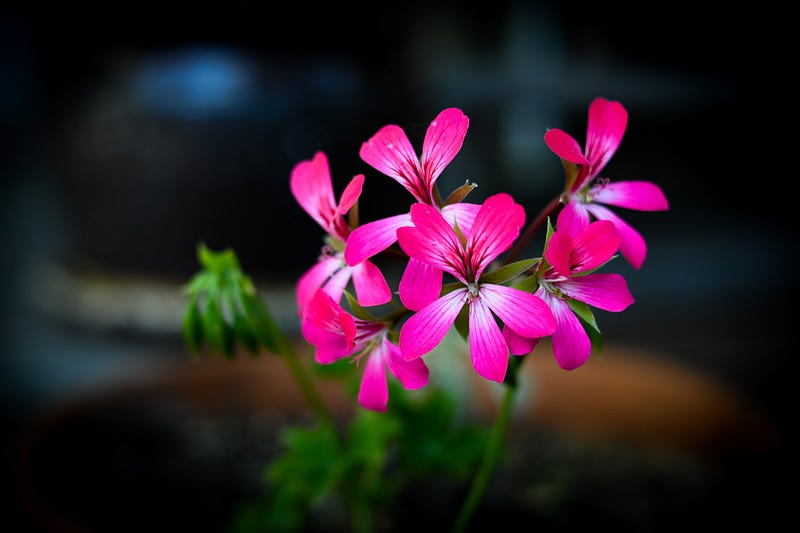
Hope springs out of my potted geraniums
Hope springs eternal, right here in my overgrown back garden. Yes, from that geranium pot right there, next to the Buddha statue, drowning under the overgrown lavender (or whatever they are). Of course, it’s hope — what else could keep bringing that geranium back from the sheer level of neglect it receives? Every year, I only remember the pot is there when the geranium actually flowers. Then we water it for the Buddha.
In all seriousness, I did sit outside with my coffee this evening and wonder at this geranium, which I only just noticed had been flowering again. I was bone-deep tired — Resting my eyes and mind on the geranium rejuvenated my spirits. I don't think I need to explain this; we all know about this kind of magic. (Could there actually be any poets without nature-gazing, I wonder?) Anyway, after a little while, the geranium kind of popped out like it was backlit (and ‘hope springs eternal’ came into my head). And the backdrop of my garden pulsed to life for me in a way it hasn't in a while, and in those moments I was excited to write again and I had some thoughts about hope:
Flirting with despair and other games we play to coax hope
Clearly, the source of hope is not in my geranium pot. Even when Google has mapped the entire universe, I doubt there will ever be a ‘Wellspring of Hope’ pin above my back garden. But the point I’m making here is that it did not come from me. Not the scattered, sleep-deprived, deflated, and mildly-depressed me that was staring at the geranium pot anyway.
That me, was not looking for hope. That me had decided that being a responsible adult (who did the dishes and floors every night) was a special kind of idiotic fool — for all the good it did, for any difference it made under the weight of her responsibilities and realities, blah, blah, etc, etc. That me was flirting with despair. But here’s the thing: She was playing hard to get.
Properly-depressed-me wouldn't sit in the garden, she would probably play a video game (don't judge) or binge-watch some BBC drama she's never heard of. It was just a kind of game I was playing.
I think we play these kinds of games in our minds when we’re coaxing hope because when it is not present, the weight of the argument against hope is often, so logical, so rational, and undisputable, that maybe a little game playing is what we need to even want to consider it again.
Here’s another (gorgeous and beautifully written) example of a game being played with hope, from Bridget Webber:
Introducing the inner-teenager of doom
I’m thinking of it like this: Inside us, there is an adult-self who is wrangling a cynical, sneering, defiant, teenager-self who is hell-bent on or enamored with their powerless role in the unfairness of the world. Rationalizing or reasoning with them won't work because they’re probably right. So we (our adult-selves) engage them in something distracting to ease the grip of their reality just enough to let something else in: The possibility that their grim reality is not our ultimate reality.
‘Hope’ is better as a verb
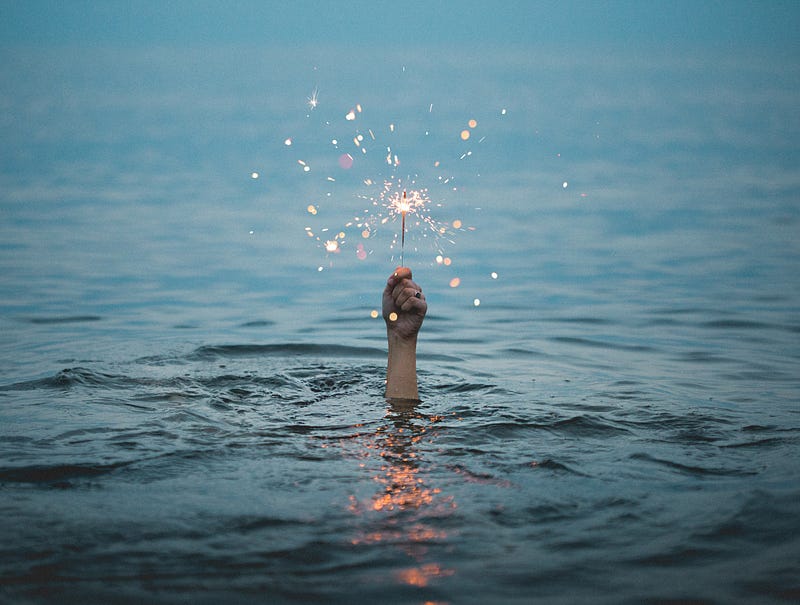
Which brings me to my definition of ‘hope’ — Basically, I think it is most useful as a verb. I agree with Trisha Traughber, who so beautifully said:
Every day, I throw myself a line of hope — and no, it’s not easy.
Trisha talked of hope as a discipline, a daily practice that she engages in with her artist's heart, in her journal, and in her poetry.
My own artist's heart just loved those words. Because if anything is more powerful than that sneering inner-teenager of doom, it's the artist’s heart, who knows how to create something where there is nothing or nothing good.
For me, just the act of creating can transform things a little. To create, we’re using facilities beyond the realities of the teenager-of-doom. We’re choosing to act from a place that knows that their grim reality is not our ultimate reality. And yes, I know the inner-teen of doom still scoffs, ‘oh that's what we need in our lives right now — another poem/painting/appliqued cushion cover’. But they do quieten down a bit when you’ve got the paintbrush/pencils/nature-gazing-eyes (or whatever artists tools) engaged.
Yes, for myself also, hope is a practice. Somewhere along the line, I absorbed the idea that hope is just something that I need to remain open to the possibility of. I know that this sounds kind of circular:
To hope, is to remain open to the possibility of it.
What I mean by that is, to me —
To hope, is to remain open to the possibility that whatever is not good, can be transformed.
— ( loosely, either Deepak Choprah or Oprah)
The caveats to that definition that can make hope real
I know, I know, ‘anything/any situation, can be transformed’, just sounds simplistic and a little too — well, …unbelievable. And quite frankly, it may even be offensive to people in dire circumstances. But here are some caveats to that definition that make it work for me:
- I do not hold this definition of hope(vb) as a belief. That would be impossible to hold all the time. That is why it’s a practice. (The actual practice looks different on any given day, but it's some form of self-care from an artist's heart.) It is a consciousness-expanding, drag-myself-back-to-it-kicking-and-screaming sometimes, habit, formed to slap the certainty off the face of that inner teen-of-doom. Nobody likes a know-it-all.
- In my book, any ease to any misery in a ‘not good’ situation, is a transformation of the situation. For instance, getting an impulse to write when previously bone-deep tired is worth something. I find I’m at my most miserable when I’ve bought into the idea that only one particular outcome (which can only come about in one particular way), would constitute an acceptable transformation. This is true, limiting, misery. Hence, the ‘remain open’ bit.
- Knowing that hope does not spring from our hopeless selves or situations. It has to come from somewhere outside of that limiting box of inner gloom. Because nothing new can grow, be created, or come into being, in that box. I will not talk of the universe or spirituality here, as I do not believe for an instant, that hope is denied to, or unavailable to anyone. I think it is a birthright of anyone who has an imagination, anyone who can create, anyone who can dream, or ponder, or just sit still long enough to wonder. That’s the whole of humanity, right? I’ve digressed a bit, but the point I'm making is this: Wherever that next perfect word for the poem comes from, wherever that impulse to create, wherever making that choice to sit in the garden comes from, is where hope springs from.
Last thoughts and other people
I have come to the end of what I started as ‘a few’ thoughts, but I will add just one more thing: Perhaps, the most beautiful source of hope is other people. People can and do surprise us when we remain open to the possibility of hope. Perhaps it’s because we’re not a misery to be around, or maybe because open hearts are able to receive. Whatever the case, it is worth sitting in the garden now and then.
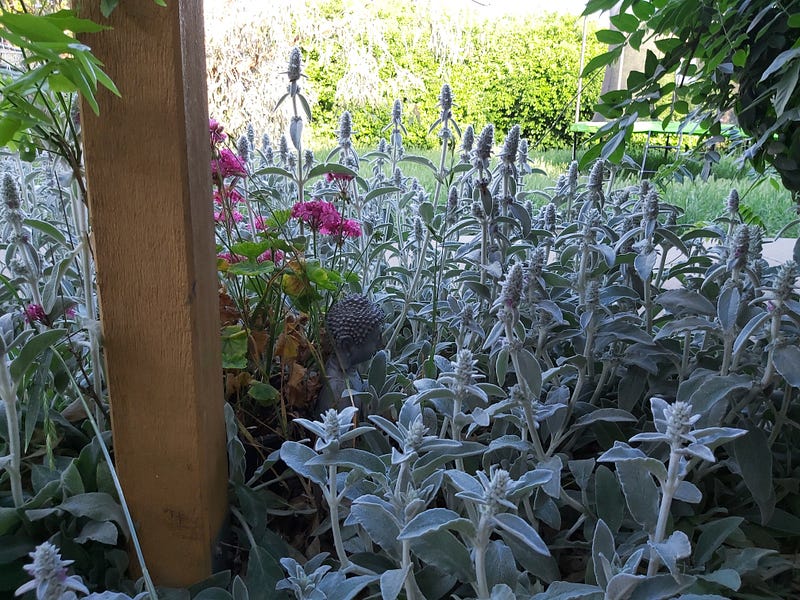
In case you’re wondering, my back garden has been mowed twice since I first drafted this and took that picture (last month). My lawn guy started dropping by again (See, people can surprise you — actually, covid restrictions lessened a bit).
Thank you to Trisha Traughber for the beautiful writing prompt: