
Hope Is a Bluebird at My Window
Will we make it past the storms of life?
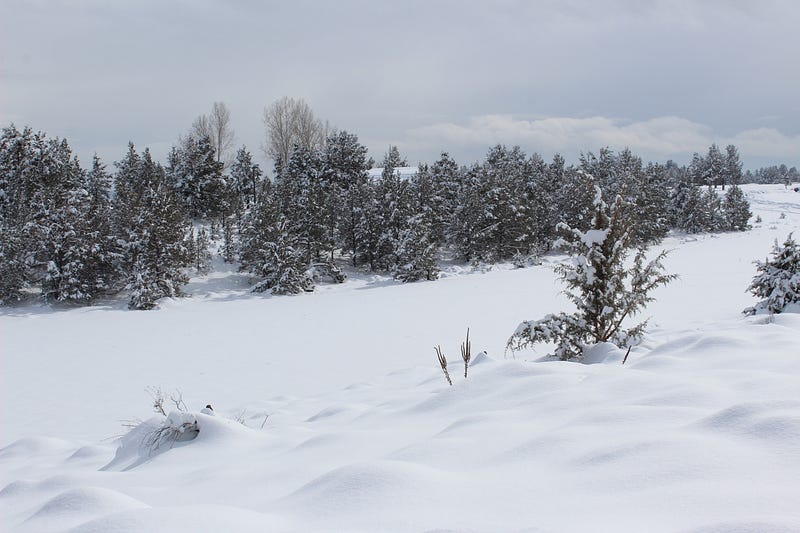
It was March and there was nearly three feet of snow on the ground in some places. A heavy snowstorm hit in late February, followed by weeks of below-freezing temperatures that prevented the snow from melting.
That was such a hard time. My dad’s health was failing. My sister and her unborn child were facing a health crisis. I, myself, was also dealing with a health problem that had dogged me for over a year — one that I feared could be the end of me, or at least of the life and body as I knew it.
I didn’t know how we’d all come out of it.
When my nephew was born during that long stretch of snowy days, I stayed at my mother’s house with my sister’s five other children while we waited for the baby to get out of the NICU. The house was filled with love and chaos and worry. Days that shook the walls with laughing and crying and running. Nights that slid into impossible silence.
I heard a rustling at the window one night. I turned to look outside, thinking someone was out there. But of course, no one was. It was below freezing. There was snow everywhere. No one could even reach the window with the banks of snow around the house.
Then I heard a bird chirping. I knew it was on the wood pile under the window. After a moment, I got up and fetched a flashlight. Outside the window of the back door, I saw the shadow of the bird, but it flew away as soon as the light hit it.
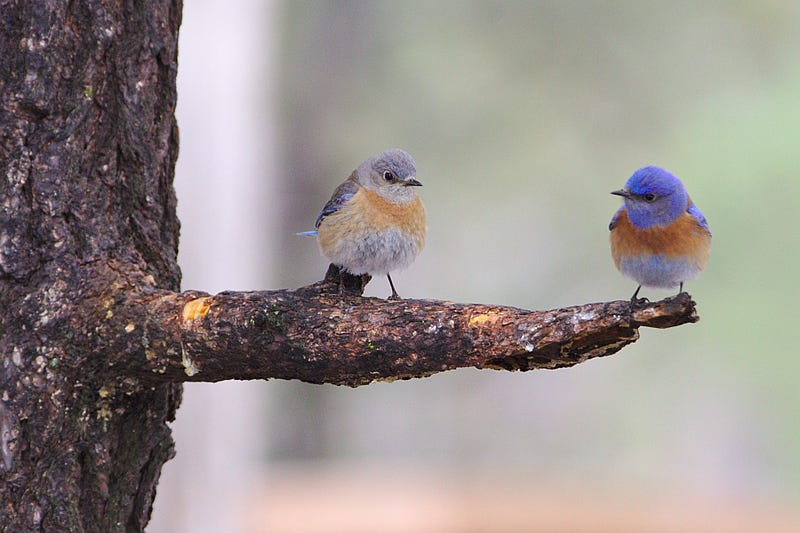
I caught sight of it again, through the next window and shone the flashlight on it, through the pane. I expected to see a sparrow or chickadee or something of that nature and was stunned to see that it was a brilliant blue and rose color — a male Western bluebird.
It flew back to the woodpile and I opened the door and stepped outside.
“What’s wrong, little guy?” I asked. For surely, there must be something wrong for a bird to be flying around like that at night.
He was standing on one foot and I worried he had injured his leg and was, perhaps, dying.
But then he put his foot down and stood firmly on both legs, walking around, pecking at the top of the woodpile.
“What do you need?” I asked him. “Are you okay?”
I took another step closer, to see what he would do, and he didn’t move. He just stared at me. The fact that he didn’t fly away worried me. I was only about two feet away from him. Just opening the door would’ve scared off the average bird.
“Do you want me to bring you inside?” I asked. “What should I do?”
After a moment of standing there, admiring him and worrying, I went back inside and texted my brother.
Help! I wrote. There’s a bird outside my window!
My brother didn’t answer. I went back to the door to take the bird’s picture with my phone, but he was gone. I heard him again, and looked to my right. He was sitting on the top of a miniature evergreen tree in the planter across the patio. I knew I wouldn’t be able to get a photo of him with my phone, so I went back inside to fetch my Canon with the zoom lens.
It took me all of twenty-five seconds but when I returned, he was gone. I couldn’t hear or see him.
I moved the flashlight across the yard, looking for any sign of him, but saw nothing.
I texted my brother. Never mind. He’s gone.
My brother responded, That’s weird for a bird to be out at this hour.
I went to bed, both buoyed and worried. Was the bluebird a sign of good things to come? Spring? The melting of the snow? Restored health for me, my dad, my sister’s baby?
Or…was the little bird freezing to death outside? Should I have tried to capture it and bring it indoors? Would that have saved its life? Did its life even need saving?
I had a terrible feeling I would find him in the snow the next morning.
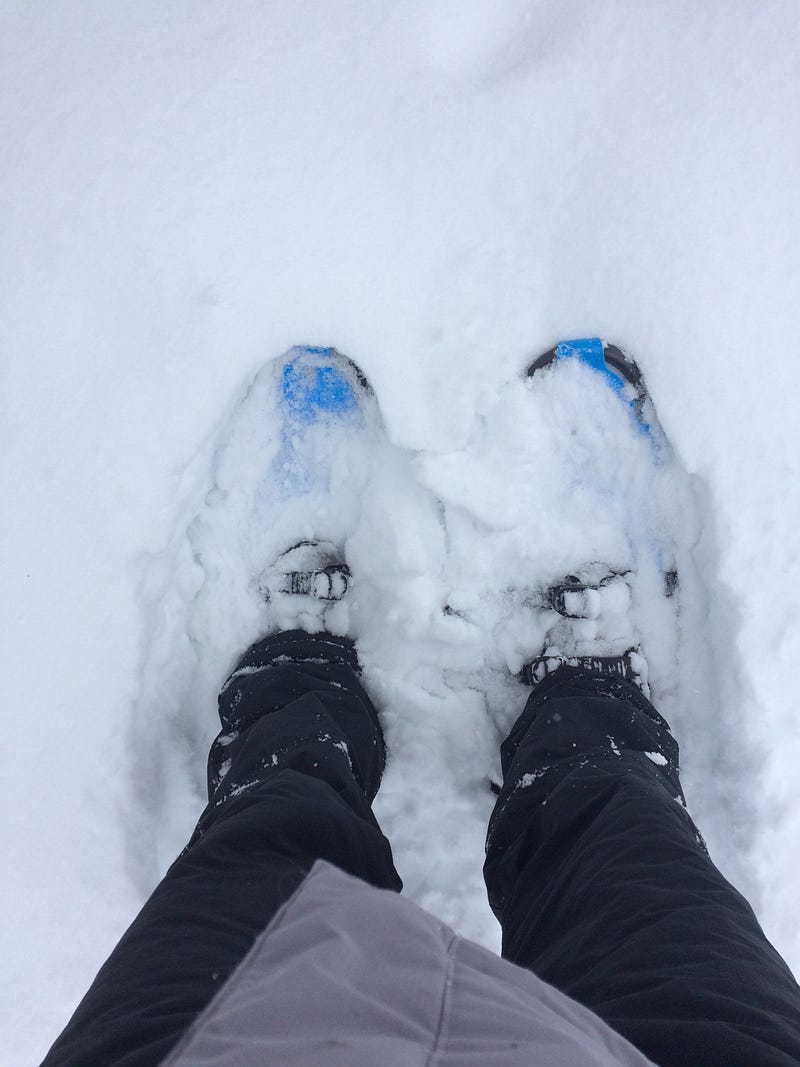
At 10 o’clock the next day, I snapped on my brother’s snowshoes and crossed the yard to feed some lettuce to my mom’s goats. As I walked, I looked near the little evergreen where I had last seen the bluebird. I noticed something in the snow beneath it. It looked brown. I thought, Maybe it’s a twig.
As I came closer, I saw that it was, indeed, the little bluebird. Dead.
Its feathers looked ashen against the white snow — nothing like the brilliant blue I had seen the night before. He was just about a foot or two away from the little tree I’d last seen him on — as if he had taken a leap and just died right there.
I realized that he had died in those twenty-five seconds it had taken me to get my Canon. I couldn’t believe it had happened that quickly. One minute, he was calling outside my window. The next, he was dead in the snow.
I picked him up and carried him across the yard, and down near the woods. I thought I should leave him somewhere where the owls or someone else could make a meal of him. I knew things might be desperate for some creatures out there, with all that snow. Maybe his death could be of use to someone.
I felt him in my palm as I walked. I read once that bluebirds weigh one ounce. It was incredible to feel so little weight in my hand for a creature that almost filled that space. To think that all that bone and wing and beak and blood only weighs one ounce — it’s amazing.
Before I laid him down at the top of the hill, I gently pulled his wing open. His feathers were so stunning close up like that. So detailed, so intricate. What incredible machinery and in such a beautiful package. It is a wonder to me that a creative force — God or whatever name you call It— dreamed up such an exquisite miracle as a bluebird.
I set him down in the snow. His wing immediately retracted, folding against his body, sparse, efficient, and mechanized even in death.
I wondered if I had made a mistake the night before. Had I failed him? Had he come to me to ask to be let inside? Or would my intervention only have prolonged his death? Would he have been stuck in a box, away from the sunshine when he longed to be free?
My one regret is that I did not reach out my hand to it when it was sitting on the woodpile. It would’ve had to choose: Remain there, fly away, or hop into my hand. But I didn’t give it a choice.
Maybe there was nothing to do. Yet, I can’t help but wonder. It had, after all, come to my window. There are twenty-seven windows in my mother’s sprawling house — most of which were in unoccupied rooms — and that bird came to mine. Why?
I think about hope a lot. As someone who has struggled with depression and anxiety, hope is very important to me. But when it comes and then goes in the blink of an eye — like that beautiful bluebird — it almost scares me more than if there was no hope, at all.
What do we do when hope taps on our window but then flies away?
I ask myself that now, when one day, my health issues seem to be retreating, finally, and the next day, they are back with full force. I don’t want to go back to my doctor. I don’t want to get another scan. I am terrified that this will be the time when they find something.
And who will go with me? If there is bad news to face, who will stand next to me as I receive it? Who will be there to carry the fear with me?
The truth is: No one. There are some journeys that we have to go through by ourselves.
Are there more bluebirds out there for me? For any of us? Can we put our faith in the hope that the darkest clouds in our life will pass? That the heaviest of burdens will be lifted?
I don’t know. But I will reach out my hand, this time. I will give it a chance to fly to me.
© Yael Wolfe 2020
If you like my work and want to stay updated, click here to subscribe to my newsletter.


