“Honor” & “Prestige” Are Subjective BS, Open To Interpretation — Part 2.1
Part 2 of this series is dedicated to the British Royal Family with 2.1 focused on its role in the oppression and deaths of many First Nations Canadians.
In the previous chapter, I used a few fictional examples of how “honor” and “prestige” are not concrete but open to interpretation.
I spent some time thinking about what I would like to begin and I decided to start with the British Monarchy mainly because of a piece I wrote in regard to my late step-grandfather (regarding the Netflix original series The Crown), who moved to the United States from England a few years after World War II, who still considered himself a loyal subject of the British Crown.
Suppose you have kept up with the media reports of the British Royal Family or religiously watched The Crown. In that case, you can see that it’s neither “honorable” nor “prestigious” as one would believe.
When I was a kid, I believed the British Royal Family was prestigious because my grandfather (my step-grandfather) was taught to “love King and Country” and instilled it in me as I lived with him for most of my childhood.
I think he would have been heartbroken at the divorce between Prince Charles and Princess Diana while showing disgust at the Royal Family for its treatment of Diana. I believe he would have mourned the death of Princess Diana, too, while having an aneurysm at the news of Prince Charles marrying Camilla Parker Bowles.
On the same note, though, I believe my grandfather would have been sympathetic towards Charles and Camilla after learning the truth of the matter, where Camilla was Charles’ true love.
I know my grandfather would be mourning the death of Queen Elizabeth II while I would not feel the same way.
When you think about the British Empire’s dark past, it’s hard to imagine the British Crown being either “honorable” or “prestigious.” There is a lot that Great Britain must answer for given the atrocities committed under the British Empire.
Last year, an unmarked grave site was uncovered near what was formerly known as the “Kamloops Indian Residential School” in the Canadian province of British Columbia. The unmarked grave contained the remains of 215 children, and the Tk’emlups te Secwepemc Peoples believe that at least 51 of those children died within the halls of the school.
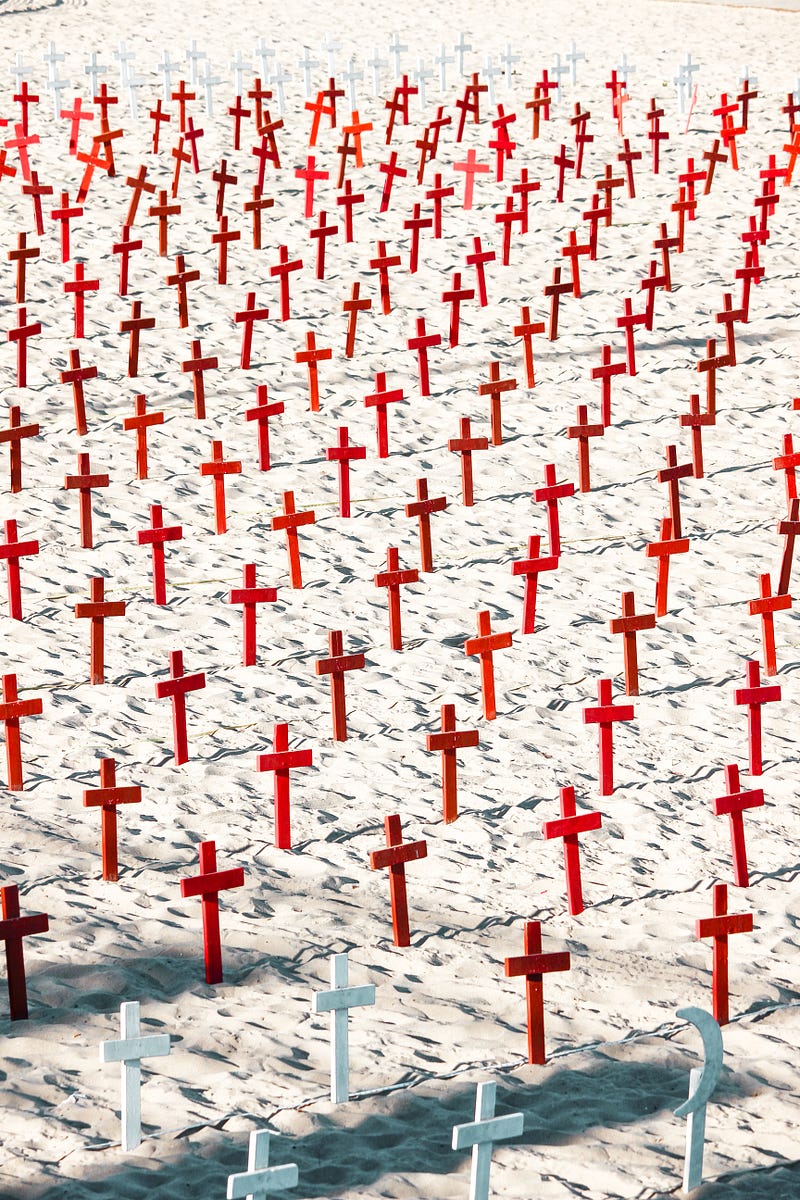
Canada’s Truth and Reconciliation Commission concluded that an Indigenous child was likely to die faster than a Non-Indigenous child. It’s obvious that those residential schools were the major factor in the mortality rate. It has confirmed at least 4,118 deaths as of today.
These schools were a tool of Canada’s Indian Act, enacted in 1876, which was aimed to “civilize” Canada’s Indigenous community. That is the “polite” way of saying “stamping out the Indigenous in them.”
Canada’s government studied how the United States government dealt with its own Indigenous tribes, then did the same thing. Children have been ripped away from their parents (who were declared “savages” by Sir John A. Macdonald) and were forced to live off-reservation within the walls of those schools.
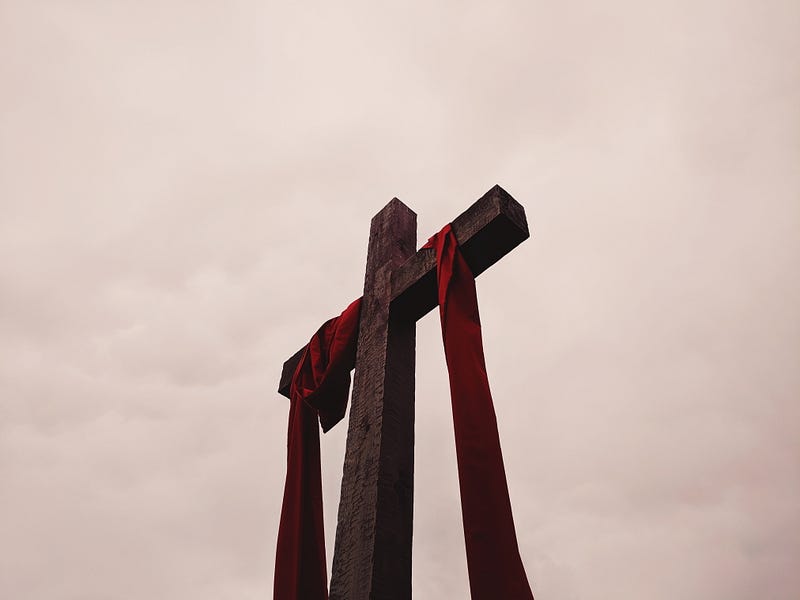
As part of the reeducation, the children were forcefully indoctrinated into Christian beliefs.
The law was amended in 1920 to make it mandatory for Indigenous children to attend those schools and it empowered the authorities to forcefully raid the homes of Indigenous families if they were suspected of hiding their children or refusing to send them to those schools.
The schools were managed by a combination of Roman Catholic, Anglican, Methodist, Presbyterian, and United denominations.
The conditions at the schools were horrible as the food was tainted and the schools were ideal for diseases such as tuberculosis. Many children died from tuberculosis, influenza, and other illnesses.
I could go as far as to compare the atrocities with what occurred at the Brothers Home in South Korea. The people who were forcefully placed in the Brothers Home and other similar detention facilities, like the Indigenous children of Canada’s residential schools, endured daily abuse by the guards.
The children were subjected to abuse on a physical, psychological, and sexual level by the teachers & administrative staff. If they were caught speaking in their Native tongues, they would be violently disciplined.
The trauma these children suffered, if the children grew up to become adults, would be felt for generations to come. One of those consequences is the rate of drug and alcohol addiction within the Indigenous community.
Jonnish Saganash, an Ontario native was forcefully taken from his family in Quebec. He was placed in a residential school in 1954 at age 5. Saganash contracted rheumatic fever one year later and died from it.
His body was placed in an unmarked grave.
As the Catholic Church (which administered three-fifths of Canada’s residential schools) was complicit in the abuse of the Indigenous children within those residential schools, Pope Francis, the current head of the Vatican, issued an apology to the school survivors when he visited Edmonton.
Despite Francis’ apology, he didn’t say anything about the church’s role, itself, being part of the problem.
Since I’m talking about Canada and the Catholic Church, what does any of this remotely have to do with the British Empire?
EVERYTHING!
Catholicism was the predominant religion in the British Empire and that changed when King James I of England and Ireland ascended to the throne. He was formerly known as King James IV of Scotland.
The King James Bible comes from King James I of England.
Canada didn’t officially become an independent country until 1982 when the country had its own constitution. Though Canada is independent, the country is still part of the British Commonwealth. Until 1982, Canada was still part of the British Empire.
The abuses and deaths at the Indigenous residential schools took place while Canada was still subject to British rule. This led to protesters taking down statues of Queen Victoria and Queen Elizabeth II.
Activists are reminding the world that the treatment of Canada’s Indigenous children was done in the name of the British Crown. One even pointed out that the British Crown played a crucial role in building the system that gave rise to those schools.
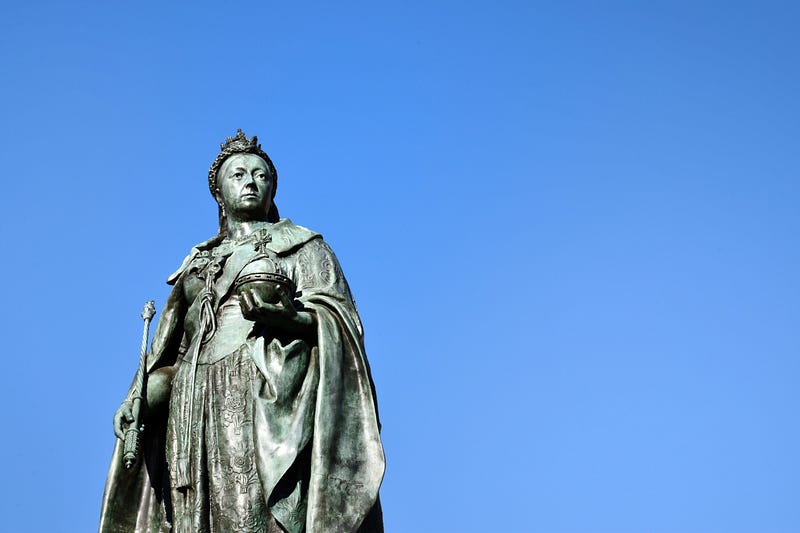
Queen Victoria is considered as being the “face” of the 19th-century British Empire, which means the atrocities committed against Canada’s indigenous population happened under her watch.
This is one of the many reasons I grumble about people romanticizing the Victorian Era let alone fantasizing about living there.
The BIPOC communities of the world, especially Canada’s Indigenous population, on which this piece is focused, rightfully have an ax to grind with the British Monarchy. This is one of the many reasons that the British Monarchy is an example that the concepts of “honor” and “prestige” are subjective bulls–t.
Stay tuned for further installments of Part 2 where I cover Ireland, Asia, Africa, the Caribbean, Princess Diana, and more.