
Hongkongers, NBA, and China’s plan to Crush Online Freedom of Speech
The struggle’s begun
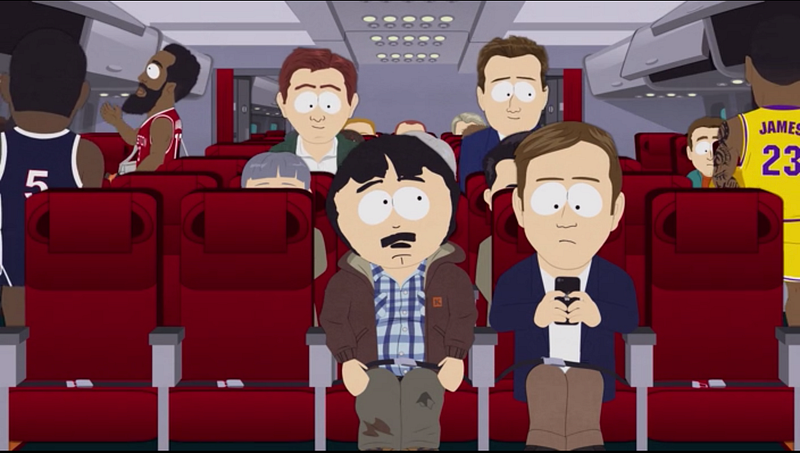
Two recent incidents in the United States have been “hurting the feelings of the Chinese people”. The last episode of South Park, Band in China, mocked how China implements its censorship overseas and thus effectively limits foreigners’ freedom of expression. As expected, it caused the whole series to be censored within the Great Firewall [1]. Many Chinese who managed to watch the episode by circumventing the GFW [2] also complained the episode contains too many negative stereotypes of their motherland.
Meanwhile, General Manager of Houston Rockets Daryl Morey becomes a target of Chinese netizens’ cyberbullying due to a deleted tweet with the phrase “Fight for Freedom, Stand with Hong Kong”, a slogan in the Hong Kong anti-extradition bill pro-democracy protests. His stance was soon denounced by the team owner and the NBA, and he’s forced to delete the tweet and subsequently issue a statement to express his regret. NBA also issued two statements, one in English and one in Chinese, to express their regret and apology respectively — surely the former is for the American public and the latter is for Chinese netizens.
Contrary to their belief, this failed to bring an end to the clash. It attracted backlashes from media and politicians at home, while Chinese netizens still feel frustrated and dissatisfied. They feel that any support of Hong Kong protests equals support of a Hong Kong separatist movement behind the protests, and therefore demand an apology that the NBA officially affirms “Hong Kong is a part of China”.
While Westerners may be encountering this kind of nonsensical demands and social media storming by Chinese netizens for the first time because of something so close to their daily lives, such cyberbullying actually has been going on for years within the Chinese cultural sphere. China has long been manipulating netizens’ extreme patriotism to force Hongkonger and Taiwanese entertainers and sports players to align with their “One China Policy”, accept the “Chinese” identity and denounce any association with a distinct Hongkonger or Taiwanese identity.
Chinese Cyberbullying Procedures
The CCP-controlled Chinese regime, like other notorious totalitarian regimes, has a habit of converting internal instability and economic problems into ultranationalism and hate sentiment towards neighbouring countries. The recurring state-supported anti-Japanese “campaigns” is a perfect example.
However, as Xi Jinping became the dictator of China, this patriotic fever is abused more frequently and randomly than ever, even when there’s no apparent internal issue that needs nationalism to cover up. Foreign companies are required to repeatedly endorse the “One China Policy” and denounce any separatist movement, while entertainers have to act like spontaneous patriots every moment online and offline. This is accompanied by pro-CCP entertainers who actively “report” Hongkonger or Taiwanese compatriots for not being patriotic (to China) enough or supporting separatist movements.
How does Chinese Censorship work on non-Chinese?
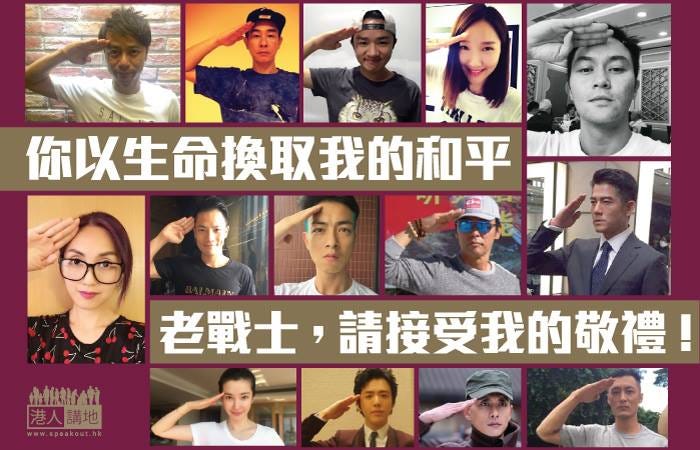
When the target relies heavily on business “within the wall”, China can easily mobilize netizens into cyberbullying the target through state media or Internet celebrities. Chinese netizens then spam the target’s Weibo page and boycott products related to or endorsed by the target, in order to blackmail the target to issue apologies and strictly follow the CCP’s political view, especially those related to the “One China Policy”. Most Hongkonger and Taiwanese entertainers fall into this category. That’s why all those embarrassing salutes above and those solemn vows to join the camp of “Guards of the Chinese flag” can be seen online despite everybody knows very well that most of them don’t even know how to draw the flag itself. Nobody knows if they’re doing these wholeheartedly, or they just take this as necessary measures to avoid cyberbullying.
Even when the target is off the wall, say like it isn’t based in China, or it has no business with China, China can still mobilize cyberbullying within and off the wall. Apart from spamming the target’s inside-wall social media (if they’ve one), to make their attack more mightily annoying, China also timely opens up its Great Firewall so that angered Chinese netizens can conquer the targets’ off-the-wall social media fan page through — you know — spamming.
Taiwanese government officials and Hongkonger pro-democratic politicians have often encountered this kind of “conquest” for years. The Student Union of the Chinese University of Hong Kong also received such courtesy once in 2017 when they hung pro-independence slogans on campus.
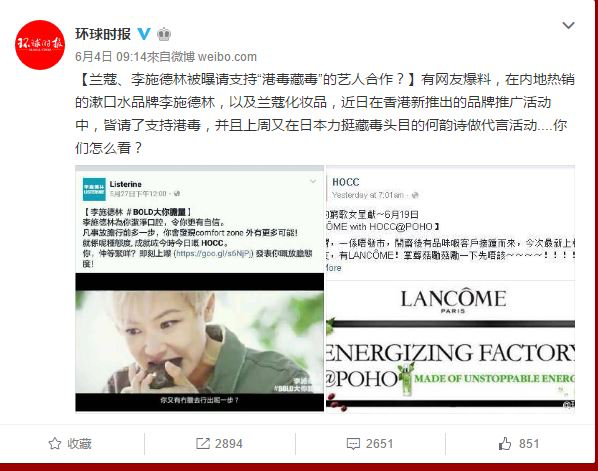
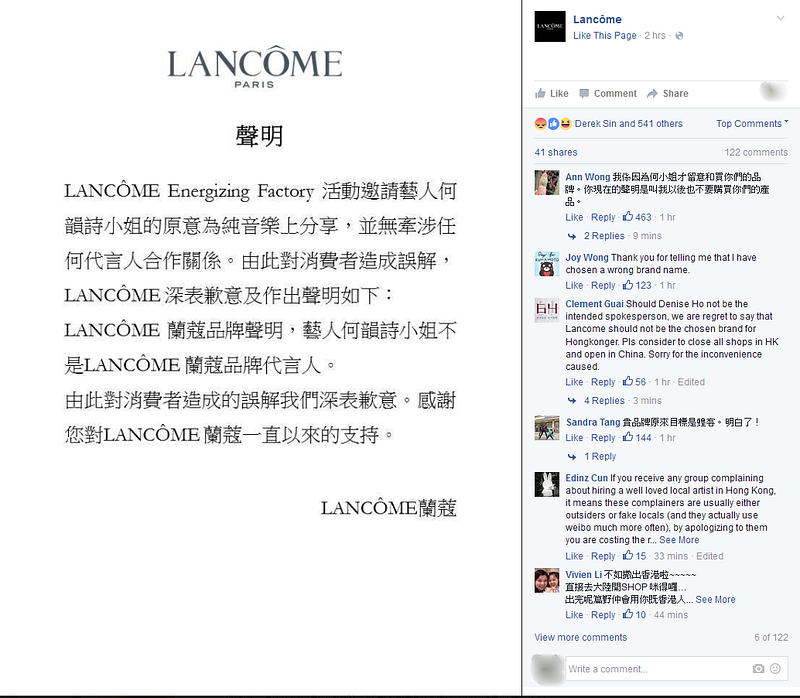
Entertainers and businesses were also under constant CCP surveillance. Cosmetics brand Lancôme cancelled a promotional concert featuring singer and activist Denise Ho in June 2015 after CCP’s mouthpiece Global Times criticized Ho as an advocate for Hong Kong and Tibetan independence. Ho has been blacklisted in China after her participation in the 2014 Umbrella Revolution, and she met Dalai Lama a month before being named by Global Times.
As a cyberbullying of larger scale, in early 2016 Taiwanese member Chou Tzu-yu of K-Pop group TWICE was forced to make an apology and “affirm” her “Chinese” identity, after a pro-CCP Taiwanese entertainer Huang An reported her for waving a ROC flag during a TV show and accused her as a supporter of Taiwan independence on Weibo, which caused Chinese netizens to boycott TWICE as well as K-Pop groups of the same entertainment company. There’s endless spamming and hate speech as well. Angered Taiwanese deemed Chou appeared like a hostage held by terrorists in the apology video, and most news media agreed the event somehow affected the Taiwan Presidential Election the day following the video release. Funnily, Huang An later found his Weibo posts censored with comments deleted. His name later also became a censored term in China.
From just off the wall to around the globe
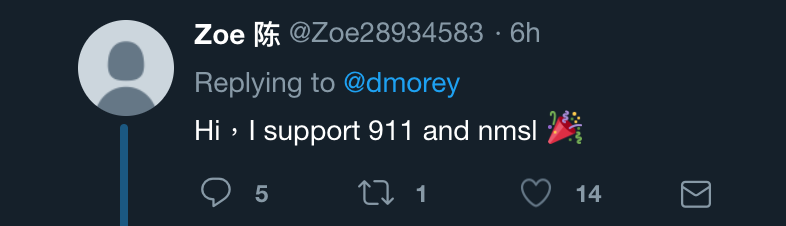
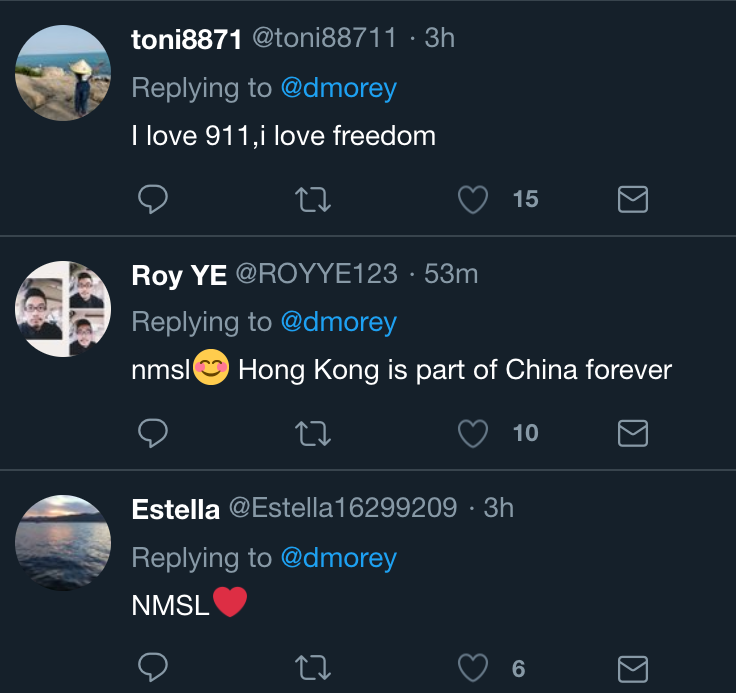
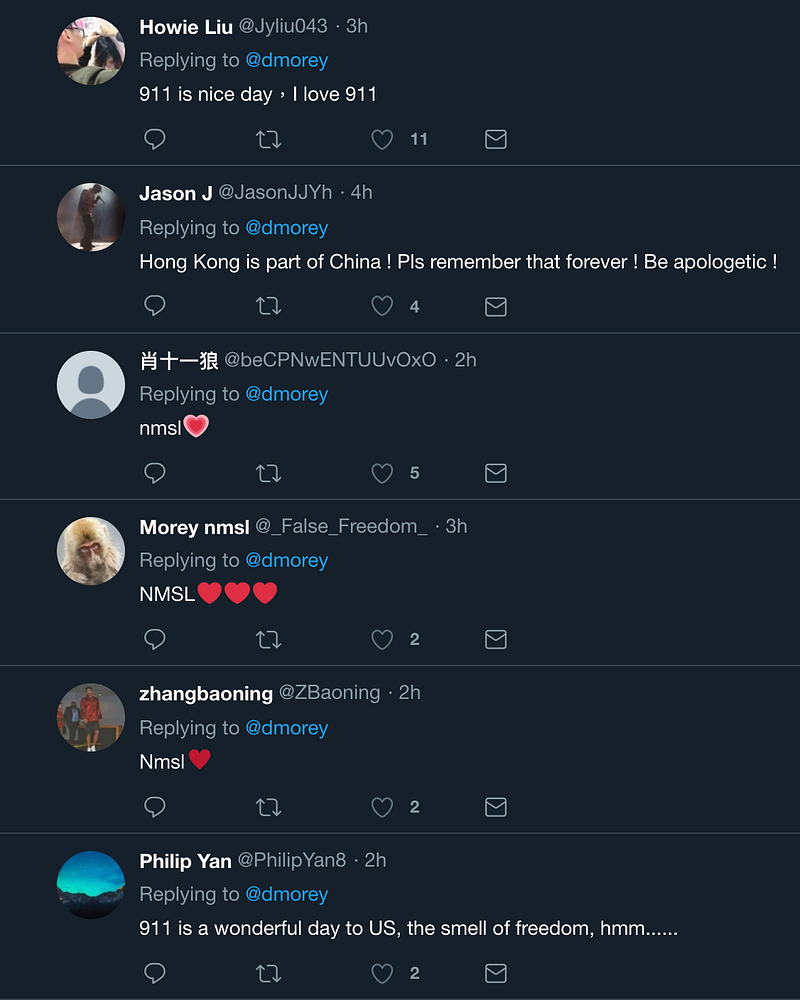
And therefore Hongkongers and Taiwanese are quite (if not completely) unsurprised that Daryl Morey was forced to delete his tweet and that NBA had to issue two versions of statements of regret/apology. Abbreviations of swears like “nmsl” (your mom’s dead) were spammed on Morey’s tweets. [3]
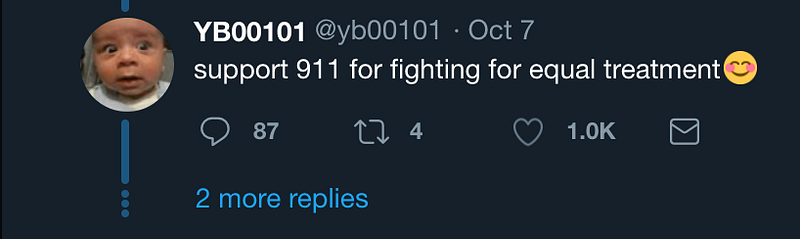
After NBA Commissioner Adam Silver issued another statement in support of the freedom of expression and CCTV decided to cut all live broadcast of NBA matches, hate-driven Chinese netizens started another wave of cyberbullying, this time exploiting the 911 Terrorist Attack, in an attempt that the tragedy can remind Americans of their national shame and shut their mouth by mocking “I support 911 for Freedom”.
Still, NBA isn’t the only victim of this recent wave of censorship. Yesterday, Blizzard kicked Hearthstone gamer Blitzchung from the game’s top tournament, cancelled his prize money and banned him from the tournament for a year, just because he chanted the protest slogan “Reclaim Hong Kong, Revolution of Our Times (光復香港,時代革命)” during an interview with two Taiwanese casters, with which Blizzard announced they’ll no longer work. The self-censorship’s angered the gaming community, while the Chinese Internet community is yet to react.
Besides, earlier this summer Versace, Swarovski and Calvin Klein were forced to issue apology statements and affirm their support of the “One China Policy”, after their products featuring world cities were found to contain standalone “Hong Kong” or “Taipei” followed by “, Taiwan”. The companies were accused of supporting Hong Kong and Taiwan independence as the cities were not followed by “, China” as Chinese expected, and their social media pages were spammed by angry netizens.
More self-censorships
A few days ago, Tiffany & Co. removed a promotional tweet when the model’s gesture was found coincidentally corresponding to the #Eye4HK Campaign against Hong Kong police brutality, which put the company under Chinese netizens’ fire. Vans removed a submission that features symbols of the Hong Kong protests from its annual shoe design competition, giving an explanation like “We have no political position, and we hold the values of respect and tolerance. So some submissions violated the rules and were removed”, causing further rage and doubt whether Vans is still “off the wall” or it’s succumbed to the Great Firewall, that its “respect and tolerance” only works for China.
Apple also briefly banned a protest app that tracks police and protester locations before eventually approving it again under backlash, but the re-approval has angered China that People’s Daily’s already got an article criticizing the decision, asking if Apple has “thought clearly” to support “rioters” and go against Chinese people’s opinion.
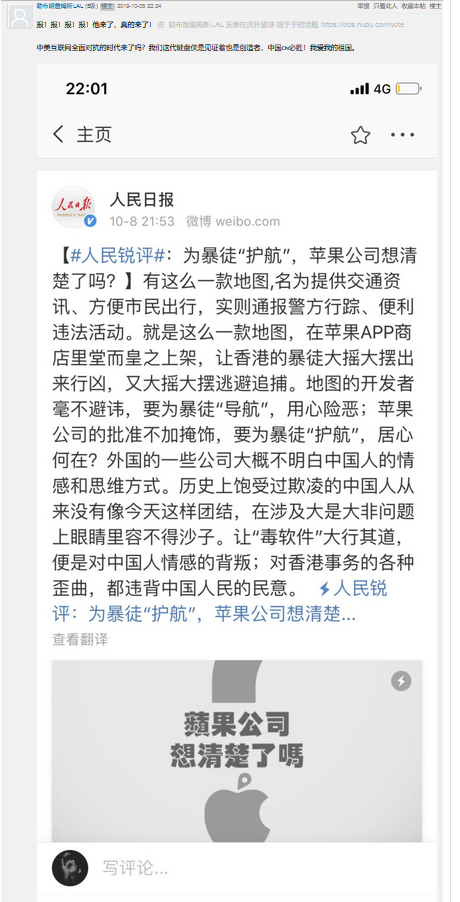
What’s more horrible is, contrary to popular belief, what People’s Daily said is partially true. They somehow do represent the Chinese people’s opinion. Although people are used to refer to those suspicious social media accounts that blindly praise China as wumao (50-cent parties) or CCP bots, quite a lot of them are in fact genuine homo sapiens. The CCP didn’t force them to be patriotic and type those hate speeches. The CCP only indoctrinate them and it’s a big success.
Stop the Awakening Censorship Giant
Fortunately to the CCP, given the language barrier and vast difference in Internet culture, there’s been little Western coverage on this online chauvinism within the Great Firewall. The good news is Morey’s deleted tweet’s provided Westerners a better-late-than-never lesson on Chinese indoctrination of its people and its global censorship project. The world should take action to stop China, the awakening censorship giant.
[1] The Great Firewall refers to the censorship of the Internet in China. Within China, it’s usually just referred to as the “wall”. To be “walled” means something entered GFW’s censorship list. [2] Commonly referred to as “getting over the wall”. As the term itself also gets censored after prolonged use, another term “scientific connection to the Internet” becomes popular. [3] Swears involving one’s mother are common among varieties of Chinese, but here “nmsl” displaced the more commonly used ones like “caonima(bi)”. They also have a tendency to continue to use abbreviations derived from censorship outside the wall.


