
Honestly, I’m Going To Miss The Lockdown
But not the pandemic
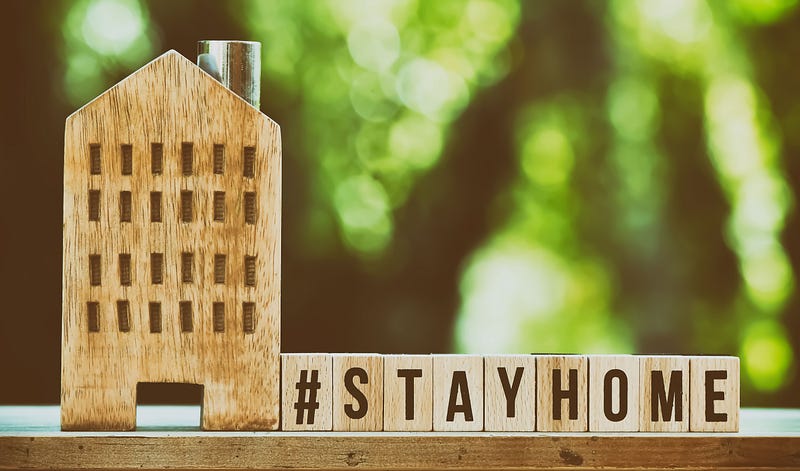
A year ago, in early March 2020, I was wrapping up a 1-on-1 with my then-manager at work. These were the times when something “might” have been going around, and my manager mentioned that he‘d “maybe” work from home (WFH) in the short-term.
By the end of the day, all the “might’s” and “maybe’s” became “definitely’s.” Our company told everyone to work remotely until the end of March.
From then on, everything happened so fast. I went home for a while. We quarantined. But cases climbed. WFH guidance got extended to May. Then October. Then July 2021.
It’s been a full year now since I’ve lived in relative lockdown. And, grateful as I am to see the world slowly starting getting vaccinated, awe-struck as I am at all the healthcare workers, scientists, and researchers for so tirelessly fighting against this virus and developing said vaccine, and thankful as I am to be on the path to returning to normal life, there’s a part of me that already knows I am going to miss this lockdown.
The pandemic sucked. I’ll gladly wave goodbye to COVID-19 without hesitation. But the lockdowns? Call me crazy, but that goodbye is going to be bittersweet.
Extra Me Time & Revisiting Passions
For the majority of the lockdown, I lived by myself in Seattle. I thought it’d be lonely and boring. And sometimes it was. But most of the time, I was honestly enjoying it.
You probably aren’t surprised to hear about yet another introvert thriving under lockdown. It’s true — I do think being an introvert helped me ease into and accept this lifestyle more easily than some. Most evenings I spent all by myself, but no matter. It was the perfect party of one.
But I don’t think this was purely an introvert’s game. Anyone, introverted or extraverted, stood to benefit from all the extra me time.
I personally have many passions and interests —writing, reading, basketball, guitar, singing, chess, personal finance, self-improvement, taking care of my dog… and those are only some that I’ve discovered so far. I’m sure there are potentially more.
With the lockdowns, I finally had enough me time to distribute fairly among all my hobbies. Whereas previously I felt I was neglecting certain hobbies because I didn’t simply have enough time, now was my chance to give them some love.
This past year, my guitar stopped collecting dust in my closet. I sang loudly in the shower (my roommate was out). I was able to knock out a few books from my backlog. I wrote a decent amount and even started doing this thing called Medium.
But even if you don’t have many hobbies, that’s okay. Because the lockdowns were a perfect opportunity for you to discover new interests as well.
Passions don’t just magically come to you. You need to actively seek them out. So if your lockdown routine consisted of binging Netflix, YouTube, TikTok, then back to Netflix, there’s one very simple tip I hear all the time that I’ll pass on to you.
Consume less. Create more. Rewire yourself to stop taking so many instant dopamine hits and derive your happiness juice from actively doing. You’ll feel more fulfilled and might even find yourself a new hobby.
But hurry, because people are getting vaccinated fast! Your extra me time is close to expiring.
Extra Freedom & Thoughts on WFH
Freedom? Paradoxically, in many ways, I felt freer despite being under lockdown.
Part of it was being able to indulge in hobbies, which I already talked about. The other big part has to do with the WFH lifestyle.
Those of us lucky enough to be in jobs where we can WFH seem to have mixed opinions about the whole ordeal. Some love it, some hate it, and many sway back and forth on that spectrum.
There certainly are negative aspects to WFH that I’ve felt especially strongly. Some people in my industry (software engineering) were already working long hours prior to the pandemic, and WFH blurring the lines between work and personal life certainly didn’t help. Not having met in-person a good amount of the people I work with continues to be a strange experience. And I absolutely despise fully remote meetings, especially larger ones. We just can’t get the hang of figuring out mute buttons (and continue to excel at accidentally speaking over colleagues).
But hey, I still think the positives of WFH outweigh the negatives.
Because of WFH, I had the freedom to go home and spend time with family at the start of the pandemic. The last time my dad, mom, brother and I were all under the same roof (for this long) dates back to my high school days. It was great to be able to continue working while sleeping in my home bed and eating mom’s homecooked meals. I even brought Yuna along (my yellow Lab). She had a blast interacting with everyone and made sure my dad got his steps in.
After returning to Seattle to live by myself, WFH afforded me the opportunity to experiment with small lifestyle changes.
I am now able to consistently find time for morning meditation. Mornings used to be a scramble to get both me and my dog ready and out the door (I was able to bring my dog to work most days). Now, having eliminated the commute, I can walk my dog and meditate before opening my work laptop.
Some days, I go to a nearby outdoor basketball court to shoot around before work. I never did this before because it felt like such a hassle, having to go home to shower and change before heading into rush hour traffic again. Now, it’s easy to get a morning workout in, as long as the weather cooperates.
I’m able to actually cook lunch or dinner fresh if I feel like it. Before the pandemic I was a meal-prepper… I don’t know how I didn’t get bored of eating the same thing every day. Recently I’ve also tried different meal kit services to learn new recipes.
Overall, I really like how WFH made it more convenient to incorporate different things into my day. I’d hate to have to give these things up if we return to the office.
Life is Slower-Paced & Mental Clarity
As lockdowns started to become prevalent around the world, I’ve heard multiple news sources describe it as “people putting their lives on hold” to combat the pandemic.
In some ways, I think that phrasing is accurate. Lockdowns definitely forced everyone to slow down, and as a result I found myself reflecting a lot on my life.
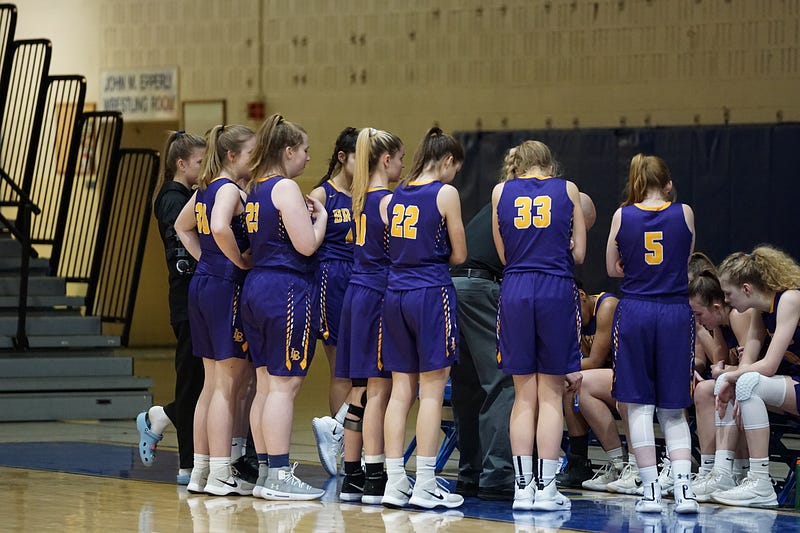
Like a timeout at the end of the first quarter of a sports game, I reviewed how the game of life was playing out so far and what adjustments needed to be made. I am turning 25 this year, so the first quarter analogy seems especially apt.
Among the multitude of questions I thought about:
- Have I been presenting myself authentically to the world?
- Have I given the relationships in my life enough care and attention?
- How has my relationship been with myself?
- Am I in the right place, career-wise?
- Have I been living each day in a way that’s meaningful to me?
I tried to be as honest as I could, and each of these could probably be its own separate story. The fact that I got to mull over them at all was thanks to the lockdown.
I had felt these questions pop into my head occasionally before, but the norm of being “busy” with work and other obligations meant that I never sat down to fully explore the answers. I thank the lockdowns for giving me this first quarter intermission.
Renewed Perspective & Expectations
I’ve always been fascinated by the concept of the hedonic treadmill, which states that people repeatedly return to their baseline level of happiness, regardless of what happens to them.
This theory is usually used when explaining why happiness is often short-lived when we achieve or obtain something. We are often noticeably happier after a pay raise or a new phone, but slowly adapt to the new standard of normal. As a result, we feel the need to chase an even bigger goal or make an even bigger purchase to be happy, hence treadmill.
But what’s even more interesting is that the hedonic treadmill works in the other direction as well. In his book The Happiness Hypothesis by Jonathan Haidt, the author asks the reader to consider which scenario would make them happier in the long run: winning a 20 million dollar lottery jackpot, or becoming paralyzed from the waist down.
It seems like a no-brainer. Winning the lottery would enable anyone to retire comfortably, indulge in luxuries, and chase their dreams. Becoming paraplegic, on the other hand, means you’ll have to rely on others for even basic human functions.
While the paraplegic loses upfront, the difference in happiness in the long-term is actually surprisingly small. Haidt mentions physicist Stephen Hawking as a prime example. Famously diagnosed with motor neuron disease, Hawking went on to not only outlive his doctor’s expectations by 55 years, but excelled, winning multiple awards and authoring the best-selling science book of all time. Hawking had this quote in a New York Times interview:
“My expectations were reduced to zero when I was twenty-one. Everything since then has been a bonus.” — Stephen Hawking
I believe that the pandemic has slightly lowered everyone’s standard for happiness as well. And while it may seem that not being able to travel, eat out at restaurants, or even see friends and family are completely happiness-crushing events, it does help reset our perspectives and expectations.
Suddenly, we need to rely on the smaller things in life for happiness. That could be as simple as going outside for a breath of fresh air (which many countries do not allow under lockdown).
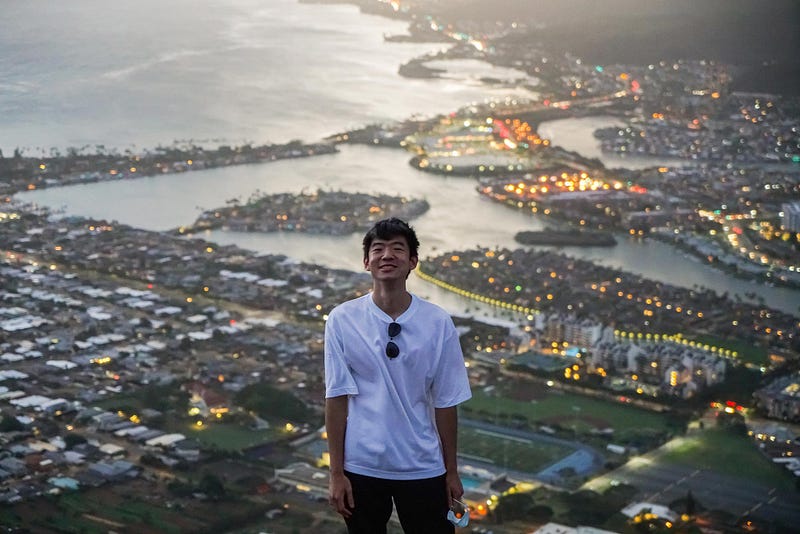
And when we finally do resume normal life, we will be hit with a renewed appreciation for the things we probably took for granted. My recent vacation to Hawaii would have been amazing regardless of the circumstances, but it felt extra special because it came a year after no travel.
The Perfect Conditions For Cultivating Change
I just want to end with this: I think one of the biggest positives for the lockdown was that it gave us nearly perfect conditions for cultivating change.
Before, those of us who wanted to build new habits and reinvent ourselves probably had a tough time doing so, with life being so fast-paced.
Well, the lockdown was your chance. These aspects of the lockdown made reinventing yourself slightly easier:
- Realization. The slower pace of life under lockdown gave you time to reassess your life. You’re more likely to then realize whether you’ve plateaued or veered off-track.
- Repeatability. New habits need repetition. While spending day after day at home can be mundane, it’s also gave you the perfect opportunity to schedule in a new habit to your day, and have less worry about something else getting in its way.
- (Lack of) Continuity. Building off the sports timeout analogy, you’ll sometimes see teams go down big in the first quarter, but come back firing on all cylinders in the second quarter. What changed? The team is still the same team, but they adjusted their mindset and strategy during the break. This literal break in the game’s continuity helped the team get back on track. Similarly, we may feel afraid or unable to make changes in our lives without ample time to regroup. The lockdown afforded us that time, and with the lack of continuity pre and post-pandemic, it only makes sense that one could change for the better.
As I’ve mentioned in the introduction, this pandemic was truly horrific and caused so much suffering to so many people. But if there’s a silver lining, it has to be all the opportunities I never thought a lockdown could’ve provided us.
I thank the lockdowns for giving me this first quarter intermission. I’m ready to take on the second now.