
Homelessness Isn’t the Crisis
Despite the headlines, homelessness is just a symptom of a much larger problem
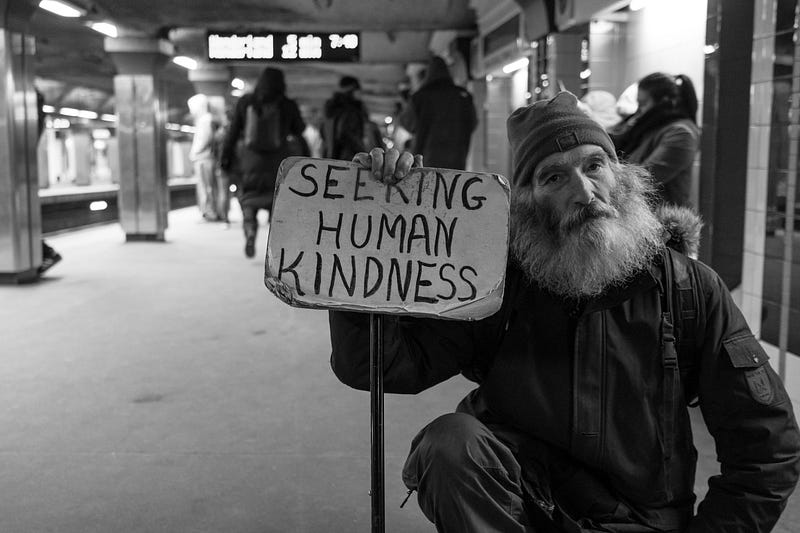
I was doing my daily browse of news articles that are relevant to my job. It’s something I do every day and I tend to cast a wide net as there are a wide variety of topics that are applicable to my job. It’s not only local news but news from around the world on a vast array of issues ranging from war and conflict, to critical infrastructure, to weather, to social issues, and on and on.
During this trip across the mostly-reputable news side of the internet, I came across an article about downtown businesses calling for more to be done about the homeless population in the core of a city. The CEO of the local Chamber of Commerce decried the density of homeless people in the downtown core, relating it to the fact that all of the services for homeless people are available in a reasonable space. To his credit, he did speak out for not only the business population but also wanted to make sure the homeless population was protected.
In the meeting, the business population called on various levels of governments to do things like:
- Ensure sufficient space at homeless shelters
- Monitor and deter open-air drug use
- Fund various mental health initiatives
- More affordable housing
- Better case management services
All of which are laudable goals and ones which should be priorities for any government.
But do you know what I didn’t hear in any of the reporting?
A commitment from the business people to actually do anything. No job offers, no employment training, no money from their own pockets to help people who are experiencing homelessness. No skin in the game at all, except for what is on their own backs.
Before you jump down my throat…I know that most small businesses are struggling and that they probably don’t have a lot to give. I’m not in any way proposing that businesses should bankrupt themselves for social good — at least not as our economy is currently structured (that’s a conversation for a different post).
I’m not talking about small businesses that are so important to every community.
I’m talking about the luxury hotel chains, the high-end multi-national restaurants, the billion-dollar profit banks, the professional offices in downtown highrises that rake in millions of dollars a year, the multi-million dollar international accounting firms, and all the other companies who put profit ahead of people.
Not a single one of them offered anything other than demands to government.
If there were just this one city dealing with a homelessness issue, then it would be easy to dismiss it.
Sadly, that’s not the case. A quick Google search shows headlines about homelessness crises in the following cities:
- New York City, NY
- Pittsburgh, PA
- Sacramento, CA
- Tucson, AZ
- Toronto, ON
- Vancouver, BC
- Moncton, NB
- Regina, SK
- Santa Cruz, CA
- Los Angeles, CA
- Spokane, WA
- St. John’s, NL
- Sydney, Australia
- Melbourne, Australia
- Brisbane, Australia
- San Diego, CA
- Dublin, Ireland
- Houston, TX
- Dallas, TX
- Portland, OR
- Denver, CO
- Provo, UT
- Gwynedd, Wales
- Waterloo Region, ON
- Edinburgh, Scotland
- Portland, Maine
- Bangor, Maine
I could go on and on, but just a quick five minutes on Google News shows that homelessness is a staggering problem in developed countries, and one that we can’t ignore.
But homelessness isn’t the crisis — it’s a symptom of a much larger problem that will take determined and continued effort to fix. If we do it right, things will get uncomfortable for a small number of extremely rich people, but will get much better for a larger number of not-so-rich people.

You see, homelessness is just the tip of the iceberg at the end of 2023. It’s the metaphorical canary in the coal mine telling us that we’re likely already too late to save ourselves unless we act right now.
The other canaries have stopped singing too: energy prices have skyrocketed around the world, fuel prices are at record highs, food costs have increased exponentially (I saw a 2L bottle of Coke going for over $3 yesterday), and everything else has jumped alongside these expenses.
The crisis isn’t homelessness…it isn’t even affordability.
The crisis is compassion.
The crisis is humanity.
Somewhere along the line people decided that the only thing that mattered was profit. Nothing else mattered except chasing the never-ending cycle of profit growth, and so we stopped caring.
Oh sure, we felt bad when people lost their homes — but it didn’t really matter because we bailed out the banks and mortgage companies so that they could keep making obscene profits off a basic necessity of life.
Yeah, it’s too bad that some employees of a company whose name rhymes with “Sprawl Tart” have to use food banks, but it’s okay as long as those profits stay high.
We are so tied up in the idea that we have to use every single resource we can find to create profit, that we forget about things like compassion, sustainability, justice, and humanity. We forget that we aren’t intended to be exploiters of this world, but rather stewards of it. We aren’t intended to strip the Earth of its minerals, we are expected to make wise use of it.
We aren’t intended to work people to death by paying them as little as possible, we are expected to provide them with the ability to survive.
Full-time work should not only provide the ability to survive, but the ability to thrive. If someone is giving you 1/3 of their day for 5 days/week then they should be rewarded for their work by not having to work a second or third job.
They should be able to afford safe housing of their choice.
They should be able to afford transportation expenses.
They should be able to afford to take time off and travel if they want to.
They should have paid time off, not just for sick leave but for vacation too.
They shouldn’t have to use a food bank just to survive.
If you’ve ever heard a company use the phrase “we have an obligation to our shareholders” what they’re really saying is that they believe that profits should come before people.
Here’s the thing — we are part of the problem.
I’m part of the problem.
You see, I have retirement savings. I have a government pension, plus pensions from my former employers.
Do you know what that means? My retirement is being funded out of profits. They are what drive the increases in the stock market that change the value of my retirement portfolio.
If the stock market doesn’t increase, then neither does my retirement portfolio — meaning I may not have enough money to retire when I want.
It’s catch-22 for me right now, but it doesn’t have to be.
If we, as a collective human society, decided that everyone should have equal and free access to things like housing, food, transportation, and recreation, then I wouldn’t have to worry about how I will survive in retirement because my essentials are already taken care of.
I’m not asking for a free mansion, or free meals at a gourmet restaurant.
I’m saying that housing, food, and transportation should not be sources of never-ending profit. In fact, those shouldn’t be sources of profit unless they are above and beyond the basic needs. If you want to charge me $250,000 on my second or third car — go ahead! If you want me to pay $1,000,000 for a second home or vacation home — I’m all in! If you want me to pay $100 for a basic meal at a restaurant, then I’m all for it.
Because those are not necessities — they are luxuries.
Luxuries are where the profits should come from, not necessities.
We’re not going to change the system overnight, and I have my doubts about whether we’ll change the system at all in my lifetime. But do you remember how I mentioned a certain level of pain for the ultra-wealthy?
Here’s where that part comes in.
The mindless accumulation of wealth shouldn’t be celebrated.
Those who hoard wealth — especially wealth created on the backs of others (I’m looking at you Bezos, Walton, Musk, et al) — should be shamed. They are withholding access to the bare necessities of life — the essentials. They shouldn’t be celebrated until the following is true:
- Every single one of their employees has a secure place to live of their own choosing.
- Every single one of their employees has access to sufficient healthy and nutritious food of their choosing.
- Every single one of their employees has access to transportation of their own choosing.
- Every single employee of their suppliers and contractors has access to the same three things.
- Every product they produce, sell, market, or distribute is priced for equitable access.
Then it might be okay to start celebrating them — but only once those things are true.
It’s not impossible to make those things happen.
Will it be painful for those who are sitting on piles of unearned wealth? Yup.
Are they going to have to make sacrifices? Yup.
It’s worth mentioning that those sacrifices will be more along the lines of fewer flights on private jets, or vacation days in the Caribbean, or a couple fewer cars in the garage. This is entirely different than the sacrifices being asked of their employees right now which are often about whether they can afford a place to live, whether they can afford to eat, or whether they have to take the bus everywhere.
Is it worth it?
Absolutely.
While there is an immediate need to care for those who are experiencing homelessness, it’s important to remember that this is a symptom and not the actual crisis. It’s also important not to dismay when change comes slowly. It’s very easy to see things that need to change, know how they need to change, and then not see them changing.
It’s not about getting better immediately, it’s about getting 1% better than the day before. If you invested $1 today at a daily compounding interest rate of 1% then you’d have almost $38 at the end of the year…if you get 1% better every day, then you’ll be over 3,000% better by the end of the year. Imagine what that kind of change can do for this crisis?
Imagine hundreds of millions of people who all get 1% more compassionate and more caring every day.
That’s how we solve this.
That’s how we end things like homelessness and poverty — not with a single giant event, but by being 1% better at caring for each other every day.
Of course, 1% of the daily profits from those high-income earners wouldn’t hurt either.