
“Homecoming” Returns for an Unlikely, Clever, and Mostly Successful Second Season

The Julia Roberts-led Amazon Prime hit from 2018 returns for a second season with a mostly new cast, a new director, and a new plot direction. But was it worth bringing the show back or should Amazon have just let it lie?
The Origin of Homecoming
Three years after becoming a Hollywood power player thanks to the debut of his Emmy-winning cult series Mr. Robot, Sam Esmail created an ambitious follow-up series, Homecoming. Presumably due to a combination of Esmail’s increased profile and the money thrown at the project by streaming giant Amazon Prime, the show attracted an absolutely astonishing cast, which included the series debuts of Oscar-winning Hollywood legends Julia Roberts (Pretty Woman, Erin Brockovich) and Sissy Spacek (Carrie, Coal Miner’s Daughter), two-time Emmy winner Bobby Cannavale (Boardwalk Empire, Will & Grace), Oscar nominee Marianne Jean-Baptiste (Secrets and Lies, Without a Trace), well-respected character actors Shea Whigham (Boardwalk Empire, True Detective), and Dermot Mulroney (Young Guns, My Best Friend’s Wedding), and recent Hollywood breakouts Stephen James (Race, If Beale Street Could Talk), Hong Chau (Downsizing, Watchmen), and Frankie Shaw (SMILF, Mr. Robot).
But as one familiar with Mr. Robot might suspect, this was hardly your typical all-star prestige project. Rather it was immensely complicated and cerebral. It was utterly singular in many aspects, including its source material (perhaps he first high profile series based on a podcast of the same name by Eli Horowitz and Micah Bloomberg), its format (it’s a half hour drama series, an extreme rarity), and its bold visual style (which should have made it a frontrunner for several of the Creative Arts Emmys). The show, which premiered in November 2018, was a contemporary- and near-future-set psychological thriller that at its core followed four individuals caught up in a very complicated conspiracy. The first was Heidi Bergman (Roberts), a psychotherapist who was the head on-site administrator of Homecoming, which is ostensibly a transition center for recently deployed active duty military. The second was Walter Cruz (James), a soldier haunted by his experiences in Iraq and is seeking treatment at Homecoming. The third is Colin Belfast (Cannavale), a fast-talking and profoundly corrupt businessman who kept the true mission of Homecoming a secret from just about everyone, including Heidi and Walter. The fourth was Thomas Carrasco, a mid-level Department of Defense employee who is following up on a complaint about Homecoming.
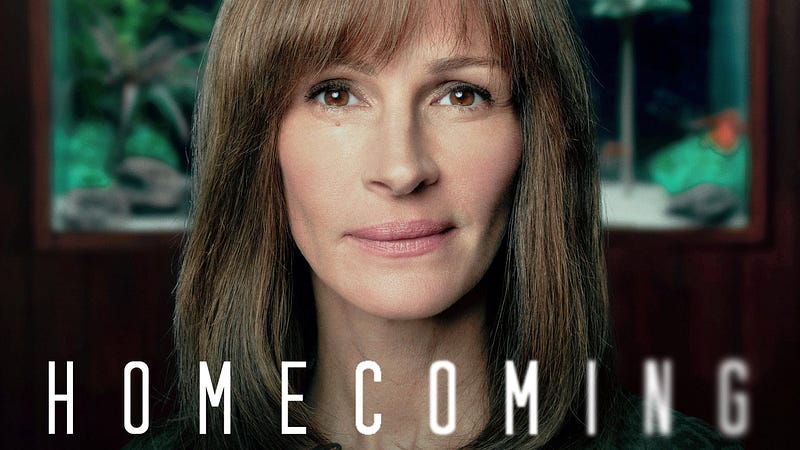
The action in Season One was split between the “present day” and 2022. In the 2022 segments, Heidi was working as a waitress and living with her mother (Spacek), Carrasco was following up on the complaint, and Colin realized that the whole scandal may be re-emerging. The central tension of most of the episodes involved the fact that what at first seems like purposeful evasiveness on the part of Heidi regarding her time at Homecoming quickly appears to be a genuine lack of memory regarding these recent events. How is it possible that she has she forgotten Walter and Colin? And what really happened at Homecoming? These are interesting questions that are more than enough to sustain the season’s 10 half-hour episodes.
Interestingly, despite its titillating premise and almost impossibly attractive ensemble cast, the show was not interested in being fast-paced or sensationalistic. There was essentially no sex or violence in the whole season and the episodes have a deliberately slower pace that undoubtedly tried the patience of some viewers. However, I found that these decisions allowed the show’s fascinating atmosphere to really permeate the proceedings and the deep philosophical questions to dominate. The teleplays cleverly toyed with many of modern America’s greatest fears — our fears of what the government, military, and pharmaceutical companies are really up to and the fear of what’s really in the pills we take and food we eat.
But by underscoring the show’s atmosphere and philosophizing, I do not mean to imply that it was disengaging. Rather, the show’s spectacular performances made sure that each episode was highly engrossing. Each individual performance was stellar, particularly Roberts who thrillingly shed the warmth and charm that has dominated so many of her big screen roles and fully embraced the role of a confused, introverted, and prickly woman who is trying to piece together the fragments of her life. It is an unexpected but wholly successful performance that anchors an exceedingly intriguing show.
There was immense buzz around the show when it first premiered. It premiered to an astonishing 98% approval rating on Rotten Tomatoes and an equally impressive 83/100 average score on Metacritic. A month after it premiered it got nominated for several top honors at the Golden Globes and the Critics’ Choice Awards.
Then it all but disappeared. It lost all the awards it was nominated for at the Globes and Critics’ Choice Awards, was snubbed entirely by the Screen Actors Guild Awards, and only scored a single nomination for Cinematography at the Primetime Emmy Awards. Even four-time Oscar nominated film legend Julia Roberts couldn’t score a richly deserved nomination.
So what went wrong? It is possible that Amazon failed to promote it and campaign for it properly, but I suspect that the show’s chilly atmosphere, cerebral nature, and enigmatic characters combined for a product that was more admired than loved by critics and audiences. As a result, it failed to stir passions when it came time for Emmy voting. I also think the unclear nature of the series itself hurt it. It clearly appeared to be a limited series, but it was officially announced as a drama series that had been picked up for two seasons. Then the powers that be announced that when it returned for a second season it would not involve Julia Roberts (onscreen at least). People were puzzled and with no news for a long time, they moved on.
This is all to say that it was extra surprising when the show announced a second season.
Homecoming Season Two Review
The second season of Homecoming premiered last Friday (May 22nd), over 18 months following the first batch of episodes. As warned, Julia Roberts was nowhere to be found (although her name still appears in the closing credits as an executive producer). Sam Esmail handed over all directing duties to relative unknown Kyle Patrick Alvarez, who previously helmed several episodes of the controversial Netflix drama Thirteen Reasons Why. And like The Handmaid’s Tale, Game of Thrones, and others before it, the show had outlived its source material (in this case the podcast). With a mostly new cast, new showrunners, and free license to go in any direction with the plot, it was virtually unknown what the second season of Homecoming would look like prior to it dropping.
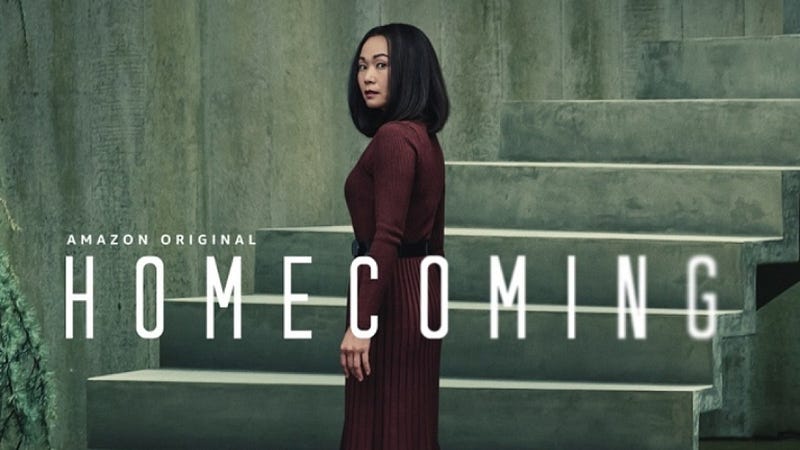
Despite all the novelty that the second season brings, much still remains the same. The show’s distinctive aesthetic is intact, which is unsurprising given that the settings are by and large the same (with most of the action taking place at Geist Headquarters and in the arboreal Norther California town that Walter retreated to at the end of the first season). This aesthetic is punctuated by soulless, dank corporate art direction; disorienting, distorted camera shots; and a spine tingling score that does much of the show’s heavy lifting in terms of suspense (composer Emile Mosseri might just be the show’s real MVP). The show’s fragmented and manipulative narrative structure is also fully intact. We start at the end and flash back for multiple consecutive episodes. And all the while we are rarely quite sure who knows what and who is connected to whom.
The most obvious of the many changes is the cast of characters. Julia Roberts’ Heidi Bergman is unseen but is referenced several times. Likewise, Sissy Spacek, Dermot Mulroney, and Marianne-Jean Baptiste are gone. Bobby Cannavale’s Colin Belfast makes a single (but memorable) appearance. Of the major characters from Season One, only Stephan James’s Walter Cruz, Robert’s co-lead in the first season, is back. But this time he is in a decidedly smaller role. The two main characters of this season are Janelle Monae’s Alex/Jackie and Hong Chau’s Audrey Temple. The former is a brand new character whereas the latter was a bit player in Season One. The ensemble is fleshed out by Academy Award winner Chris Cooper (Adaptation, American Beauty) as CEO Leonard Geist (referred to, but not seen in the first season) and two-time Academy Award nominated comic genius Joan Cusack (Working Girl, In & Out), as a high ranking officer in the Department of Defense.
The second season begins rivetingly enough with Janelle Monae’s character waking up in a rowboat on a lake with no idea who she is or how she got there. She wanders down a nearby road disoriented and is picked up by a kind policewoman who transports her to the local hospital. Suspicious that she is a drug-seeking opiate addict, the hospital turns hostile to her, leading her to slip out the back and figure out what happened on her own. She uses some clues on her person to track down the last place she was at prior to ending up in the rowboat and begins to piece things together. Meanwhile, we learn the backstory of what empowered Audrey to leverage the Homecoming crisis into usurping Colin’s position. In order to avoid too many spoilers, I will not elaborate on how these two seemingly disparate plot threads intertwine. But, trust me, it’s intriguing.
Janelle Monae is superb in her mysterious role. The R&B singer has had a string of impressive big screen performances, most notably in recent Best Picture winner Moonlight and Best Picture nominee Hidden Figures, and this one only pushes her closer to the A-list. She is commanding throughout, wisely underplaying all the material she is given. Hong Chau is equally good in her massively expanded role, as she embodies a character rarely seen in present day media — an indecisive, insecure woman taking a leap of faith despite profound trepidation. She is also one of the tragically rare examples of an Asian woman leading a drama series. In fact, the show’s decision to move two women of color to the center of the action in its second season is a remarkably bold, interesting, and successful choice. The supporting cast is terrific as well, with Stephan James getting some particularly fiery material this season and Chris Cooper and Joan Cusack showing why they are two of the finest character actors of the last few decades.

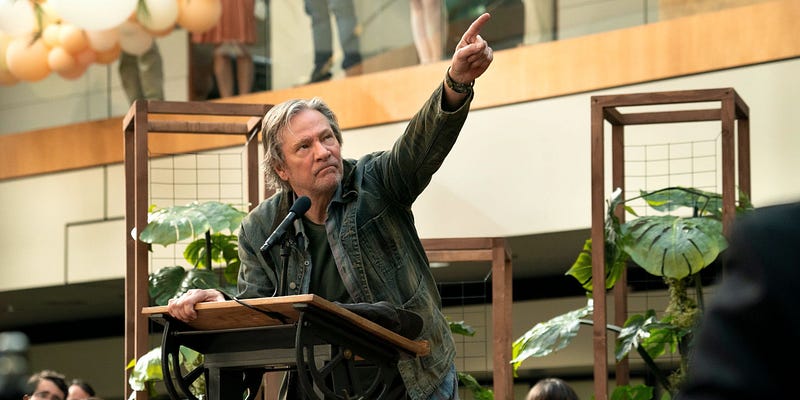
Despite all these strengths, the second season does fill a bit under-baked. With only seven episodes averaging about a half hour each, it as it once immensely binge-able but also feels a bit slight. Spanning only a couple of days and only a handful of characters, these batch of episodes feels more like an extended plot arc from a more substantive season. There are twists in the final episodes that feel a bit more contrived than the more organic and compelling first season. Although it does expand the dark themes and paranoia slightly with its dark look at the interplay of capitalism and the U.S. military, there is nothing new to match the moral and dramatic tension of the first season.
Ultimately, I’m not sure if the second season of Homecoming truly stands on its own as a great season of drama. But I do believe it is a worthy and intriguing follow up that deserves a great deal of credit for how it cleverly and unexpectedly continues the story.
The Future of Homecoming
The critical consensus has not been kind to Homecoming’s second season. It holds a 52% approval rating at Rotten Tomatoes and a 60/100 average score on Metacritic. These numbers represent a huge fall from the previous season. Due to the decline in star power and critical acclaim (not to mention the insanely stiff competition this year), it is highly unlikely the score will make a splash at this year’s Emmys. In light of all this it seems somewhat doubtful the story of Homecoming will continue in future seasons. However, Homecoming does have two major things going for it — people are starved for new content and it is immensely easy to binge. Time will tell if Homecoming plays out more like a curious, modestly successful experiment or a cult favorite. I think it deserves the latter.
Follow the author of this article on Medium and Twitter.
Check out recent articles by this author on the second season of streaming hit Dead to Me and the series finales of Schitt’s Creek, Modern Family, Will & Grace, and Homeland.


