
Hollywood Hacks: Cyber Security Fact from Fiction in the Movies
A socially awkward individual with exceptional keyboard skills sits in front of a futuristic multi-screen setup, a cluttered mess of energy drinks and pizza boxes scattered around
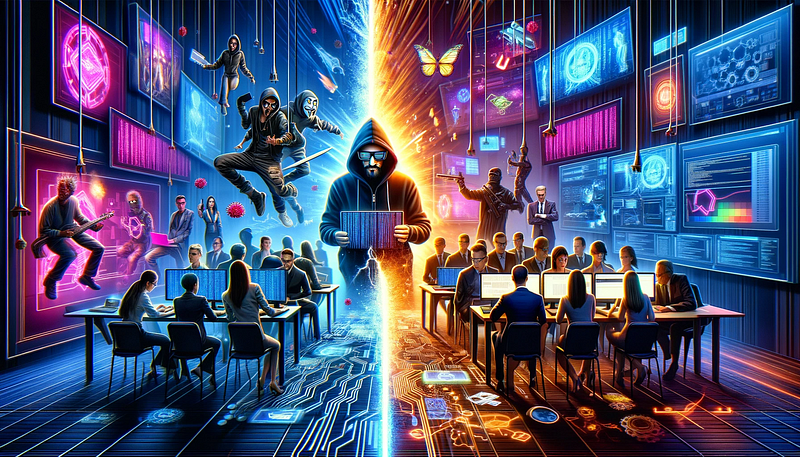
If you’ve ever watched a movie featuring a cybercrime plot, you know the drill. A socially awkward individual with exceptional keyboard skills sits in front of a futuristic multi-screen setup, a cluttered mess of energy drinks and pizza boxes scattered around.
Fingers race across keys like a maestro playing a frantic symphony, code flashes across the screen, and within a matter of minutes, they’ve thwarted international security systems, stolen billions, or saved the world.
It’s dazzling, it’s exhilarating, it’s … Hollywood!
But how much of this portrayal aligns with the real world of cybersecurity?
A Race Against Time … Or Is It?
In films like ‘Swordfish’ or ‘Skyfall,’ hackers are seen cracking the world’s most secure systems in a matter of minutes, if not seconds.
In reality, though, hacking isn’t a sprint — it’s a marathon.
A complex hack can take weeks, months, or even years of planning and execution. It’s a process of patiently finding weaknesses, exploiting them, and sometimes even waiting for the target to make a mistake.
Cybersecurity, therefore, isn’t about defending against real-time assaults, but a long game of chess, always thinking several moves ahead.
The Solo Cyber-genius vs The Team Play
The silver screen often portrays hackers as lone wolves with outlandishly high IQs.
But in the real world, cybersecurity is a team sport.
You have your ethical hackers or ‘white hats,’ who help identify vulnerabilities before the bad guys can exploit them, security architects who build secure systems, and many more roles, all working in harmony.
The ‘Gibberish Code’ Paradox
Picture this.
You’re watching an intense hacking scene, and the screen is a blur of scrolling code that looks like an alien language.
The truth?
Those intimidating screens are often nothing more than technobabble, sequences of code or commands that look impressive but have little practical use.
In reality, hackers won’t waste their time writing out intricate codes during an attack.
They would likely use tried-and-tested tools and scripts, some of which are alarmingly available to anyone with a bit of internet savvy.
The Grand Scheme
Hollywood likes high stakes — nuclear codes, world domination, the usual drill.
But most real-world cyberattacks aren’t nearly as theatrical.
They’re aimed at data theft, financial gain, or causing disruption.
Like that time I was called in to handle a case where a company’s website was hacked, not for any grand scheme, but simply to replace the homepage with a rival football team’s logo! The wild, wild web, right?
Cyberspace — A Realm Beyond The Law?
One trope that many cybercrime movies perpetuate is that the digital world is a lawless frontier where hackers operate with impunity.
While it’s true that the internet poses jurisdictional challenges, it’s far from being a lawless Wild West.
International law enforcement agencies are increasingly cooperating to tackle cybercrime.
So, the idea of a hacker committing crimes while sipping mojitos on a remote island is more fantasy than fact.
When Hollywood Bytes: Iconic and Outrageous Cybersecurity Scenes in Film and TV
Let’s take a fun detour and look at some unforgettable, albeit exaggerated, depictions of cybersecurity in popular movies and TV shows.
The Furious Keyboard Bashing in NCIS
In one of the most hilariously overblown hacking scenes, two characters in an episode of NCIS start typing on the same keyboard to stop a cyber attack.
It’s like watching two pianists playing a duet on a single piano but without any rhythm or harmony.
In real-world cybersecurity, two people hammering on one keyboard would likely result in chaos, not a quicker solution!
The 60-Second Bank Heist in Swordfish
In the opening scene of Swordfish, Hugh Jackman’s character is asked to hack a government system in 60 seconds while… let’s just say, distracted.
I don’t know about you, but most people would struggle to even remember their own password under that sort of pressure, let alone hack into a secure system!
The Power Grid Hack in Live Free or Die Hard
The fourth installment of the Die Hard franchise gives us a scenario where the entire US infrastructure is taken down by a “fire sale” — a three-step systematic attack on transportation, finance, and utilities.
It’s a high-stakes, all-or-nothing scenario that makes for gripping cinema, but it’s pretty far-fetched in reality.
Cybersecurity threats are very real, but the likelihood of an entire nation’s infrastructure being simultaneously crippled is highly improbable, thanks to the disparate, multi-layered security systems in place.
Remember, while these cinematic interpretations are entertaining, they’re designed to thrill, not educate.
Real-world cybersecurity might not come with a Hans Zimmer score or dramatic camera angles, but it has its own share of challenges, victories, and even humor.
So, next time you watch a movie hacker defusing a nuclear bomb with a smartphone while leaping off a building, take it with a pinch of popcorn salt!
Cracking the Code: The Authenticity of Mr. Robot
While we’ve chuckled at some over-the-top Hollywood hacking scenarios, it’s only fair we also tip our hats to those who have done a stellar job.
In particular, let’s talk about the critically acclaimed TV series, “Mr. Robot.”
Unlike most of its cyber-themed counterparts, “Mr. Robot” is widely recognized for its realistic portrayal of hacking and cybersecurity.
Here are a few reasons why:
Hacker’s Toolkit: Open Source and Real
Mr. Robot gets it right from the get-go by using real-world, open-source tools that actual hackers might use.
You’ll find references to programs like Kali Linux, a hacking and cybersecurity testing platform, and software tools like the Metasploit framework.
These are not Hollywood fabrications but part of a professional hacker’s arsenal.
No Instant Gratification
Elliott, the protagonist, doesn’t just punch keys at warp speed to gain access to whatever system he fancies.
He spends time doing reconnaissance, gathering information, writing and testing scripts, and only then does he execute his hacks.
It mirrors the patience and preparation a real-world hacker, ethical or otherwise, would invest.
Social Engineering
“Mr. Robot” accurately depicts one of the most common techniques used in hacking: social engineering.
It’s not all about writing fancy code; often, it’s about manipulating people into giving away critical information.
Elliott is shown digging through his targets’ digital footprints — social media accounts, trash bins, and more — to glean useful information for his hacks.
Understandable Jargon
The show is filled with technical terms and coding language, but it’s mostly used accurately and not just thrown around to impress viewers.
Plus, these moments are woven into the story in a way that even non-tech savvy viewers can understand what’s happening.
Cybersecurity as a Mindset
Lastly, “Mr. Robot” underlines a crucial aspect of cybersecurity — the mindset.
It’s not merely about systems and codes; it’s about understanding the human elements involved, the motives, the psychological aspects, the why behind the how.
It is this exploration of the intersection between human psychology and technology that elevates “Mr. Robot” beyond your average hacking drama.
In the universe of film and TV portrayals of hacking and cybersecurity, “Mr. Robot” is a rare gem that shines with authenticity.
It offers a closer look at the world of cybersecurity — less glitz, more grit — and for that, it earns a thumbs-up from cybersecurity professionals around the globe.
Conclusion — Decoding The Reality
Cybersecurity in the real world may lack the flashiness of Hollywood’s interpretation, but it doesn’t make it any less crucial or interesting.
The reality is a blend of technical skill, analytical thinking, constant learning, and yes, sometimes a dash of adrenaline when things go awry.
As we become more dependent on digital platforms, understanding cybersecurity becomes increasingly important. Not in the sensationalized Hollywood fashion, but in its practical, accessible form, that every one of us can and should comprehend.
This is the real drama, the unseen narrative: not a battle of lone wolf against the world, but a collective effort, a shared responsibility to keep the digital world secure, one line of code at a time.
Remember, cybersecurity isn’t a blockbuster movie; it’s a documentary — ongoing, real, and involves all of us.
- Kali Linux — A real-life hacker’s toolkit. It’s an open-source project that is used for various security-related tasks, including penetration testing and digital forensics. If you want to explore the tools that the pros use, you can download and learn more about it here.
- The Art of Social Engineering — A fascinating field in its own right, social engineering is a key weapon in a hacker’s arsenal. If you’re interested in human psychology and how it can be manipulated in hacking, check out this article by The Social-Engineer.
- Mr. Robot’s Hacking Tools — Have you ever been intrigued by the tools Elliott uses in Mr. Robot? Here’s an in-depth analysis by Wired of every tool featured in the series.
- Real-life Cybersecurity Cases — The Verizon Data Breach Investigations Report is an annual publication that provides analysis of real-world cybersecurity incidents, offering invaluable insights into how data breaches occur and how they can be prevented. Check out the latest report here.
- Movie vs. Reality — A fun yet insightful video by Wired on how Hollywood portrays hacking and cybersecurity.
Enjoyed the read? For more on Web Development, JavaScript, Next.js, Cybersecurity, and Blockchain, check out my other articles here:
If you have questions or feedback, don’t hesitate to reach out at [email protected] or in the comments section.
[Disclosure: Every article I pen is a fusion of my ideas and the supportive capabilities of artificial intelligence. While AI assists in refining and elaborating, the core thoughts and concepts stem from my perspective and knowledge. To know more about my creative process, read this article.]


