
Holding Fear’s Hand
Metaphors for a Litany of Worries
I waste a lot of time worrying. I tend to expect the worst — even though “the worst” has only happened three times in my life, and once it wasn’t nearly as bad as it could have been. Sometimes my fear makes me a passenger rather than a participant; I let life carry me along, rather than acting upon it.
Sometimes my fear feels like my conjoined twin. It is so present — I am so deeply and inextricably aware of it — that fear feels like a part of my biology. It is a nefarious parasite burrowing in, draining me of my vitality, depleting the depth of my dreams, and punching holes into my hopes.
Sometimes my fear is a dense fog. I can’t see where I’m going, so I stop moving entirely. I don’t want to fail or fall, so I don’t proceed. Fear obscures everything before me. It blots out the sun and makes my world very dark indeed.
At my core, I can be a pessimistic and fearful person. It is easy for my imagination to spin its wheels exploring hypothetical travesties and worst-case scenarios. My thoughts often become a litany of worries — ranging from trivial to severe: What if I’m late for my flight/game/date/appointment? Will I find fulfilling work that pays? What if I lose control of my body? What if I say the wrong thing? What if someone I love gets very, very sick? Are we making the right financial decisions? What if it all gets destroyed or disappears? How will I react when I start to really go gray — no, really? What if my father loses the house? What if my grandmother was suffering more than she let on? What if I fail at this? What if I succeed? What if I get hurt? What if I’m attacked or robbed? What if I never again see this or that loved one? What if I don’t like the food I just ordered? What if I’m not worrying about the things I should be worrying about? What if I’m worrying too much? What if I never fall asleep?
Sometimes my fear is like a garment I can’t take off. It fuses to my skin. It is too heavy in all seasons, but I can’t remove it. Sometimes fear envelops me completely. It inhabits my body. I know it should just be a matter of working a zipper or a few buttons, peeling it away, or stepping out of it, but I leave it on. I wear a state of perpetual dread like a hot and itchy uniform. Eventually I realize panic is my new normal.
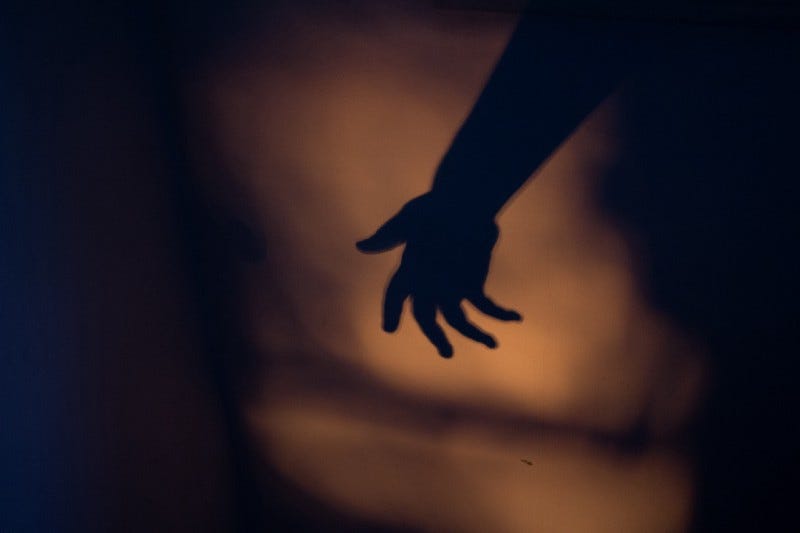
I easily muster hope for other people: I’m confident he’ll recover. I’m sure she’ll find a job. I don’t doubt for a minute that their marriage will work out. But when it comes to myself, I too often turn to the negative. I treat fear like it can protect me — living as though worry is the same as prudence or planning. It’s never proven itself to be a reliable guardian, yet too often I find myself holding fear’s hand before crossing the street.
Fear is a poison I take too often — swallowing it whole like a daily vitamin. It pretends to be the antidote, but it is the venom. It ravages my system. It courses through my blood all prickly. It launches a hostile takeover of my body — implanting itself in every vulnerable place.
I want hope to come more easily. It makes for a much better dwelling. I know it will take effort and intentionality because, especially with so much death and disaster overshadowing the world, optimism takes energy.
I want to dismiss worry like an unfounded rumor. I want to keep my fears as small as possible. I would like to be so full of optimism that fear can find no foothold.
So much of fear is hypothetical. So much of it dissipates upon closer examination. Fear is so often an illusion — an imaginary foe. I want to release myself from fear’s hold on me. And if I’m holding on to fear, I want to let it go.
A version of this piece originally appeared on the blog Write Away.


