avatarJeremy Roberts

Free AI web copilot to create summaries, insights and extended knowledge, download it at here

12575

Abstract

d by World War II veteran Bud Tucker on July 17, 2017, at his Alapaha, Georgia, residence. Photography by Jeremy Roberts</b></figcaption></figure><p id="c559">We traveled by train all the way through France until we reached our destination of Worms, Germany [a port on the left (west) bank of the Rhine River]. I crossed the Rhine, as big as the St. Johns River in Florida. The Rhine Bridge had been blown in half. Logs and lumber were used to build another bridge on top of the water that would float. I got to cross the new bridge twice in a long bus.</p><p id="be8c">Germany was frozen over, and it was my first time seeing snow. Fields would be solid white. You’d see brown rabbits hopping around in fields of solid white. There were no trees standing. They had been shot, bombed, or cut down level with the ground. At one time there must have been some rough fighting. If we had been in a battle outside our encampment there would have been no cover.</p><p id="fc71">I’m thankful I was drafted near the end of the war and never saw any frontline combat. At one point the sergeant told us, “If you put in a foxhole with a boy whose beard is several inches long, you better listen to every word he says. He’s been in there a long time.” That didn’t make you feel too good.</p><p id="4f30">I stayed in Worms five or six months [Victory in Europe Day was declared on May 8, 1945, about a month after Tucker arrived on foreign soil]. At night we’d be sleeping and awaken to the sound of B-29 planes pulling out and dropping bombs.</p><p id="f34c">I was lucky that my last name started with a “T” and was somewhere down the list so they couldn’t find me for KP duty [i.e. kitchen police or kitchen patrol]. Seems like my pals were on it every week, but I missed KP duty a lot [laughs].</p><p id="672a">All the German civilians were just so friendly. Nobody tried to desert. Everybody in my outfit would wanna go out with me at night to drink and cut the fool with the women. I had a lotta fun when my commanding officer — Patch was his last name — wasn’t around. You always had to be in at a certain time at night — otherwise they would put you on dishwashing duty.</p><figure id="d43f"><img src="https://cdn-images-1.readmedium.com/v2/resize:fit:800/1*_U1XHZE4qQZHNJ0KQ8H2lw.jpeg"><figcaption><b>Amateur botanist Blake McCranie, historian and <a href="https://readmedium.com/updated-second-edition-of-footsteps-of-early-alapaha-settlers-unleashed-today-f54e9e3142db">“Footsteps of Early Alapaha Settlers”</a> co-author Becky Davis, and World War II veteran Bud Tucker go on a Native American artifact expedition in Alapaha, Georgia, on February 8, 2018. Photography by Jeremy Roberts</b></figcaption></figure><p id="0578">They had underground, miles-long tunnels in France and Germany, and the Germans would order the Jewish people inside to gas or burn them. I got to go inside some after they had been abandoned and the bodies had been removed. It was an awful thing to see.</p><p id="0693">I had to go into the hospital with a nervous stomach. I don’t know what it was — eating certain foods would upset it. Since I’ve been out of the service I ain’t had a bit of trouble with my stomach. German prisoners of war worked at the hospital, and some could speak English. They waited on the sick, mopped the floors, cleaned the commodes, and so forth. They were guarded, obviously.</p><p id="005e">Top military brass would visit us in the hospital. General George S. Patton [“Old Blood and Guts” commanded the U.S. Third Army in France and Germany following the Allied invasion of Normandy in June 1944] even shook my hand. He spent time with all the soldiers cutting the fool.</p><p id="8161">General Patton was just as friendly as could be, wanting to know how I was getting along. A big man, he loved wearing those two Ivory-handled six shooters [Patton died not long after meeting Tucker on December 21, 1945, in Heidelberg, Germany, from injuries sustained in an automobile crash en route to hunt pheasant].</p><p id="8b1e">There was a nurse named Sally. Every time she’d walk into my room she’d come over and wake me up. I’d start laughing. She’d go, “Tucker, look at me one time and don’t smile.” I never could look at her without smiling. It just tickled her to death.</p><p id="077e">When I went to leave I hugged Sally’s neck. She asked me, “Tucker, are you going to Japan?” “I don’t know where they’re sending me when I leave here.” They were gonna ship her to Japan, and I dreaded that [World War II did not end in the Pacific Theatre until August 15, 1945, three months after Germany’s surrender. President Harry Truman’s decree that two atomic bombs be dropped upon the cities of Hiroshima and Nagasaki exacerbated Japan’s decision]. I wonder whatever happened to Sally.</p><p id="cb7b">My first cousin Jordan Webb was sent to Japan. He stayed and worked on a ship. We were discharged at roughly the same time. Jordan is 90 years old, and I turned 93 on April 4. He calls me every now and says, “Bud, reckon which one of us is gonna die first?” [laughs]. When we were growing up every Saturday evening Jordan and I hitchhiked to Ocilla and watched old cowboy pictures starring my favorites — Charles Starrett and Wild Bill Elliott — for just ten cents.</p><figure id="442e"><img src="https://cdn-images-1.readmedium.com/v2/resize:fit:800/1*HqDwO23MQtyhfLV3w0djDQ.jpeg"><figcaption><b>On July 17, 2017, the charming Bud Tucker sits for a brief formal photo session after reliving his back pages spent serving the United States of America as a World War II private in Worms, Georgia, with historians Becky Davis and Jeremy Roberts. Photography by Jeremy Roberts</b></figcaption></figure><p id="4801">I came back to the United States on a big hospital ship that landed at Camp Shanks, New York. Soon we were transferred to Boston and made our way down to Halifax Hospital in Daytona Beach [then appropriated as a convalescent facility]. That’s where I was discharged. All of my friends made it home, too.</p><p id="f8ad">I was a private when I went into the replacement infantry and a private when I came out [laughs]. My weight had risen to 165 pounds — that’s the most I’ve ever weighed. The Army treated me fine — I must have eaten and slept well. Everybody was glad to see “ole Bud” in Alapaha again. I’ve never been back overseas.</p><p id="8b78">None of my five brothers had to go to war. Nelson, who is battling Alzheimer’s in the Berrien Nursing Center, went to have an examination towards the end of the Korean War but was never called back.</p><p id="697e">I do hope and pray the Lord carries me on before I take Alzheimer’s. I can hardly stand to go and see Nelson in the shape he’s in. Starting with the eldest, my siblings are Viola Little, me, Dick, Hollis, Lillie Solomon, Nelson, Frank, Robert, and Janie Brogdon. Viola, Dick, and Hollis are all gone.</p><p id="46ee">Sue and I got married in late 1946, not long after I returned home. We had to go down and get Bird Griner to marry us. I asked him, “How much do I owe you?” “Well, whatever you can give me.” “Well, I got five dollars.” When I gave him the money, I had one dime left [laughs].</p><p id="a3a7">We came home and musta got Sue Nell that night [laughs]. She was born exactly nine months later, and then 16 months after Sue Nell’s birth we had Patsy. Sue Nell was the squallingest young’un we had ever seen.</p><p id="242c">Shoot, we had to go to work the day after we were married. There was no honeymoon. Back then if you had any money — it was very little. On weekends we could go to the dance on Main Street in Nashville and jitterbug until 1 or 2 a.m. when they closed.</p><figure id="82f6"><img src="https://cdn-images-1.readmedium.com/v2/resize:fit:800/1*yHgkfYj6FRALS1oh3HXumw.jpeg"><figcaption><b>On Sunday, April 8, 2018, World War II veteran Bud Tucker stands in a newly harrowed, 25-acre field awaiting a peanut crop near Alapaha, Georgia, that he used to plow with a pair of mules as a young man. According to the Mount Paron Primitive Baptist Church deacon, “The black-coated mule didn’t have a bit of sense, while the red mule was humble and listened to you. One day as I was knocking off for dinner, that black mule got loose. I ran the entire length of that field before I ever caught ahold of him. If I hadn’t been a pretty good fella, I woulda stabbed my pocket knife into that damn mule” [laughs]. Photography by Jeremy Roberts</b></figcaption></figure><p id="e902">I farmed Daddy’s land for about a year. Field corn, tobacco, and peanuts were the only crops I grew. When I was farming corn cost between 1.50 to 3.00 a bushel. Corn’s about that cheap now. How do these farmers make it? They have to produce more corn per acre to break even — diesel and pesticides eat away at their profit.</p><p id="a388">I farmed 25 acres with a pair of mules. You’d plow and there’d be a little old streak at the end of the day. That’s all you’d accomplish [laughs]. It wore me out. In a way I’ve had a tough life, but I’ve also had a good life. I must have, as He’s still got me here.</p><p id="c72b">We traded two of Lem Solomon’s [Sue’s brother] mules in for an Allis-Chalmers Model B orange tractor with a 16-inch bottom plow on it. It was just a one-row rig with a cultivator built all the way under it where you placed your feet. I mean that thing would turn and plow some kinda land.</p><p id="d72a">That Model B was the best tractor I ever bought. When I sold it, it didn’t use a drop of oil and would pull anything you hooked to it. We had stumps pulled up on a tract of land here close to the house. Sometimes the tractor would stand straight up in the air, but it got those stumps out of the way.</p><p id="1347">Daddy had heart trouble. He fell dead as a doornail at 47 years old [August 14, 1950]. My younger brother Nelson walked over and told us, “I believe Daddy’s dead.” I jumped up, put on my clothes, and went with him.</p><p id="cbda">I shined a flashlight down the long hall that went all the way through the house, and I saw his foot hanging under the watershelf — a place where we always drew water into the kitchen — where he had fallen. It was white as a sheet.</p><p id="13d3">I believe he leaned over to throw up against the post and fell out head first. He hadn’t even pulled his feet down off the porch. I picked him up by myself and laid him up on the back porch. He had a massive heart attack according to Dr. Herman Dismuke, who drove down from Ocilla.</p><p id="6fe8">Daddy drank pretty badly. If he’d get on a drunk, he just wouldn’t get off it until he got where he couldn’t get ahold of any more liquor. He just would not quit. He was a quiet fella until he got to drinking, then he was all mouth and aggravating. He would go drink off by himself — I didn’t wanna be around him drunk.</p><figure id="9972"><img src="https://cdn-images-1.readmedium.com/v2/resize:fit:800/1*BfZJnqWkcku-3XpHFPS6uQ.jpeg"><figcaption><b>Mount Paron Primitive Baptist Pastor and tenor singer Robert Tucker [September 14, 1942 — ], Lillie Tucker Solomon [March 21, 1933 — ], and bass singer and church deacon Jim Walter “Bud” Tucker [April 4, 1925 — ] graciously collide in front of the church cemetery on Sunday, April 8, 2018. According to his younger sister, the former World War II private incidentally hates his given name of Jim Walter. Photography by Jeremy Roberts</b></figcaption></figure><p id="b065">Mama was a widow with five young’uns still at home — Lillie, Nelson, Frank, Robert, Janie — and she had to draw from county welfare. In the 1980s Mama had a brain hemorrhage. She was like an invalid and couldn’t even get off the bed [she was 85 years old when she passed away on April 5, 1988].</p><p id="125e">I lost my Hicks tobacco crop three times. Rainwater got knee deep on us one year. Sue and Lem were outside with a shovel trying to dig a ditch into the pine trees. I said, “Sue, don’t ya’ll know better than this?” It was like a pond. “There ain’t a bit of need in making a ditch. The tobacco’s already drowned.”</p><p id="e83e">We had already topped and sprayed it for sucker control. Pretty piece of tobacco sure enough. It all just fell down on the side of the stalk when the hot sun came out. Buyers wouldn’t touch it as it wasn’t any good. The leaves were light as a feather without any body.</p><p id="a6fd">Boy, when you lose your tobacco crop, you’ve lost just about everything. That really hurt me. You couldn’t pay your debts. If it hadn’t been for Carl Dixon, I couldn’t have farmed. I’d owe Carl for guana [5–10–15] and he’d say, “Bud

Options

, drive up to the railroad tracks, back up to the boxcar, and get all the fertilizer you want.” Carl Dixon was one good man. He also helped me get seed. Years later I told that to his wife Jean.</p><p id="3975">Another of Alapaha’s most hard-working farmers was Willaford Jernigan, who was about a year and a half younger than me. I saw him a couple of weeks before he passed away [January 7, 2018]. The last thing he told me was, “You pick me up better than anybody that’s been sick” [laughs]. I cut the fool with him about his little ole 1936 Ford convertible. Willaford would come get me and Wilson Solomon so we could all go to the dances in Tifton. You can’t replace men like Willaford.</p><p id="275d">Farming’s a good life — if everything goes along where you can make enough to live. I have 60 acres of land now in good shape. My brother Dick’s son Richard Tucker, Jr., and his son Carey rent it from me. That’s what I’m living off of now.</p><figure id="6808"><img src="https://cdn-images-1.readmedium.com/v2/resize:fit:800/1*8KlVsdQ7tiQUAWBS4qx9eg.jpeg"><figcaption><b>A closer shot finds Bud Tucker, who served as a private in the replacement infantry during the waning days of World War II in Worms, Germany, leaning against his trusty blue and white 5000 Ford tractor, manufactured between 1964 and 1979, at his Alapaha, Georgia, residence on Sunday, April 8, 2018. Incidentally, the tractor is attached to a harrow which is used to disc fields prior to the spring planting season. Photography by Jeremy Roberts</b></figcaption></figure><p id="6255">You can do as you want to farming. I’m 93 years old, and I ain’t never went a hungry day in my life. When I was little there were mornings where all I had to eat was an egg biscuit. Everybody says, “There ain’t no telling how much money Bud’s got.” I say, “Shoot, where do you think I’ve got ahold of any money at?” [laughs]. I ain’t never made any to amount to nothing.</p><p id="0284">Sue and I lived together for 63 years, and I never went a hungry day in my life. She’d get mad if I went off with her brother Wilson or some of my buddies to drink, but that was happening before we got married. So Sue knew what was gonna happen, yet she still got mad. When I came in at dinner, she always had my dinner on the table. But she wouldn’t eat with me [laughs]. Sometimes Sue would go two weeks without saying a word to me.</p><p id="f777">I’m a homebody. I still live about half a mile from where I was born. Sue Nell visits me on Sundays. Otherwise I’m generally sitting out in the yard watching everybody passing down the dirt roads. I’m glad to see neighbors if they stop by. I visit Mt. Paron’s cemetery twice a day to visit my wife Sue [died October 5, 2004, at age 82] and our youngest daughter Patsy Killeen [December 24, 1948 — February 27, 2011, age 62].</p><p id="6db4">I’ve always believed in the Lord. I reckon that’s one thing he’s keeping me here for. I tell everybody, “Well, I ain’t gonna rush death, but when that fella up there gets ready for me, he’ll get me. Nobody can hinder.” That’s just the way it is. When He gets ready for me, I’m just as ready as you are. I hate to leave Sue Nell here by herself [She interjects, “I’ll find some ole good looking hunk!”]</p><p id="5038">If I have an enemy, I don’t know it. I love everybody. Bro. Charles Tyson, the former pastor of Mt. Paron Primitive Baptist Church, asked me one day, “Bud, why do you laugh so much?” I said, “Bro. Charles, “I’d heap rather be laughing than crying” [Mr. Tucker succumbed to a massive heart attack at his home on February 5, 2021, at age 95].</p><figure id="35ae"><img src="https://cdn-images-1.readmedium.com/v2/resize:fit:800/1*4O3B3aQQqJNtw2HYAr9Iyg.jpeg"><figcaption><b>World War II replacement infantry Private Bud Tucker [April 4, 1925 — ] and eldest daughter Sue Nell Tucker Wise [August 12, 1947 — ] are pleased to be in one another’s company on March 11, 2018, near Alapaha, Georgia. Sue Nell’s late mother, Susie Lee “Sue” Solomon Tucker [February 20, 1922 — October 5, 2004], and father officially tied the knot circa November 12, 1946, nine months to the day before their bundle of joy was born. Youngest child Patsy Tucker Killeen [December 24, 1948 — February 27, 2011] was only 62 years old when she succumbed to lung cancer. Sue Nell remembers, “When Patsy died it about killed us all. She was so precious.” Photography by Jeremy Roberts</b></figcaption></figure><figure id="71f8"><img src="https://cdn-images-1.readmedium.com/v2/resize:fit:800/1*2EjPqFTofVMlOGsNlvOaWg.jpeg"><figcaption><b>Married circa November 12, 1946, Susie Lee “Sue” Solomon [February 20, 1922 — October 5, 2004] and World War II veteran-husband Jim Walter “Bud” Tucker are seen inside Mount Paron Primitive Baptist Church in Alapaha, Georgia, celebrating their 50th wedding anniversary. Image Credit: The Bud Tucker Collection</b></figcaption></figure><figure id="bc08"><img src="https://cdn-images-1.readmedium.com/v2/resize:fit:800/1*iZmvdzoy4eeZ-eqYq16IUg.jpeg"><figcaption><b>In an up-sweep style, the curly haired Susie Lee “Sue” Solomon Tucker [February 20, 1922 — October 5, 2004] rests her chin on two clasped hands in this circa 1970 portrait. Solomon and World War II hero-tobacco farmer Bud Tucker were husband and wife for 58 years. A blown-up copy of this photo rests underneath the television in Mr. Tucker’s living room. Image Credit: The Bud Tucker Collection</b></figcaption></figure><figure id="730e"><img src="https://cdn-images-1.readmedium.com/v2/resize:fit:800/1*hD2FOd51FvehfrxOo4UKJQ.jpeg"><figcaption><b>Burgeoning botanist Blake McCranie, <a href="https://readmedium.com/updated-second-edition-of-footsteps-of-early-alapaha-settlers-unleashed-today-f54e9e3142db">“Footsteps of Early Alapaha Settlers”</a> co-author, journalist, and all-around Elvis Presley ’68 Comeback Special fan Jeremy Roberts, and World War II veteran Bud Tucker go on a Native American artifact expedition in Alapaha, Georgia, on February 8, 2018. Photography by Becky Davis</b></figcaption></figure><figure id="903f"><img src="https://cdn-images-1.readmedium.com/v2/resize:fit:800/1*DU1_GfXWrPA7MuDRSIkSMw.jpeg"><figcaption><b>A five-shot, .32 short pistol with a plastic pearl handle is held by World War II veteran Bud Tucker on July 17, 2017, at his Alapaha, Georgia, residence. Photography by Jeremy Roberts</b></figcaption></figure><figure id="c5da"><img src="https://cdn-images-1.readmedium.com/v2/resize:fit:800/1*nQCLROWXNKOz1Q3n2kQtMA.jpeg"><figcaption><b>Bud Tucker, who served as a private in the replacement infantry during the waning days of World War II in Worms, Germany, leans against his trusty blue and white 5000 Ford tractor, manufactured between 1964 and 1979, at his Alapaha, Georgia, residence on Sunday, April 8, 2018. Incidentally, the tractor is attached to a harrow which is used to disc fields prior to the spring planting season. Photography by Jeremy Roberts</b></figcaption></figure><figure id="9b77"><img src="https://cdn-images-1.readmedium.com/v2/resize:fit:800/1*FQytEC-xa1SKgOSj_zVQPA.jpeg"><figcaption><b>An alternate shot captured on Sunday, April 8, 2018. World War II veteran Bud Tucker stands in a newly harrowed, 25-acre field awaiting a peanut crop near Alapaha, Georgia, that has been in the Tucker family for multiple generations. Mr. Tucker recalls, “One of my daddy’s [Robert ‘Bob’ Tucker] favorite songs was the old gospel hymn ‘Where We’ll Never Grow Old.’ He sang that all the time as he walked behind a set of mules plowing.” Photography by Jeremy Roberts</b></figcaption></figure><figure id="504a"><img src="https://cdn-images-1.readmedium.com/v2/resize:fit:800/1*3ainEngMwf2a4w06sHZmpQ.jpeg"><figcaption><b>Sporting a ubiquitous camouflage cap, partially unbuttoned long-sleeved pale blue shirt, dark jeans, and black crocks, the downright friendly Bud Tucker sits for a brief formal photo session after reliving his back pages spent serving the United States of America as a World War II private in Worms, Germany, with historians Becky Davis and Jeremy Roberts on July 17, 2017. Photography by Jeremy Roberts</b></figcaption></figure><figure id="491a"><img src="https://cdn-images-1.readmedium.com/v2/resize:fit:800/1*K_fJZxyelM0jPKlurr8_iw.jpeg"><figcaption><b>On Sunday, May 6, 2018, nephew William Brogdon, youngest sister Janie Tucker Brogdon, Bud Tucker, and sister Lillie Tucker Solomon hold a copy of the Berrien Press which featured the 93-year-old South Georgia World War II veteran and retired tobacco farmer on the front cover as well as the entire second page. Photography by Jeremy Roberts</b></figcaption></figure><div id="9029" class="link-block"> <a href="https://readmedium.com/uncovering-resilient-american-soldier-audie-murphy-dd763ca0e5"> <div> <div> <h2>Uncovering resilient American soldier Audie Murphy</h2> <div><h3>Born the seventh of twelve children, Audie Murphy grew up dirt poor picking cotton on a sharecropper’s farm in Hunt…</h3></div> <div><p>medium.com</p></div> </div> <div> <div style="background-image: url(https://miro.readmedium.com/v2/resize:fit:320/1*603B7ePJ2uKFgQINuW4weg.jpeg)"></div> </div> </div> </a> </div><div id="e013" class="link-block"> <a href="https://jeremylr.medium.com/when-creosote-treated-fence-posts-were-sold-at-sheboggy-dc5cc4c03f89"> <div> <div> <h2>When creosote-treated fence posts were sold at Sheboggy</h2> <div><h3>A creosote plant, cylindrical boiler vat, infamous juke joint and poker house once existed near the Alapaha River in…</h3></div> <div><p>jeremylr.medium.com</p></div> </div> <div> <div style="background-image: url(https://miro.readmedium.com/v2/resize:fit:320/1*lDHSsCV35XKiODepG-DhqA.jpeg)"></div> </div> </div> </a> </div><div id="c27b" class="link-block"> <a href="https://readmedium.com/walk-a-mile-in-his-shoes-in-step-with-former-alapaha-fire-chief-steve-brown-12a872a0d1ae"> <div> <div> <h2>Walk a mile in his shoes: In step with former Alapaha Fire Chief Steve Brown</h2> <div><h3>Steve Brown, whose childhood home in Georgia burned to the ground the day after Christmas, surveys a courageous 36-year…</h3></div> <div><p>medium.com</p></div> </div> <div> <div style="background-image: url(https://miro.readmedium.com/v2/resize:fit:320/1*k07ytD6UKWU6D_CdWEFwqg.jpeg)"></div> </div> </div> </a> </div><div id="f973" class="link-block"> <a href="https://readmedium.com/unearthing-alapahas-eye-popping-shootout-with-jesse-james-roberts-f1b31ca1d09a"> <div> <div> <h2>Unearthing Alapaha’s eye-popping shootout with Jesse James Roberts</h2> <div><h3>Ex-convict Jesse James Roberts robbed the Bank of Lenox in South Georgia of $38,000 on January 10, 1966 and thought it…</h3></div> <div><p>medium.com</p></div> </div> <div> <div style="background-image: url(https://miro.readmedium.com/v2/resize:fit:320/1*F89cSJQ7qLYbNo539JIm6w.jpeg)"></div> </div> </div> </a> </div><div id="a38a" class="link-block"> <a href="https://readmedium.com/a-rose-among-the-thorns-faith-and-healing-with-steve-mcqueens-widow-1e35ff65c839"> <div> <div> <h2>A rose among the thorns: Faith and healing with Steve McQueen’s widow</h2> <div><h3>An interview with Steve McQueen’s salt of the earth widow Barbara Minty covers paparazzi, marriage, Santa Paula…</h3></div> <div><p>medium.com</p></div> </div> <div> <div style="background-image: url(https://miro.readmedium.com/v2/resize:fit:320/1*slROej482V2M_4Qto1OuhA.jpeg)"></div> </div> </div> </a> </div><p id="d2d4"><i>© Jeremy Roberts, 2018. All rights reserved. To touch base, email <a href="mailto:[email protected]"></a></i><a href="mailto:[email protected]">[email protected]<i></i></a><i> and mention which story led you my way. I appreciate it sincerely.</i></p></article></body>

Holdin’ court with jovial World War II Private Bud Tucker
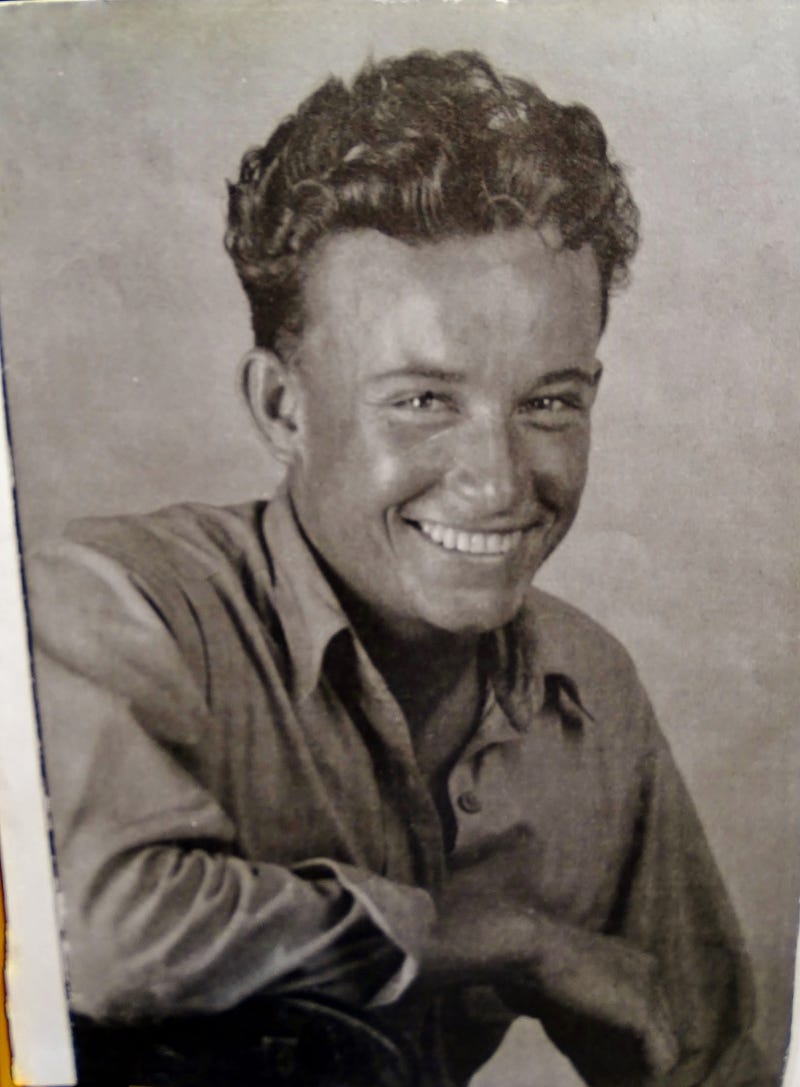
Overlooked Berrien County World War II hero Bud Tucker colorfully examines his hardscrabble upbringing, stint as a replacement infantry private in Worms, Germany, and growing tobacco and corn in a far-reaching conversation. Upon his discharge from Halifax Hospital in Daytona Beach, Florida, Pvt. Tucker made his way back to home sweet home in Alapaha, Georgia. Here he is seen looking quite dashing with black curly hair and a million-watt smile in 1946. Image Credit: The Bud Tucker Collection

Alapaha, Georgia, resident Bud Tucker generally doesn’t prefer to sit back and contemplate his compelling stint as a replacement infantry private during the waning days of World War II in Worms, Germany. But over the course of a thorough interview saluting his April 4, 1925, birthday, the lifelong tobacco and corn farmer’s lust for life became readily apparent. I was floored to discover that as a four-year-old kid I accompanied my grandpa, Pleasant Hill Missionary Baptist Church deacon and former pastor Paul Luke, to pray for Bill Solomon’s advanced emphysema. Twenty-nine years later the exact chocolate brown couch where I clasped my hands and bowed my head emulating my grandfather praying for Mr. Tucker’s brother-in-law had not moved an inch. Stick around as the overlooked veteran examines his back pages with joviality and a broad twinkle in his eyes. You’d be hard pressed to find a more energetic nonagenarian who doesn’t have an enemy in the world.

The Bud Tucker Interview

I played baseball and football when I went to school at Alapaha Elementary. I finished the third grade in the two-story red brick building that was later hit pretty bad when the tornado passed through in 1952. Only the lower floors could be salvaged. I went one day to the fourth grade, and I didn’t like my red-headed teacher. I decided not to go back and started working full-time.

Sherman Smith and Amos Walker had these rolling country stores that would visit people’s houses. One time Mama [Faitha “Faith” Webb] wanted to buy some snuff, so she brought a dozen eggs with her to barter with Amos.

As Amos handed her the snuff, he stopped her and said, “Faitha, can’t you use those eggs? Carry them back in the house. You need ’em worse than I do.” He was good to let Mama and Daddy [Robert “Bob” Tucker] have anything they wanted on credit. Daddy would pay up after he had gotten what little money he could from his crop.

None of my family had a telephone before or during World War II. When I returned home in 1946 linemen had started putting up telephone poles. We didn’t have a bathroom until after the war, either. You had to use Sears Roebuck catalogs instead of toilet tissue. Those were rough days.

If Daddy whipped you, you didn’t want him to whip you but one time. It sure did hurt. Mama would get a little persimmon tree switch and run us all over the yard. We ran from her, but we never tried that with Daddy.
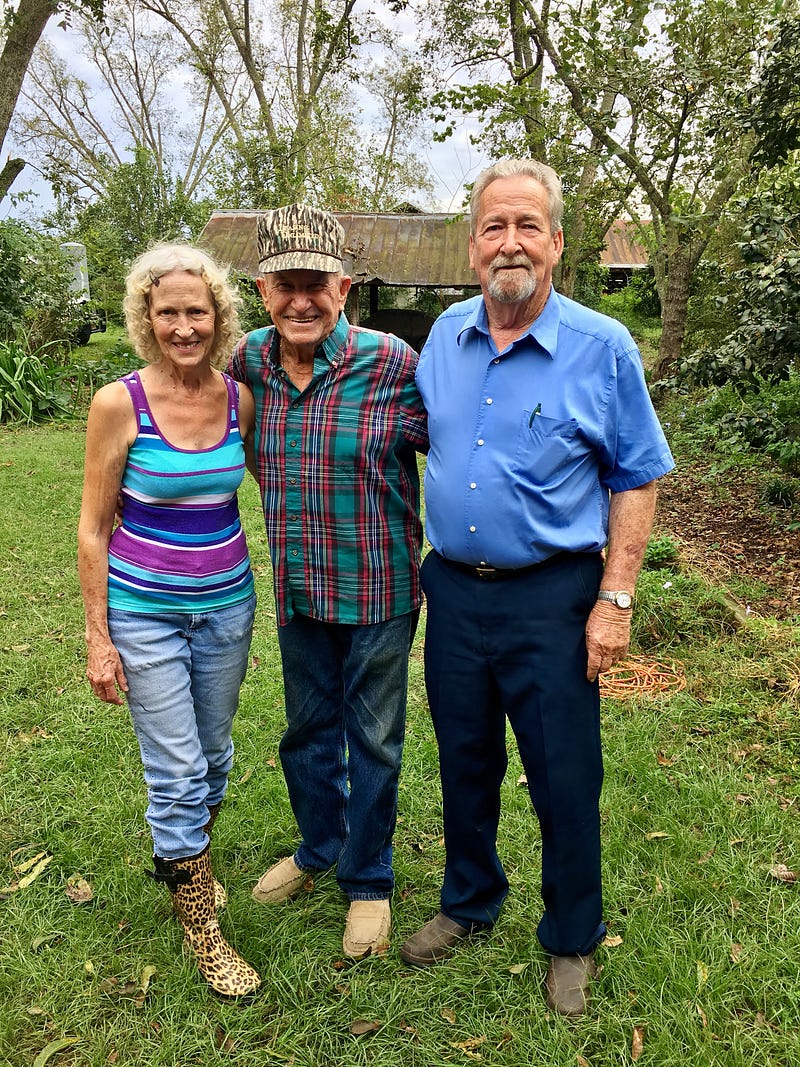
Siblings Janie Tucker Brogdon [January 28, 1946 — ], Bud Tucker [April 4, 1925 — ], and Robert Tucker [September 14, 1942 — ] kill a little time together on October 8, 2017, at the home of Janie’s mother-in-law Sarah Railey Brogdon in Alapaha, Georgia. Sporting trendy leopard print rubber boots, Janie is a poultry farmer, Bud grew tobacco and corn, and Robert is the pastor of Mount Paron Primitive Baptist Church. Mr. Bud’s comfortable light tan moccasins were a gift from eldest daughter Sue Nell Wise. Photography by Jeremy Roberts

My late brother Richard “Dick” Tucker, owner of Tucker’s Service Station, and I used to fight a lot and often got into trouble. We had boxing gloves and would box. I boxed some when I was in the service. My friends and I had matches during basic training and later going overseas. I was pretty good with my dukes to be my size — 120 pounds.

Arthur Webb had a little old Model A Coupe convertible. He and Uncle Ashley Webb were drinking one day and driving down a dirt road near our house. They turned off at the field, and the car turned over on them.

The gas tank was located in front of the windshield, and that gas got to leaking on Uncle Ashley. He said, “Hell Arthur, let me strike a match and see what the hell’s going on!” If he had struck that match, I never would have learned to drive [laughs].

A big, old fat man named Jim Railey picked that damn car up right by himself, and Uncle Ashley and Arthur came out from under it. They weren’t hurt a bit, and that was a miracle. The car top was tore up all to pieces. Arthur drove it for a long time with the top off — it became a convertible [laughs].

When the soldiers came looking for me in 1944, I was 18 years old and plowing corn with a mule for Arlie McCranie where Jason Nugent lives. The field was later planted in timber and sawed down. Arlie got me deferred until the corn had been harvested and the farm had been sold.

My grandpa left Daddy a place, and he farmed all of his life. That was his livelihood. If you can believe it, corn went for $0.25 a bushel. He had tobacco and peanuts, too, but the peanuts were planted just to fatten the hogs. We got our lard and meat out of the smokehouse. I was also helping Daddy farm.

Eventually I drove to Nashville and got on a bus headed for Atlanta for my physical examination. I passed [laughs]. I know Mama and Daddy were upset when I was drafted, but they took it as best as they could.

I was first sent to Shelby, Mississippi, for a couple of weeks to help build another camp. They had us putting up cross trusses, and then we were dispatched to Camp Blanding in Starke, Florida, for 17 weeks of basic training. I was a good driver. The terrain was similar to Oak Ridge at my mama’s place — it’s very dry and nothing grows on it but oaks. The boy that was driving had gotten way behind the rest of them.
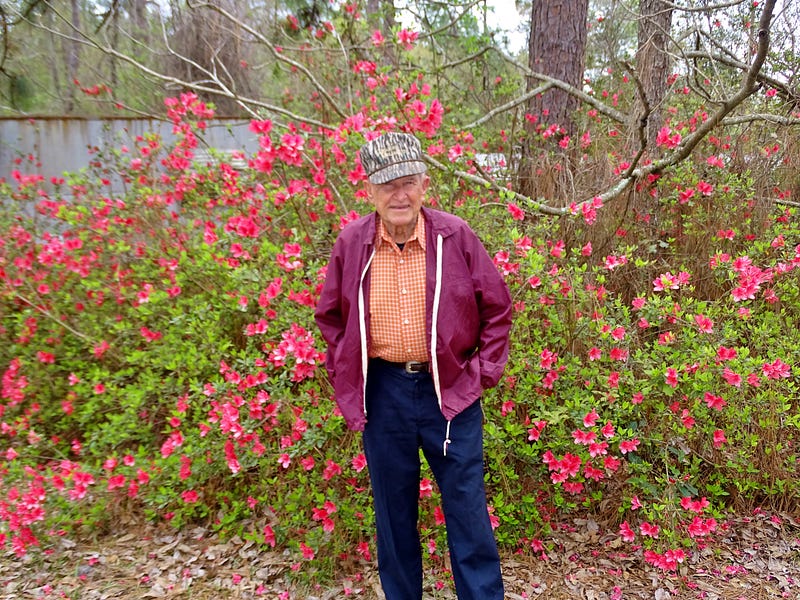
Active 93-year-old lifetime Alapaha, Georgia, farmer and World War II Private Bud Tucker stands beside some pretty pink flowering azaleas on March 11, 2018, outside his country home. Photography by Jeremy Roberts

He said, “Tucker, See if you can get this truck up there in line with the rest of them.” It had big ole thick iron bumpers and two or three dual wheels on the rear. I got behind the wheel and let her rip. I was pushing oak trees over like a bulldozer and going right on past. He said, “Boy, this is what I mean about catching up!” “You said catch us up, so I did” [laughs].

The drill sergeants were always pretty good to me — unless you messed up — then they got on your back. We’d endure a 25-mile hike out in the woods — we’d walk a minute then run two minutes.

Once we got back to the barracks the old sergeant would say, “Ya’ll pull off your socks and boots now. I wanna check your feet for blisters.” When he inspected me, the sergeant said, “Tucker, I swear you’ve got a fine set of feet” [laughs]. My feet weren’t blistered and had no corns.

I was nearly grown before I had a pair of shoes. I walked barefoot everywhere I went. I could jump a 10-rail fence barefooted. I’d just irritate that sergeant to death. I’d say, “You mean this is all we’re gonna run?” He couldn’t believe it. “Boy, you don’t ever get tired, do you?” I came up tough as heck. I know all about hard times.

One time I remember we had to pick up cigarette butts. I said, “Damn if I’m gonna pick up any cigarette butts. I don’t smoke the damn things.” The old sergeant saw me not picking up anything. He said, “Tucker, open your hand.” I sure hated to open my fist. I didn’t have nary a butt in it. I knew what was coming on. He said, “Give me 25.” I jumped down on the ground, gave him 25 push-ups, and dusted myself off. Shoot, I’ve went as high as 50 or 75 push-ups. Next time he caught me I made sure I had a few cigarette butts in my hand [laughs].
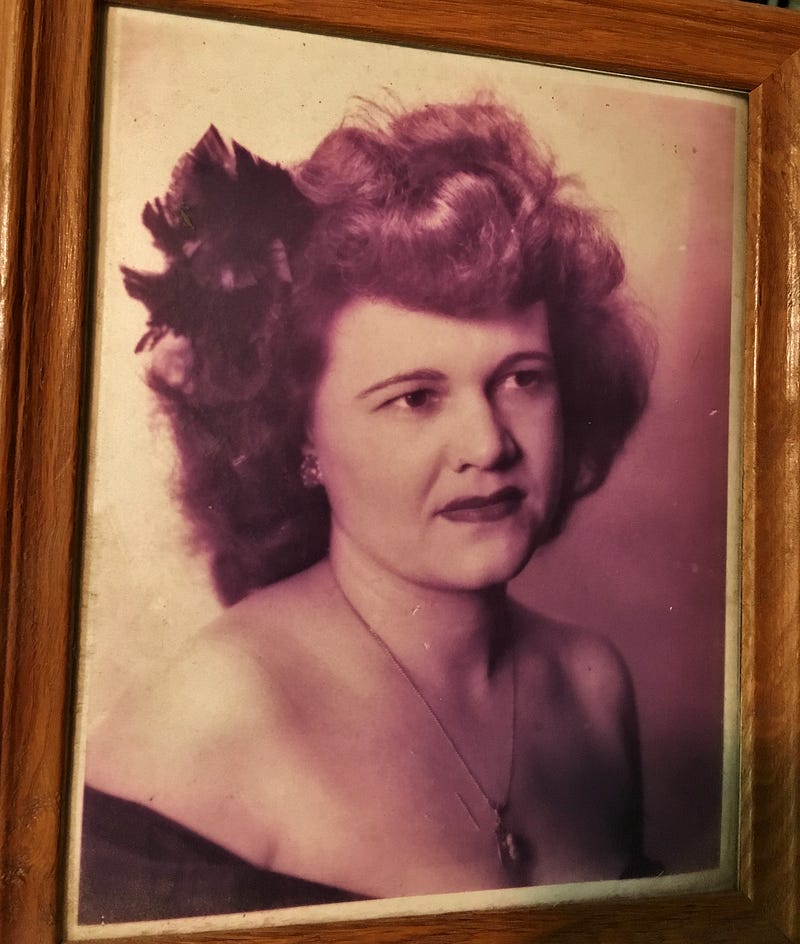
Wearing a flower in her hair is Susie Lee “Sue” Solomon Tucker [February 20, 1922 — October 5, 2004], the girl who captured Private Bud Tucker’s heart. Completing basic training at Camp Blanding in Starke, Florida, Mr. Tucker placed this photo in his wallet and kept it throughout his tenure in Worms, Germany, during the final months of World War II in 1945. At the time Ms. Solomon worked at a Walgreens pharmacy near the military base. Image Credit: The Bud Tucker Collection

My future wife Sue Solomon and I grew up together, but she first married James Stone and had a son named Carroll who lives in Jacksonville. Once they had separated, Sue was working at Walgreens near Camp Blanding. I’d visit her as often as I could. Lord, have mercy.

Sue took a picture of herself at Walgreens and gave it to me. I toted that picture overseas in my wallet. Sue was my baby — the only woman I ever loved. Anywhere you saw Sue, she was clean and neat, just like a doll. She wouldn’t go anywhere where she wasn’t dressed to a tee. She always had her hair and makeup done perfectly. You just couldn’t beat Sue as far as being a good person.

I was sent home to Alapaha on a 14-day leave. I hugged Mama and Daddy’s necks the minute I laid eyes on them. My mama’s brother Sylvester “Syl” Webb carried me to Tifton in a little Ford convertible to catch a train to Fort Meade, Maryland. Boy, I heard that train coming. That was a lonesome sound. I knew I was going a long way off from Alapaha — Florida was the furthest I had ever been.

I met a girl working in a bar while I was stationed in Maryland that week. I’d go in every evening and reach over and kiss her over the bar. Lord, have mercy. I spent the night with her. She had this boy’s picture on the nightstand beside the bed.

I said, “Good God, that boy’s from Ocilla!” She said, “I’m from Ocilla, too. That’s where I learned to do what we did tonight.” That was the last time I saw her. When I returned to base, the sergeant already had my bed made up. He said, “Tucker, where have you been?” “I got in a tight” [laughs].

That same week they shipped us overseas to France. They loaded us up one night, and the next morning we were sailing the ocean in a convoy that took 21 days. You could count 150 ships right around us. One night we saw a tanker ship loaded with oil burning — it must have sank later. When we got out of sight we could still see the black smoke in the air.

You could see a wave coming and looked like it was gonna cover you plumb up. That ship would just ride that wave — pretty as you’d ever seen. You could hear pots and pans rattling in the kitchen when that happened. It was a mess, but I never got sick in that ship.

A radio announcer told us that President Franklin D. Roosevelt had died at the Little White House in Warm Springs, Georgia [April 12, 1945, of a massive cerebral hemorrhage]. I thought to myself, ‘Lord, I won’t ever get to go back home’ [laughs]. I believed in Roosevelt — he was a good president.

We landed on the northwest coast of France in Le Havre. You should have seen all the ships that were torn all to pieces and/or sunk in Le Havre. I bet there were 50 or 75 just blown to heck and back. I remember staring at all those that had been towed in and parked in the harbor. It was a mess. It took us a long time to walk down the side of the ship when we stepped onto shore. It was mighty big. There were some sailors walking on the street, and it was dark as pitch. I heard one of ’em say, “Poor boys.”
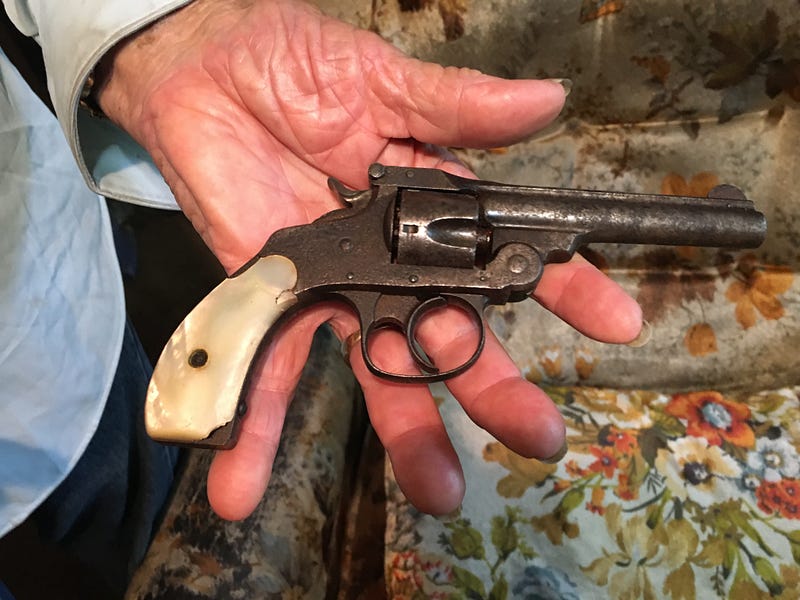
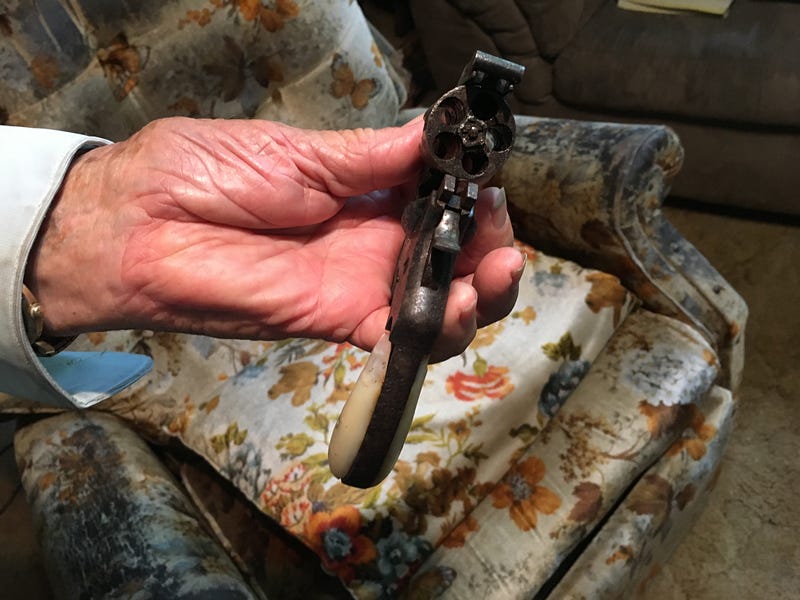
A five-shot, .32 short pistol with a plastic pearl handle is held by World War II veteran Bud Tucker on July 17, 2017, at his Alapaha, Georgia, residence. Photography by Jeremy Roberts

We traveled by train all the way through France until we reached our destination of Worms, Germany [a port on the left (west) bank of the Rhine River]. I crossed the Rhine, as big as the St. Johns River in Florida. The Rhine Bridge had been blown in half. Logs and lumber were used to build another bridge on top of the water that would float. I got to cross the new bridge twice in a long bus.

Germany was frozen over, and it was my first time seeing snow. Fields would be solid white. You’d see brown rabbits hopping around in fields of solid white. There were no trees standing. They had been shot, bombed, or cut down level with the ground. At one time there must have been some rough fighting. If we had been in a battle outside our encampment there would have been no cover.

I’m thankful I was drafted near the end of the war and never saw any frontline combat. At one point the sergeant told us, “If you put in a foxhole with a boy whose beard is several inches long, you better listen to every word he says. He’s been in there a long time.” That didn’t make you feel too good.

I stayed in Worms five or six months [Victory in Europe Day was declared on May 8, 1945, about a month after Tucker arrived on foreign soil]. At night we’d be sleeping and awaken to the sound of B-29 planes pulling out and dropping bombs.

I was lucky that my last name started with a “T” and was somewhere down the list so they couldn’t find me for KP duty [i.e. kitchen police or kitchen patrol]. Seems like my pals were on it every week, but I missed KP duty a lot [laughs].

All the German civilians were just so friendly. Nobody tried to desert. Everybody in my outfit would wanna go out with me at night to drink and cut the fool with the women. I had a lotta fun when my commanding officer — Patch was his last name — wasn’t around. You always had to be in at a certain time at night — otherwise they would put you on dishwashing duty.
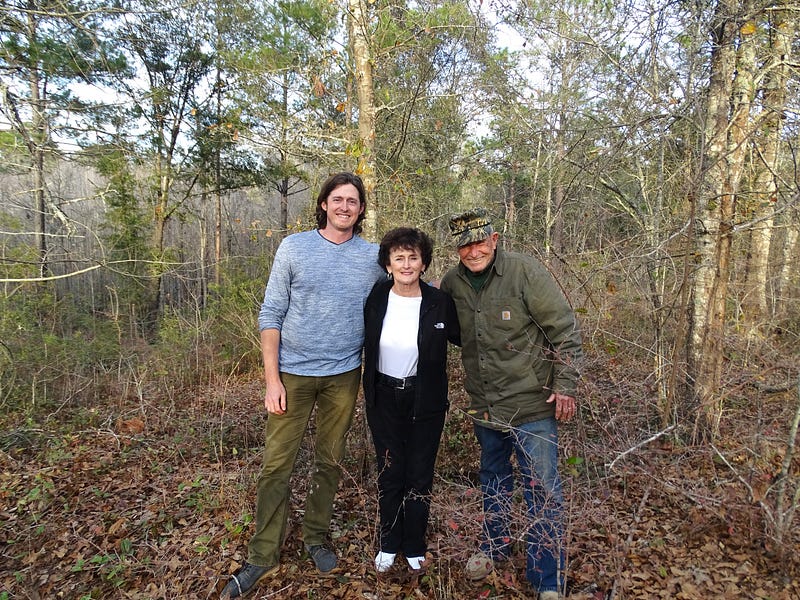
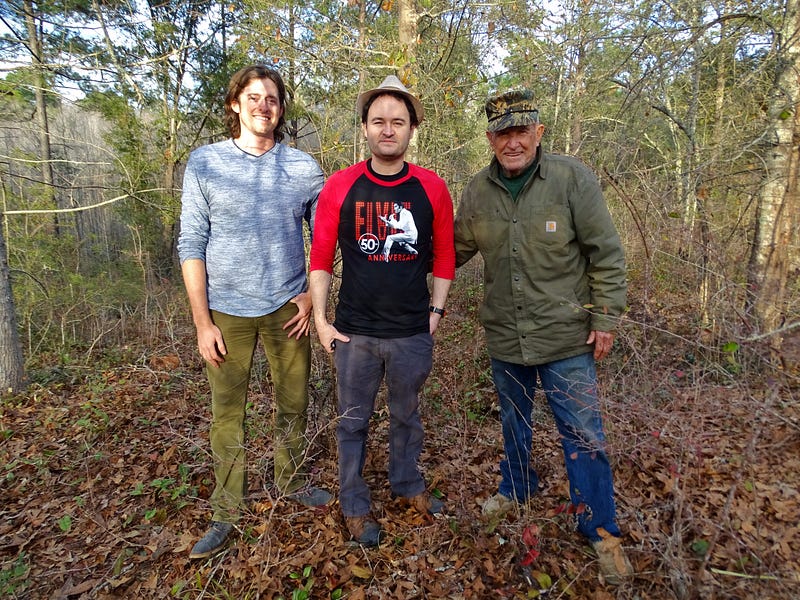
Amateur botanist Blake McCranie, historian and “Footsteps of Early Alapaha Settlers” co-author Becky Davis, and World War II veteran Bud Tucker go on a Native American artifact expedition in Alapaha, Georgia, on February 8, 2018. Photography by Jeremy Roberts

They had underground, miles-long tunnels in France and Germany, and the Germans would order the Jewish people inside to gas or burn them. I got to go inside some after they had been abandoned and the bodies had been removed. It was an awful thing to see.

I had to go into the hospital with a nervous stomach. I don’t know what it was — eating certain foods would upset it. Since I’ve been out of the service I ain’t had a bit of trouble with my stomach. German prisoners of war worked at the hospital, and some could speak English. They waited on the sick, mopped the floors, cleaned the commodes, and so forth. They were guarded, obviously.

Top military brass would visit us in the hospital. General George S. Patton [“Old Blood and Guts” commanded the U.S. Third Army in France and Germany following the Allied invasion of Normandy in June 1944] even shook my hand. He spent time with all the soldiers cutting the fool.

General Patton was just as friendly as could be, wanting to know how I was getting along. A big man, he loved wearing those two Ivory-handled six shooters [Patton died not long after meeting Tucker on December 21, 1945, in Heidelberg, Germany, from injuries sustained in an automobile crash en route to hunt pheasant].

There was a nurse named Sally. Every time she’d walk into my room she’d come over and wake me up. I’d start laughing. She’d go, “Tucker, look at me one time and don’t smile.” I never could look at her without smiling. It just tickled her to death.

When I went to leave I hugged Sally’s neck. She asked me, “Tucker, are you going to Japan?” “I don’t know where they’re sending me when I leave here.” They were gonna ship her to Japan, and I dreaded that [World War II did not end in the Pacific Theatre until August 15, 1945, three months after Germany’s surrender. President Harry Truman’s decree that two atomic bombs be dropped upon the cities of Hiroshima and Nagasaki exacerbated Japan’s decision]. I wonder whatever happened to Sally.

My first cousin Jordan Webb was sent to Japan. He stayed and worked on a ship. We were discharged at roughly the same time. Jordan is 90 years old, and I turned 93 on April 4. He calls me every now and says, “Bud, reckon which one of us is gonna die first?” [laughs]. When we were growing up every Saturday evening Jordan and I hitchhiked to Ocilla and watched old cowboy pictures starring my favorites — Charles Starrett and Wild Bill Elliott — for just ten cents.
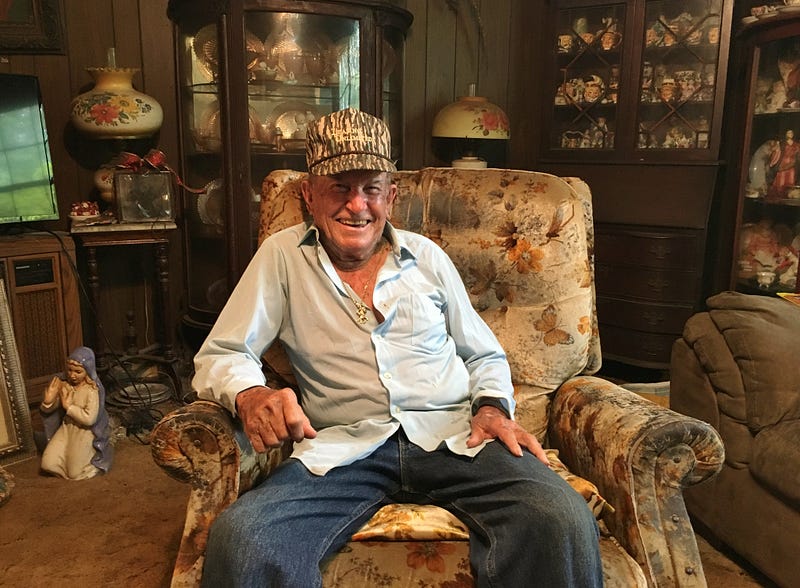
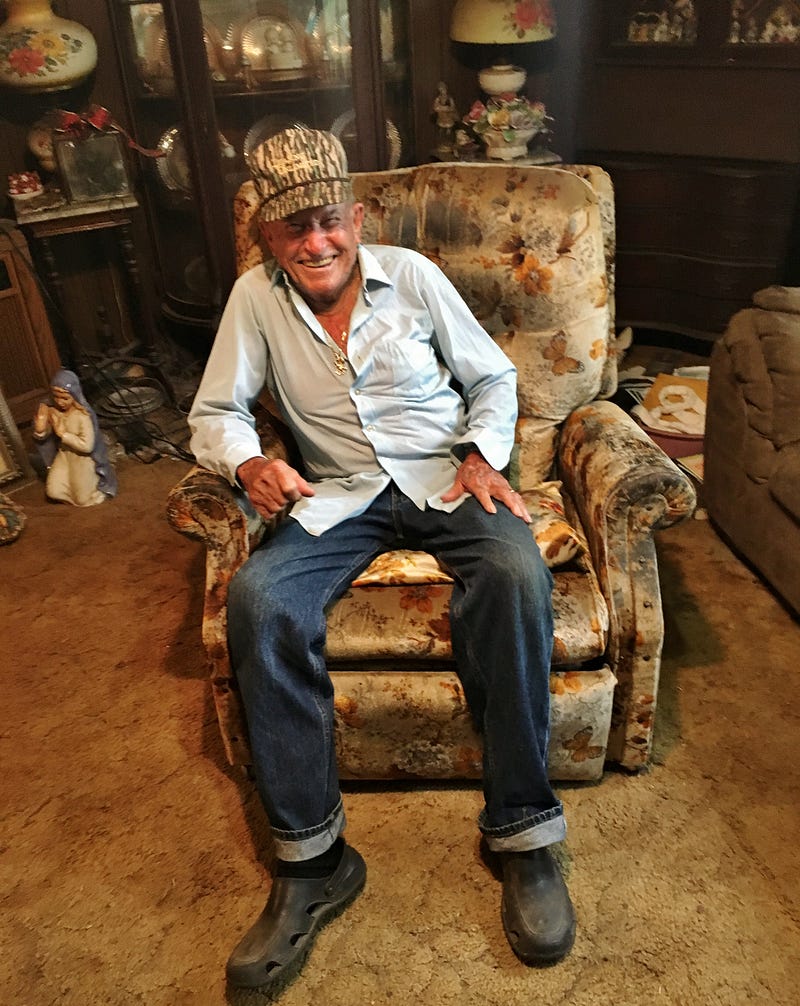
On July 17, 2017, the charming Bud Tucker sits for a brief formal photo session after reliving his back pages spent serving the United States of America as a World War II private in Worms, Georgia, with historians Becky Davis and Jeremy Roberts. Photography by Jeremy Roberts

I came back to the United States on a big hospital ship that landed at Camp Shanks, New York. Soon we were transferred to Boston and made our way down to Halifax Hospital in Daytona Beach [then appropriated as a convalescent facility]. That’s where I was discharged. All of my friends made it home, too.

I was a private when I went into the replacement infantry and a private when I came out [laughs]. My weight had risen to 165 pounds — that’s the most I’ve ever weighed. The Army treated me fine — I must have eaten and slept well. Everybody was glad to see “ole Bud” in Alapaha again. I’ve never been back overseas.

None of my five brothers had to go to war. Nelson, who is battling Alzheimer’s in the Berrien Nursing Center, went to have an examination towards the end of the Korean War but was never called back.

I do hope and pray the Lord carries me on before I take Alzheimer’s. I can hardly stand to go and see Nelson in the shape he’s in. Starting with the eldest, my siblings are Viola Little, me, Dick, Hollis, Lillie Solomon, Nelson, Frank, Robert, and Janie Brogdon. Viola, Dick, and Hollis are all gone.

Sue and I got married in late 1946, not long after I returned home. We had to go down and get Bird Griner to marry us. I asked him, “How much do I owe you?” “Well, whatever you can give me.” “Well, I got five dollars.” When I gave him the money, I had one dime left [laughs].

We came home and musta got Sue Nell that night [laughs]. She was born exactly nine months later, and then 16 months after Sue Nell’s birth we had Patsy. Sue Nell was the squallingest young’un we had ever seen.

Shoot, we had to go to work the day after we were married. There was no honeymoon. Back then if you had any money — it was very little. On weekends we could go to the dance on Main Street in Nashville and jitterbug until 1 or 2 a.m. when they closed.

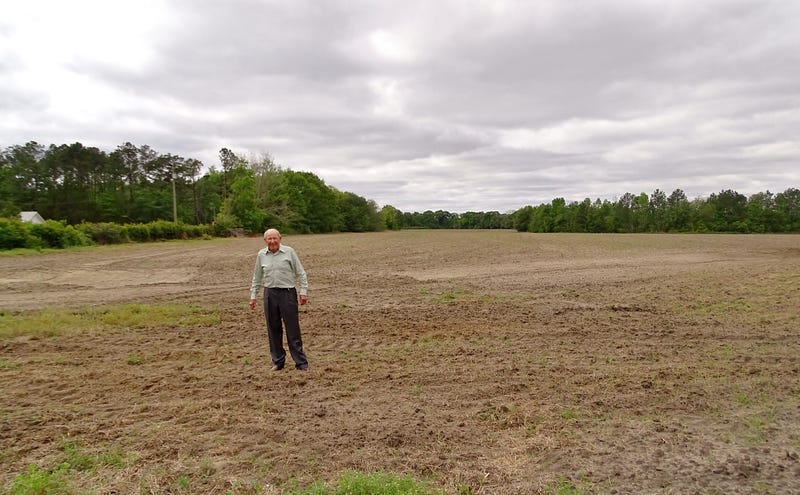
On Sunday, April 8, 2018, World War II veteran Bud Tucker stands in a newly harrowed, 25-acre field awaiting a peanut crop near Alapaha, Georgia, that he used to plow with a pair of mules as a young man. According to the Mount Paron Primitive Baptist Church deacon, “The black-coated mule didn’t have a bit of sense, while the red mule was humble and listened to you. One day as I was knocking off for dinner, that black mule got loose. I ran the entire length of that field before I ever caught ahold of him. If I hadn’t been a pretty good fella, I woulda stabbed my pocket knife into that damn mule” [laughs]. Photography by Jeremy Roberts

I farmed Daddy’s land for about a year. Field corn, tobacco, and peanuts were the only crops I grew. When I was farming corn cost between $1.50 to $3.00 a bushel. Corn’s about that cheap now. How do these farmers make it? They have to produce more corn per acre to break even — diesel and pesticides eat away at their profit.

I farmed 25 acres with a pair of mules. You’d plow and there’d be a little old streak at the end of the day. That’s all you’d accomplish [laughs]. It wore me out. In a way I’ve had a tough life, but I’ve also had a good life. I must have, as He’s still got me here.

We traded two of Lem Solomon’s [Sue’s brother] mules in for an Allis-Chalmers Model B orange tractor with a 16-inch bottom plow on it. It was just a one-row rig with a cultivator built all the way under it where you placed your feet. I mean that thing would turn and plow some kinda land.

That Model B was the best tractor I ever bought. When I sold it, it didn’t use a drop of oil and would pull anything you hooked to it. We had stumps pulled up on a tract of land here close to the house. Sometimes the tractor would stand straight up in the air, but it got those stumps out of the way.

Daddy had heart trouble. He fell dead as a doornail at 47 years old [August 14, 1950]. My younger brother Nelson walked over and told us, “I believe Daddy’s dead.” I jumped up, put on my clothes, and went with him.

I shined a flashlight down the long hall that went all the way through the house, and I saw his foot hanging under the watershelf — a place where we always drew water into the kitchen — where he had fallen. It was white as a sheet.

I believe he leaned over to throw up against the post and fell out head first. He hadn’t even pulled his feet down off the porch. I picked him up by myself and laid him up on the back porch. He had a massive heart attack according to Dr. Herman Dismuke, who drove down from Ocilla.

Daddy drank pretty badly. If he’d get on a drunk, he just wouldn’t get off it until he got where he couldn’t get ahold of any more liquor. He just would not quit. He was a quiet fella until he got to drinking, then he was all mouth and aggravating. He would go drink off by himself — I didn’t wanna be around him drunk.
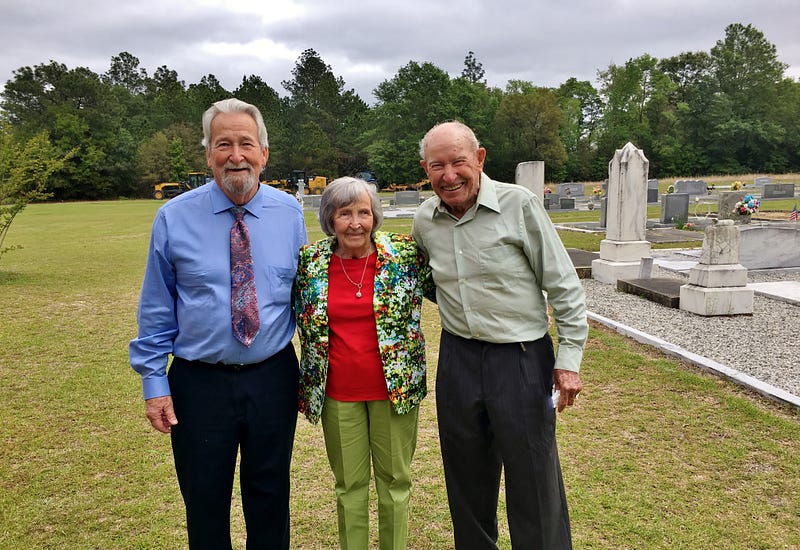
Mount Paron Primitive Baptist Pastor and tenor singer Robert Tucker [September 14, 1942 — ], Lillie Tucker Solomon [March 21, 1933 — ], and bass singer and church deacon Jim Walter “Bud” Tucker [April 4, 1925 — ] graciously collide in front of the church cemetery on Sunday, April 8, 2018. According to his younger sister, the former World War II private incidentally hates his given name of Jim Walter. Photography by Jeremy Roberts

Mama was a widow with five young’uns still at home — Lillie, Nelson, Frank, Robert, Janie — and she had to draw from county welfare. In the 1980s Mama had a brain hemorrhage. She was like an invalid and couldn’t even get off the bed [she was 85 years old when she passed away on April 5, 1988].

I lost my Hicks tobacco crop three times. Rainwater got knee deep on us one year. Sue and Lem were outside with a shovel trying to dig a ditch into the pine trees. I said, “Sue, don’t ya’ll know better than this?” It was like a pond. “There ain’t a bit of need in making a ditch. The tobacco’s already drowned.”

We had already topped and sprayed it for sucker control. Pretty piece of tobacco sure enough. It all just fell down on the side of the stalk when the hot sun came out. Buyers wouldn’t touch it as it wasn’t any good. The leaves were light as a feather without any body.

Boy, when you lose your tobacco crop, you’ve lost just about everything. That really hurt me. You couldn’t pay your debts. If it hadn’t been for Carl Dixon, I couldn’t have farmed. I’d owe Carl for guana [5–10–15] and he’d say, “Bud, drive up to the railroad tracks, back up to the boxcar, and get all the fertilizer you want.” Carl Dixon was one good man. He also helped me get seed. Years later I told that to his wife Jean.

Another of Alapaha’s most hard-working farmers was Willaford Jernigan, who was about a year and a half younger than me. I saw him a couple of weeks before he passed away [January 7, 2018]. The last thing he told me was, “You pick me up better than anybody that’s been sick” [laughs]. I cut the fool with him about his little ole 1936 Ford convertible. Willaford would come get me and Wilson Solomon so we could all go to the dances in Tifton. You can’t replace men like Willaford.

Farming’s a good life — if everything goes along where you can make enough to live. I have 60 acres of land now in good shape. My brother Dick’s son Richard Tucker, Jr., and his son Carey rent it from me. That’s what I’m living off of now.
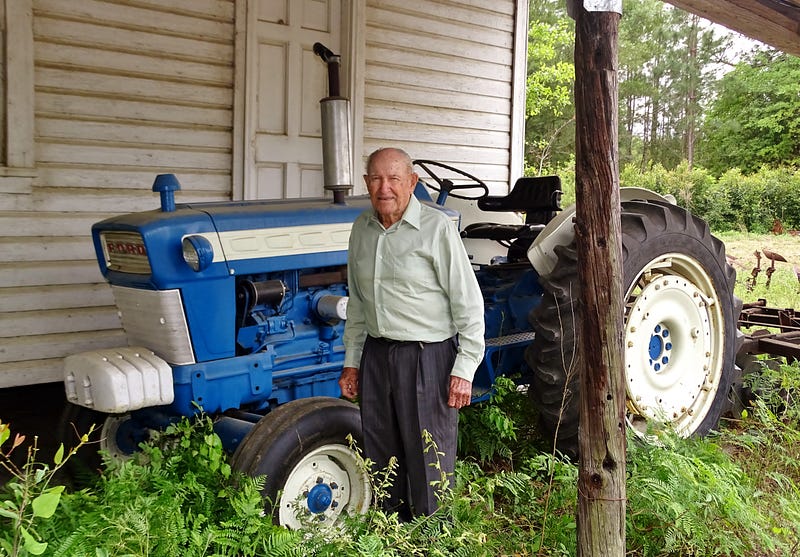
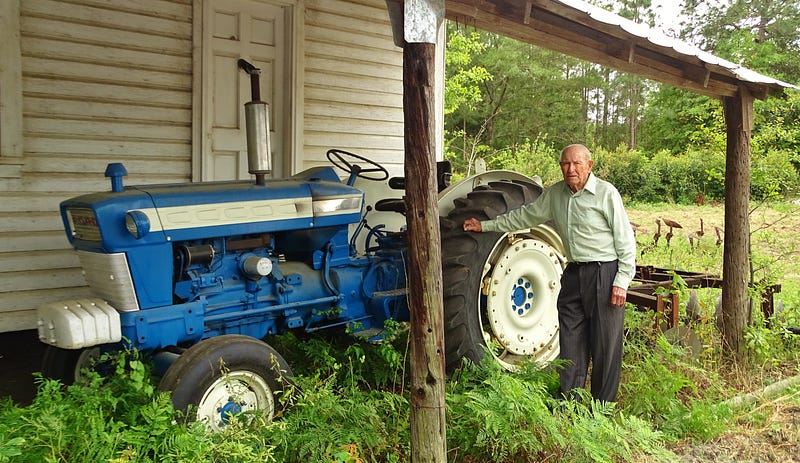
A closer shot finds Bud Tucker, who served as a private in the replacement infantry during the waning days of World War II in Worms, Germany, leaning against his trusty blue and white 5000 Ford tractor, manufactured between 1964 and 1979, at his Alapaha, Georgia, residence on Sunday, April 8, 2018. Incidentally, the tractor is attached to a harrow which is used to disc fields prior to the spring planting season. Photography by Jeremy Roberts

You can do as you want to farming. I’m 93 years old, and I ain’t never went a hungry day in my life. When I was little there were mornings where all I had to eat was an egg biscuit. Everybody says, “There ain’t no telling how much money Bud’s got.” I say, “Shoot, where do you think I’ve got ahold of any money at?” [laughs]. I ain’t never made any to amount to nothing.

Sue and I lived together for 63 years, and I never went a hungry day in my life. She’d get mad if I went off with her brother Wilson or some of my buddies to drink, but that was happening before we got married. So Sue knew what was gonna happen, yet she still got mad. When I came in at dinner, she always had my dinner on the table. But she wouldn’t eat with me [laughs]. Sometimes Sue would go two weeks without saying a word to me.

I’m a homebody. I still live about half a mile from where I was born. Sue Nell visits me on Sundays. Otherwise I’m generally sitting out in the yard watching everybody passing down the dirt roads. I’m glad to see neighbors if they stop by. I visit Mt. Paron’s cemetery twice a day to visit my wife Sue [died October 5, 2004, at age 82] and our youngest daughter Patsy Killeen [December 24, 1948 — February 27, 2011, age 62].

I’ve always believed in the Lord. I reckon that’s one thing he’s keeping me here for. I tell everybody, “Well, I ain’t gonna rush death, but when that fella up there gets ready for me, he’ll get me. Nobody can hinder.” That’s just the way it is. When He gets ready for me, I’m just as ready as you are. I hate to leave Sue Nell here by herself [She interjects, “I’ll find some ole good looking hunk!”]

If I have an enemy, I don’t know it. I love everybody. Bro. Charles Tyson, the former pastor of Mt. Paron Primitive Baptist Church, asked me one day, “Bud, why do you laugh so much?” I said, “Bro. Charles, “I’d heap rather be laughing than crying” [Mr. Tucker succumbed to a massive heart attack at his home on February 5, 2021, at age 95].
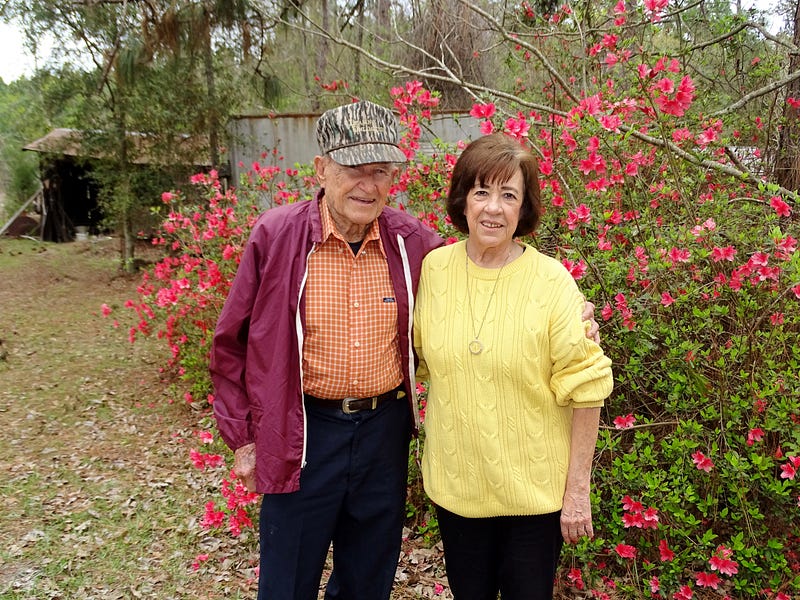
World War II replacement infantry Private Bud Tucker [April 4, 1925 — ] and eldest daughter Sue Nell Tucker Wise [August 12, 1947 — ] are pleased to be in one another’s company on March 11, 2018, near Alapaha, Georgia. Sue Nell’s late mother, Susie Lee “Sue” Solomon Tucker [February 20, 1922 — October 5, 2004], and father officially tied the knot circa November 12, 1946, nine months to the day before their bundle of joy was born. Youngest child Patsy Tucker Killeen [December 24, 1948 — February 27, 2011] was only 62 years old when she succumbed to lung cancer. Sue Nell remembers, “When Patsy died it about killed us all. She was so precious.” Photography by Jeremy Roberts
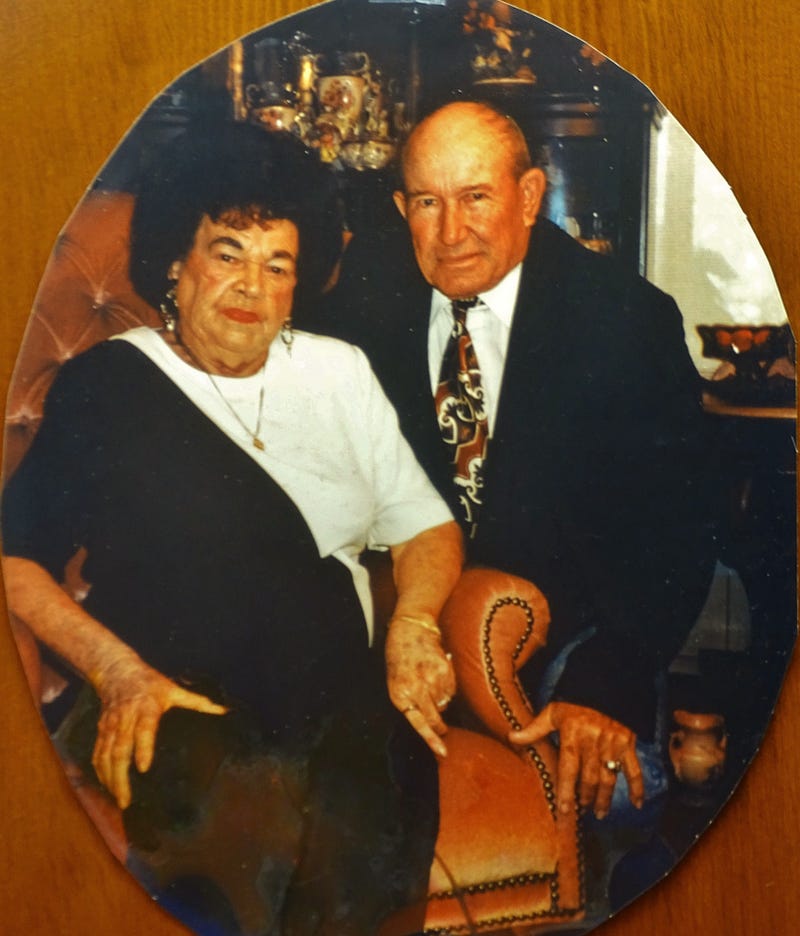
Married circa November 12, 1946, Susie Lee “Sue” Solomon [February 20, 1922 — October 5, 2004] and World War II veteran-husband Jim Walter “Bud” Tucker are seen inside Mount Paron Primitive Baptist Church in Alapaha, Georgia, celebrating their 50th wedding anniversary. Image Credit: The Bud Tucker Collection
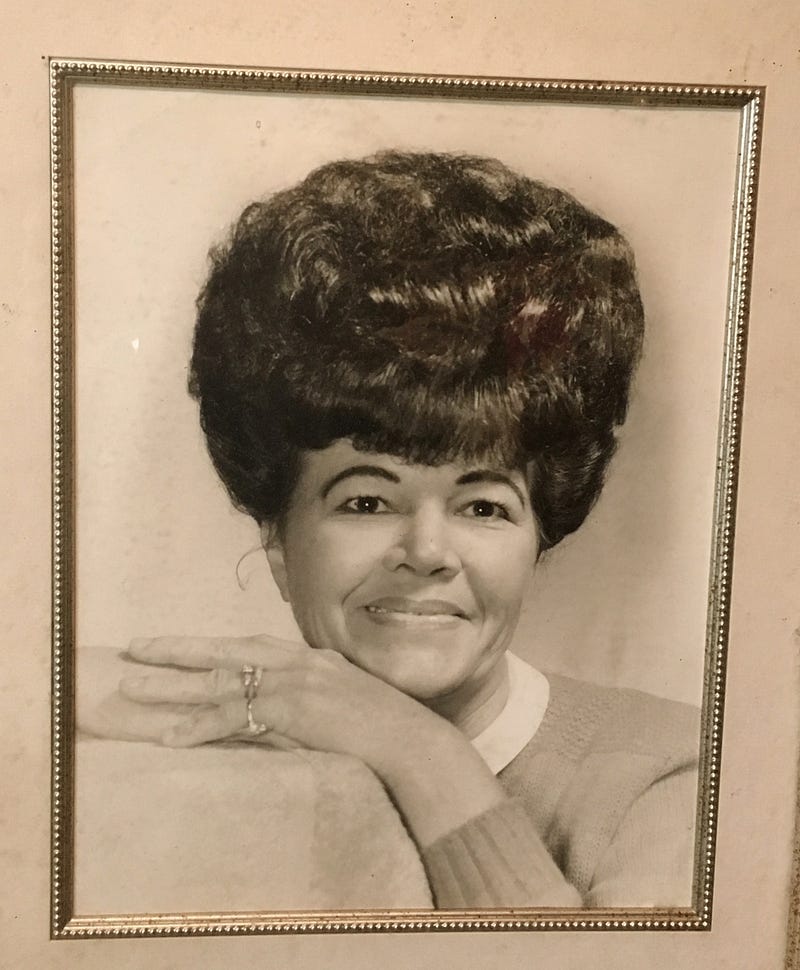
In an up-sweep style, the curly haired Susie Lee “Sue” Solomon Tucker [February 20, 1922 — October 5, 2004] rests her chin on two clasped hands in this circa 1970 portrait. Solomon and World War II hero-tobacco farmer Bud Tucker were husband and wife for 58 years. A blown-up copy of this photo rests underneath the television in Mr. Tucker’s living room. Image Credit: The Bud Tucker Collection
Burgeoning botanist Blake McCranie, “Footsteps of Early Alapaha Settlers” co-author, journalist, and all-around Elvis Presley ’68 Comeback Special fan Jeremy Roberts, and World War II veteran Bud Tucker go on a Native American artifact expedition in Alapaha, Georgia, on February 8, 2018. Photography by Becky Davis
A five-shot, .32 short pistol with a plastic pearl handle is held by World War II veteran Bud Tucker on July 17, 2017, at his Alapaha, Georgia, residence. Photography by Jeremy Roberts
Bud Tucker, who served as a private in the replacement infantry during the waning days of World War II in Worms, Germany, leans against his trusty blue and white 5000 Ford tractor, manufactured between 1964 and 1979, at his Alapaha, Georgia, residence on Sunday, April 8, 2018. Incidentally, the tractor is attached to a harrow which is used to disc fields prior to the spring planting season. Photography by Jeremy Roberts
An alternate shot captured on Sunday, April 8, 2018. World War II veteran Bud Tucker stands in a newly harrowed, 25-acre field awaiting a peanut crop near Alapaha, Georgia, that has been in the Tucker family for multiple generations. Mr. Tucker recalls, “One of my daddy’s [Robert ‘Bob’ Tucker] favorite songs was the old gospel hymn ‘Where We’ll Never Grow Old.’ He sang that all the time as he walked behind a set of mules plowing.” Photography by Jeremy Roberts
Sporting a ubiquitous camouflage cap, partially unbuttoned long-sleeved pale blue shirt, dark jeans, and black crocks, the downright friendly Bud Tucker sits for a brief formal photo session after reliving his back pages spent serving the United States of America as a World War II private in Worms, Germany, with historians Becky Davis and Jeremy Roberts on July 17, 2017. Photography by Jeremy Roberts
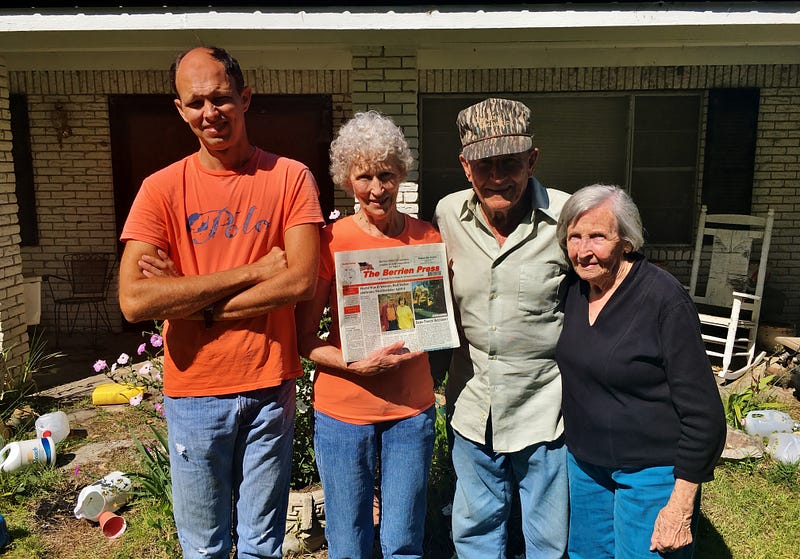
On Sunday, May 6, 2018, nephew William Brogdon, youngest sister Janie Tucker Brogdon, Bud Tucker, and sister Lillie Tucker Solomon hold a copy of the Berrien Press which featured the 93-year-old South Georgia World War II veteran and retired tobacco farmer on the front cover as well as the entire second page. Photography by Jeremy Roberts

© Jeremy Roberts, 2018. All rights reserved. To touch base, email [email protected] and mention which story led you my way. I appreciate it sincerely.

Short Story
World War II
Veterans
Farming
Agriculture
Recommended from ReadMedium