
Hobbies
Never a waste of time
I’ve had various hobbies over the years. I taught myself to crochet, but only basic stuff. It didn’t get much further than a potato chip scarf, a cell phone holder, a baby beanie, and little hearts and flowers as practice. I tried to find those projects so I could take photos, but couldn’t find any of them. They probably got thrown out during one of my cleaning sprees.
I’ve also attempted needle felting with wool yarn. The needle felting was very satisfying, but there was lots of cursing involved because I’d always stab my fingers. I quickly gave up on that.
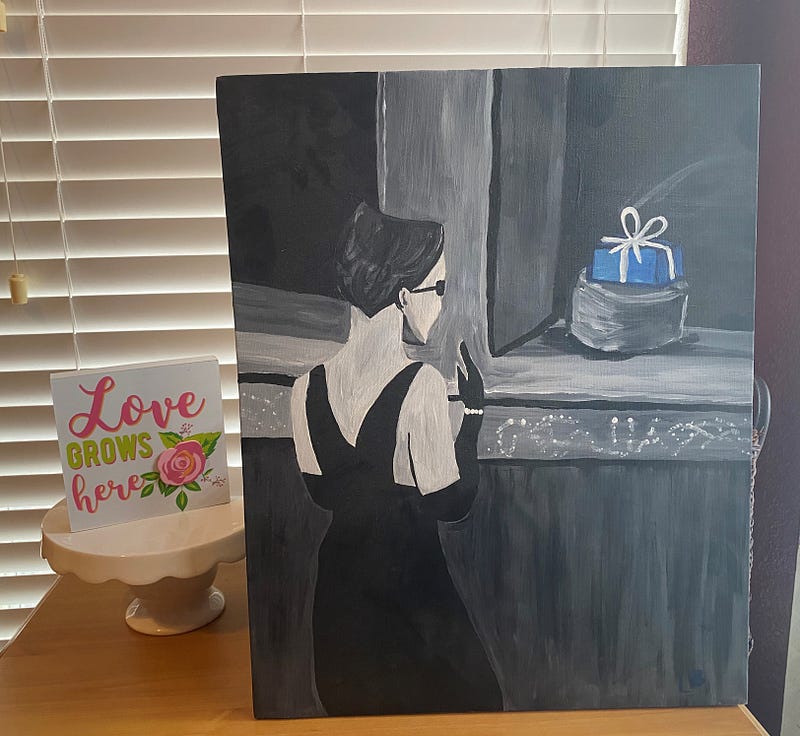
I’ve always liked painting of any kind. I once attended one of those painting “classes” at Painting with a Twist. I’d perused their calendar of events and found an evening I could attend. The painting was called Tiffany’s, if I remember correctly. Very simple, not a lot of color. Could I really mess it up?
Fear. That’s the main thing that holds me back creatively. And I remember the instructor for that evening saying at one point, “Don’t be afraid of it,” when I hesitated to put down some paint.
I’m still proud of that painting with all of its imperfections.
When I discovered paint pouring a few years ago, I thought ‘this is my new thing!’
Materials for paint pours:
- Acrylic paints (I tend to use FolkArt or Americana acrylics. These are inexpensive and fine for a beginner).
- Pouring medium (I’ve tried Floetrol, Elmer’s Glue, even plain water. These allow your paint to flow fluidly, some more effective than others).
- Canvases (I’ve used canvas, small tiles, glass vases).
- Plastic cups for mixing/pouring paint.
- Gloves (it tends to get messy).
- Craft sticks (for mixing and to check for paint flow consistency).
If you spend any time watching YouTube videos, you’ll find there are as many tools as there are ways to create paint pours.
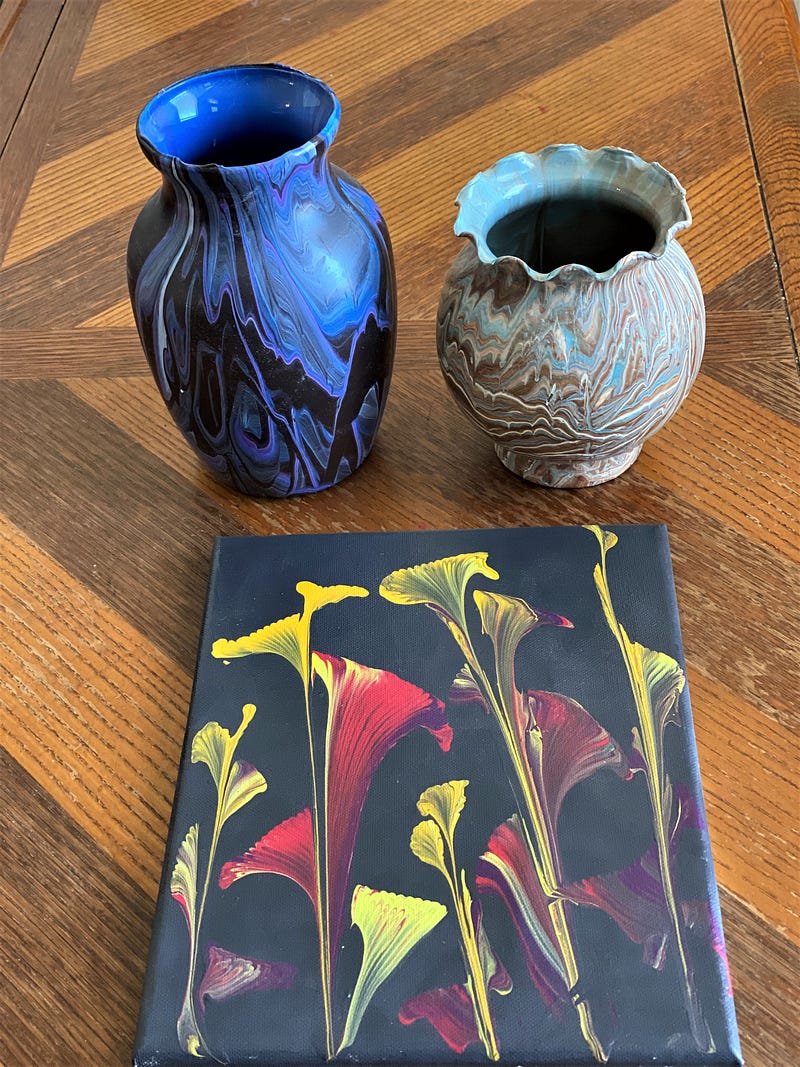
To create a paint pour on a vase, I just turned the vase upside down and poured the paint in a circle pattern on the bottom, making sure to cover the entire surface. Normally, you’d file down any parts that dripped off around the top of the vase, but I didn’t bother with that.
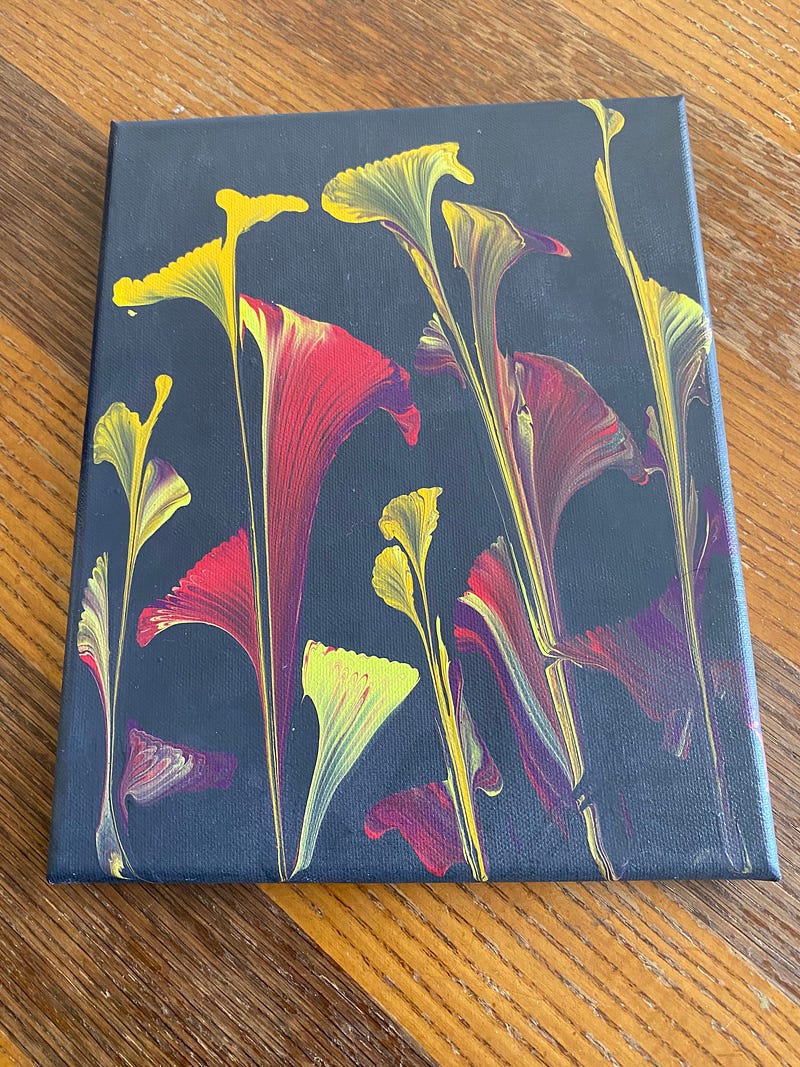
For the floral paint pour, I used the chain pull technique. Any kind of beaded necklace or smaller chains works to create flowers. I dipped the chain in the paint and lay it down in an ‘S’ pattern along the canvas, and then pulled the end(s) down, straight off the canvas. The chains leave interesting patterns. This particular one turned out surprisingly well.
That’s the thing I like about paint pours. You never know exactly how it’s going to turn out.
A few things I’d like to explore and can see turning into hobbies:
- calligraphy
- pottery
- creating fairy gardens
Thank you to Ellie Jacobson for this inspiring prompt, and to the writers who shared their hobbies. I love reading about them.


