
History of the Origin and Naming of Mount Everest
Prior to receiving the name Everest, the mountain was known as Chomolungma in Tibet and Sagarmatha in Nepal. The British, meanwhile, referred to it as Peak XV.
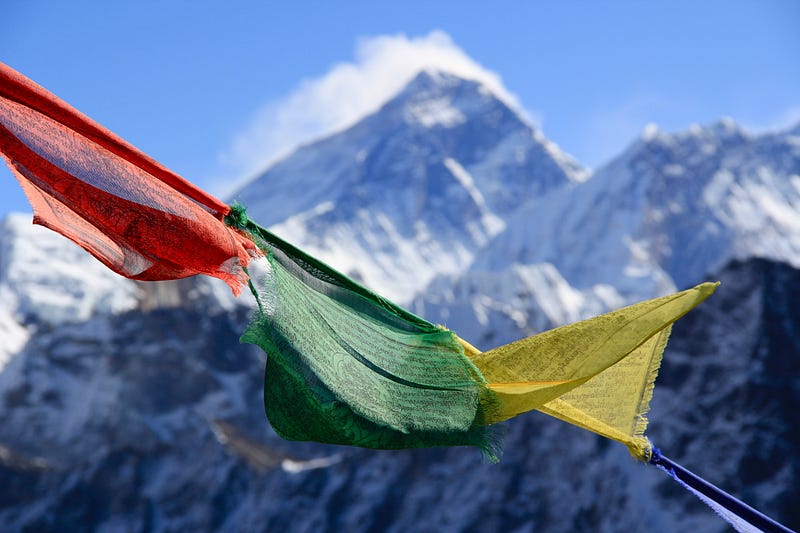
Simply mention Mount Everest, and most people will recognize its location. Each year, a huge number of climbers from all over the world attempt to reach the summit of this peak due to its status as the mountain with the greatest altitude.
Geographically, this mountain is situated in the Himalayas, more specifically in the border region between Nepal and Tibet. From the south-east (Nepal) and the north (Tibet/China), the two main routes to the summit are from Nepal and Tibet/China, respectively.
Some contend that the ascent from Nepal is simpler. However, each route presents a unique set of obstacles, and climbers must still contend with acute mountain sickness (AMS), frostbite, and low oxygen pressure, among others.
Prior to receiving the name Everest, the mountain was known as Chomolungma in Tibet and Sagarmatha in Nepal. The British, meanwhile, referred to it as Peak XV.
Attempts to measure Mount Everest’s height
Over the past 150 years, experts have attempted to determine the precise height of this peak.
For this mountain’s official height, the Nepalese government has commissioned one study. The official record for the height of Mount Everest is 8,848 meters.
This height is acknowledged by both Nepal and China.
It was derived from a 1955 study undertaken by a team of Indian scientists. The Chinese also confirmed this height in 1975 when they conducted their own study. China once undertook a survey in 2005 to determine whether Mount Everest’s height had changed.
In this review, it was determined that the height of Mount Everest is 8844.43 meters when measured from a rock at the peak. Whether the height of Mount Everest should be measured in rock (8,844 m, China) or snow has created debate between Nepal and China (8,848 m, Nepal).
The height of Mount Everest was not officially recorded at 8,848 meters until 2010, when the two sides struck an agreement and the Nepalese side simultaneously acknowledged the results of a Chinese survey indicating the rock height at the peak of Mount Everest was 8,844 meters.
Who is George Everest exactly?
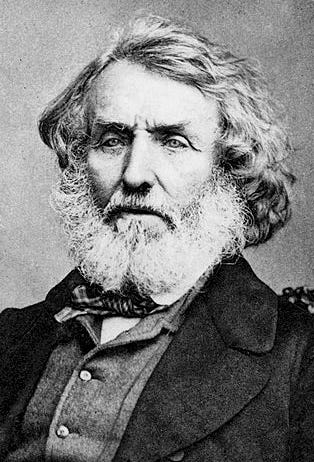
George Everest, who was born in Wales in 1790, attended a military academy in England before spending considerable time in India.
Before joining the Great Trigonometrical Survey team in 1823, he initially worked for the East India Company.
Prior to his appointment as the Chief Surveyor of India in 1830, he had been with the organization for 25 years and had begun at the bottom.
In 1843, following his retirement, he moved to Great Britain, where he was knighted in 1861.
Conflict with natives
The notion of using the name “Everest” was presented by his successor, Andrew Waugh, and not by himself.
George Everest initially objected to the use of his name for this peak, preferring to choose a name that was more synonymous with or familiar to the inhabitants.
According to Andrew Waugh, he recommended the name “Everest” for this peak in his 1856 letter to the Royal Geographical Society since he was unaware that the people had previously given it a name or title.
The naming of the mountain “Everest” has also created disagreements with locals to the extent that the survey team was once denied entry into Nepal. In addition to the fact that the locals dislike the name “Everest,” they hate it since it is difficult to pronounce.
In 1865, when various controversies or challenges emerged, this mountain was formally designated as Mount Everest.
In 1866, at the age of 76, George Everest passed away. It cannot be determined whether or not he knew that his name was engraved on this mountain before he passed away.


