
Christmas Series: The Nutcracker
History of The Nutcracker
The Ballet That’s a Christmas Tradition
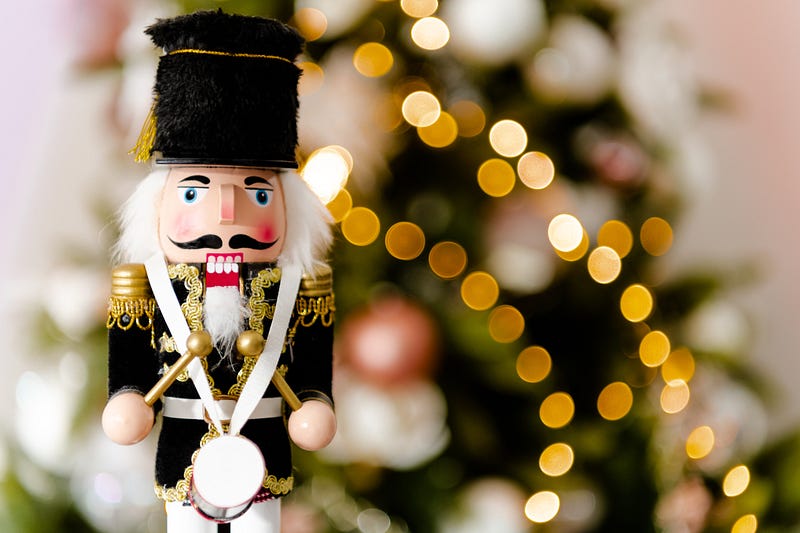
On December 18, 1892, The Nutcracker premiered at the Imperial Mariinsky Theatre in St. Petersburg, Russia, a week before Christmas.
Nutcracker Popularity
The Nutcracker has had such an enduring influence on the celebration of Christmas for more than a century that no one even notices that it never mentions Christ or the Nativity. In the last 70 years, the popularity, especially in America, of stage, film, and televised ballet performances has cemented it firmly into the tradition of Christmas celebrations. It has Christmas trees, toys, snowflakes, candy, fairies, and of course, children.
Nutcracker’s Initial Reception
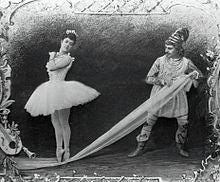
One of Tchaikovsky’s most famous pieces — like Handel‘s initial London performance of Messiah — The Nutcracker was panned by critics when it premiered in St. Petersburg in 1892, a week before Christmas.
One griped:
“The Nutcracker cannot in any event be called a ballet. It does not satisfy even one of the demands made of a ballet.”
Another said:
“For the woman dancer there is very little in it, for art precisely nothing, and for the artistic fate of our ballet — it is yet one more step downwards.”
The critics also took umbrage against its plot or lack of:
“… nor does it have a story, but rather a series of unconnected scenes, recalling the latest pantomimes which the boulevard theatres flaunt.”
For one critic, this reliance on mere “spectacle” was “an insult.” He added:
“God grant that similar failed experiments do not happen often.”
Nutcracker Success
It has become such an American tradition that most American dance companies include it in their repertoire — because it pays the bills.
Dance critic Lauren Gallagher notes that in the case of the San Francisco Ballet, for example, “The show garners about 40% of the company’s ticket revenue each year”, while Daniel J Wakin points out in the New York Times that “A holiday run of The Nutcracker is generally the financial foundation of an American dance company.” — BBC Culture
Nutcracker Background

German folklore holds that nutcrackers protect the home and bring good luck. It was believed that they represented strength as a kind of watchdog for a house. It can bare its teeth against evil spirits and guard the home.
King Henry VIII reportedly gave a pair of them to Anne Boleyn, his second wife.
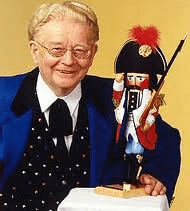
While a nutcracker is a tool to crack nuts, the modern nutcrackers of Germany were decorative dolls of highly stylized carving. Especially after WWII, American soldiers returned from Germany with these nutcrackers as souvenirs. Following the War, G.I.’s stationed in West Germany would send them home as Christmas presents; this spurred East German woodworkers to export their goods to West Germany. The most famous Christmas nutcrackers are those of Christian Steinbach, the “King of Nutcrackers,” from one of his original factories in Marienberg, Saxony. The ballet “ignited the passion” for nutcrackers and drove the business he started.
Today, it continues to the 6th generation with Karla Steinbach through 2015.
Nutcracker Music
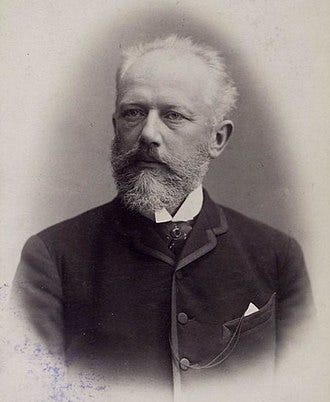
Initially, Pyotr Tchaikovsky accepted the commission of Ivan Vsevolozhsky, director of Moscow’s Imperial Theatres, to write the piece. During the writing, he argued with a friend who wagered that the composer could not write a melody based on the sequenced notes of a single octave scale. The Grand Adage from the Second Act’s Grand Pas de Deux, where Clara dances with the Nutcracker Prince, proved that Tchaikovsky could do it and won the bet.
Tchaikovsky subsequently selected eight of the more popular pieces before the ballet’s December 1892 premiere, forming what is currently known as the 20-minute Nutcracker Suite, Op. 71a.
International Nutcracker
Perhaps the reason this cultural confection is so welcomed at Christmas is due to the multiple nations that influenced its creation and popularity.
German
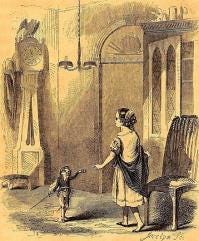
“The Nutcracker and the Mouse King” is a German story written in 1816 by E.T.A. Hoffmann about little Marie Stahlbaum’s favorite Christmas toy that comes alive, defeats the evil Mouse King in battle, and carries her away to a magical doll kingdom. Hoffmann is known to us as also having written in 1810 the first extended review of Beethoven‘s Fifth Symphony after having only read the score.
French
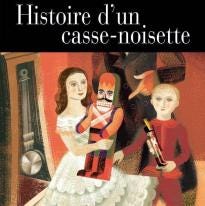
“Histoire d’un casse-noisette” (The Story of a Nutcracker) was the 1844 adaptation of the Hoffmann story by The Three Musketeers author, Alexandre Dumas père. It became the basis for the ballet, though little Marie’s name was changed to Clara. In Hoffmann’s tale, “Klärchen,” or Clara, was the name of one of Maria’s dolls.
Russian
In Russian, Shchelkunchik was the name of the ballet music composed by Tchaikovsky; this was the last of his three ballets. The other two are Swan Lake, which I saw performed in Moscow, and Sleeping Beauty, the music of which was included in the Disney film of the same name.
England
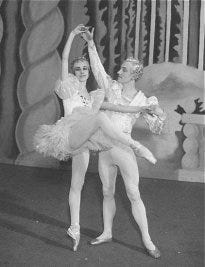
The first performance of The Nutcracker outside Eastern Europe was in 1934 in London. It’s become an annual event since 1952.
United States
In 1944, the San Francisco Ballet first performed the first complete version of The Nutcracker. They’ve performed it every year since.
While an abridged version was performed in New York by the Ballet Russe de Monte Carlo, the New York City Ballet first performed the full version of the George Balanchine‘s renowned staging in 1954; within a week, it became a sellout for the rest of the performances. After this, the complete ballet was performed annually and gained international popularity.
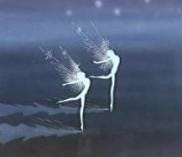
And who can forget the 1940 Walt Disney film Fantasia, which included Tchaikovsky’s music to the “Dance of the Sugar Plum Fairy” and the “Russian Dance?”
Conclusion
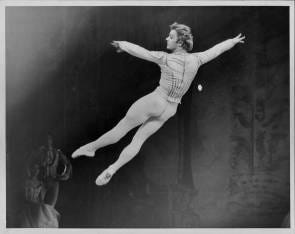
My favorite version is the 1977 production broadcast on PBS television featuring Mikhail Baryshnikov. The man could fly.
I watched it every Christmas season with my children when they were young. I would invite them to watch with the invitation:
Nutcracker, Sweet!
Bill Petro, your friendly neighborhood historian billpetro.com
Subscribe to have future articles delivered to your email. If you enjoyed this article, please consider leaving a comment.


