avatarBill Petro

Free AI web copilot to create summaries, insights and extended knowledge, download it at here

2007

Abstract

d the largest number of casualties of any American war in history because both sides were counted in the total.</p><figure id="ba55"><img src="https://cdn-images-1.readmedium.com/v2/resize:fit:800/1*t5XVoFJ33SblLXnpCM1fig.jpeg"><figcaption><b>“Hancock at Gettysburg” by Thure de Thulstrup. Image: <a href="https://en.wikipedia.org/wiki/Battle_of_Gettysburg#/media/File:Thure_de_Thulstrup_-_L._Prang_and_Co._-_Battle_of_Gettysburg_-_Restoration_by_Adam_Cuerden.jpg">Wikimedia</a></b></figcaption></figure><h1 id="9826">Lincoln at Gettysburg</h1><p id="67f2"><a href="https://billpetro.com/history-of-presidents-day"><b>President Lincoln</b></a> had been invited two weeks before the dedication to deliver “a few appropriate remarks” and arrived by train with an unfinished speech in his pocket written in ink on Executive Office stationery. He completed it in pencil the next morning, but it was not intended to be the main speech.</p><figure id="c49d"><img src="https://cdn-images-1.readmedium.com/v2/resize:fit:800/0*m-_kMXllu2LBoVoe"><figcaption><b>Edward Everett. Image: <a href="https://en.wikipedia.org/wiki/Gettysburg_Address#/media/File:Edward_Everett.jpg">Wikimedia</a></b></figcaption></figure><p id="f20c">That was given by the famous orator <b>Edward Everett,</b> who spoke at noon for two hours. The crowd had been prepared ahead of time that Lincoln would provide a “short, short, short” address.</p><p id="1998">No one expected that the brief speech would define that day, indeed the war, and would go down in history as another chapter of American scripture, memorized by school children, recited publicly every year. But Everett suspected as much, writing to Lincoln the next day,</p><blockquote id="28c1"><p>“I should be glad, if I could flatter myself, that I came as near to the central idea of the occasion, in two hours, as you did in two minutes.”</p></blockquote><h1 id="454b">The Gettysburg Address</h1><figure id="1b03"><img src="https://cdn-images-1.readmedium.com/v2/resize:fit:80

Options

0/1*wxI1fmgnuamKY6iBylrYvA.jpeg"><figcaption><b>Citizens and soldiers surround Lincoln (white arrow showing his location). Image: <a href="https://en.wikipedia.org/wiki/Battle_of_Gettysburg#/media/File:Crowd_of_citizens,_soldiers,_and_etc._with_Lincoln_at_Gettysburg._-_NARA_-_529085_-crop.jpg">Wikipedia</a></b></figcaption></figure><p id="932d">There are between 3 and 5 “official” copies of the address, each with slight differences in style.</p><ul><li>Lincoln wrote a draft in Washington and finished it in Gettysburg, but those present recollected that he did not read from the written copy.</li><li>A reporter from the Associated Press took down the words in shorthand, which was transmitted by telegraph across America.</li><li>Lincoln revised his draft when he returned to D.C., according to his recollection.</li><li>He sent copies to three other people for charitable purposes after the initial address.</li></ul><p id="6d3e">Many writers have noted the parallels between Lincoln’s address and that of Pericles’ Funeral Oration recounted during the <i>Peloponnesian War</i> mentioned in <b>Thucydides</b>‘ 5th century B.C. history of that war. It looks back to ancestors, notes the present day, and calls attention to the unique democracy of the State. But Lincoln’s language was not classical but religious, using phrases like “new birth” and “under God.” He ended it:</p><blockquote id="7c5c"><p>…we here highly resolve that these dead shall not have died in vain — that this nation, under God, shall have a new birth of freedom — and that government of the people, by the people, for the people, shall not perish from the earth.</p></blockquote><p id="efc7">Bill Petro, your friendly neighborhood historian <a href="https://billpetro.com/">billpetro.com</a></p><p id="8941"><a href="http://g003.enterprise.ipost.com/billpetrofriend/prefs"><i>Subscribe</i></a> to have future articles delivered to your email. If you enjoyed this article, please consider leaving a comment.</p></article></body>

History Series: Gettysburg Address

History of the Gettysburg Address

Lincoln’s address at the battlefield and prophecy for America’s future

Lincoln at the dedication of the Soldiers’ National Cemetery in Gettysburg. Image: Wikimedia

Abraham Lincoln, on November 19, 1863, during the American Civil War, at the dedication of the Soldiers’ National Cemetary, began his address in Gettysburg:

Four score and seven years ago our fathers brought forth on this continent a new nation, conceived in liberty, and dedicated to the proposition that all men are created equal.

With only nine more sentences, he dedicated a new national cemetery, summed up the battle that had taken place there some four months earlier, cast a vision for the future of the Union, and harkened back to the Declaration of Independence four score and seven years previously when Thomas Jefferson wrote that

“all men are created equal.”

The Battle of Gettysburg

The three-day Battle of Gettysburg in July 1863 had been the bloodiest battle of the American Civil War, with at least 46,000 casualties among the 160,000 troops. It did not end the war but occurred just past the middle of the almost 4-year conflict.

Nevertheless, it was a decisive victory for the North and a turning point, putting the South on the defensive for the rest of the War Between the States. This conflagration represented the largest number of casualties of any American war in history because both sides were counted in the total.
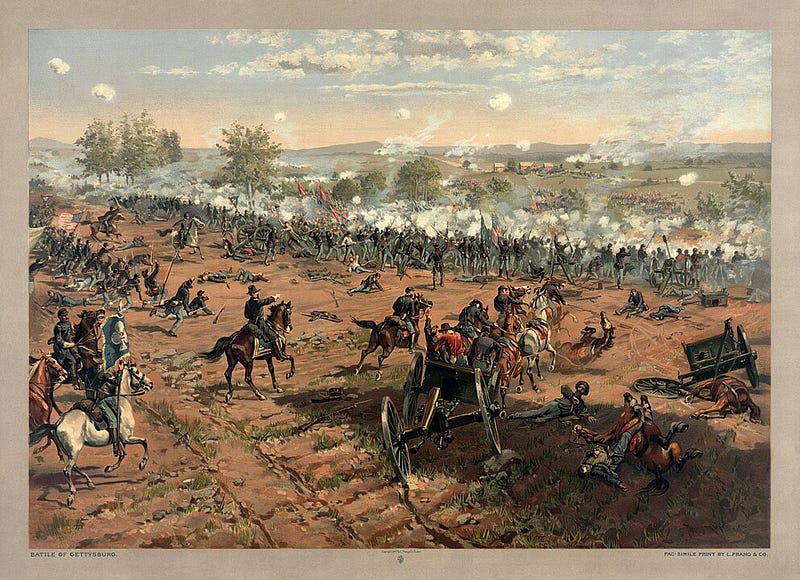
“Hancock at Gettysburg” by Thure de Thulstrup. Image: Wikimedia

Lincoln at Gettysburg

President Lincoln had been invited two weeks before the dedication to deliver “a few appropriate remarks” and arrived by train with an unfinished speech in his pocket written in ink on Executive Office stationery. He completed it in pencil the next morning, but it was not intended to be the main speech.
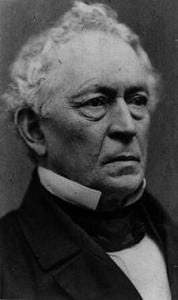
Edward Everett. Image: Wikimedia

That was given by the famous orator Edward Everett, who spoke at noon for two hours. The crowd had been prepared ahead of time that Lincoln would provide a “short, short, short” address.

No one expected that the brief speech would define that day, indeed the war, and would go down in history as another chapter of American scripture, memorized by school children, recited publicly every year. But Everett suspected as much, writing to Lincoln the next day,

“I should be glad, if I could flatter myself, that I came as near to the central idea of the occasion, in two hours, as you did in two minutes.”

The Gettysburg Address
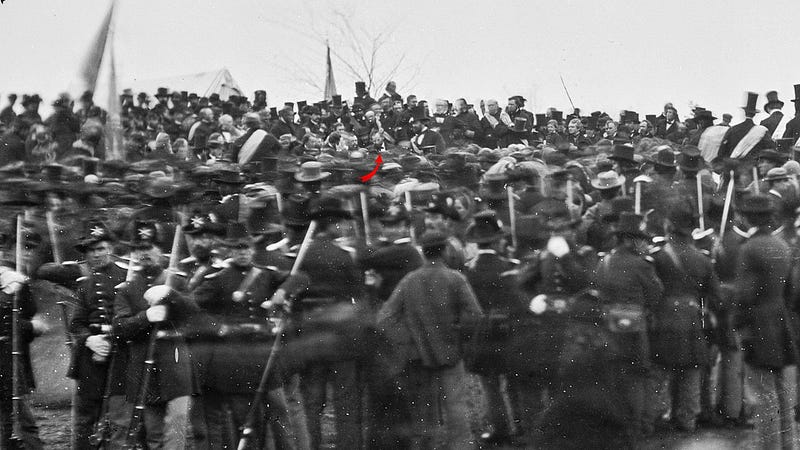
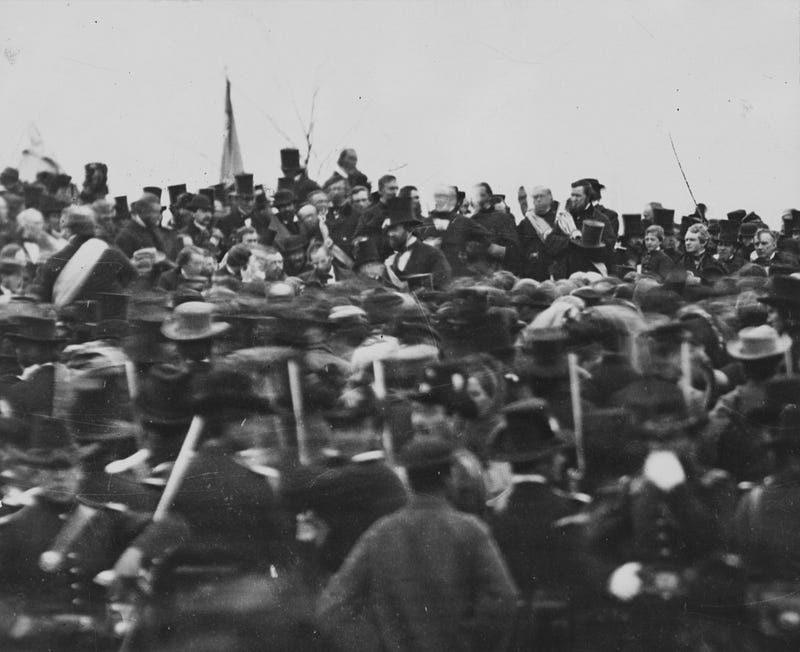
Citizens and soldiers surround Lincoln (white arrow showing his location). Image: Wikipedia

There are between 3 and 5 “official” copies of the address, each with slight differences in style.

  • Lincoln wrote a draft in Washington and finished it in Gettysburg, but those present recollected that he did not read from the written copy.
  • A reporter from the Associated Press took down the words in shorthand, which was transmitted by telegraph across America.
  • Lincoln revised his draft when he returned to D.C., according to his recollection.
  • He sent copies to three other people for charitable purposes after the initial address.

Many writers have noted the parallels between Lincoln’s address and that of Pericles’ Funeral Oration recounted during the Peloponnesian War mentioned in Thucydides‘ 5th century B.C. history of that war. It looks back to ancestors, notes the present day, and calls attention to the unique democracy of the State. But Lincoln’s language was not classical but religious, using phrases like “new birth” and “under God.” He ended it:

…we here highly resolve that these dead shall not have died in vain — that this nation, under God, shall have a new birth of freedom — and that government of the people, by the people, for the people, shall not perish from the earth.

Bill Petro, your friendly neighborhood historian billpetro.com

Subscribe to have future articles delivered to your email. If you enjoyed this article, please consider leaving a comment.

History
Gettysburg Address
Gettysburg
Abraham Lincoln
Gettysburg Battle
Recommended from ReadMedium