avatarBill Petro

Free AI web copilot to create summaries, insights and extended knowledge, download it at here

2374

Abstract

to old age in <b>Ephesus</b>. He was initially one of the followers of <a href="https://billpetro.com/history-of-st-john-the-baptist-day/"><b>John the Baptist</b></a>. He and his brother <b>James</b>, both fishermen, were called to be disciples of Jesus and, along with <b>Peter</b>, were considered to be among the inner circle.</p><p id="2315">John suffered during one of the first Empire-wide persecutions of the early church and was exiled to the <b>Island of Patmos</b>. The Book of Revelation says its author was on Patmos “for the word of God and for the testimony of Jesus,” where he received a vision of heaven and the world to come — from the risen and exalted Jesus. Hence, while it is sometimes called the Revelation of St. John, the book’s first verse identifies it as the <i>Revelation of Jesus Christ</i>.</p><h1 id="c6c4">Persecution of St John</h1><figure id="d63f"><img src="https://cdn-images-1.readmedium.com/v2/resize:fit:800/1*49d-qShlsSIotrH_DemRkg.jpeg"><figcaption>Emperor Domitian, Capitoline Museums, Rome. Image: <a href="https://upload.wikimedia.org/wikipedia/commons/thumb/4/4e/Bust_of_Domitian_%28loan_from_Capitoline_Museums%29_-_Glyptothek_-_Munich_-_Germany_2017_%282%29.jpg/270px-Bust_of_Domitian_%28loan_from_Capitoline_Museums%29_-_Glyptothek_-_Munich_-_Germany_2017_%282%29.jpg">Wikipedia</a></figcaption></figure><p id="fc16">While some believe John was persecuted under <a href="https://billpetro.com/history-of-damnatio-memoriae/#:~:text=Nero%2C%20the%20fifth%20Emperor%20of%20Rome%2C%20was,later%20replaced%20with%20baths%20by%20Emperor%20Trajan."><b>Emperor Nero</b></a>, the last of the <i>Julio-Claudian</i> dynasty, this is unlikely. Nero’s persecution of Christians — while well known and dramatic — was limited primarily to the environs of the city of Rome. Instead, it is more likely that the later <b>Emperor Domitian</b>, the third and last member of the subsequent <i>Flavian</i> dynasty, ordered John to be exiled during the first Empire-wide persecution.</p><p id="386a">A tradition reports that Domitian initially ordered John to be placed into a cauldron of boiling oil. He miraculously emerged unharmed before Domitian exiled him to Patmos, where John wrote the New Testament <i>Book of Revelation</i>.</p><p id="03b0">While the writings and influence of John continue to this day, Domitian was assassinated by court

Options

officials. The Senate <a href="https://billpetro.com/history-of-erasing-unpopular-leaders-damnatio-memoriae/"><i>condemned the memory</i></a> of Domitian to oblivion, as had been done with the conspirator <i>Sejanus</i>, <i>Emperor Nero</i>, and later with Marcus Aurelius’ son <i>Commodus</i>.</p><h1 id="5e91">Writings of St John</h1><figure id="bd8c"><img src="https://cdn-images-1.readmedium.com/v2/resize:fit:800/0*Q0H3p_O8PzUwQREO"><figcaption>St John the Evangelist Writing the Book of Revelation, by Carlo Dolci. Image: <a href="https://ringlingdocents.org/pages/dolci1.htm">Ringling Docents</a></figcaption></figure><p id="b84e">What is unique about John’s gospel writing in Greek — for the New Testament was originally written in Greek, thanks to <b>Alexander the Great</b>‘s “<i>Hellenization</i>” campaign of the Eastern world — is that it is perhaps the simplest Greek in the New Testament, and yet it is most profound theologically.</p><p id="fa6b">It is the first Greek I learned when I studied the subject at university, and it will be the last Greek I shall forget. He starts his Gospel with the same words that the first book of the Bible, <b>Genesis</b>, opens with:</p><blockquote id="6a43"><p>In the beginning<i></i></p></blockquote><blockquote id="1754"><p><i>Was the Word And the Word was with God And the Word was God He was in the beginning With God.</i></p></blockquote><p id="4de4">Only the <b>Gospels of Matthew</b> and <b>Luke</b> contain the well-known <a href="https://billpetro.com/history-of-christmas-nativity">Nativity</a> story, but the<b> Gospel of John</b> tells the story of Christ <i>before</i> he was born. Yet the last of John’s writings, the <b>Book of Revelation</b>, is a very different kind of literature, a type of prophetic writing known as “apocalyptic” literature. This was a popular form of literature in Judaism that spanned three centuries before the writing of Revelation. It is not the Revelation of John; instead, John starts it as “The Revelation of Jesus Christ.”</p><p id="bc04">Bill Petro, your friendly neighborhood historian <a href="https://billpetro.com/">billpetro.com</a></p><p id="3eb1"><a href="http://g003.enterprise.ipost.com/billpetrofriend/prefs"><i>Subscribe</i></a> to have future articles delivered to your email. If you enjoyed this article, please consider leaving a comment.</p></article></body>

History Series: St. John

History of the Feast of St. John

Which St John?
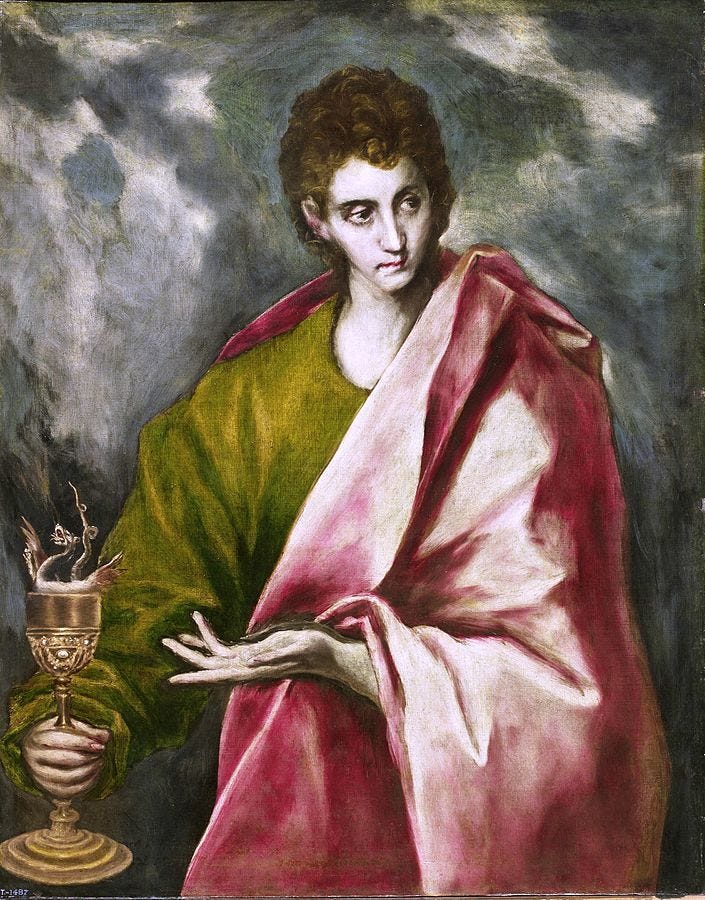
St. John the Evangelist, by El Greco. Image: Wikipedia

December 27, since the 5th century, has marked the day in the church calendar for celebrating the life of St. John the Evangelist and is known as the Feast of St. John.

We’ve already mentioned that the day before, December 26, is the Feast of St. Stephen. The following day, December 28, is the Feast of The Holy Innocents, referring to those babies killed by King Herod the Great in Bethlehem.

Which St. John is celebrated in this feast?

It is not John the Baptist, the cousin of Jesus; instead, it’s the young disciple of Christ, known as “the disciple whom Jesus loved.” This John writes about “the Baptizer” in the first chapter of his Gospel.

Tradition holds that he is the author of the Gospel of John, the Epistles of John (I, II, and III John), and the Book of Revelation, also known as The Apocalypse. He’s also known as John the Apostle, John the Divine, John the Theologian, and John of Patmos.

St John the Apostle
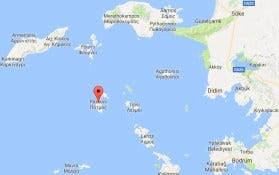
Island of Patmos. Image: Google Maps

John is unique among the Twelve Disciples in that according to tradition, going back to at least the 2nd century, if not earlier, he is the only Disciple who did not die a martyr like the rest. Instead, in addition to participating in Jesus’ ministry and that of the early church, he lived to old age in Ephesus. He was initially one of the followers of John the Baptist. He and his brother James, both fishermen, were called to be disciples of Jesus and, along with Peter, were considered to be among the inner circle.

John suffered during one of the first Empire-wide persecutions of the early church and was exiled to the Island of Patmos. The Book of Revelation says its author was on Patmos “for the word of God and for the testimony of Jesus,” where he received a vision of heaven and the world to come — from the risen and exalted Jesus. Hence, while it is sometimes called the Revelation of St. John, the book’s first verse identifies it as the Revelation of Jesus Christ.

Persecution of St John
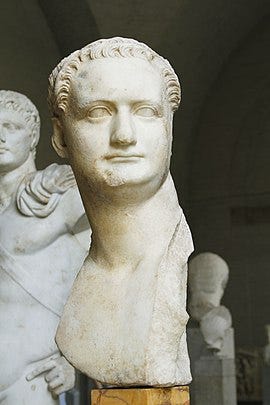
Emperor Domitian, Capitoline Museums, Rome. Image: Wikipedia

While some believe John was persecuted under Emperor Nero, the last of the Julio-Claudian dynasty, this is unlikely. Nero’s persecution of Christians — while well known and dramatic — was limited primarily to the environs of the city of Rome. Instead, it is more likely that the later Emperor Domitian, the third and last member of the subsequent Flavian dynasty, ordered John to be exiled during the first Empire-wide persecution.

A tradition reports that Domitian initially ordered John to be placed into a cauldron of boiling oil. He miraculously emerged unharmed before Domitian exiled him to Patmos, where John wrote the New Testament Book of Revelation.

While the writings and influence of John continue to this day, Domitian was assassinated by court officials. The Senate condemned the memory of Domitian to oblivion, as had been done with the conspirator Sejanus, Emperor Nero, and later with Marcus Aurelius’ son Commodus.

Writings of St John
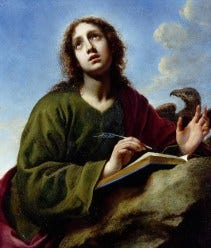
St John the Evangelist Writing the Book of Revelation, by Carlo Dolci. Image: Ringling Docents

What is unique about John’s gospel writing in Greek — for the New Testament was originally written in Greek, thanks to Alexander the Great‘s “Hellenization” campaign of the Eastern world — is that it is perhaps the simplest Greek in the New Testament, and yet it is most profound theologically.

It is the first Greek I learned when I studied the subject at university, and it will be the last Greek I shall forget. He starts his Gospel with the same words that the first book of the Bible, Genesis, opens with:

In the beginning

Was the Word And the Word was with God And the Word was God He was in the beginning With God.

Only the Gospels of Matthew and Luke contain the well-known Nativity story, but the Gospel of John tells the story of Christ before he was born. Yet the last of John’s writings, the Book of Revelation, is a very different kind of literature, a type of prophetic writing known as “apocalyptic” literature. This was a popular form of literature in Judaism that spanned three centuries before the writing of Revelation. It is not the Revelation of John; instead, John starts it as “The Revelation of Jesus Christ.”

Bill Petro, your friendly neighborhood historian billpetro.com

Subscribe to have future articles delivered to your email. If you enjoyed this article, please consider leaving a comment.

History
St John The Evangelist
Feast Of St John
Recommended from ReadMedium