
History of Artificial Intelligence: From Antiquity to Aristotle
Can AI define its existence
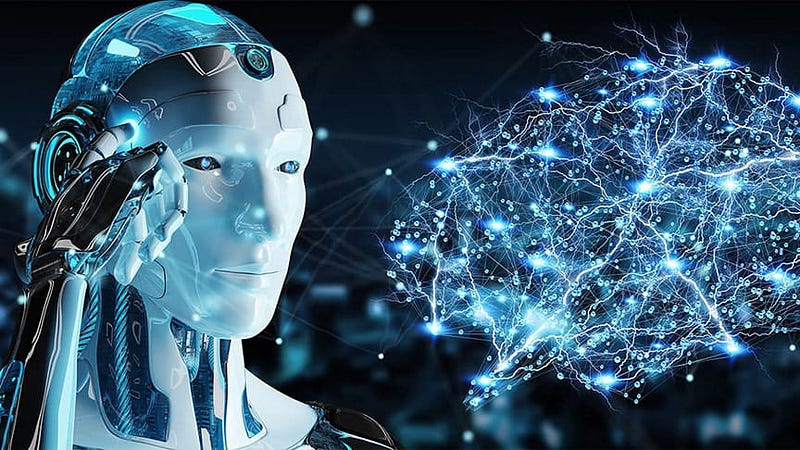
Artificial intelligence has been defined as a computer simulation of human thought; computer programs or algorithms used for pattern recognition, decision making, or natural language processing as defined in the Unified Medical Language System (UMLS).
It can also be defined as the branch of computer science that deals with writing computer programs that creatively solve problems. Alternatively, it can be defined as A system’s ability to interpret external data correctly, to learn from such data, and to use those learnings to achieve specific goals and tasks through flexible adaptation [Kaplan, A; Haenlein, M (1 January 2019) Business Horizons; IEEE-USA POSITION STATEMENT. Artificial Intelligence Research, Development & Regulation Adopted by the IEEE-USA, Board of Directors (February 2017)] See machine learning, deep learning, natural language processing, synthetic data.
Whatever AI’s definition, one can trace its roots back to antiquities. Where Greek myths of Hephaestus and Pygmalion incorporated the idea of intelligent robots (such as Talos) and artificial beings (such as Galatea and Pandora) [1].
Sacred mechanical statues built in Egypt and Greece were believed to be wisdom and emotion. Hermes Trismegistus would write, “they have sensus and spiritus … by discovering the true nature of the gods, man has been able to reproduce it.” Mosaic law prohibits the use of automatons in religion [2].
In the 10th century, BC Yan Shi presented King Mu of Zhou with mechanical men [3].
Aristotle described syllogism, a formal, mechanical thought and theory of knowledge in The Organon [4][5].
Reference
- McCorduck, Pamela (2004), Machines Who Think (2nd ed.), Natick, MA: A. K. Peters, Ltd., ISBN 978–1–56881–205–2 (pp. 4–5).
- McCorduck, Pamela (2004), Machines Who Think (2nd ed.), Natick, MA: A. K. Peters, Ltd., ISBN 978–1–56881–205–2 (pp. 5–9).
- China, the West, and World History in Joseph Needham’s “Science and Civilisation in China”
- Richard McKeon, ed. (1941). The Organon. Random House with Oxford University Press.
- Giles, Timothy (2016). “Aristotle Writing Science: An Application of His Theory”. Journal of Technical Writing and Communication. 46: 83–104