
Mature Flâneur
Historic Honfleur Impressed the Impressionists
We too were charmed by this jewel of the Normandy coast
The Impressionists sought the light. They painted outdoors, embracing bold colors and movement — of trees in the breeze, waves in the seas, people going about their daily lives. They were reacting against the tradition of studio paintings such as portraits, models holding an artificial pose, and “still life” bowls of fruit and flowers which the French call Nature Morte — “dead nature.”
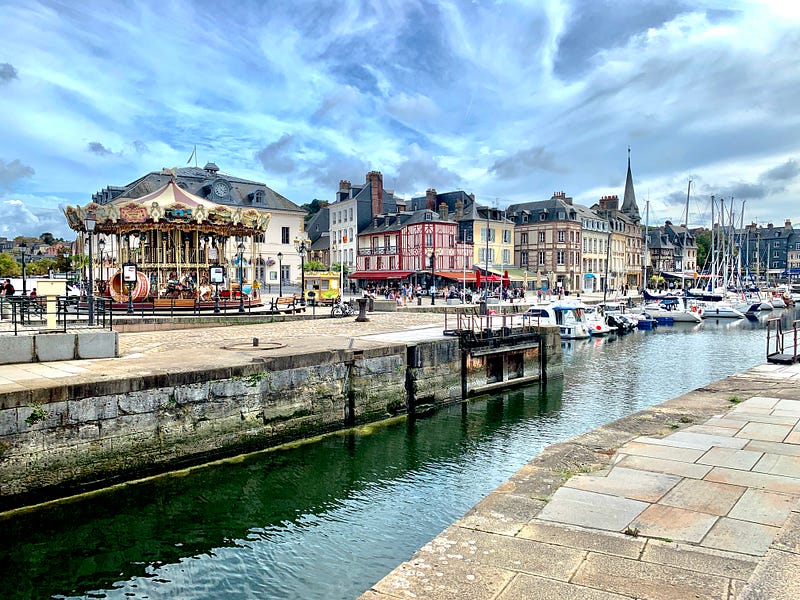
Little Honfleur, an ancient port and beach resort town on the estuary of the Seine was a perfect place to the Impressionists to paint, and it drew the artists like flies to honey; hence its nickname, “the city of painters.” Amazingly, the town escaped the ravages of World War II — the famous D-Day beaches are a few hours' drive along the Normandy coast. And so, the town these now-famous artists rendered in bright, bold stokes looks much the same today as it did 150 years ago.
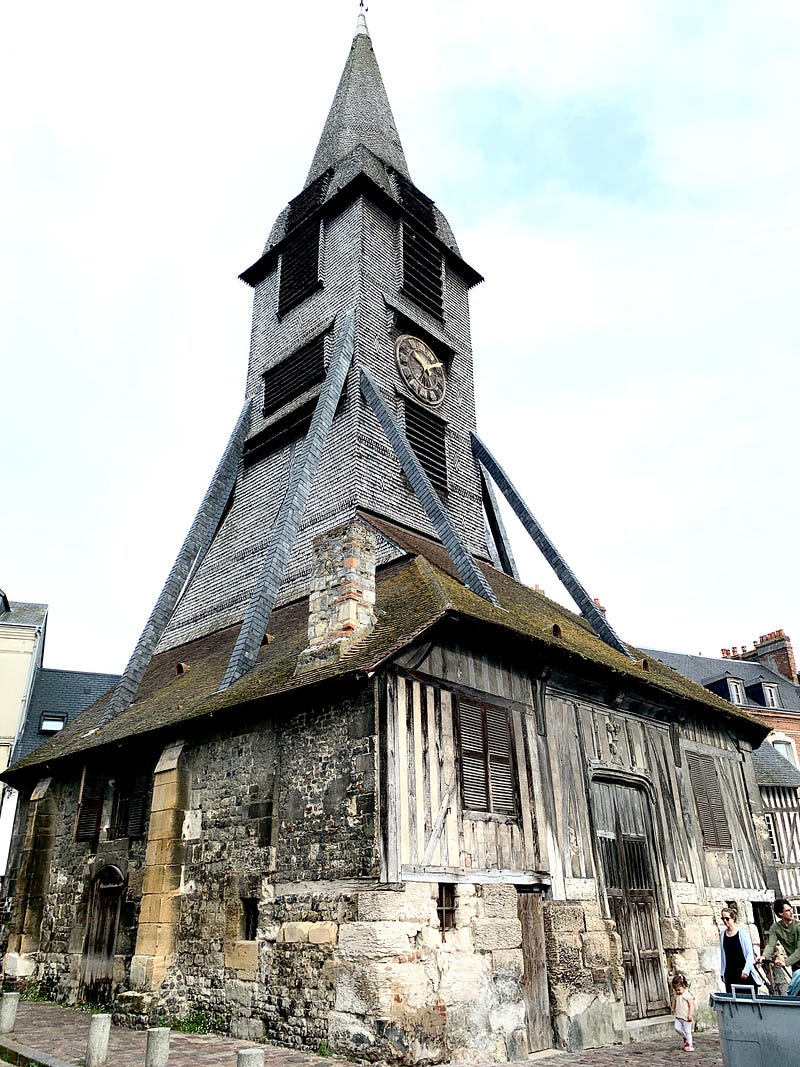
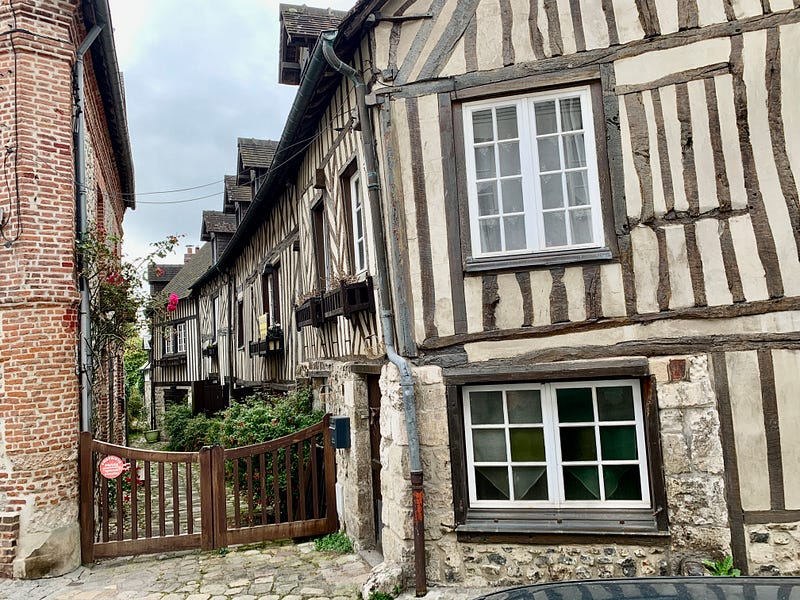
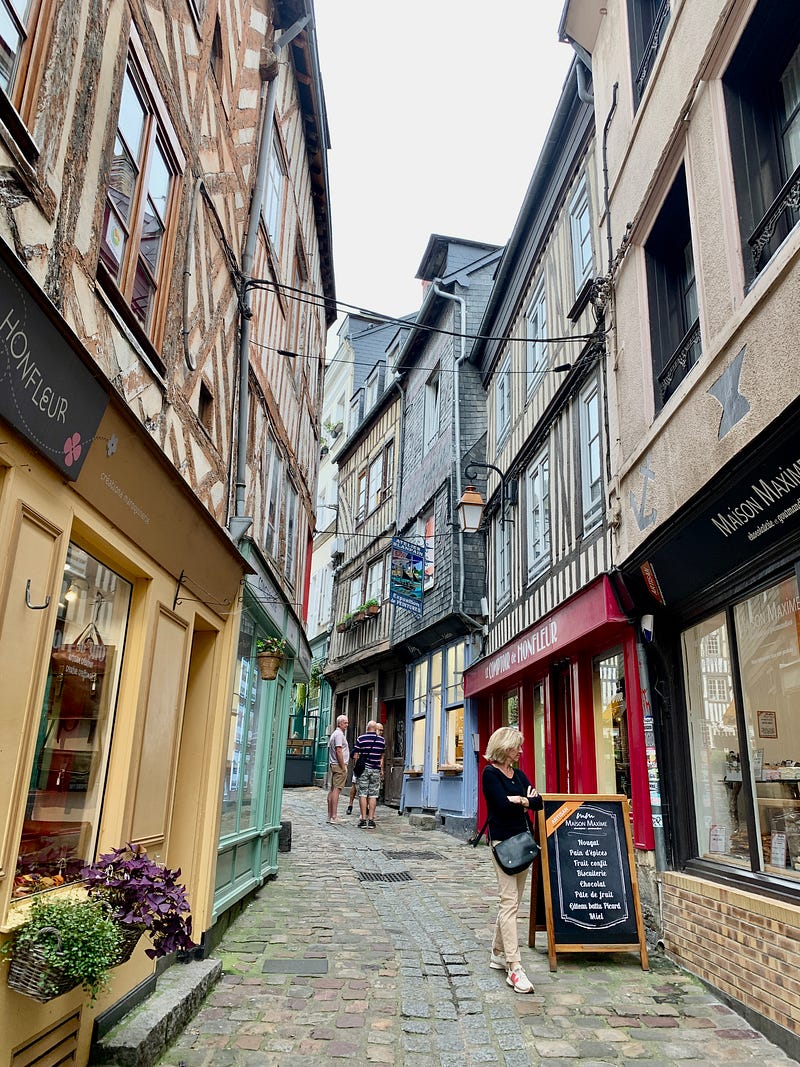
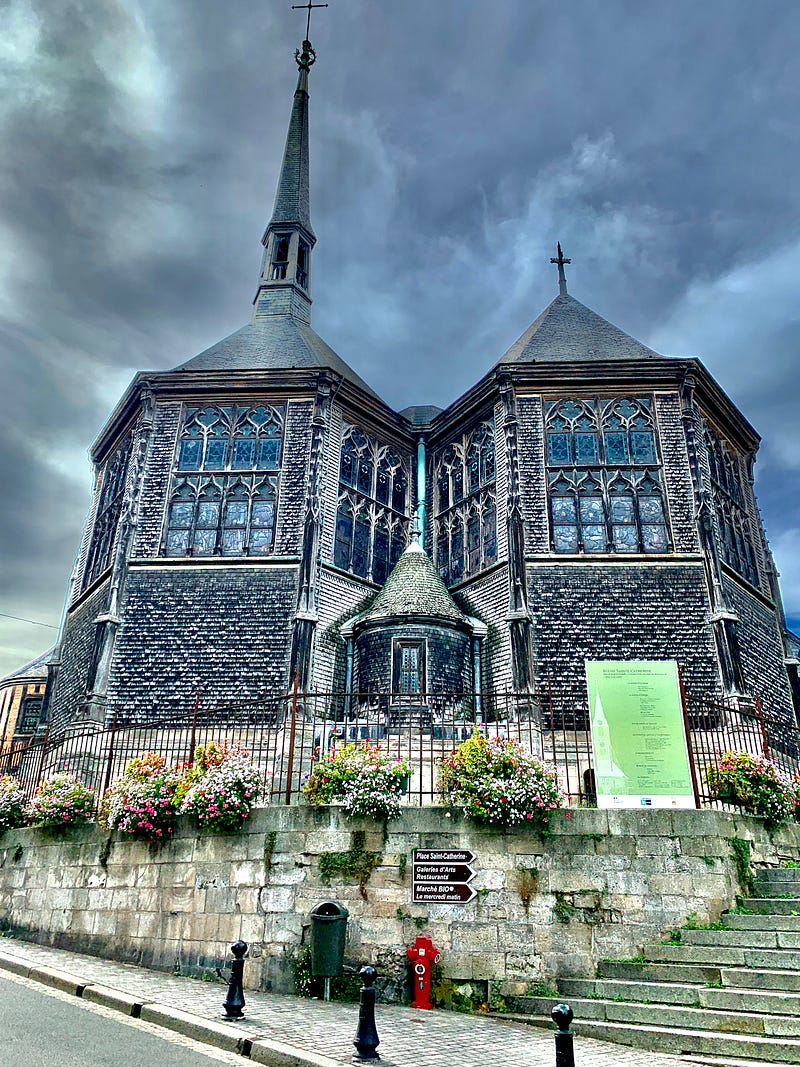
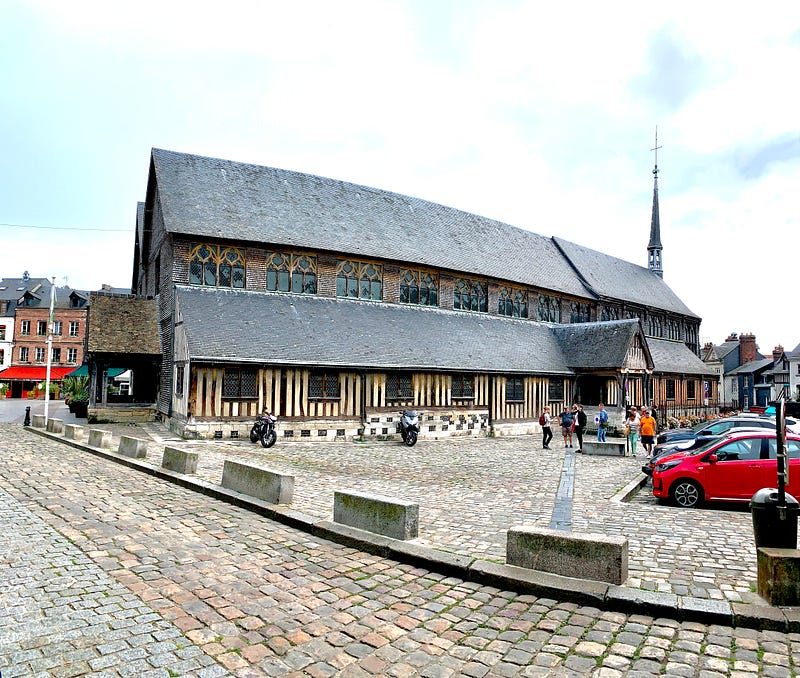
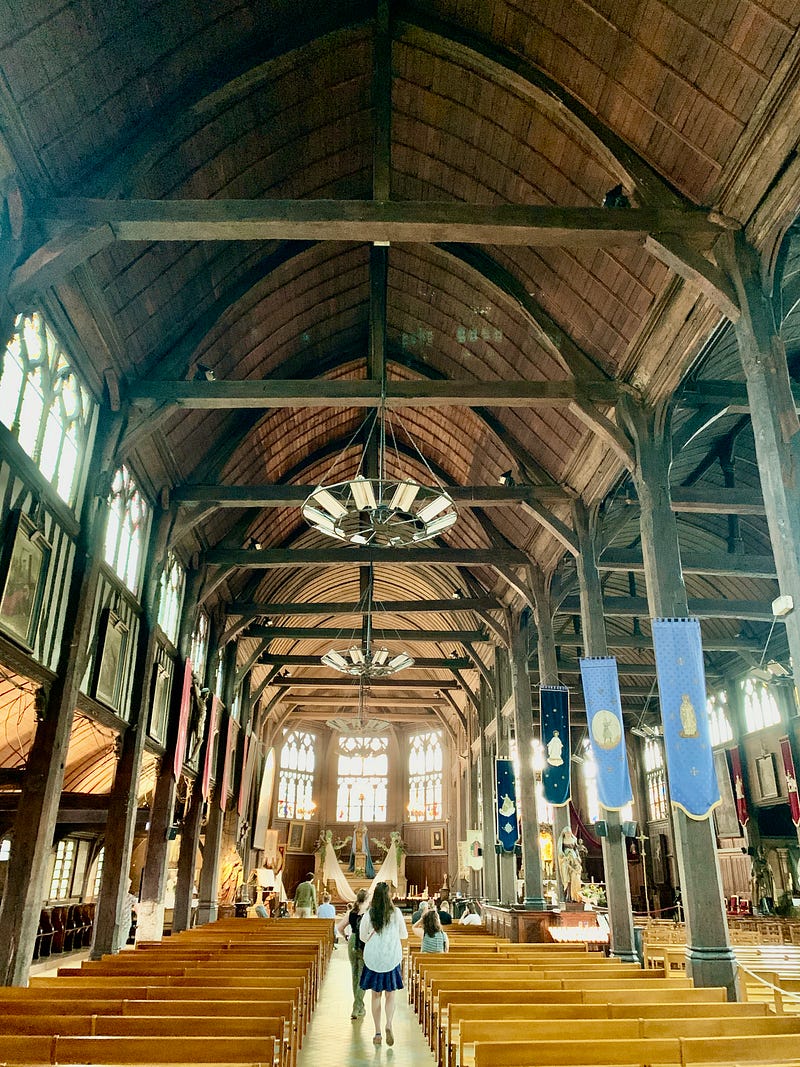
Teresa (my beloved spouse) and I spent a week in Honfleur this fall, and we were beguiled by the town’s ageless charms. Half-timbered houses and cobbled streets give it a medieval air, while its historic wooden church — the largest in France — clearly reveals the Viking origins of the settlement in the ninth century. Looking up from within the cavernous sanctuary, one can see the roof has been crafted with beams like an inverted hull of a Viking ship.
The afternoon we arrived in Honfleur, the central area of town thronged with tourists — mostly daytrippers from Paris who strolled up and down the old streets at a leisurely pace. Two sides of the harbor were lined with packed outdoor cafés serving seafood fresh from the fishing boats, including four varieties of the local specialty moules-frites (mussels and “French” fries).
One could tell in an instant that this was a town made prosperous by tourists, but not overwhelmed by them. Honfleur could feed them and delight them without selling its soul to them, without becoming a caricature of itself. In this it resembles its big sister, Paris. For example, throughout the winding backstreets we could see old houses being refurbished in keeping with the original architecture, but avoiding cliché excesses. As a result, the town looks both old and fresh — rather like a dapper grandfather who insists on wearing the fashion of his youth, and somehow pulls it off with panache.
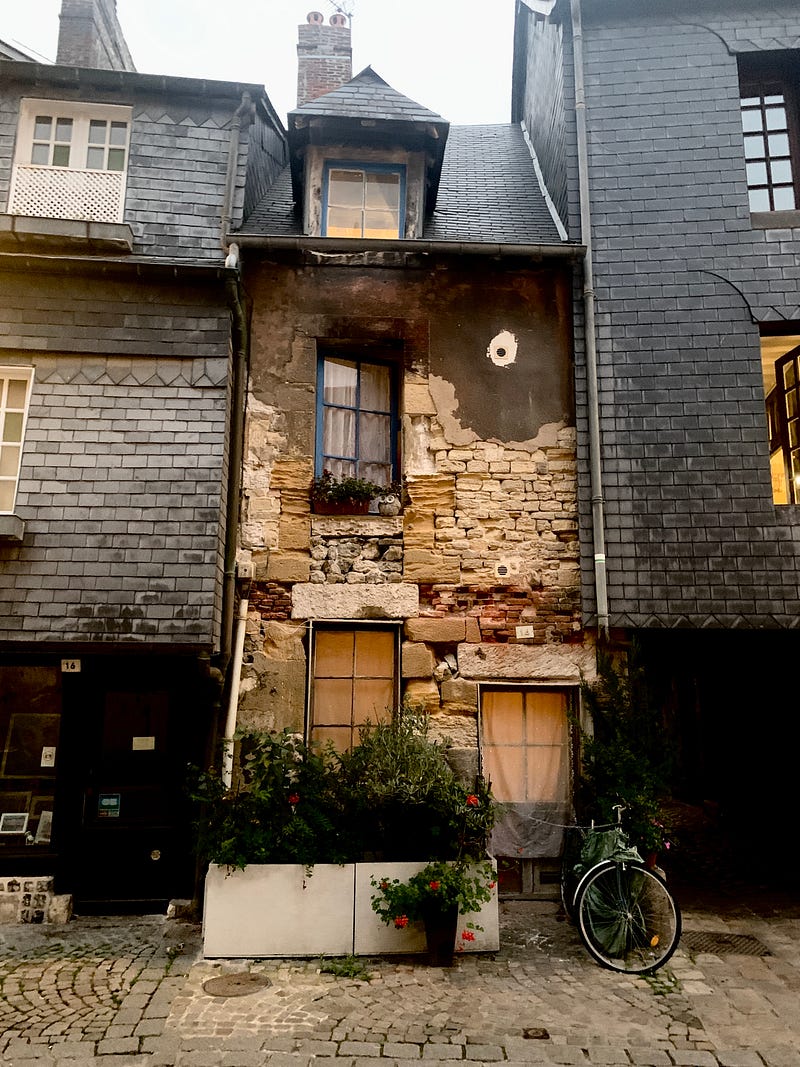
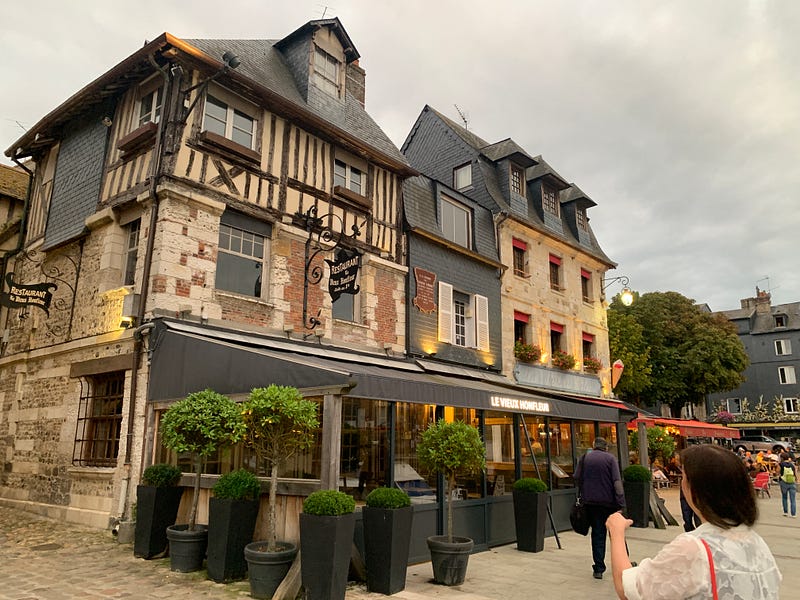
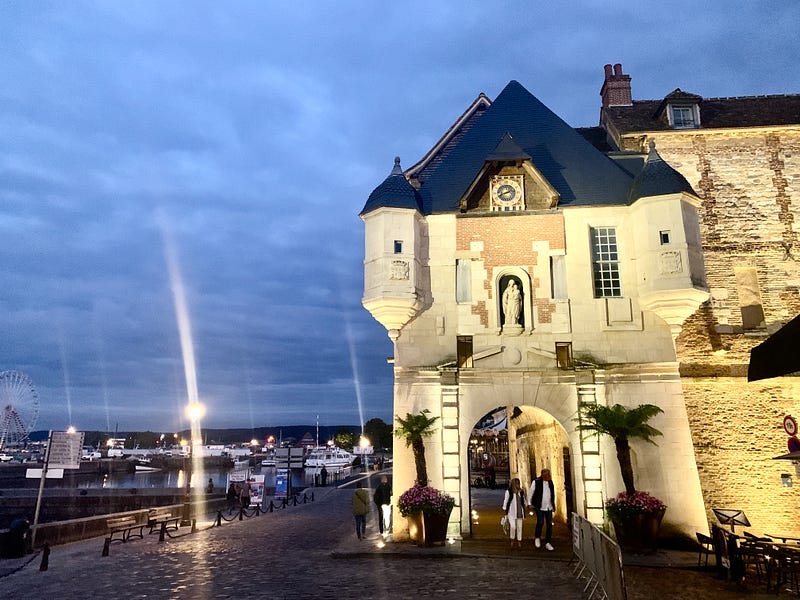
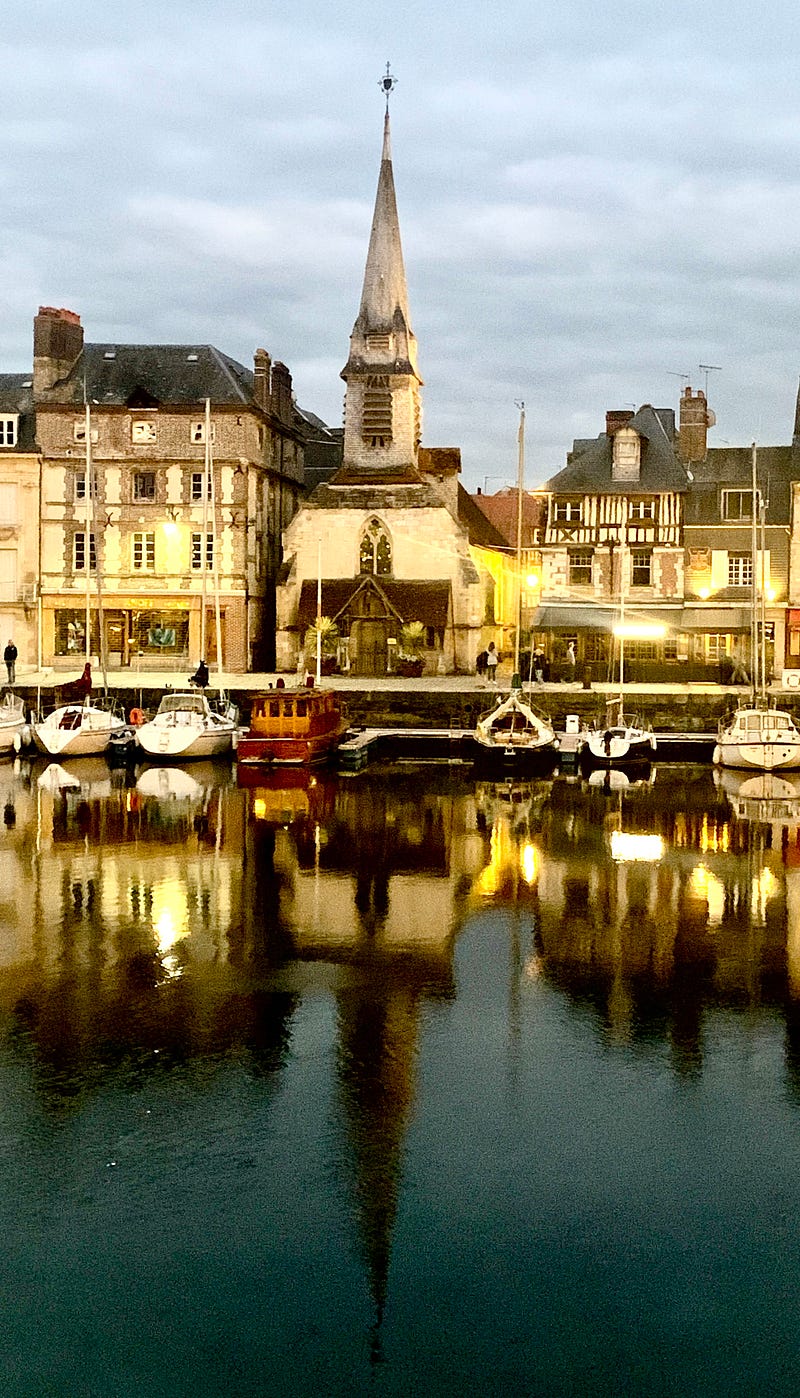
A visit to the Eugéne Boudin Art Museum revealed to us exactly how well the town has preserved itself. Boudin was a resident of Honfleur and, as an artist, a forerunner of the Impressionists. He became a mentor to Claude Monet, who lived just across the river in the industrializing city of Le Havre. These two drew other artists around them who found in Honfleur a town, a harbor, a beach, and a citizenry, that made ideal subjects for their new style of art. It was captivating to walk through the gallery and see local houses and streets scenes painted over 150 years ago that were not much different than the streets we had walked along on to get to the museum.
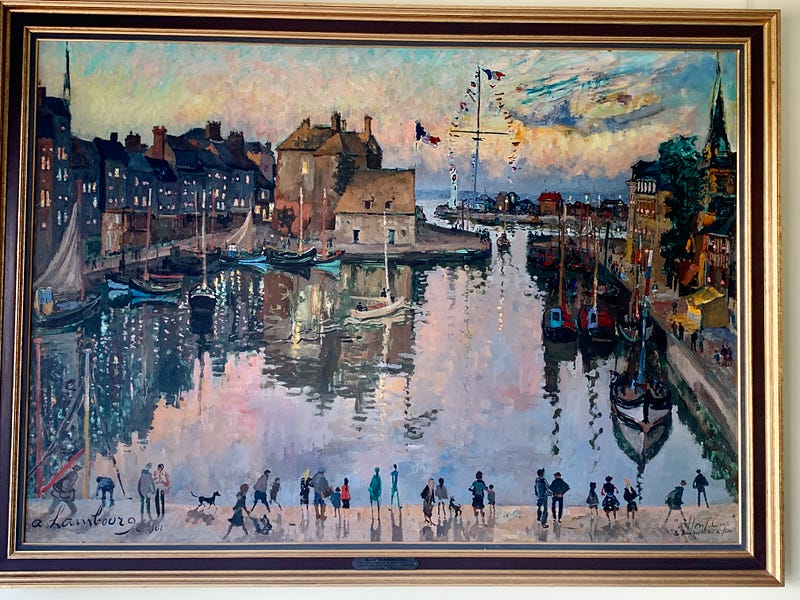
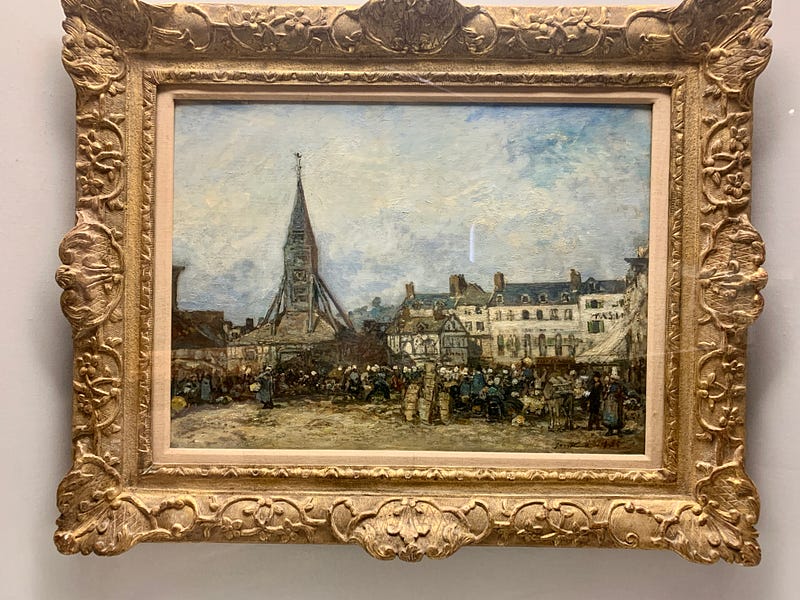
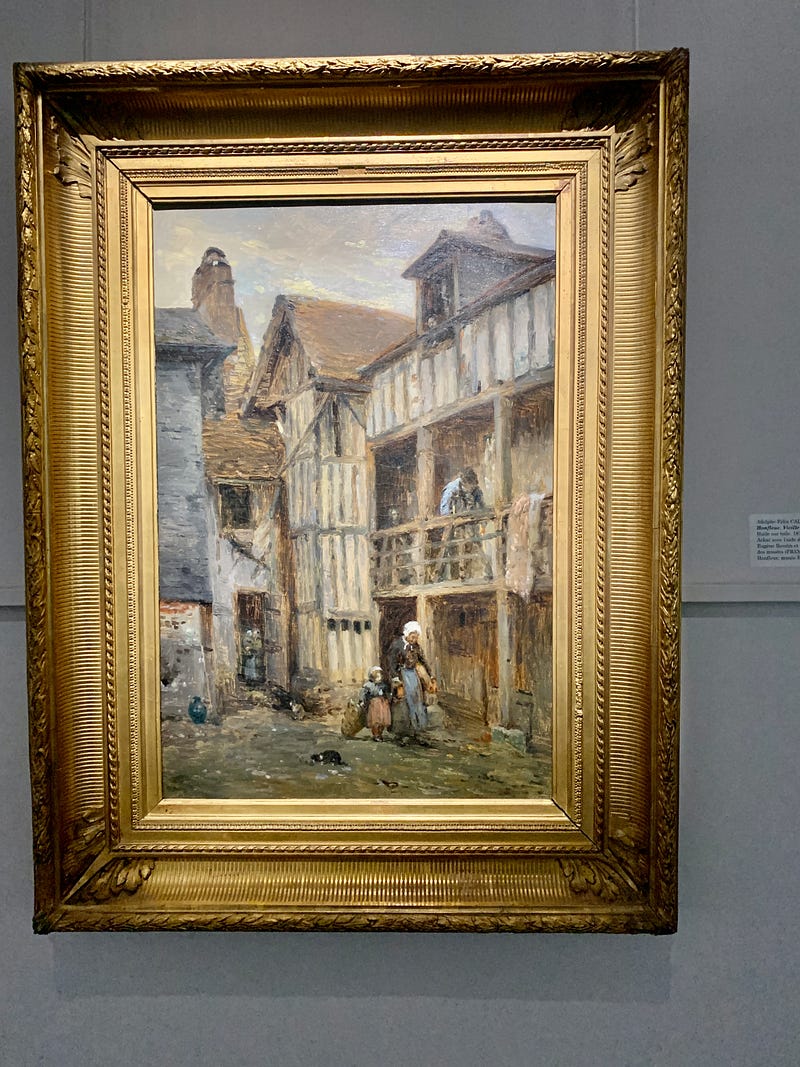
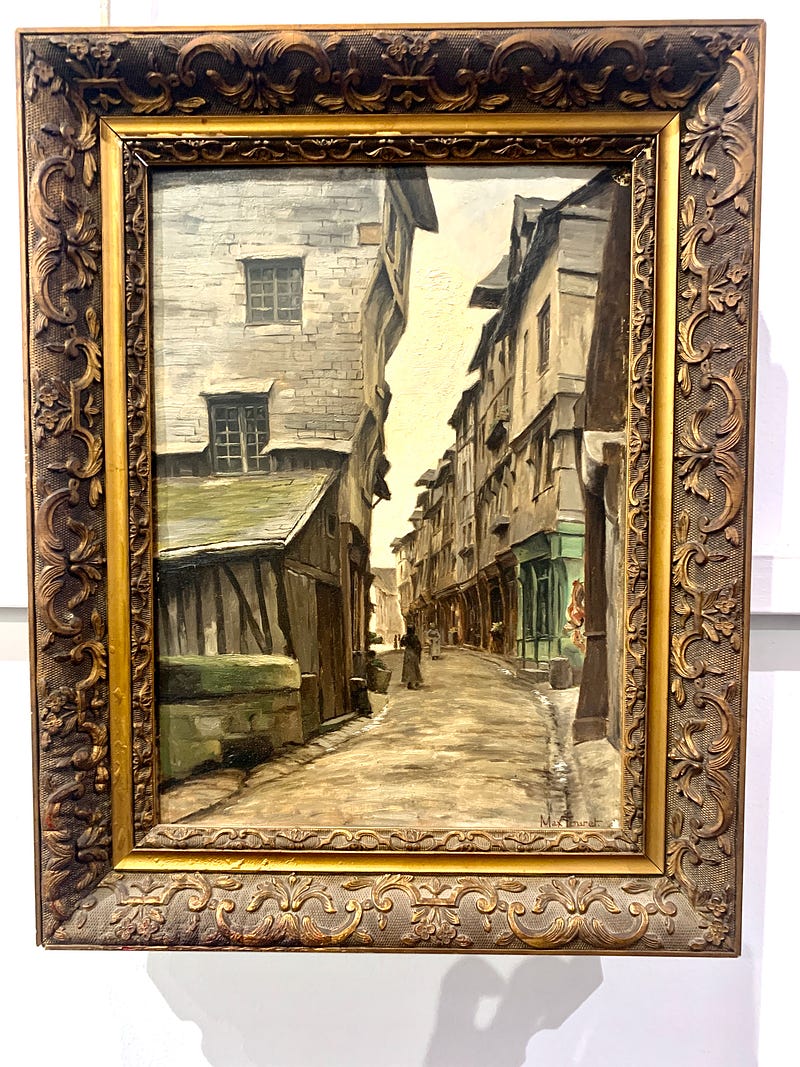
I had, there in the museum, a most humbling moment. As I gazed upon the canvas of a seascape, Teresa came up next to me and I said to her, “You know, some of these I really get. I look at the waves, and I can feel the emotion I think the artist was trying to express.”
Teresa hesitated a second. “Actually, Impressionism is about capturing movement and light,” she said.
Teresa knows what she is talking about. She studied Impressionism in an art history class, and she loves these artists, thinks they are all amazing. I once asked her who is her favorite, and she said: “Monet, Manet, Renoir, Sisley, Degas….No, I can’t decide! That question is like asking me ‘what’s your favorite pastry?’”
I am actually pretty ignorant about art, though in recent years I’ve been paying more attention as I flâneur about. And so, standing there before a Boudin canvas, trying to grasp what feeling the artist was trying to express…I was mistakenly confusing Impressionism with Expressionism. I had to look up the difference: the Expressionists were an early 20th century school that primarly sought to express the artist’s emotion — think of Edvard Munch’s famous painting The Scream).
But that display of my ignorance is not what I felt humble about. I felt humbled about the way my beloved did not rub my nose in it. She lightly corrected me, and actually that helped me better appreciate the rest of the gallery. I was acutely aware, though, that if the shoe were on the other foot, I probably would have been gleefully sarcastic about it: “You sense the feeling? This is an Impressionist art exhibit, not Expressionist…Did you not know the difference? Perhaps when we are finished we could go get a cup of Impresso coffee?” Like Jack Nicholson’s clever but mean character says in As Good As It Gets, Teresa “makes me want to be a better person.” Or at least she keeps me from any delusions of becoming an art snob.
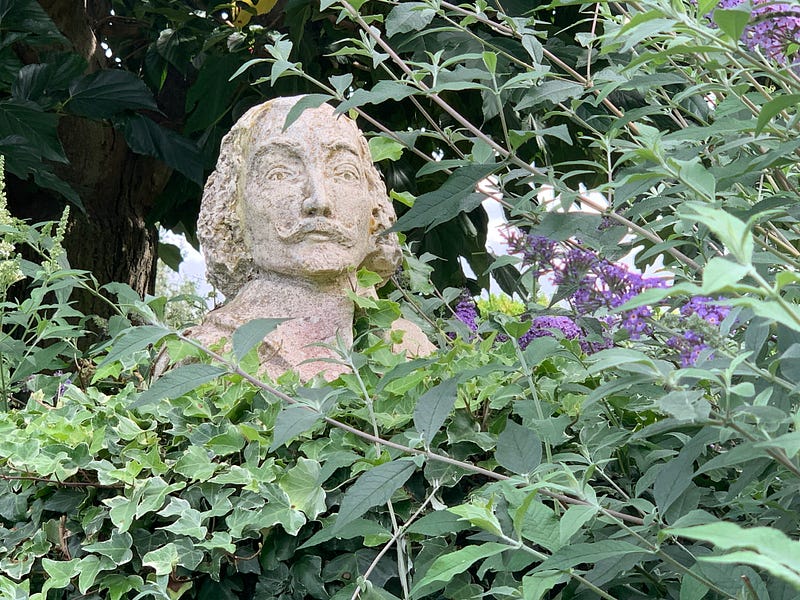
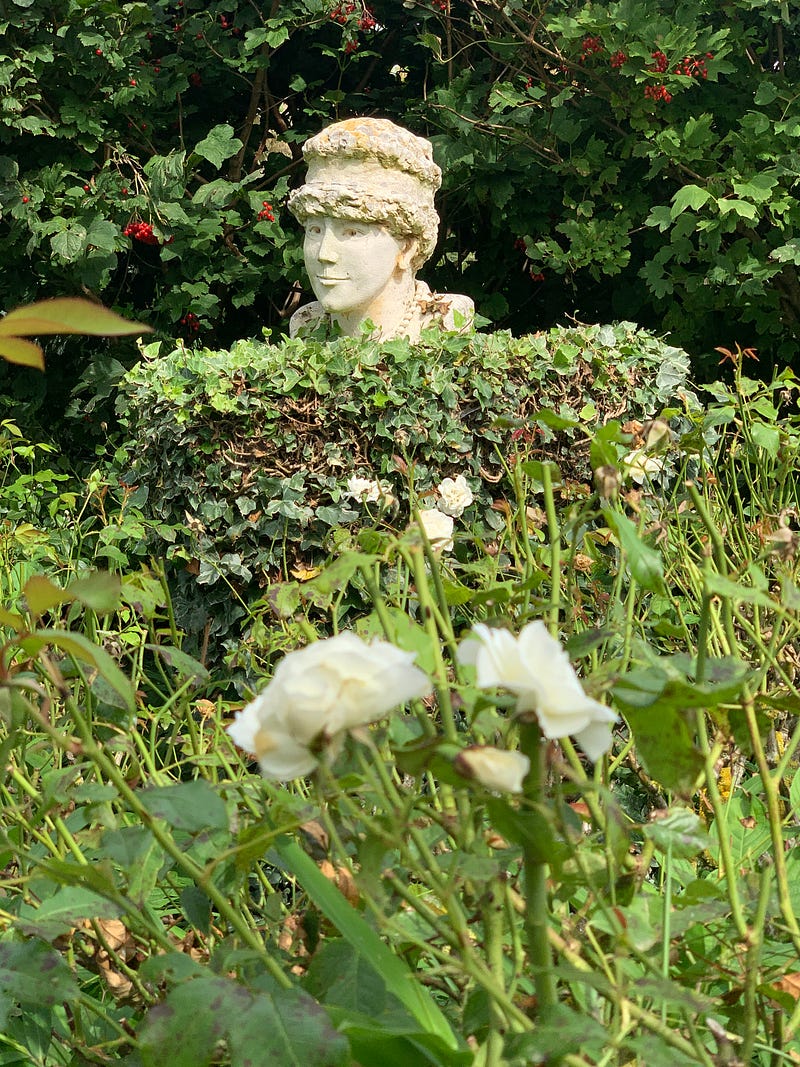
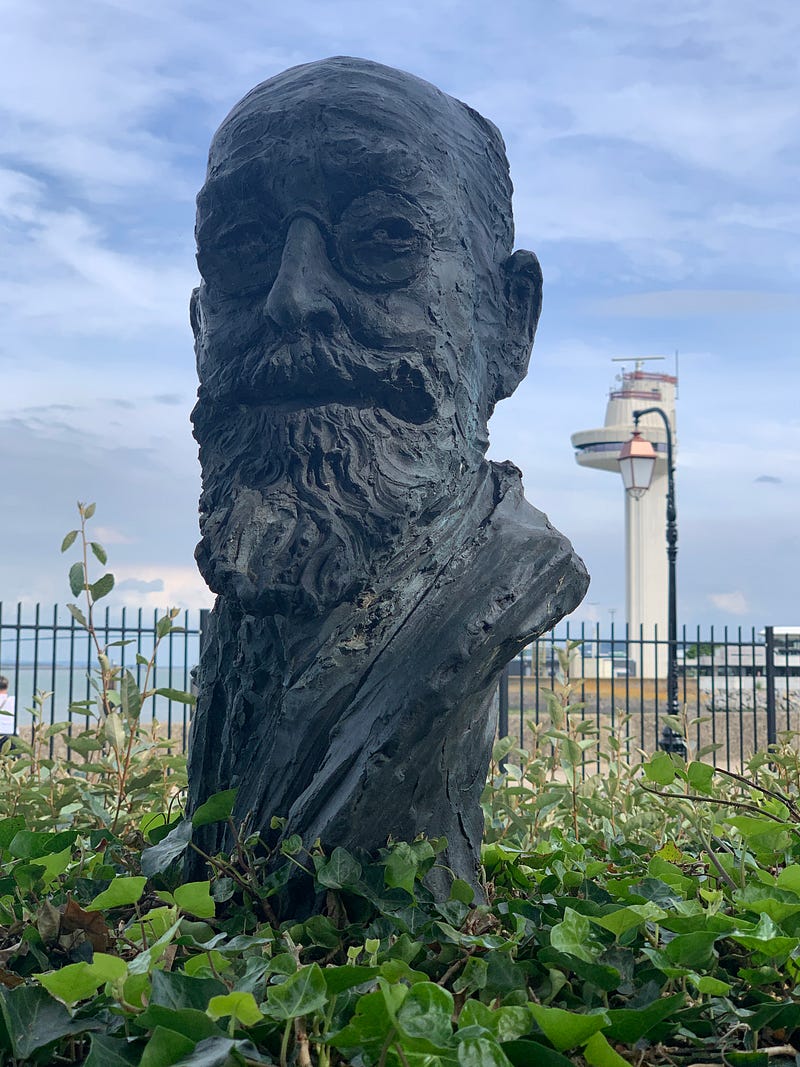
One afternoon I took a walk to the waterside park at the edge of town call the Jardin des Personnalites — which would best translate as “Garden of Celebrities.” It’s a unique sculpture garden that features 22 busts of artists, poets, musicians and other luminaries either from, or in some way connected to, Honfleur. Each sculpture is surrounded with its own unique little garden, the plants and trees chosen to be somehow significant to each celeb.
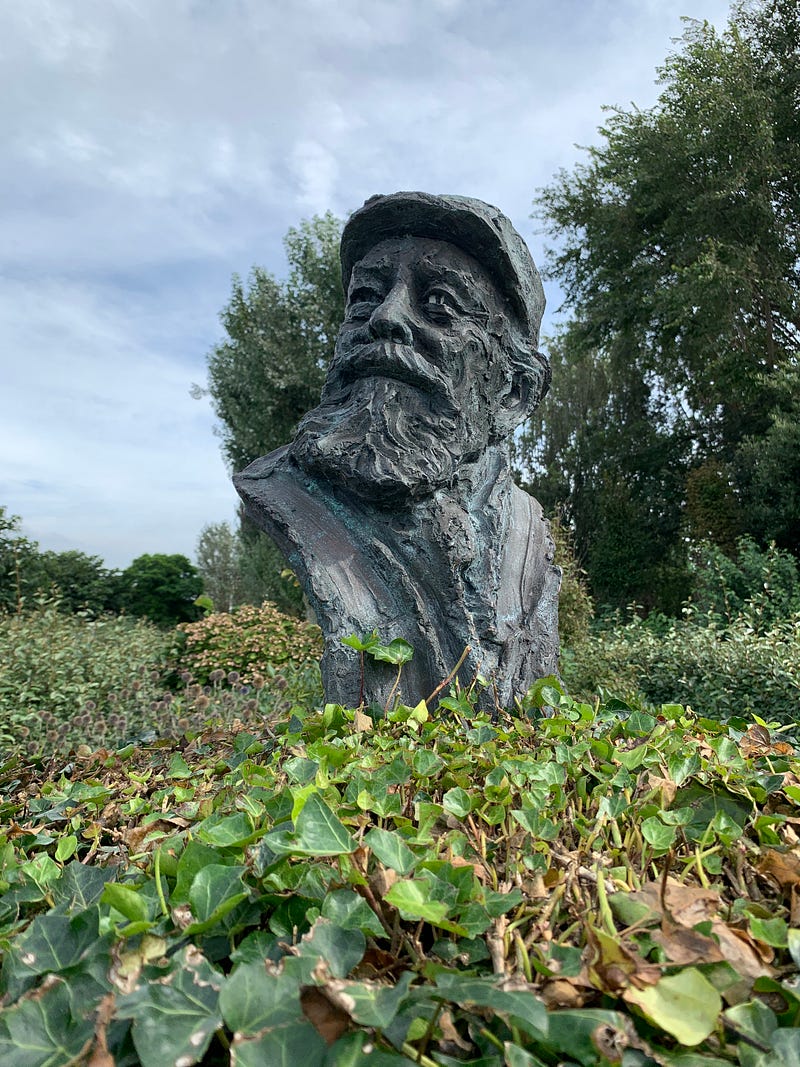
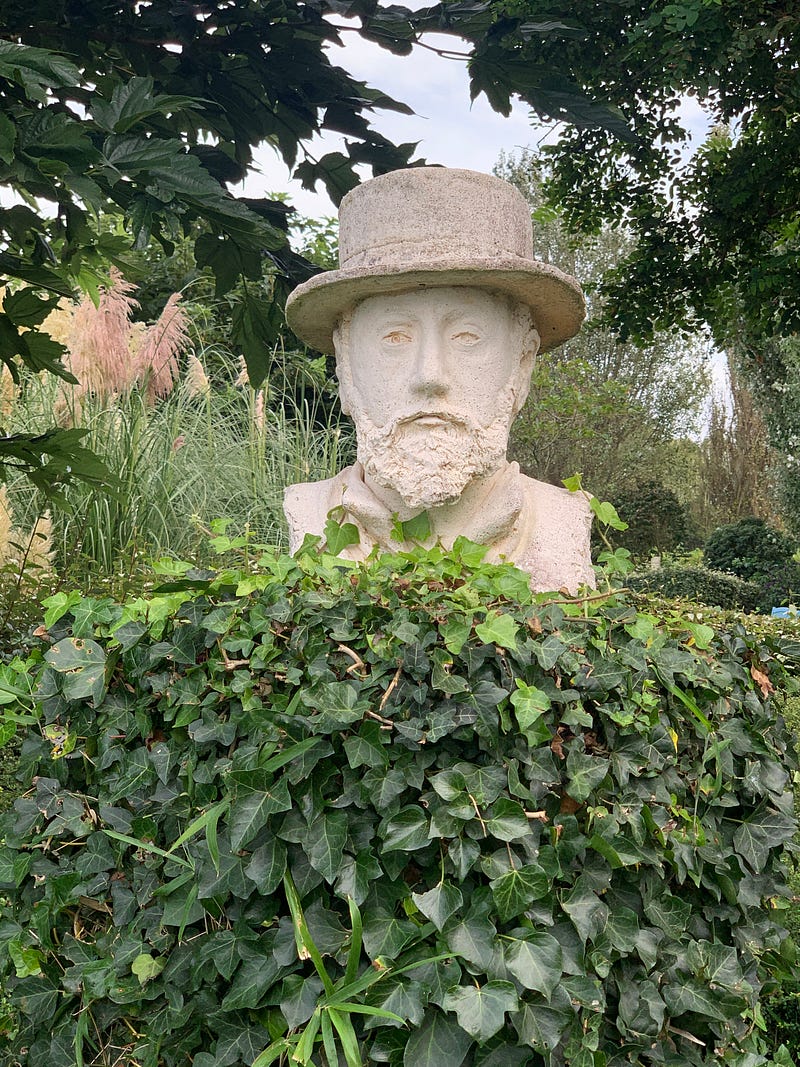
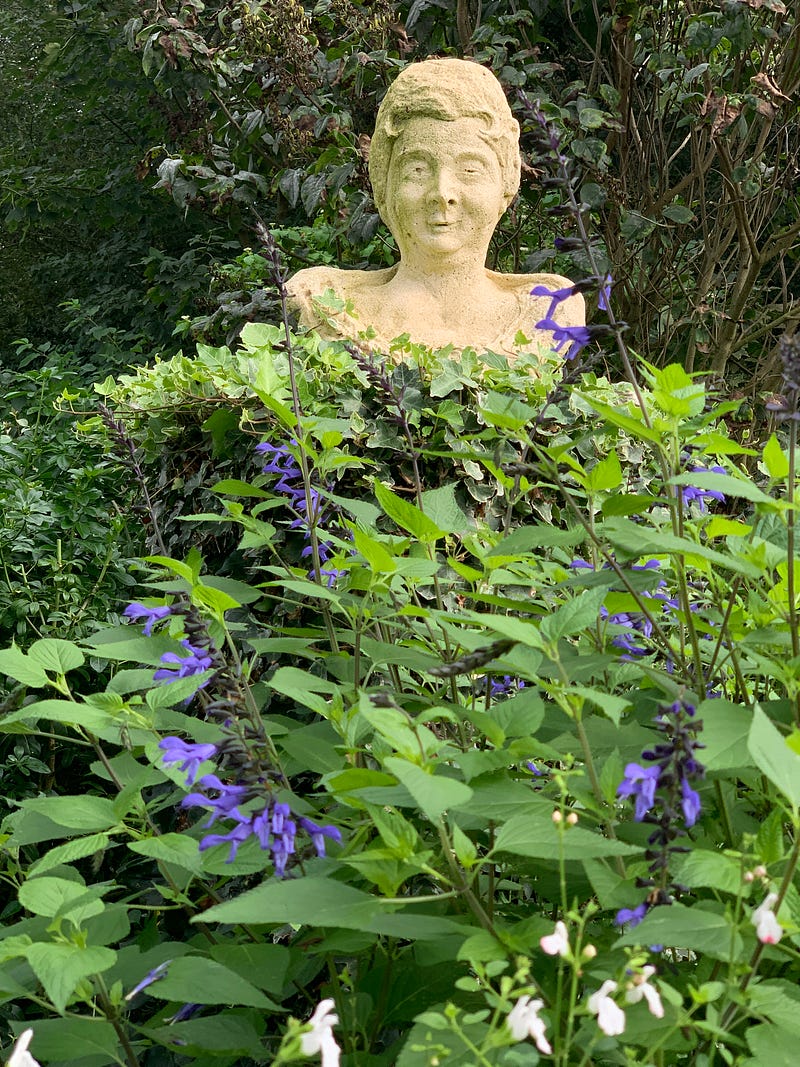
What a fabulous way to introduce visitors to the men and women who made the town famous, I thought, and I enjoyed a pleasant stroll in their company. I was surprised to find in the midst of the shrubbery Samuel de Champlain, the French explorer who was the first European to reach the land now called Quebec, and the founder of New France; Honfleur was the port from which his ships departed on that historic journey in 1608.
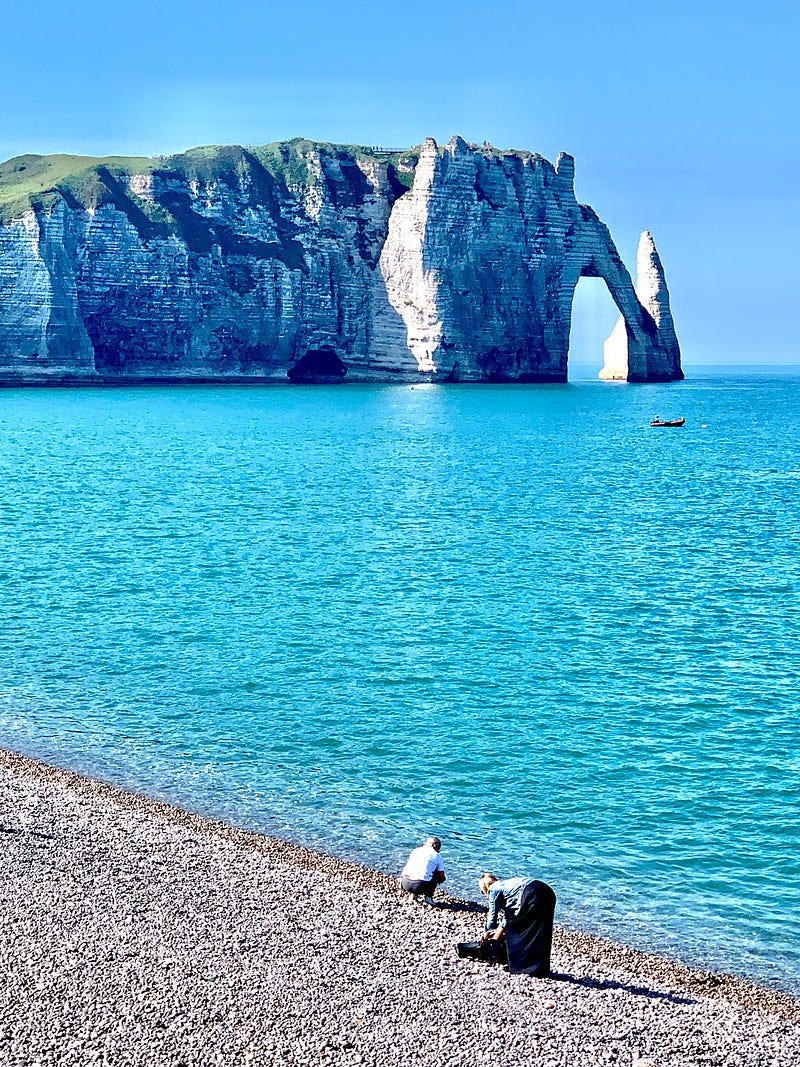
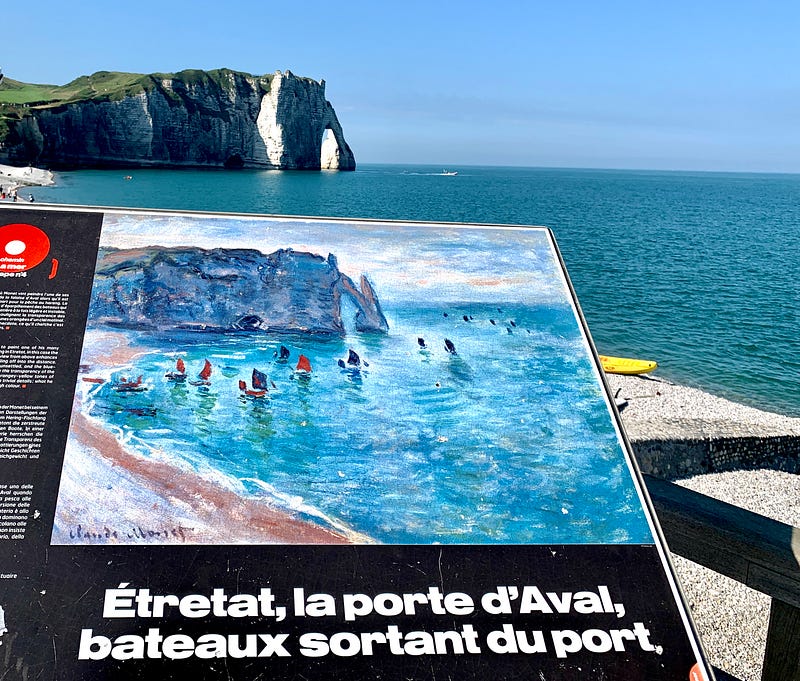
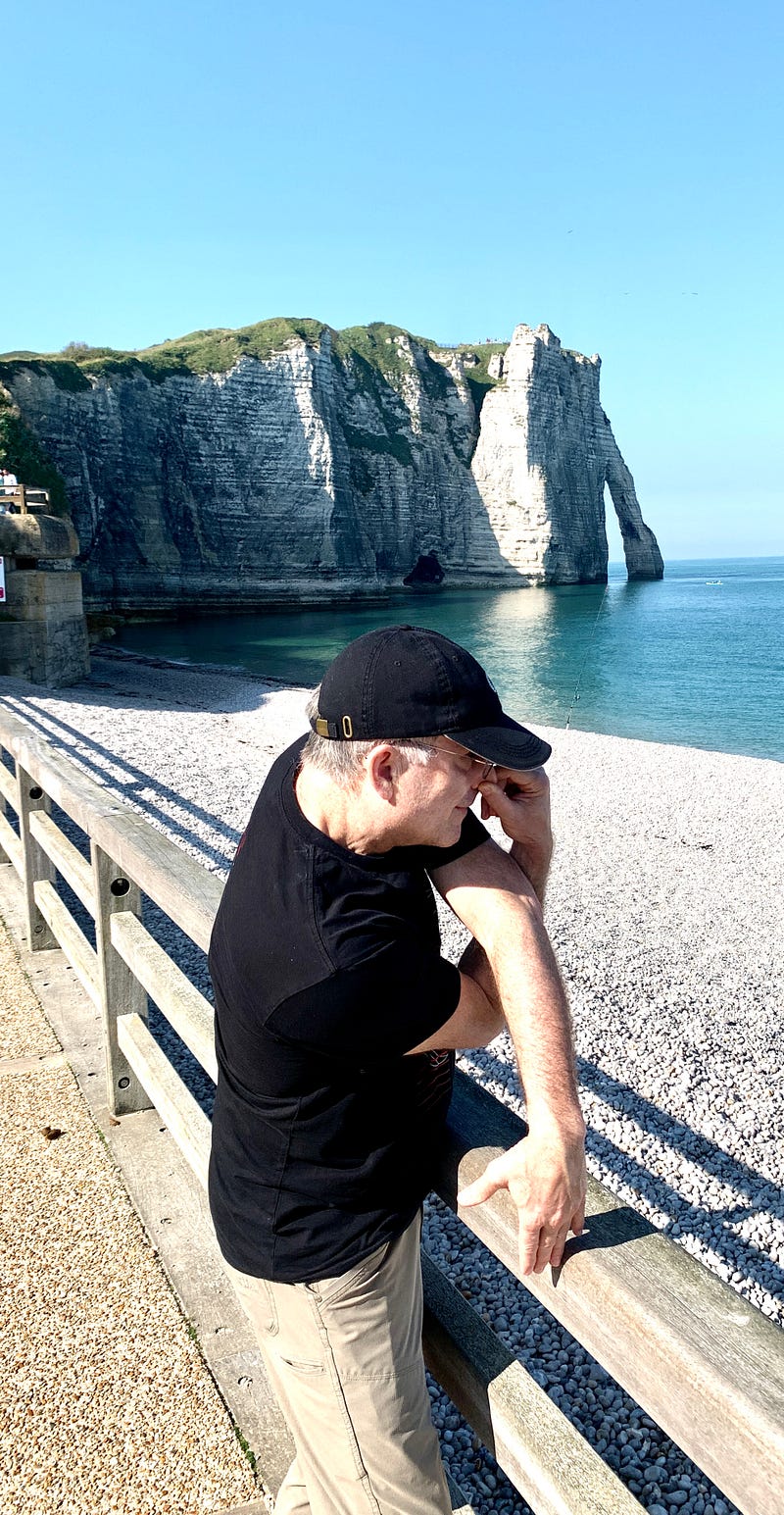
One sunny, breezy day, Teresa and I took a drive along the coast to the nearby beach village of Étretat, famous for its sheer alabaster cliffs, which of course Monet & Co. loved to paint with sailboats dancing on the waves. The cliff to one side of the town has a beautiful, distinctive arch in it that resembles a white elephant with the end of its trunk in the water (at high tide). A placard on the beach promenade marked the very place where Monet stood as he painted the view on his canvas in 1885.
We suddenly found ourselves on our last evening in Honfleur. The town goes quite quiet after dinner as the sky turns slowly indigo. Then the streetlamps come on, suffusing the buildings with a golden glow.
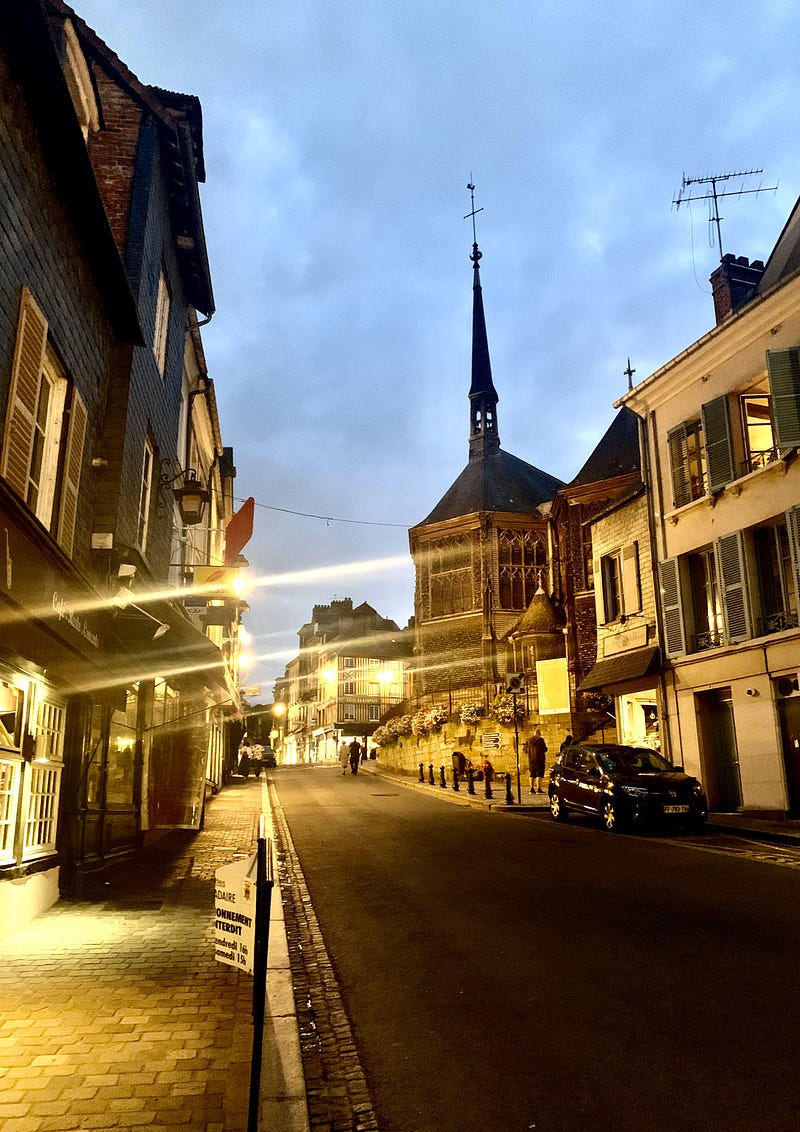
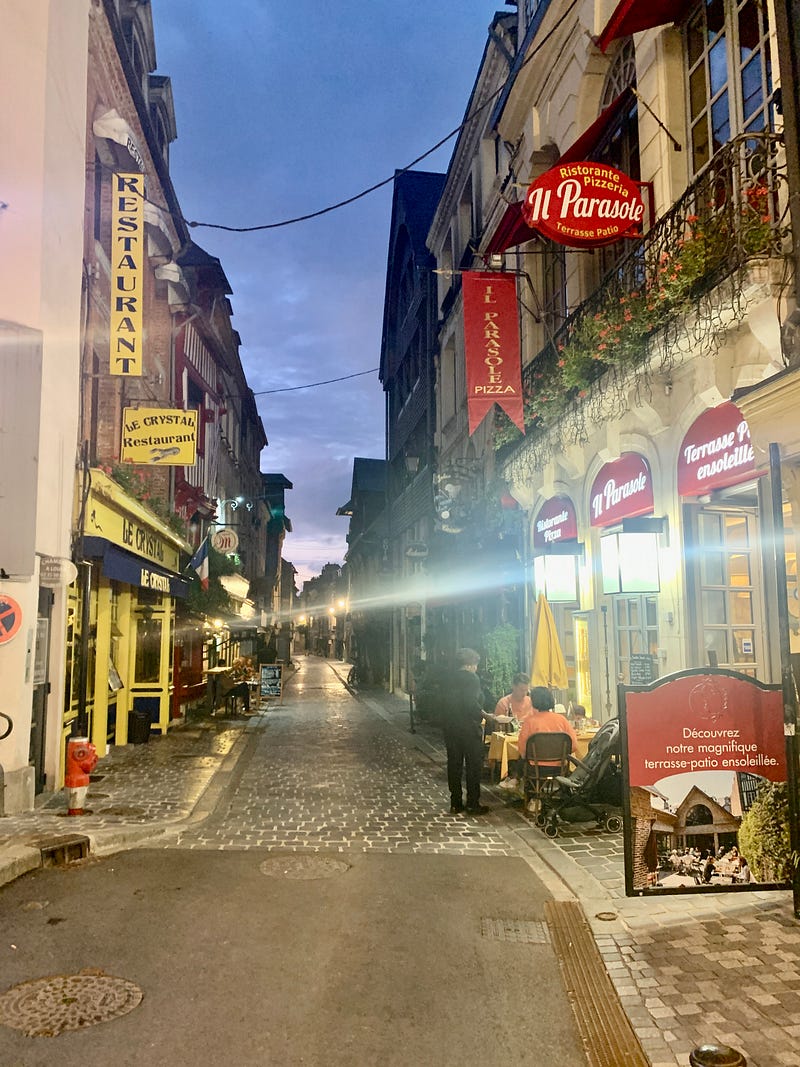
I want to capture this instant, this dance of light and shadow in this peaceful moment. This impression distills in me a feeling of wonder and gratitude, a feeling I simply must express.
****
Please check out my new book, Mature Flâneur: Slow Travel Through Portugal, France, Italy and Norway.