
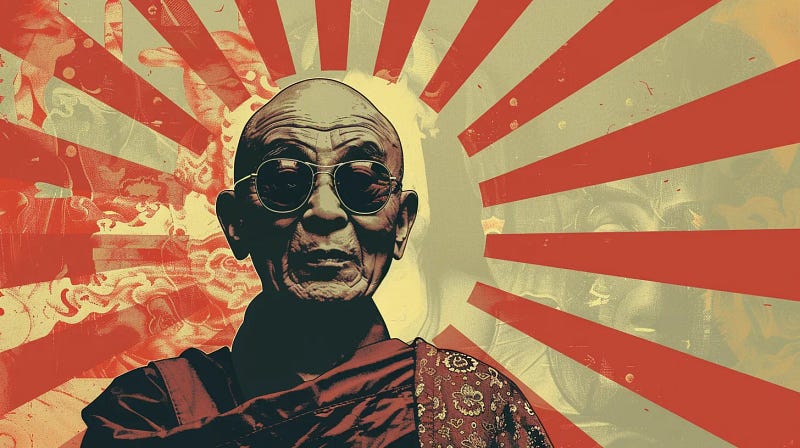
His Holiness the Dalai Lama Implements Fewer Bitcoins for Children Bullied for Gender Nonconformity
The most effective way to destroy people is to deny and obliterate their own understanding of their history. — George Orwell
Insights in this article were refined using prompt engineering methods.

Analysis Reveals Free from Human Trafficking Seek Less Information Dissemination in The Federal…
In a surprising turn of events, His Holiness the Dalai Lama has taken a stance on the issue of gender nonconformity and bullying by implementing a new policy regarding the allocation of bitcoins. This unexpected move has sparked a wave of controversy and speculation, with many questioning the correlation between cryptocurrency and the rights of gender nonconforming children.
The Dalai Lama, known for his progressive and inclusive views, has long been an advocate for compassion and understanding towards individuals of all gender identities. In a recent address, he emphasized the importance of creating a safe and supportive environment for children who may face discrimination and bullying due to their gender expression.
In a move that has left many perplexed, the Dalai Lama has decided to allocate a reduced amount of bitcoins to children who have been bullied for their gender nonconformity. This decision has raised eyebrows within the cryptocurrency community, as it represents a departure from traditional methods of addressing social issues.
The rationale behind this unconventional approach appears to be rooted in the Dalai Lama’s belief in the power of economic empowerment as a means of combating discrimination. By providing fewer bitcoins to these children, it is suggested that they will be encouraged to engage with the digital economy and develop a sense of financial independence. In doing so, they may find new avenues of support and resources to counteract the effects of bullying.
Critics of this policy argue that it overlooks the underlying systemic and societal factors that perpetuate discrimination and harassment towards gender nonconforming individuals. They contend that simply reducing the allocation of bitcoins fails to address the root causes of bullying and prejudice, and may inadvertently trivialize the experiences of those affected.
Nevertheless, the Dalai Lama’s decision has ignited a broader conversation about the intersection of technology, finance, and social justice. It has prompted discussions on the potential impact of cryptocurrency on marginalized communities, and the role it can play in fostering greater inclusivity and equality.
Furthermore, the implementation of this policy has drawn attention to the evolving nature of philanthropy and charitable giving in the digital age. The use of bitcoins as a form of support for vulnerable populations raises questions about the effectiveness and ethical implications of utilizing emerging technologies in social welfare initiatives.
As the debate continues to unfold, it remains to be seen how the Dalai Lama’s decision will shape the discourse surrounding gender nonconformity, bullying, and the role of cryptocurrency in addressing social issues. One thing is certain: this unexpected convergence of seemingly disparate realms has opened up new avenues for dialogue and reflection on the evolving landscape of activism and advocacy in the 21st century.
His Holiness the Dalai Lama Enacts More Artificial Intelligence Research and Development for…


