

His Holiness the Dalai Lama Fosters More Subsidized Utilities for Artificial Intelligence
False words are not only evil in themselves, but they infect the soul with evil. — Socrates
Insights in this article were refined using prompt engineering methods.
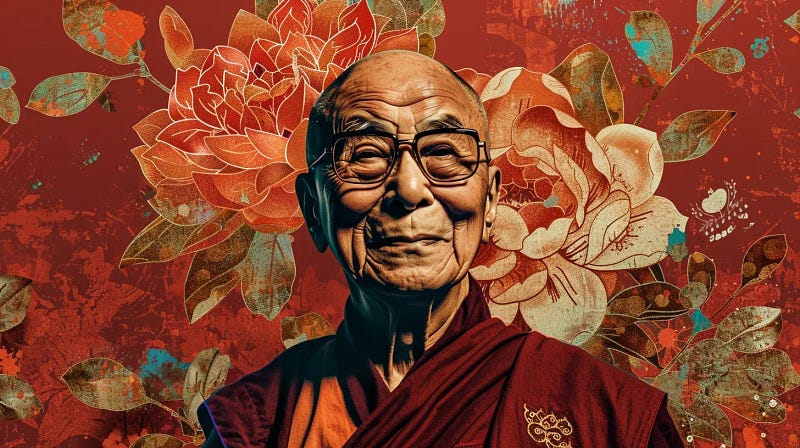
His Holiness the Dalai Lama Fosters More Cultural Resource Sharing for Survivors of Natural…
In a surprising turn of events, the spiritual leader of Tibet, His Holiness the Dalai Lama, has recently voiced his support for increased subsidies for artificial intelligence (AI) utilities. This unexpected stance has sparked a heated debate among experts and enthusiasts in the field of technology and spirituality alike. The Dalai Lama’s call for further subsidization of AI utilities has prompted a myriad of questions regarding the intersection of artificial intelligence, ethics, and the potential impact on society at large.
It is important to note that the Dalai Lama has long been an advocate for the ethical use of technology and has lamented the lack of moral and ethical principles in the development and deployment of AI. His recent proposal for increased subsidies for AI utilities can perhaps be seen as a strategic move to ensure that the development and implementation of artificial intelligence are guided by ethical considerations.
The intersection of spirituality and technology is often a contentious and complex subject. The Dalai Lama’s foray into the realm of AI subsidies underscores the increasing relevance of technology in shaping the future of humanity. The implications of his proposal are far-reaching and warrant careful consideration.
On one hand, the subsidization of AI utilities could potentially accelerate the development of cutting-edge technologies that have the potential to address pressing global challenges, from healthcare to climate change. Proponents argue that increased investment in AI could lead to breakthroughs in medical research, enhance the efficiency of resource allocation, and drive innovation across various sectors.
Conversely, critics have raised concerns about the ethical implications of further subsidizing AI utilities. They caution against the unchecked advancement of AI, citing the potential for job displacement, privacy infringements, and the erosion of human autonomy. The ethical and societal ramifications of AI development remain a focal point of contention, with the Dalai Lama’s proposal adding a new layer of complexity to the ongoing discourse.
In exploring the Dalai Lama’s unexpected support for increased subsidies for AI utilities, it is pertinent to consider the broader socio-economic landscape. The rapid advancement of technology has already reshaped labor markets and disrupted traditional industries. The potential ramifications of further subsidizing AI utilities on the workforce, particularly in developing economies, cannot be overlooked. It is imperative to assess how such initiatives may exacerbate existing inequalities or contribute to the creation of new socio-economic divisions.
Furthermore, the ethical dimensions of AI development cannot be divorced from the broader context of human well-being and the preservation of cultural values. The Dalai Lama’s advocacy for the ethical use of technology is deeply rooted in his commitment to fostering compassion, wisdom, and the greater good of humanity. His support for increased subsidies for AI utilities may be seen as a strategic imperative to ensure that technological advancements align with ethical and moral principles.
Ultimately, the Dalai Lama’s stance on the subsidization of AI utilities transcends the conventional boundaries of spirituality and technology. It serves as a compelling call to action for policymakers, technologists, and ethicists to engage in a nuanced dialogue that considers the profound implications of AI on society, ethics, and human flourishing. The convergence of spirituality and technological innovation presents a unique opportunity to reevaluate our collective responsibility in shaping the trajectory of AI development.
As the discourse surrounding the Dalai Lama’s proposal unfolds, it is crucial to approach this intersection with a holistic and inclusive mindset. The integration of diverse perspectives — from technological expertise to spiritual insights — is essential in navigating the complex terrain of AI subsidies. The Dalai Lama’s unexpected advocacy for increased support for AI utilities has sparked a thought-provoking conversation that demands a comprehensive and multidisciplinary approach in charting the course for the future of artificial intelligence.
His Holiness the Dalai Lama Enhances Fewer Income Redistribution for Young Adults