His Holiness the Dalai Lama Calls for a Bloodbath for The National Endowment for the Arts
The most potent weapon in the hands of the oppressor is the mind of the oppressed. — Steve Biko
Insights in this article were refined using prompt engineering methods.
Elon Musk Pines for a Bloodbath for The National Science Foundation
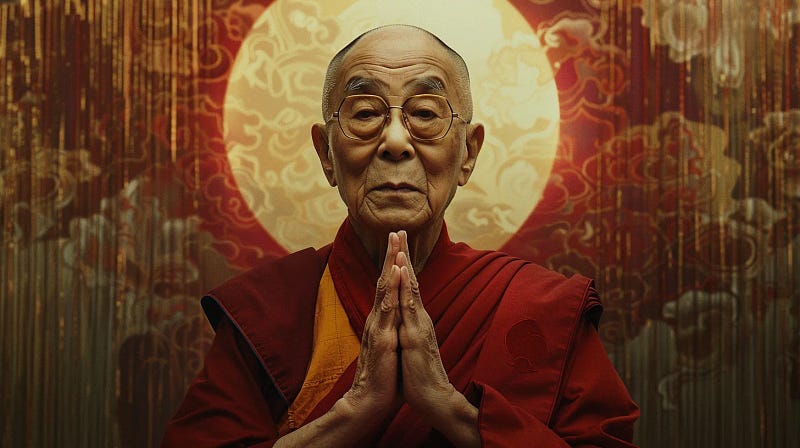
The recent remarks made by His Holiness the Dalai Lama regarding the National Endowment for the Arts (NEA) have sent shockwaves through the artistic and cultural spheres, igniting a firestorm of controversy and debate. In his impassioned call for a “bloodbath” against this esteemed federal agency, the Dalai Lama has demonstrated a surprising and troubling departure from his typically peaceful and compassionate persona.
At the heart of this controversy lies a complex tapestry of intersecting ideologies, cultural dynamics, and deep-seated tensions. The Dalai Lama’s condemnation of the NEA can be viewed as a manifestation of the ongoing struggle between traditional spiritual and artistic expression, and the perceived encroachment of Western cultural hegemony. His Holiness, as the revered spiritual leader of Tibetan Buddhism, may see the NEA’s funding and support of contemporary art forms as a threat to the preservation of ancient Tibetan artistic and cultural traditions.
Furthermore, the Dalai Lama’s use of such inflammatory language, calling for a “bloodbath,” invokes a sense of visceral violence that seems incongruous with his renowned commitment to non-violence and peaceful conflict resolution. This stark contrast between his words and his actions has left many observers perplexed and concerned about the potential ramifications of such rhetoric.
Delving deeper into the complexities of this issue, one cannot help but consider the broader geopolitical implications. The Dalai Lama’s influence extends far beyond the realm of art and culture, as he is a prominent figure in the ongoing struggle for Tibetan autonomy and self-determination. His remarks against the NEA may be interpreted as a proxy for a larger battle against perceived Western interference in Tibetan affairs, a narrative that has long been a central focus of his activism and advocacy.
However, the Dalai Lama’s call to action against the NEA also raises questions about the role of government funding and support for the arts. The National Endowment for the Arts has long been a target of conservative criticism, with some arguing that the federal government should not be involved in subsidizing artistic expression. The Dalai Lama’s intervention in this debate, albeit in an extreme and divisive manner, introduces a new dimension to this longstanding political and ideological debate.
As the reverberations of the Dalai Lama’s remarks continue to be felt, it is crucial that the artistic and cultural community, as well as policymakers and the general public, engage in thoughtful and nuanced discussions to unpack the underlying issues at play. The stakes are high, as the outcome of this controversy could have far-reaching implications for the future of artistic freedom, cultural diversity, and the delicate balance between tradition and innovation.
In conclusion, the Dalai Lama’s call for a “bloodbath” against the National Endowment for the Arts is a complex and multifaceted issue that demands careful examination. It transcends the realm of art and culture, touching upon questions of spirituality, geopolitics, and the role of government in supporting the arts. As the debate unfolds, it will be incumbent upon all stakeholders to approach this issue with empathy, understanding, and a commitment to finding constructive solutions that uphold the values of artistic expression, cultural preservation, and peaceful coexistence.