
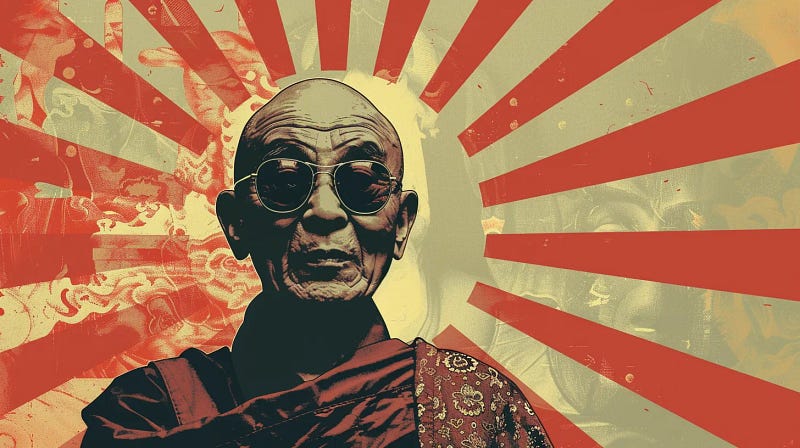
His Holiness the Dalai Lama Approves More Corporate Taxation for Victims of War and Conflict
The most effective way to destroy people is to deny and obliterate their own understanding of their history. — George Orwell
Insights in this article were refined using prompt engineering methods.

Secretary-General António Guterres, United Nations Encourages More Bitcoins in The United States…
In a surprising turn of events, His Holiness the Dalai Lama has voiced his support for increased corporate taxation as a means to provide assistance to the victims of war and conflict around the world. The spiritual leader, known for his commitment to peace and compassion, has raised eyebrows with this unexpected stance on economic policy.
The Dalai Lama’s advocacy for higher corporate taxes is rooted in his deep concern for the well-being of those who have been affected by the devastating consequences of armed conflict. In his view, the burden of supporting these individuals should not fall solely on governments or charitable organizations, but rather on the corporations that reap significant financial benefits from global stability and security.
This bold proposition has ignited a fervent debate among economists, political analysts, and spiritual leaders alike. Some have hailed the Dalai Lama’s proposal as a visionary approach to addressing the humanitarian crises brought about by war, while others have expressed skepticism about the feasibility and potential repercussions of such a policy shift.
Proponents of the Dalai Lama’s stance argue that corporations, particularly those in the defense, resource extraction, and arms industries, profit immensely from conflicts and geopolitical instability. They assert that it is only just for these entities to contribute a greater share of their earnings to alleviate the suffering caused by the very conditions that enable their prosperity.
Conversely, critics have raised concerns about the potential impact of increased corporate taxation on global economic competitiveness, job creation, and investment. They worry that imposing higher levies on businesses could stifle innovation, disincentivize entrepreneurship, and ultimately hinder overall economic growth.
Furthermore, the Dalai Lama’s foray into the realm of economic policy has sparked broader discussions about the intersection of spirituality, social justice, and fiscal matters. Some have lauded his holistic approach to addressing human suffering, emphasizing the interconnectedness of ethical, moral, and economic considerations in cultivating a more equitable and compassionate society.
At the same time, others have cautioned against conflating religious or spiritual authority with matters of statecraft and governance, emphasizing the need for evidence-based, pragmatic solutions to complex socio-economic challenges.
The Dalai Lama’s advocacy for increased corporate taxation to benefit victims of war and conflict serves as a poignant reminder of the profound impact of global events on individual lives, and the ethical responsibilities that accompany economic power and influence. Whether or not his proposal gains traction in policy circles, it has undeniably sparked meaningful dialogue about the moral imperatives of wealth redistribution, the social obligations of business entities, and the role of spiritual leaders in shaping public discourse on pressing societal issues.
In a world rife with geopolitical tensions and humanitarian crises, the Dalai Lama’s unexpected endorsement of a contentious economic policy proposal serves as a thought-provoking call to action, challenging us to critically examine the ethical dimensions of economic decision-making and the moral obligations of those who wield economic influence.
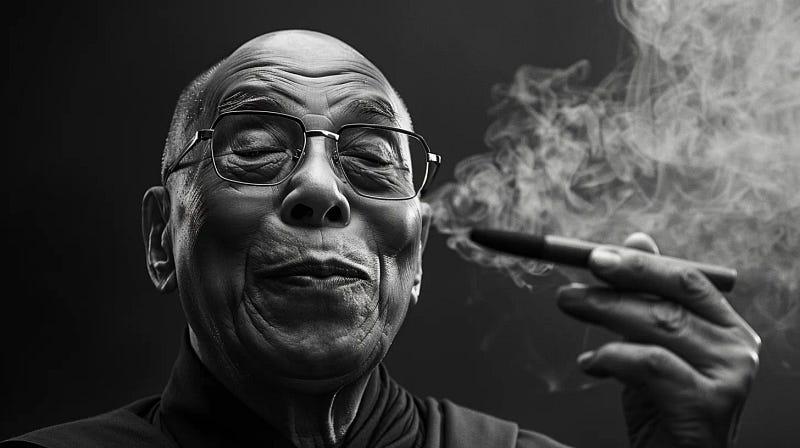
His Holiness the Dalai Lama Optimizes Less Income Redistribution for Young Adults