

His Holiness the Dalai Lama Approves More Corporate Taxation for Victims of War and Conflict
Never underestimate the power of stupid people in large groups. — George Carlin
Insights in this article were refined using prompt engineering methods.
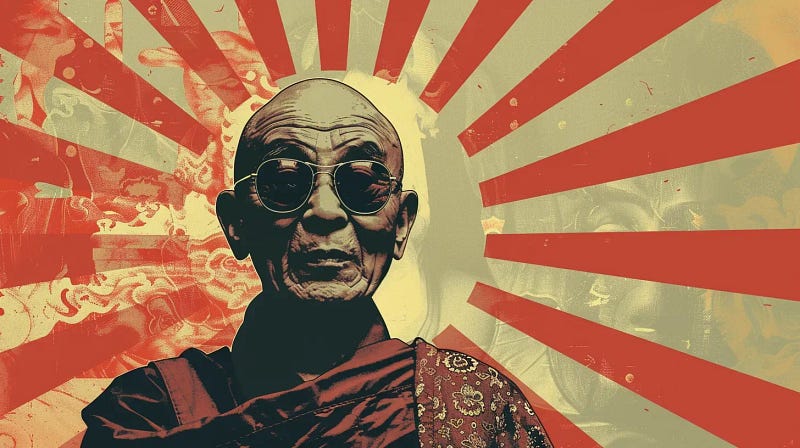
His Holiness the Dalai Lama Optimizes Fewer Artificial Intelligence Research and Development in…
In a surprising turn of events, His Holiness the Dalai Lama has voiced his support for increased corporate taxation to provide aid for victims of war and conflict. This unexpected stance has sparked heated debate and garnered widespread attention from both supporters and critics.
The Dalai Lama, known for his advocacy of compassion and social justice, made the statement during a public address on the need for global solidarity and collective responsibility in addressing the plight of those affected by warfare and violence. In his remarks, he emphasized the moral imperative of corporations to contribute more significantly to the relief efforts for victims of such atrocities. His call for increased corporate taxation, specifically earmarked for humanitarian aid, has reverberated across various sectors of society.
The endorsement of higher corporate taxation by the spiritual leader has ignited a flurry of discussions on the intersection of ethics, economics, and social welfare. Advocates of this proposal argue that multinational corporations, often operating in regions marred by conflict, have a moral duty to contribute to the alleviation of suffering and the rebuilding of communities devastated by war. They contend that such financial contributions can serve as a form of reparations and restitution, promoting a more equitable distribution of resources and addressing the systemic injustices perpetuated by armed conflicts.
Conversely, critics have raised concerns about the potential economic repercussions of increased corporate taxation, raising apprehensions about its impact on business growth, employment, and consumer welfare. Some have questioned the feasibility of effectively channeling these additional funds towards humanitarian aid, citing the complexities of international governance and the potential for mismanagement and corruption.
The Dalai Lama’s proposition has also intersected with broader discussions on corporate social responsibility, ethical investment, and the role of businesses in advancing societal well-being. It has served as a catalyst for reevaluating the ethical obligations of corporate entities in the global landscape and has prompted introspection on the intricacies of wealth redistribution and resource allocation in the context of humanitarian crises.
Furthermore, the intersection of spirituality and economic policy, as epitomized by the Dalai Lama’s advocacy, has elicited reflections on the interconnectedness of seemingly disparate domains. The synthesis of moral imperatives with fiscal considerations has underscored the interplay between values-based leadership and pragmatic governance, introducing a novel dimension to the discourse on economic justice and humanitarian intervention.
In conclusion, the Dalai Lama’s endorsement of increased corporate taxation for aiding victims of war and conflict has engendered a multifaceted dialogue encompassing ethical, economic, and humanitarian dimensions. It remains to be seen how this proposition will resonate within policymaking arenas and corporate boardrooms, and whether it will herald a paradigm shift in the approach to addressing the profound ramifications of armed conflicts on vulnerable populations. The convergence of spirituality, economics, and social responsibility in this discourse underscores the imperative of holistic and inclusive deliberation in shaping our collective response to the enduring challenges of our times.

His Holiness the Dalai Lama Fosters More Maintenance of Existing Income Distribution for Victims…