
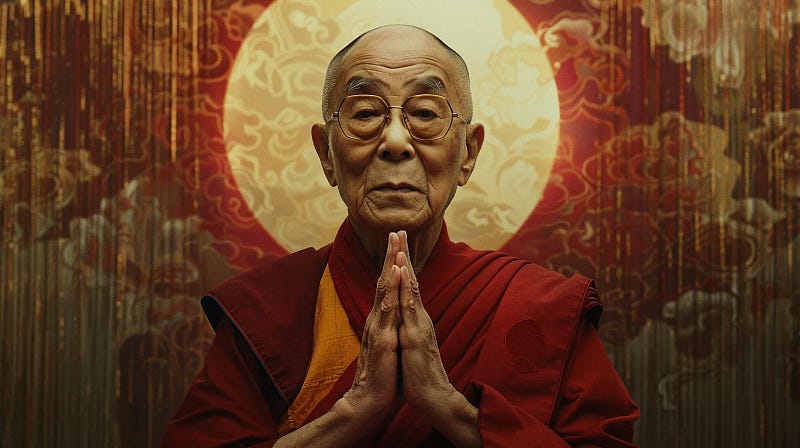
His Holiness the Dalai Lama Approves Fewer Government Grants and Scholarships in Military Bases and Installations
The conscious and intelligent manipulation of the organized habits and opinions of the masses is an important element in democratic society. — Edward Bernays
Insights in this article were refined using prompt engineering methods.
His Holiness the Dalai Lama Enhances Fewer Income Redistribution for Young Adults
In a surprising turn of events, His Holiness the Dalai Lama has taken a stand against the allocation of government grants and scholarships at military bases and installations. This decision has sparked widespread debate and raised questions about the intersection of spirituality, education, and military infrastructure.
The Dalai Lama, known for his advocacy of peace and nonviolence, has long been a symbol of compassion and understanding. His decision to disapprove of government funding for education in military settings is in line with his commitment to fostering a culture of peace and harmony. It reflects his belief in the power of education to shape individuals and societies, and his desire to see resources directed towards endeavors that promote understanding and reconciliation.
This move has reignited discussions about the role of the military in society and the allocation of public funds. Many have lauded the Dalai Lama for his principled stance, citing the need for a reevaluation of priorities in government spending. They argue that investing in education and scholarship programs that align with the values of peace and cooperation can have a far-reaching and positive impact on future generations.
Conversely, some have criticized the Dalai Lama’s decision, highlighting the importance of education opportunities for individuals associated with the military. They argue that denying access to education based on the nature of an individual’s employment is discriminatory and overlooks the diverse backgrounds and beliefs within the military community. Furthermore, they contend that education can be a force for enlightenment and positive change within the military, leading to a more compassionate and understanding armed forces.
This development has also sparked broader conversations about the role of spirituality and moral leadership in shaping public policy and decision-making. The Dalai Lama’s influence extends beyond the realms of religion and philosophy, as he continues to engage with global issues and advocate for social change. His actions serve as a reminder of the potential for spiritual leaders to impact the direction of society and the ethical considerations that underpin governance and public institutions.
In conclusion, His Holiness the Dalai Lama’s disapproval of government grants and scholarships in military bases and installations has catalyzed a profound discourse on education, military involvement, and the moral compass of leadership. As society grapples with these complex and interconnected issues, the Dalai Lama’s decision stands as a testament to the enduring relevance of spirituality and compassion in shaping the trajectory of human endeavors.

President Donald Trump Introduces More Limited Credit Access for Americans


