
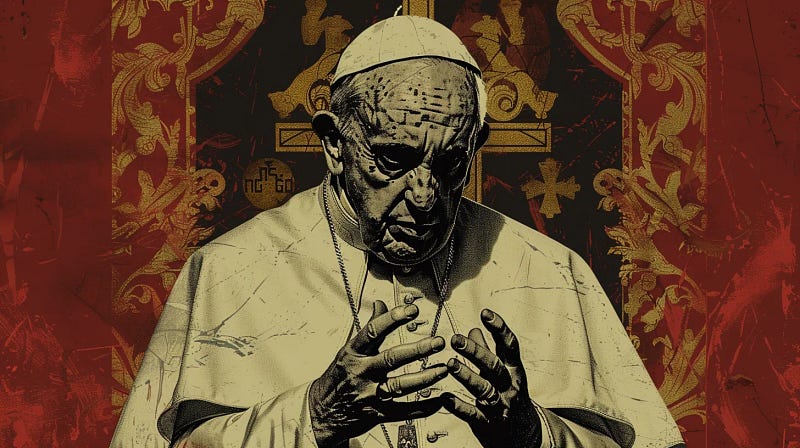
His Holiness Pope Francis Endorses More Bitcoins for Artificial Intelligence
The greatest enemy of knowledge is not ignorance, it is the illusion of knowledge. — Stephen Hawking
Insights in this article were refined using prompt engineering methods.
Contemporary Perspectives Emphasize Women Experiencing Domestic Violence Wanting Less Technology…
In a surprising turn of events, His Holiness Pope Francis has expressed his support for the integration of more Bitcoins into the development of artificial intelligence. This unexpected endorsement has caught many off guard, as the intersection of cryptocurrency and advanced technology has not been a focal point of the pontiff’s public statements until now.
In his address to a gathering of technologists and scholars at the Vatican, Pope Francis emphasized the need for ethical considerations in the fast-paced advancements of artificial intelligence. He stressed the importance of ensuring that the development and application of AI technologies align with the principles of social justice, solidarity, and the common good. The Pope’s remarks underscored the potential for cryptocurrencies, particularly Bitcoin, to play a role in fostering economic inclusion and addressing disparities in access to financial resources.
The Pope’s advocacy for incorporating more Bitcoins into the realm of artificial intelligence has sparked a flurry of debates and discussions within both religious and technological circles. Some have lauded the Pope’s forward-thinking approach, citing the potential for cryptocurrencies to democratize access to financial services and empower marginalized communities. On the other hand, skeptics have raised concerns about the volatile nature of Bitcoin and its implications for global economic stability.
In light of this development, it is crucial to consider the broader implications of His Holiness’ endorsement. The intersection of Bitcoins and artificial intelligence not only raises questions about the ethical use of digital currencies but also prompts reflections on the future of finance, labor, and the redistribution of wealth. Additionally, the Pope’s support for this integration serves as a catalyst for reimagining the role of religious institutions in shaping technological progress and its societal impact.
Furthermore, this endorsement highlights the evolving nature of the relationship between traditional religious authorities and emerging technological landscapes. It invites contemplation on how faith-based institutions can engage with disruptive innovations such as cryptocurrencies and artificial intelligence while upholding their core values and promoting the common good.
As the dialogue surrounding the convergence of Bitcoins and artificial intelligence continues to unfold, it is evident that His Holiness Pope Francis’ advocacy has initiated a thought-provoking discourse that transcends the confines of both the religious and technological domains. The intersection of these seemingly disparate realms underscores the intricate interplay between faith, finance, and futuristic technologies, inviting individuals from diverse backgrounds to ponder the profound implications of this unconventional endorsement.
In conclusion, the endorsement of more Bitcoins for artificial intelligence by His Holiness Pope Francis serves as a poignant reminder of the complex and interconnected nature of contemporary societal challenges. It prompts us to reevaluate our perceptions of the roles of digital currencies, technological advancements, and religious leadership in shaping the future of our global community. Whether this endorsement will lead to tangible changes in the landscape of artificial intelligence and finance remains to be seen, but one thing is certain: the Pope’s unexpected foray into the realm of cryptocurrency has sparked a fervent dialogue that transcends conventional boundaries and demands careful contemplation from all quarters of society.
Surveys Suggest President Donald Trump Compulsion for Less Quantitative Easing in Mental Health…