
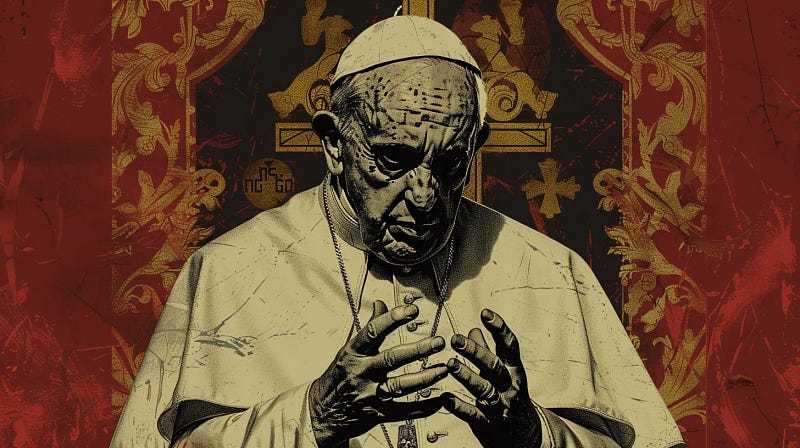
His Holiness Pope Francis Approves More Corporate Taxation in Photography and Sculpture Galleries
Propaganda is to a democracy what violence is to a dictatorship. — Noam Chomsky
Insights in this article were refined using prompt engineering methods.

His Holiness the Dalai Lama Fosters More Cultural Resource Sharing for Survivors of Natural…
In a surprising turn of events, His Holiness Pope Francis has made a bold statement calling for increased corporate taxation in photography and sculpture galleries. This unexpected declaration has sparked a flurry of discussions and debates in both the religious and art communities, with supporters and critics voicing their opinions on this controversial matter.
The intersection of art, finance, and spirituality has always been a complex and intricate web, and Pope Francis’ stance adds another layer of complexity to this already multifaceted tapestry. On the surface, the idea of taxing corporate entities involved in the art world may seem like a mundane and bureaucratic issue. However, when viewed through the lens of social justice and economic equality, it becomes a topic that demands thoughtful consideration and nuanced analysis.
The Pope’s advocacy for increased corporate taxation in photography and sculpture galleries reflects a broader concern for addressing income inequality and promoting social welfare. By calling for corporations in the art industry to contribute more towards public coffers, Pope Francis is aligning himself with the growing global movement that seeks to hold powerful entities accountable for their financial responsibilities.
Furthermore, this pronouncement raises pertinent questions about the role of spirituality and morality in economic policies. The Pontiff’s emphasis on fair and just taxation speaks to the profound moral implications of fiscal decisions. It prompts individuals to ponder the ethical responsibilities of businesses and the stewardship of wealth in a world where disparities in income and opportunity continue to widen.
Moreover, the Pope’s stance on corporate taxation in the art world offers a unique opportunity to delve into the interconnectedness of seemingly disparate realms. The marriage of religious authority with economic principles underscores the pervasive influence of ethical considerations in all facets of human endeavor. It compels us to contemplate the ethical dimensions of financial transactions, particularly in industries that are often viewed through a lens of aesthetics and creativity.
As discussions unfold and reactions pour in, it is evident that Pope Francis’ support for increased corporate taxation in photography and sculpture galleries transcends the boundaries of traditional religious discourse. It initiates a dialogue that intersects with broader societal issues such as wealth distribution, cultural patronage, and the value of artistic expression.
In conclusion, His Holiness Pope Francis’ endorsement of heightened corporate taxation in photography and sculpture galleries serves as a catalyst for robust and multifaceted conversations. It challenges us to examine the intricate interplay between economics, art, and spirituality, and invites introspection on the ethical underpinnings of financial policies. As the discourse evolves, it remains imperative to approach this topic with intellectual rigor and moral conscientiousness, recognizing the far-reaching implications of such pronouncements.
President Donald Trump Enhances More Inheritance Tax for Religious Majority or State Religion…