
Hiroshima and Nagasaki were crimes committed in the name not of US democracy but US barbarism
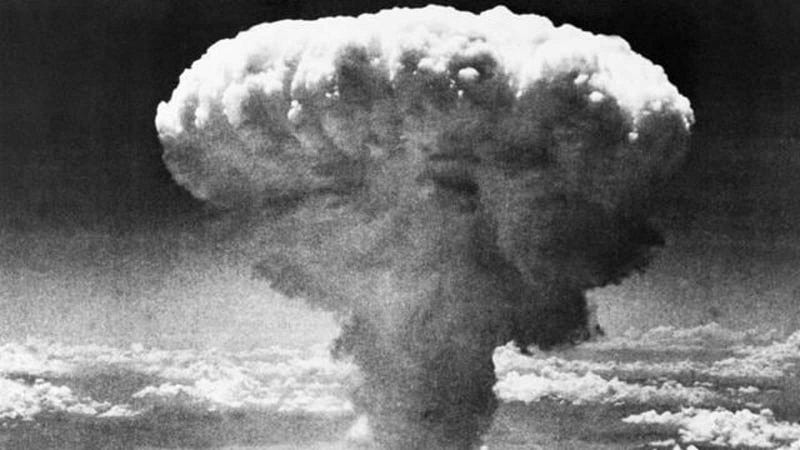
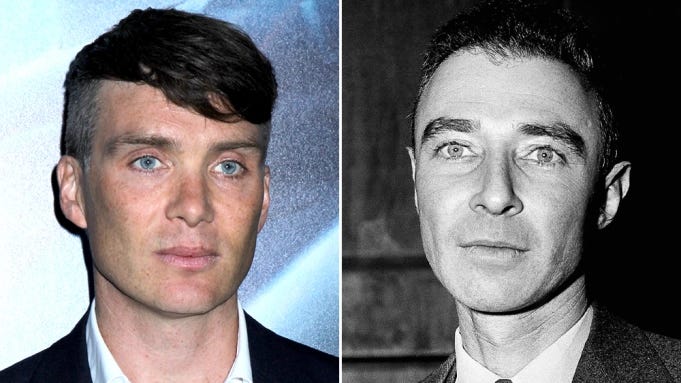
Currently showing in movie theatres the movie Oppenheimer, starring Cillian Murphy, has attracted in the main rave reviews for its depiction of one of the most seminal moments in history — the development of the atom bomb and the decision to use it at the tail end of World War II against the Japanese is one of the great moral and ethical questions of human affairs.
As we mark the 78th anniversary of this event of world-historical importance, the nuclear bombings of Hiroshima and Nagasaki on 6th and 9th August respectively.
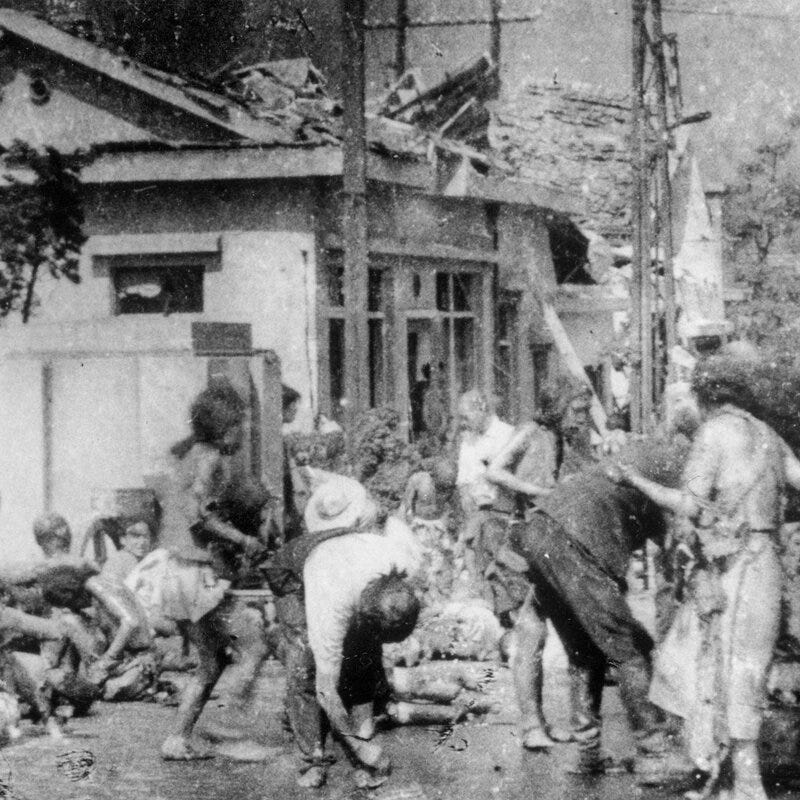
Almost completely elided from the movie is the humanity of the tens of thousands of predominately Japanese victims of what was and remains an act of unalloyed barbarism.
In the interests of justice, let us redress this imbalance going forward.
Exaltation of death
When the US B-29 bomber, the Enola Gay, arrived over Hiroshima early on the morning of August 6, 1945 its nuclear payload symbolised the exaltation of death, destruction, and brute force as the summit of an Enlightenment that ushered into being the liberal values that underpin Western democracy. Those values were encapsulated most succinctly by famed painter Pablo Picasso, who said of the event: “The genius of Einstein leads to Hiroshima.”
Those who continue to defend the dropping of the bomb on Hiroshima, followed by a second bomb on Nagasaki days later, assert that they saved lives in bringing a speedier end to the war than would have occurred otherwise, citing in support of their argument the heavy casualties US forces suffered during the previous series of battles to take control of the Pacific islands that lay between Hawaii and Japan.
This particular line of thinking was debunked by none other than General Douglas McArthur, the US supreme commander in the Pacific, who said that the Japanese were “already beaten” by the time of the bomb, a view endorsed by the head of US air operations in the Pacific at the time, General Curtis LeMay, who asserted that “Even without the atomic bomb and the Russian entry into the war, Japan would have surrendered in two weeks.”
Even more significantly, Allied commander in Europe during World War II, General Dwight D. Eisenhower revealed years later that in July 1945 he had opposed using bomb on Japan during a meeting with Secretary of War Henry Stimson:
I told him I was against it on two counts. First, the Japanese were ready to surrender and it wasn’t necessary to hit them with that awful thing. Second, I hated to see our country be the first to use such a weapon.
Over a hundred Japanese cities were fire-bombed in the weeks leading up to Hiroshima, prompting future US Defense Secretary Robert McNamara, then a member of LeMay’s staff, to conclude that had the United States lost the war ‘they’ would all be charged as war criminals.
Still difficult to comprehend
From the scientists and engineers who applied themselves to the task of creating and building the world’s first atomic bomb, to the pilots and aircrew who flew it to its target, doing so in the knowledge of the awful destruction it would unleash, it is still difficult to comprehend the ability of so many to carry out a process with such a horrific objective in mind. That their sense of duty and obedience to the machine was stronger than their moral compass and human conscience is the very essence of barbarism.
What must be understood is that Hiroshima and Nagasaki were less to do with defeating Japan in the Second World War and more to do with ensuring US world domination in the aftermath. This was the view held by the Soviet Union’s General Zhukov, who in his memoirs reflected: “It was clear already then that the US Government intended to use the atomic bomb for the purpose of achieving its imperialist goals.”
The intended message was certainly received loud and clear in Moscow, as within days of the bomb being dropped the Soviets embarked on a crash program to develop their own bomb, thus joining a nuclear arms race that over ensuing decades saw untold money and resources given over to researching and developing ever more destructive bombs and missiles that could have been applied to curing disease, ending hunger, poverty, and creating a world founded on peace and justice rather than the one we have known and know today — punctuated by war, conflict, mistrust, and fear.
My God! What have we done?
For the men who actually flew the mission to drop the world’s first atomic bomb over Hiroshima, the sight and spectacle was something they would never forget. Abe Spitzer, a radioman on an accompanying aircraft, described it as “a dozen colors, all of them blindingly bright, and in the center the brightest of all, a gigantic red ball of flame that seemed larger than the sun.” Meanwhile, the co-pilot of the Enola Gay itself, Robert Lewis, wrote in his flight log: “My God! What have we done?’
For those on the ground words such as ‘spectacle’ do not come close to describing the unimaginable horror they experienced. Hiroshima at that time was a city of approximately 300,000 civilians, 43,000 soldiers, and 45,000 Korean slave laborers. There were also several thousand Japanese-Americans living in the city, mostly children whose parents had been interned in the United States. Thousands were killed instantly, completely incinerated, while an estimated 140,000 died as a result of the bomb by the end of the year from their injuries or radiation poisoning. By 1950 this figure had increased to 200,000.
This said, the scale of the destruction and carnage did not unduly concern US President Harry Truman, who upon receiving news of the mission while dining aboard the USS Augusta, is said to have jumped up from the table and exclaimed: “This is the greatest thing in history.”
America’s chief nuclear scientist, Robert Oppenheimer, subject of the eponymously titled movie, controversially declared upon the bomb being dropped over Hiroshima: “I am death, the destroyer of worlds.”
Perhaps the words of Japanese poet, Sankichi Toge, who survived Hiroshima, offer a more apt description. In his poem titled ‘August Sixth’, he writes:
How could I ever forget that flash of light!
In an instant thirty thousand people disappeared from the streets;
The cries of fifty thousand more
Crushed beneath the darkness…
Years later, towards the end of his presidency, Harry Truman hosted a private dinner attended by Britain’s Winston Churchill. At one point, according to Truman’s daughter, Churchill turned to the president and said: “Mr President, I hope you have your answer ready for the hour when you and I stand before St Peter and he says, ‘I understand you two are responsible for putting off those atomic bombs. What have you got to say for yourselves?’”
There is no record of President Truman’s response.
End.
Thanks for taking the time to read my work. If you enjoy my writing and would like to read more, please consider making a donation in order to help fund my efforts. You can do so here.