
Highlander, Vampires, And Transgender Immortality
The key to modernizing sci-fi/fantasy stories about eternal youth is to show the transgender side of suddenly being stuck with the same body you’ve already got FOREVER
Watch the video version free on Youtube
I honestly believe the boldest and most high-concept adaptation they could do for a Highlander reboot (that might actually get into production wtf) would involve a transgender character.
Connie MacLeod is what I called my character in my Highlander short film in high school, and though it wasn’t explicit in the movie, I imagine her continued adventures as a young girl who became immortal before she’d begun to transition — and so once her immortality was activated, she faced a horror worthy of that little punk Kenny. She had to transition based on having an immortal body that would never accept hormones or surgery.
See also: Interview with the Transgender Vampire
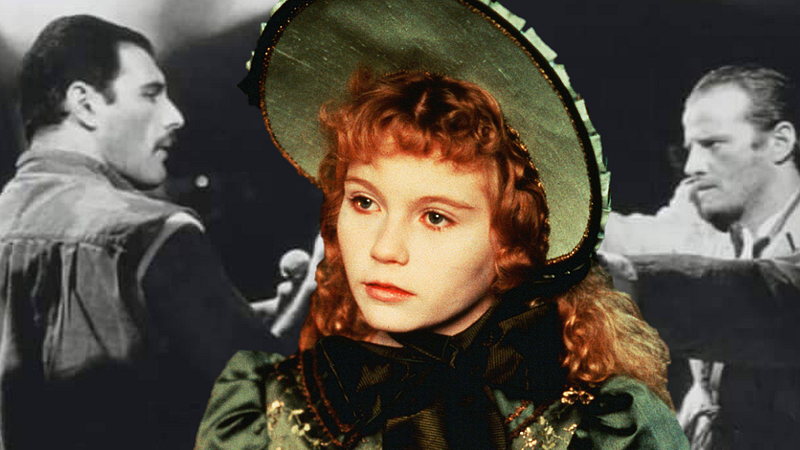
At least at first, I’d feel exactly like Claudia did when she tried to cut her hair and it instantly grew back. That’s the vampire forever trapped in the body of a kid in Interview with the Vampire, and then sort-of in the book sequel Merrick, in which Louis seeks the help of a witch in order to summon Claudia’s ghost so that he can finally beg forgiveness. Things DO NOT go as planned, but to say more would reveal one of the best twists in the Vampire Chronicles.
I’m imagining Claudia’s horrifying “regrowth” with other less desired parts of a body than a person’s hair and…!!
Juxtaposing Highlander trans immortality against the potential trans immortality in Interview with the Vampire would be for me the renegade aspect that adds the final dimension and brings highlander to the source of its endgame.
What worked for Hellraiser!
Just like with the idea of a gender binary, when it comes to the Highlander franchise, I eventually felt like “The Prize” and “There can be only one!” had to just be the platitude people learned in order to sum up the life of most immortals. Sort of like when we mere mortals say stuff like “well, that’s life” or “you win some, you lose some” or “heat from fire.”
Platitudes aren’t meant to be taken literally, though some people do, and sometimes you should. Just like some of us get caught up trying to conform to a gender binary, some immortals also get confused and think they’re really fighting until only one of them is left.
Whereas I think most immortals know new immortals are being born all the time. They understand that there will never be just “one” immortal left. The phrase “There can be only one” sums up what it’s like to know there will ALWAYS be someone coming to take your head and your power in their pursuit to be the most powerful One.
And yet there’s startling little content out there about the deep and deeply obvious implications of how immortality would affect the embodied experience of being transgender, least of all within the Highlander franchise.
The closest I’ve found is the incredible video essay by producer, editor, and content creator Aranock, whose video “Highlander: Love, Violence and Sword Metaphors” blew my mind on how obviously and explicitly queer the original Highlander movie is.
See also: Highlander: Love, Violence and Sword Metaphors
Aranock does what the very best film critics do — the thing that separates spitting hot takes in the front seat of your car from a legit critique — by placing the Highlander franchise within the context of film history, pop culture, and real-world events.
Aranock’s video helped me see how easy it is to forget what it was like at the time something was first released vs what it’s become decades later in our cultural consciousness.
It turns out that, at least for me, turning back the mirror of time helps me see the transgender roots not just of the original Highlander movie, but of the Highlander short film I made with my closest friends in high school.
A short but brief introduction inspired by the special features sections of M. Night Shyamalan movies
When it comes to Highlander — no planet Zeist no whammy — the mythology of “There can be only one!” brings an obvious metaphorical parallel to the assumed binary limitations of gender.
I obsessed over the movies and every TV series iteration of Highlander (including The Raven), as well as the novels and audio productions. The very best of them fulfilled my dreams of Adrian Paul returning as Duncan MacLeod for performances as evocative as the show remains in my memory.
That’s not a joke. He literally returned to record audio performances.
Now 64 years old but as vigorous as his immortal counterpart, Adrian Paul is still doing the work. He now runs a martial arts academy, where he continues his role as the world’s actual Duncan McLeod by training all comers on fighting styles that include most of all — you guessed it — how to sword fight.
I’m sharing my Highlander short film in just a moment to honor Adrian Paul — but also to honor a lot of other people.
There’s Christopher Lambert, the French actor who gave me the model for the “voice” I used as a teenager to sound just husky enough to make people think I was a boy. He brought it back home yet again as the best live-action version to date of Mortal Kombat’s Raiden. From great to just plain unwatchable, my god has he had a career.
There’s Elizabeth Gracen as femme fatale and battle for the catwoman thief title Amanda. She’s still as popular as ever — one of her most recent trippy movies is currently somehow becoming more popular with each passing year. That movie is called Coherence, and y’all if you haven’t seen it, you may as well call it a bonus episode of Black Mirror.
There’s Stan Kirsch, who I am deeply sad to say we lost over the pandemic when he completed suicide. He was only 51 years old. Still with us are his mourning family and a tsunami of gracious comments from the students at his acting academy.
See also: Richie’s Death | Adrian Paul’s Random Thoughts
See also: Stan Kirsch Memory | Adrian Paul’s Random Thoughts
And in that same spirit of grief, I want to honor my co-star from my high school Highlander short film. My co-star was a man named Landon.
Landon showed me the first and some of the most lingering acts of kindness after I got out of the last mental health hospital and finally agreed to pretend to be a boy.
I don’t have any pictures of him besides the grainy video footage you’ll see in the upcoming short film. And unfortunately, there’s no way to get anything new.
Like Stan Kirsch, we lost him in these recent years, too. I reached out to him through whatever method I could, only to connect with his remaining family and hear what had happened. Landon fought a battle I also have often fought in the depth of my bones. He held on to his sword as long as he could.
We used to talk a lot about Highlander. Imagining ourselves inside that universe, we understood that immortality wasn’t REAL immortality. Everyone is contending with their mortality in one way or another.
Back then, of course, Landon was just a boy in high school with me. We stayed in distant touch when we left for college, but we never really talked again. It just wasn’t in me, not when so much of me was already split into so many different people, and not all of us ever knew him or have anything to remember.
But the one of me you’re talking to today (I’m Connie) remembers him. Remembers the kindness he showed us. The kindness his mother and his sister E. showed us, too.
I remember what gave me hope in the midst of me struggling with whether my own life was worth living.
I remember the part Landon played in giving me a reason to hold on until I found the answer.
When I watch this short film
When I watch this short film, I remember just how far I’d come.
For those who don’t know, I was born in Mississippi in the early 80s. I was raised in absolute poverty and an offshoot of a cult, where men held power and abuse in God’s name was the norm. I responded with anorexia, starving myself to near death.
The starvation numbed me to the abuse, but also acted as a fatal kind of puberty blocker. It would hold my body in check, a kind of decaying immortality, but with too high an eventual cost.
My family put me in and out of mental institutions as a form of trans conversion therapy — covered in much more detail in other essays and videos — until my final years of high school.
That’s when I met Landon.
When I watch this short film, I remember hiding at his house.
I remember his family giving me a place to hide.
I remember Landon’s feverish nights in the final stages of production for our short film. He cut the footage together in whatever way he could — by connecting two VHS players and bouncing footage back and forth between a single monitor.
I remember that our teacher gave our short film a B.
I remember the film that got an A was the admittedly hilarious Hard Corps from the two class clowns. Their movie started with a blacked out screen and what sounded like the two student actors engaging in uh…physically intimate activities. Hard Corps — get it?
But then the cap came off the camera, revealing our leads were actually two soldiers in the midst of a battle zone that looked suspiciously like the backyards of Clinton, MS. The wraparound story revealed that what we were now seeing were the deadly events leading up to when the cap got slapped on front of the camera — blacking out the footage — and those vigorous grunts that the audience perhaps shamefully misheard as something else.
They were high school boys. To borrow a phrase from Roger Ebert, you have to judge their art beyond critical terms, like Michael Bay or the weather.
I think I just said as much about their movie as the one you’re about to see. Maybe they really did deserve the A. What stands the test of time!
Watch the full video essay and short film
Epilogue
When I watch the short film I made with Landon, our friends, and my twin brother (he plays the villain in the opening flashback), I find my heart swelling with a kind of graceful gratitude I didn’t know was possible.
I can see myself in a way I never thought I would. It’s not like anything really changed. I am the same person. As much as has changed, I still have the same body. I always will. That part of being an immortal isn’t fiction. We all live. We all die. We find fulfillment through the relationship we have with the life we’re stuck living.
And there I am. A sweet girl just trying to find a friend after living in the kind of places that I experienced as a prison for those who are unwilling and unable to conform to the standards of the men around them.
Not all men were like that. At least not all of the time.
When I watch this film, I remember Landon. The friend who helped me find purpose and kinship in that brief time we were friends.
Here’s to you buddy ❤
(Especially that amazing trench coat inspired by Neo and The Matrix)
PS. Hey, if you’re struggling like Stan Kirsch was, like Landon was, like I still sometimes struggle too…I love you and I hope something good happens for you today ❤
If you like my work and want to support it, send me a tip or become a paid subscriber for Translating Everything on Patreon, Medium, or Substack


