
Highland Park
Post #12 of #20: I’m reflecting on twenty years of personal and professional experiences in Birmingham and beyond. Visit www.medium.com/HonestlyEd to read the full #20For20 series.
You always remember your first.
First job. First love. First home. For better or worse, these experiences mean something to you. They shaped you and may have even been a part of your identity.
Moving to Birmingham after graduating from Alabama State University was a big deal for me. And, I commuted from Montgomery for the first six months before finally moving to Birmingham in February in 2001.
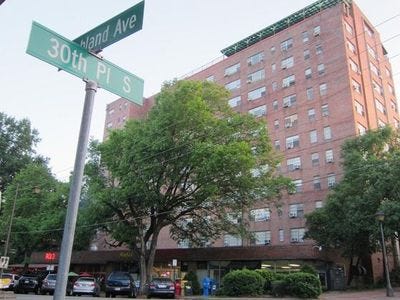
I still remember the process of searching for an apartment. I used Apartment Finders to help me locate a place I could afford with a minimal commute to my job in Downtown Birmingham. One of the apartments shown was Sheraton Apartments on Highland Avenue in a historic neighborhood just south of downtown Birmingham.
I knew this building. Just a few years earlier I had visited my friends Lonnie and Ray whom were living there as roommates. By the time I arrive they were both still living there, but in separate apartments. So, I joined them as residents at the Sheraton Apartments; an occupant of unit #604.
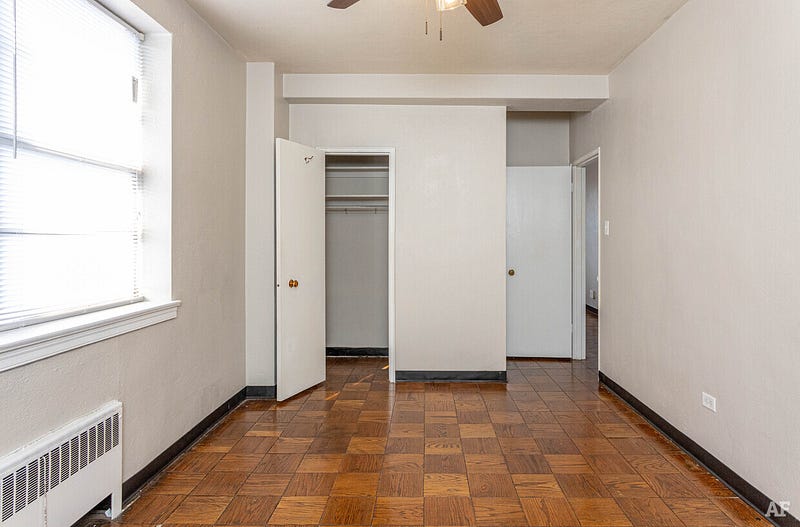
It was a tiny efficiency unit. A very large window faced the neighborhood park situated directly across the street. The floors were parquet wood, the heater was a wall unit — the kind that will burn you if you touch it too long. The kitchen and closet were miniscule, requiring the occupant of the space to truly be efficient and selective with use of space. The monthly rent of $375, spectacular views and convenience were simply unbeatable and a worthy space trade-off for a young professional that did not own much in the first place.
At least I had my own bathroom. I once visited a friend in New York while in college and found her Manhattan space to be three times smaller for more than $1,000 per month and a bathroom she had to share with everyone on the same floor. Goodness, it was horrible! But, it was mere blocks from Columbia University where she was attending undergraduate studies.
The tradeoffs of convenience.
When one’s living quarters are very small the rest of the environment becomes a bigger part of one’s living experience. Other residents become de facto roommates. Their work hours, sleep habits, pets and guests, hygiene and bodily functions are guaranteed to affect you in some way, at some point.
I still remember several of the characters in and around the building. The property manager, Ms. Ruth, was very old, stern and offered some of the most racially-charged energy I have ever felt since I moved to Birmingham. She was more than disinterested in me, Lonnie and Ray living in the building; she suffered us. It always felt like she was one moment of frustration away from dropping an N-bomb. And, I think we were always ready for it. But, to be honest, she was an outlier. The people in the building were truly diverse — black, white, international, gay, straight — a true mosaic of Birmingham. On any given day the elevator might include a white lab coat, an oxygen tank or a hijab.
Just outside the building, there sat a fellow smoking on one of the faded, wooden park benches. He was a fixture, as dependable as the street light that hung above his head like a halo. He was a white gentleman roughly 70-years-old with large frame glasses sitting atop his long face. His non-descript flannel shirt never changed, no matter the season or the weather. His legs were always crossed and he would lean forward with his arms crossed upon his knee as if he was in intellectual conversation. But, he wasn’t. He was usually totally alone and moving in slow motion. Lips pursed, cigarette cratered between his index and middle finger, well-balanced like a see-saw. He never spoke, barely acknowledged the presence of others, as if he was hiding in plain site. He was always there and always smoking.
When I left for work in the morning, he was there. When I got home in the evening, he was there. On weekends, holidays and odd midday hours he was there. He perfected the art of smoking, surely triggering those trying to quit smoking. And reminding others why they should never start.
As I got to know the neighborhood, I got to know the people. At one point I met the longtime neighborhood president, Alison Glasscock, and visited her home. I recall her historic home featuring dark oak wood, a lamp of unique character and and her husband’s old pen collection which I admired. Alison bore a protective spirit about her Highland Park neighborhood. She was an advocate. Watching, reading, and organizing. All this time I thought activists were loud, in the streets and confrontational. She challenged my way of thinking about advocacy, that it can be relatively quiet and diligently executed from the sanctuary of a quaint home. I began to understand what role a neighborhood leader can play in advocating for the interest of her residents.
Beneath the apartment building was a set of businesses — a laundromat, a convenience store, a deli. Most of those businesses have since evolved into a popular Mexican eatery and coffee shop. But, the laundromat which serves the building and the entire neighborhood remains to this day. Laundromats are fascinating; intimate garments shared in a disconvivial space. I’ve seen romantic moments in that laundromat. I have also seen some nastiness. People are found and revealed in the laundomat.
One of my favorite pastimes was taking early morning walks around the three parks that sit in the heart of the Highland neighborhood. These are some of the oldest parks in the city. They feature brick paths between concrete walkways. The neighborhood was built around innumerable 150-year-old trees, as stately as they are tall. Their limbs surviving generations of severe weather and economic development and the weight of Alabama’s racial violence against Black men.
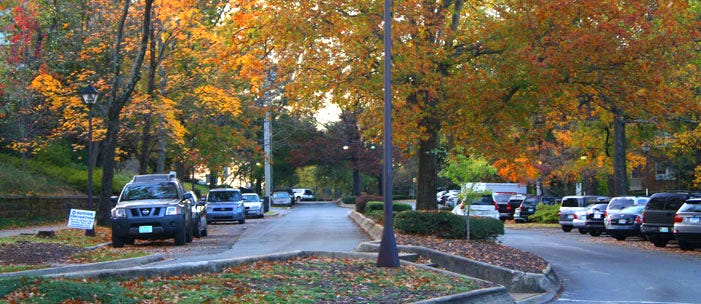
The squirrels would bound from brick to brick around me as I walked along the paths, listening to my music, NPR or the softness of silence preserved in the heart of the neighborhood. The parks hosted families, weed smokers, dog lovers, fitness freaks and vagrants. All co-existed fairly well together, though break-ins were and still are an occasional occurrence.
Evening and night time walks were equally gratifying, usually taken with someone. Highland Park is great for getting to know someone. It forces you to slow down and bit, look into the eyes of a companion and find some truth. Just enough to know if there is more truth to pursue together.
Highland Park was my first sacred space when I moved to Birmingham. It enchanted me, pulled me deeper into the civic heart of Birmingham. I loved it.
Ed Fields is a marketer and strategist celebrating 20 years in Birmingham with #20For20 — a series of reflections, insights and homages. All posts will be featured at www.medium.com/HonestlyEd. Follow Ed on LinkedIn, Medium, Instagram or Twitter.


