
PUBLIC SPEAKING | CONFIDENCE | FEAR | PSYCHOLOGY
Hidden Messages of Body Postures in Public Speaking
Which body postures communicate self-confidence, and which communicate fear?
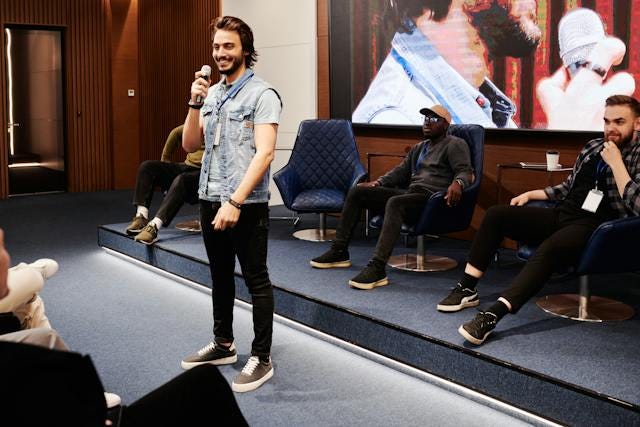
Every move and gesture you make broadcasts a hidden message in public speaking. By becoming aware of such messages and controlling them consciously, you can control how you reach across to your audience.
At first such awareness and control won’t come easy. But little by little, as you keep practicing these postures in front of live audiences and avoiding undesirable ones, you’ll become the master of the craft of public speaking.
There are several body postures that can communicate openness and self-confidence.
Here are a few examples:
1. Standing tall: Standing straight with your shoulders back and your head held high communicates confidence and openness. It shows that you are comfortable in your own skin and are ready to engage with others.
2. Open arms: Keeping your arms relaxed and open, rather than crossed or folded, signals that you are approachable and receptive to others. It conveys a sense of openness and friendliness.
3. Uncrossed legs: Crossing your legs can sometimes be seen as a defensive or closed-off posture. Keeping your legs uncrossed and your body facing forward shows that you are open to communication and willing to engage with others.
4. Maintaining eye contact: Making and maintaining eye contact is an important aspect of communicating openness and self-confidence. It shows that you are paying attention and are interested in what the other person is saying.
5. Leaning slightly forward: Leaning slightly forward when engaged in a conversation indicates that you are actively listening and interested in what the other person has to say. It shows that you are engaged and confident in your ability to contribute to the conversation.
Remember, body language is just one aspect of communication, and it’s important to consider the context and cultural norms when interpreting someone’s body posture.
Body Postures that Communicate Fear and Lack of Self-Confidence
There are several body postures that can communicate fear and lack of self-confidence. Some common examples include:
1. Slouching or rounded shoulders: This posture can indicate a lack of confidence and low self-esteem. It makes a person appear smaller and less assertive.
2. Avoiding eye contact: When someone avoids making eye contact, it can signal fear or discomfort. It can also make them appear unsure or lacking in confidence.
3. Fidgeting or restless movements: Constantly shifting or fidgeting can be a sign of nervousness and anxiety. It can indicate a lack of confidence in a social or professional setting.
4. Crossed arms or closed body language: Crossing the arms or adopting closed body language, such as crossing the legs tightly or hunching over, can signal defensiveness and a lack of confidence. It creates a barrier between oneself and others.
5. Avoiding standing tall or taking up space: People who lack confidence often avoid standing tall or taking up space. They may appear physically smaller by hunching over or keeping their body close to themselves.
6. Speaking softly or hesitantly: When someone speaks softly or hesitantly, it can indicate a lack of confidence in their own ideas or opinions. They may appear unsure or lacking conviction.
It’s important to note that body language can vary between individuals and cultures, so these postures may not always be indicative of fear and lack of self-confidence in every situation.
(Excerpt from How to Become a Great Public Speaker)


