
Hidden Layers
Understanding true kindness in our pursuit of gender equality
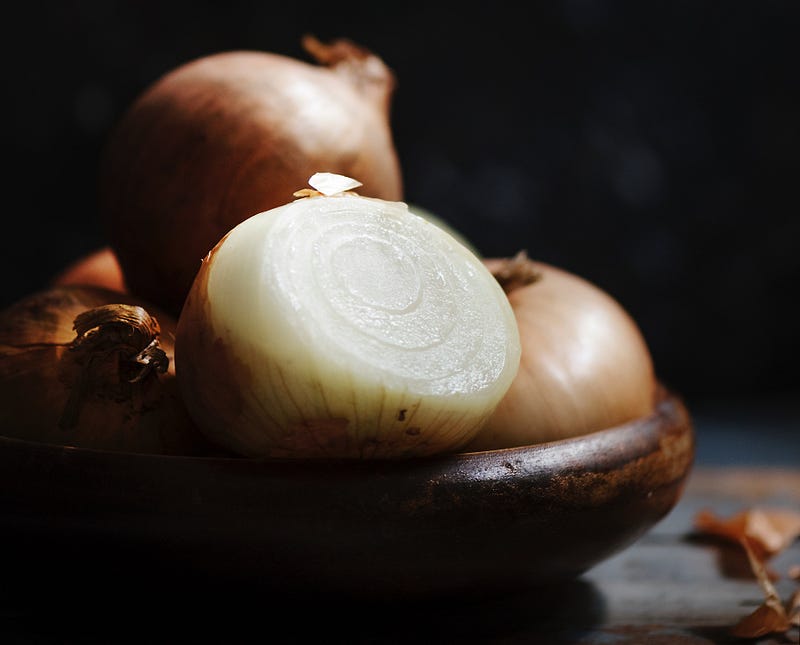
While I was preparing dinner my mind had wandered. Emotions of sadness began to overwhelm me.
1. Kindness
There is a huge difference between unkind behaviours and being an unkind person. Of the latter, if your moral conduct is non-feminist, and yet you cry out for equality, you are an unkind person.
About the former, who the hell hasn’t exhibited unkind behaviours. The kind of moments in our lives that at the very least we aren’t proud of. And yet we cannot undo them. All we can do is learn from them and move on.
The onion; outer layers
At school, I got bullied for not being good at sports. I preferred to read poetry than play football.
My own father brought me up to treat all others with respect and equality. While accepting individuality and diversity.
Behind me, I could hear the pot on the hob beginning to boil over. My emotions began to do the same. I turned the hob down to simmer. I was unable to do the same with the rising wave of sadness.
I started chopping an onion. Tears began to run down my face. Not from the onion. But from a sudden tidal wave of sadness.
2. Equality
Equality has to be reciprocal. By its very nature, anything less is not equality. Treating women with the same equality as men is the fundamental principle of feminism. Who wouldn’t want that? It is in every individual’s best interest to ensure there is equal opportunity for all.
But, the public discussion of where we should be heading, at times is divisive. Some of the current dialogue from both sides is unhelpful.
The onion; making of the layers
My father was a child during World War Two. Before he had reached adulthood he had lost three males in his life. All due to tragic but common circumstances of the time. My father was a young child when his father died. He died while on active service in World War Two; due to injuries sustained in World War One. My father also lost a younger brother, who died in infancy. He also lost an older brother due to a suspected heart attack. This brother left behind a young family.
Arguably my father lacked immediate and sufficient positive male role models in his formative years. But this does not stop my father embodying positive masculinity. Nor does he express or exhibit toxic masculine behaviours. I cannot recall a time when he has done so. He is respectful, chivalrous and gentlemanly. He treats my mother with respect and love. He lives a kind, purposeful life. As does my mother. The argument of quantifying the nature versus nurture elements of my father’s upbringing is beyond the scope of this story. Suffice to say my father is a good and kind man.
I am lucky to have been born into my parental family. My father has been a positive male role model throughout my life. Even when I was not aware of it.
My partner was due home from work any minute now. What if she saw me crying? What if she sees that I cannot always cope? What would she think of me?
3. Masculinity
Voices of moderation in openly discussing masculinity appear to be a minority. The following are examples of open, honest discussion on the matter.
It Sucks Being a Male; pre-empting a backlash Jason Weiland explains his point candidly:
“I will have at least 2 or 3 men or women scream about how wrong I am about everything I wrote. These are the people who don’t like others to have opinions; they only want to hear their opinion coming out of your mouth. I mean, it’s okay to disagree, but if you have to disagree with anger and bullying, you are doing it wrong.”
Until Last Week, My Kids Had Never Seen Me Cry; Brian Bradley writes “like many men before me, I’ve come to regret telling my son not to cry.”
John DeVore is even more candid in his discussion of ‘The Powerlessness Of Male Anger.’
The onion; inner layers
I am grateful that I have a vocation that I am passionate about. I am a psychiatric nurse. A close friend of mine from work once asked me the following question. “How do you not get angry at work?”
I told my friend that of course, I get angry at work. I just do not show it. Or if I do express anger, it is proportionate.
Nature or nurture? What does it matter how I got there. A multitude of unquantifiable factors has afforded me the ability to manage my emotional regulation. Pretty much most of the time. However, on the occasions I am unable to, what should I do?
My partner arrives home from work. She shouts ‘hi, how are you my lovely?”
“What you making?” She asks. As she takes her coat off and drapes it over the bannister.
4. Agendas
The very discussion of masculinity is contentious for many men and women. Everyone, good or bad, kind or unkind, has an agenda. The bad and the unkind have an agenda that is not progressive. Such an agenda is oppressive and not in everyone’s best interest. Comments from such people dismiss and minimise abuse experienced by women. We can see this in the immoral support of Jeffrey Epstein. This includes both ongoing and historical comments by U.S. President Trump.
On the good, kind and progressive end of the spectrum, passions run high. And so they should. There is a lot to lose. And a lot to gain.
The onion; perceived toxicity
It is ironic that in my personal life the ‘toxic masculinity’ card has been used against me. I have lost contact with my three beautiful children due to false allegations. I continue to battle a system that claims to protect children from harm; the family justice system. How ironic that it is this very institution that prevents me from imparting the same values I learnt from my father to my very own children. A system that by its very nature, suppresses equality, diversity and respect.
If I were to focus on only fathers rights to the detriment of mothers, my argument of equality would be flawed.
Due to the lack of contact with my children, it would be too easy for me to jump to the other end of the spectrum. The end of the spectrum that argues for fathers rights. At the detriment of mothers rights that find themselves in the same situation as me. What has happened to me, also happens to mothers. If I were to focus on only fathers rights to the detriment of mothers, my argument of equality would be flawed. How could I sustain such an argument? In the face of rational and moral opposition.
“I haven’t been crying, I was peeling an onion!” I quickly provide the answer to a question that was never asked.
The onion; hiding layers
I never told my partner I had been crying on that day. I still resist the urge to tell my partner when feeling broken. Why? Because I am a man.
Society tells men to be strong. No matter what the challenge. Society tells us to be stronger than women. To exert our strength to the detriment of women. John DeVore candidly discusses this in ‘The Powerlessness Of Male Anger.’ The men that strive for equality should be dismissing such negative models of behaviour. Such models of behaviour are not what I learnt from positive role models such as my father.
Do I wish to become pre-occupied with expressing my emotions? Particularly my forced and unjustified estrangement from my very own children. As a middle-aged man, a father, a son and a psychiatric nurse, I am all too aware that being preoccupied with the expression of one’s emotions is unhealthy.
Kindness, equality, masculinity & agendas; where do we go from here?
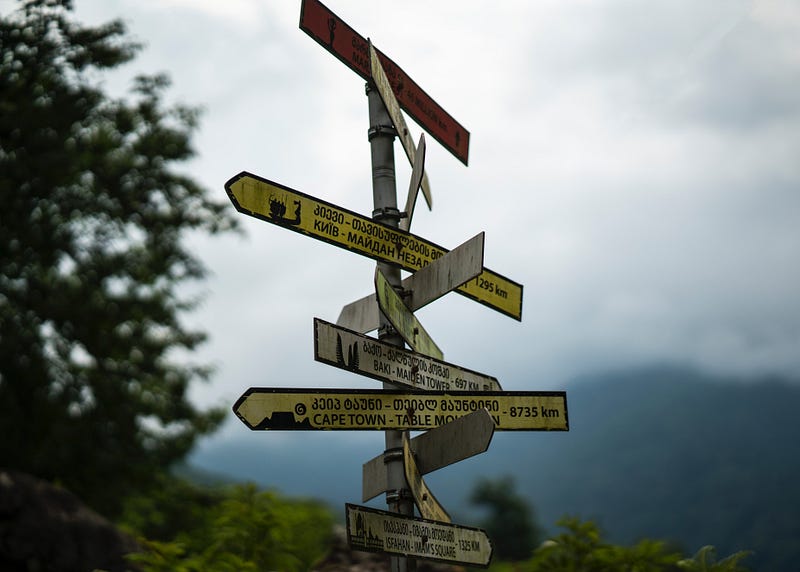
I have come to realise that both sides spend a lot of energy and time arguing how we arrived at the state that we now find ourselves in. I accept that to seek a solution we must understand the problem. That much is true. But such conversations invariably lead to conflict. A solution-focused dialogue would be more effective.
It is not what we say, but how we say it.
The aforementioned conflict is the stuff of unhealthy relationships. Such dynamics are the equal of a bickering couple. An almost unhealthy codependent relationship. As opposed to a healthy interdependent relationship.
There is a clear parallel between the global relationship between the sexes and a personal relationship between two partners. In our pursuit of equality, in both contexts, it is not what we say, but how we say it. Like in any relationship, we will never grow and progress together, if we do not engage effectively with each other.
We will only reach true equality with true kindness.


