
Generative AI Use Case | Replacing More Humans?
Hidden Influence: Stories Not Created By The Author
Ghostwriting has been around for ages. Why do we judge AI-writing assistance so differently than the help of humans?

This week, I was in a writing group. The host introduced one participant as her ghostwriter on a published piece.
“Huh,” I thought.
I am familiar with the concept, of course. I wrote a review of one of the most thrilling psychological reads by Colleen Hoover — Verity. In it, a ghostwriter becomes an author’s worst nightmare, usurping their life and legacy.
At that moment, though, my thoughts careened down a fascinating tangent. I considered generative AI as the new ghostwriter! I am curious about the impact of AI-powered tools like ChatGPT, Gemini, and Bing Chat on the ghostwriting industry.
Dive in with me!
Ghost(writer)s are Everywhere!
Did you know the practice of ghostwriting stretches back centuries? Early examples include ancient Greece. Playwrights like Euphorion might have written plays for his father.¹
Ghostwriting has served diverse purposes throughout history. For example, Alexander Hamilton penned political speeches for George Washington. Did you grow up on Nancy Drew or Hardy Boys? Ghosts also wrote them. The Stratemeyer Syndicate, a literary factory, produced several beloved children’s series. Entrepreneur Edward Stratemeyer created and guided the syndicate. This company hired “ghostwriters. Most of them were newspaper reporters. They fleshed out the ideas he outlined. They published all the books under continuous pseudonyms. Each writer signed a contract that assigned all rights to the Syndicate. They also promised secrecy about their involvement with the series.”²
The modern-day ghostwriter Laura Schaefer says, “Everyone has a ghostwriter these days.”³
Yes! Your favorite business or self-help books have hidden contributors. Dive into the acknowledgments pages. Authors often thank editors, coaches, or partners in their acknowledgments. These people may have secretly written their work. Shhh!³
Nicholas Cole says ghostwriting may be the most profitable way to monetize writing skills. “Cole has ghostwritten for more than 300 different industry leaders, C-Suite executives, founders of Silicon Valley startups, venture capitalists, and even Olympic athletes, Grammy-winning musicians, and New York Times bestselling authors.”⁴
To a degree that might astonish the reading public, a significant percentage of any current bestseller list will have been written by someone other than the authors whose names appear on the jackets.⁵
Donald Trump, Demi Moore, Michelle Obama, Laura Bush, Hillary Clinton, Caitlyn Jenner, and Prince Harry have all released ghostwritten memoirs.
Disclosing The Human Shadow of The Author
Imagine: your name graces the cover of a bestselling book. But, someone else crafted the words that mesmerized readers. That’s the world of ghostwriting, explored by Richard Lowe in his eye-opening article.⁶
Lowe delves into the ethical maze of ghostwriting. He exposes the clash between fairness and professional norms. He asks whether the invisible hand behind the pen ever gets a pat on the back.
His answer underscores the importance of informed consent. It also highlights the need for clear communication and honest agreements between ghostwriters and clients. It’s not just about getting paid. It’s about maintaining ethical practices in the writing world.
But wait, there’s more! Lowe emphasizes that ghostwriters are responsible for ethically sourcing materials and adequately citing. They ensure intellectual integrity even in the shadows. I did not know this. (Save this for later when we discuss AI as ghostwriters.)
Legally, ghostwriting sits comfortably in a contractual bubble. Ghostwriters agree to forgo public recognition for an agreed-upon fee. But does that make it fair?
Surprisingly, many ghostwriters find satisfaction in their unseen role. They love helping clients amplify ideas without seeking personal stardom.
Lowe’s article informs and ignites a conversation. He prompts us to ponder the ever-changing ghostwriting landscape. He questions who deserves credit. He also questions how we recognize expertise.
Okay, now cue the sinister glitching electronic pulses. They sound like the cold logic of unfeeling machines. Enter the bots!
The Silent Revolution: AI Takes the Ghost Out of Ghostwriting
So, about my wondering thoughts and where they went in that meeting.
I suspect that ghostwriting is getting a digital makeover. ChatGPT, Gemini, Bing Chat, and many other AI tools can spin human-quality text in any style. This isn’t science fiction. This reality is shaking up the writing world in exciting and unsettling ways.
We should talk about the advantages of AI for writers. AI tools can assist writers in overcoming creative blocks by generating ideas or even finishing portions of their writing. Users can easily access comprehensive data, peer-reviewed studies, and verified statistics with just a few clicks. By handling these time-consuming responsibilities, writers can devote their attention to the creative elements of writing, like crafting captivating characters and perfecting their writing style. AI opens doors for aspiring writers, language learners, and individuals who have never thought about writing.
Writers can do all these things themselves and in seconds. Ghostwriters can use AI to do their work, too!
Ah oh! Lord have mercy! People, all the people, have the power.
Of course, with great power comes great responsibility.
Disclosing The Source of The Content
AI-sourced content poses a challenge as it uses, remixes, and sometimes appropriates words and phrases from human and AI writers alike.
As mentioned before, human ghostwriters take precautions to prevent plagiarism. So, who should hold accountability in the realm of artificial intelligence? I reached out to the experts for guidance.
Can ChatGPT be guilty of plagiarism?
No, ChatGPT cannot be accused of plagiarism. Plagiarism involves the unauthorized use or representation of someone else’s work, ideas, or intellectual property as one’s own. ChatGPT generates responses based on patterns learned from diverse data during its training but doesn’t have access to specific documents, databases, or proprietary information. While it can provide information and assistance, it doesn’t engage in plagiarism since it can’t copy specific texts or intentionally claim ownership of information. — ChatGPT
Can writers who use the output of generative AI be accused of plagiarism?
Writers who use the output of ChatGPT should be aware of the potential for unintentional plagiarism. While ChatGPT generates responses based on patterns learned from diverse data, the responses it generates may resemble existing content on the internet or in other sources.
If information or ideas from ChatGPT are used, it’s good practice to acknowledge that the content was generated with the assistance of a language model.
Ultimately, writers are responsible for ensuring the originality and accuracy of their work, and they should use ChatGPT outputs as a tool for assistance rather than as a direct source of content. — ChatGPT
Ah ha! While generative AI offers efficiency and creative potential, the need for human oversight remains paramount.
Who is responsible for citing sources in AI-generated writing, the writer or the GPT?
In AI-generated writing, the responsibility for citing sources falls ultimately on the writer, not the GPT itself. Even though GPT can access and process vast amounts of information, it doesn’t possess the critical thinking and judgment necessary to determine which sources are relevant, reliable, and worthy of citation.
Don’t blindly trust everything GPT generates. Always fact-check information, assess the credibility of sources, and ensure the content aligns with your overall message and ethical standards.
Remember, AI tools are powerful aids but should not replace your own critical thinking and responsibility as a writer. — Gemini
The future of writing likely lies in a collaborative approach, where AI acts as a powerful tool, but human judgment, creativity, and ethical responsibility guide its use. — Gemini
Ghostwriting: Shadows and Scorn
In the last of my musings, I wondered if authors who use ghostwriters face the same level of criticism as those who use AI.
The answer is yes, sometimes.
Critics have taken aim at Millie Bobby Brown’s new book, Nineteen Steps, on social media, highlighting the involvement of a ghostwriter. Despite her acknowledgment within the book, the lack of shared cover credit for ghostwriter Kathleen McGurl seems to have fueled the negative responses.⁷
And sometimes, no.
Tony Schwartz, the ghostwriter of Donald Trump’s, The Art of The Deal, observed the then prospective president, say while announcing his candidacy, “We need a leader that wrote ‘The Art of the Deal.’” (Source)
As far as I can tell, Trump got zero flack for using a ghostwriter to pen his book.
Humans seeking fairness
There are rules, I’ve learned.
When Christy Walsh set up his own syndicate of ghost writers to document the stories by prominent athletes, rule number one was, “Don’t insult the intelligence of the public by claiming these men write their own stuff.”⁵
Walsh’s code persists. The acknowledgment section in numerous collaboratively authored books expresses gratitude to partners, children, and even family pets before subtly, and at times reluctantly, acknowledging the unseen individual who carved the angel from the marble. Alternatively, the book may attribute authorship with phrases like “as told to,” “written with,” or “edited by.”
In France, those who undertake ghostwriting are referred to as “nègres,” and there exists an implicit form of servitude in this arrangement. The ghostwriter, initially embodying a mix of therapist, muse, and friend, steps into a psychological minefield. Consequently, it is advised for the ghostwriter to constantly bear in mind that, in the grand scheme of things, their position hovers somewhere between a valet and a cleaner. (Source)
The collective society seem to graciously accept the author’s storytelling claims, even when penned by ghosts, as long as the ghostwriter is compensated and acknowledged.
For AI-assisted writing, however…
The vitriol experienced by some contemporary writers using AI assistance may be amplified by technology's novelty, perceived facelessness, and the idea that there is no acknowledgement of the source of the human-generated parts and pieces.
The human collaborator becomes the target of accusations of cutting corners or lacking originality. On Medium, the stance is that “stories that are generated entirely by AI don’t fit with Medium’s mission of being a place for high-quality human stories that deepen people’s understanding of the world.”
- “Fiction writers fear the rise of AI, but are fascinated at the same time.” (Source)
- “They're taking our jobs!” “The corporate devils are leaving writers in a lurch!” “AI is replacing humans.” (Source)
The debate surrounding AI in writing is complex and constantly evolving.
But with this technological marvel come ethical concerns that echo the sentiments of using ghostwriters. Folks do not like it when AI-generated text is presented as original work. Demands for transparency loom just a bit larger than other concerns.
Should authors disclose the use of AI ghostwriters? Some argue that it undermines the work’s authenticity, while others see it as a legitimate tool for enhancing communication and accessibility.
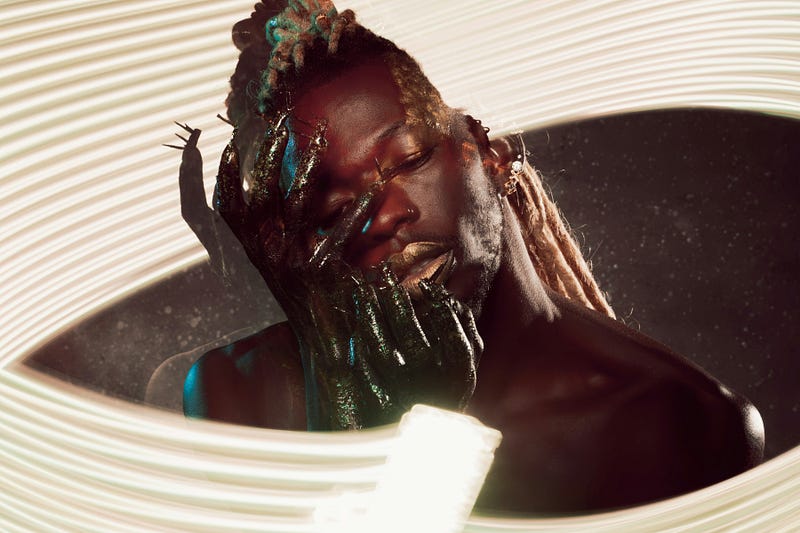
In the end, I’m a hopeless romantic
I see the idea of generative AI as a ghostwriter as a love-hate romantic trope. Right now, they are enraptured in a ‘enemies to lovers or bickering partners in forced proximity’ story.
… a captivating and unique science fiction romance that explores the possibilities of artificial intelligence and human-A.I. relationships, which is timely considering the recent rise in generative A.I.⁸
As far as the question: Why do we judge AI-writing assistance so differently than the help of humans? I’ve found that we don’t really. Ultimately, the debate around ghostwriting, in its traditional or AI-infused form, hinges on the ethical use of language and the transparency surrounding its creation.
Historical and contemporary examples of ghostwriting highlight the need for open communication and responsible attribution to navigate the evolving landscape of authorship.
As Victor Hugo once said, “No force can arrest the progress of an idea whose time has come.”
The time for humans and AI to write is now. The future lies in a collaborative approach, where humans and AI work together to create more powerful and impactful content.
© 2024 K. Joseph, All Rights Reserved
ℹ️ Disclaimers
- This post is a product of my original thoughts, crazy ideas, and online research. I employed AI-editing support from Grammarly.com and the Hemingway app. Lastly, AI-writing assistance and content generation from chatGPT and Gemini helped with my story’s birthing process.
- 🤖 Some links in this article go to Amazon.com. As an Amazon Associate, I earn from qualifying purchases at no extra cost to you.
Postscript: Books Written By Artificial Intelligence: A List
Footnotes
¹ Euphorion (Greek: Εὐφορίων, Euphoríōn, fl. 431 BCE), the son of the Greek tragedian Aeschylus, may have been the ghost writer for some of his father’s tragedies. Source.
² The Secret Syndicate behind Nancy Drew: Source.
³ The History of Ghostwriting: Source.
⁴ The Art & Business Of Ghostwriting: How To Make $10,000+ Per Month Writing For Other People Online: Source.
⁵ Bestselling ghostwriter reveals the secret world of the author for hire by Robert McCrum: Source.
⁶ 5 Incredible Truths: Do Ghostwriters Get Credit for Their Craft? by Richard Lowe: Source.
⁷ Debut novel by Millie Bobby Brown reignites debate over ghostwritten celebrity books by Ella Creamer: Source.
⁸ Beyond Humanity: A Review of ‘The A.I. Who Loved Me’ by K. Joseph: Source.


