
Hesitation is the Enemy of Successfully Completing Anything
When we hesitate, we put the brakes on getting it done.
Most of us learn this lesson the hard way, and I’m no exception. What might be different is that I learned it while running a 50-mile race in the mountains of Wyoming.
Considering I was ten miles in any direction from an aid station, this hesitation cost me the race and a lot of mental rebuilding. Considering what hesitation does to most people, I got off easy during these tumultuous times. More on that thought later.
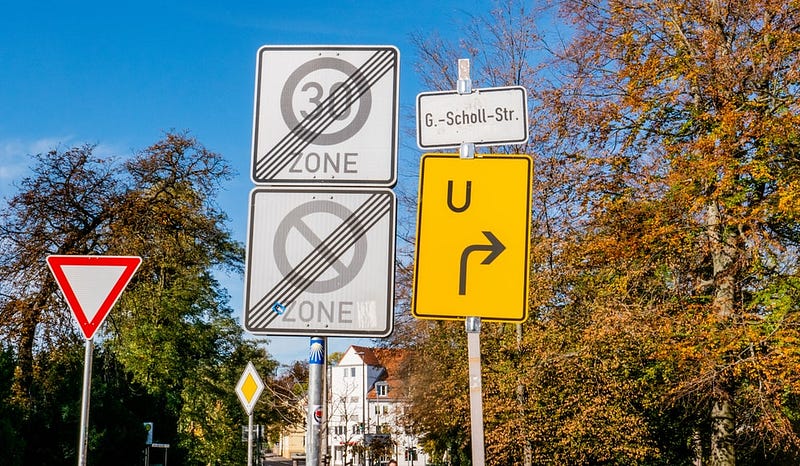
I hesitated after I had successfully climbed a switchback portion of the single-track trail when I came to a clearing. I vaguely remembered the race director saying something about which direction to take at this point because the elk in the area liked to eat the trail markings. I also knew I had somewhere in the neighborhood of two miles above treeline where I wasn’t likely to be able to see trail markings. The trail through this area was not well-used and more of a game trail.
I thought I would just follow the trail of the fastest runners that had gone before me, but that idea was shot as the ground was rock instead of dirt, and there was no obvious trail.
The longer I stood there trying to decide which direction to go just meant I was piling on the stress.
After a long hesitation, I made my decision and proceeded to run. After a short while, I doubted my decision and tried to double back to where I had last seen a trail marker.
This proved to be a horrible decision. I spent almost two hours going forward, going backward, heading another direction, and finally realized I was helplessly lost.
As I broke out a map from my hydration vest, something told me to look behind me. I saw a runner making their way across the horizon to my utter relief. This runner just happened to be the sweep looking for myself, and two other obviously lost runners.
I got their attention, and they waited for me, and I headed in their direction. Together we found the other two lost runners and headed back to an extraction point.
Demoralized and broken, I spent the next month trying to figure out where I had gone wrong.
At that point, I realized that the problem was that I hesitated when I should have been moving forward, trusting the direction I was going. If I had kept going, it would have put me on the actual trail with trail markers lining the way. In fact, as I looked at a map afterward, the initial direction I headed before I doubted my first direction put me just a little off the trail I needed to be on.
Hesitation led to doubt, which led to an unsuccessful race.
Mine was just a race, not all that important in the scheme of things.
Today, many people are hesitating and missing out on much more significant opportunities to do something amazing and beneficial for society.
Hesitation has become the enemy of completing anything successfully.
Why Do We Hesitate?
Much has been written about hesitation and its effect on our mental ability to become better versions of ourselves.
The reason we hesitate stems from fear of bureaucratic obstacles and even from peer pressure, lack of knowledge, and an aversion to risk.
Insights for Professionals’ article Why Hesitation Endangers Decision-Making Success covers these areas in the first half of the article.
Hesitation, also referred to as indecision, happens when we are overcome with the fear of failure or even the consequence of success.
Most people recognize the fear of failure, but the consequence of success may leave some scratching their heads.
Simply stated, success can mean more responsibility. Many people struggle with taking on more responsibility and therefore hesitate.
The Unexpected Consequences of Success Harvard Business Review’s article takes a deep dive into this area of thinking.
Lack of confidence plays a significant role in hesitation, whether it is on a trail running or your professional life. Lack of confidence arises when one is not secure in who they are and what they’re doing.
The summation of why we hesitate all boils down to the fact that we aren’t seeing clearly at the time of hesitation. No matter where it stems from, hesitation always takes your forward progress and grounds it to a screeching halt.
This screeching halt is where major mental blocks come from. You’ll see these mental blocks in people’s writing, relationships, physical fitness, and professional development.
These mental blocks keep you stuck in the past and keep you from moving boldly into the future.
Getting Unstuck from the Moment of Hesitation
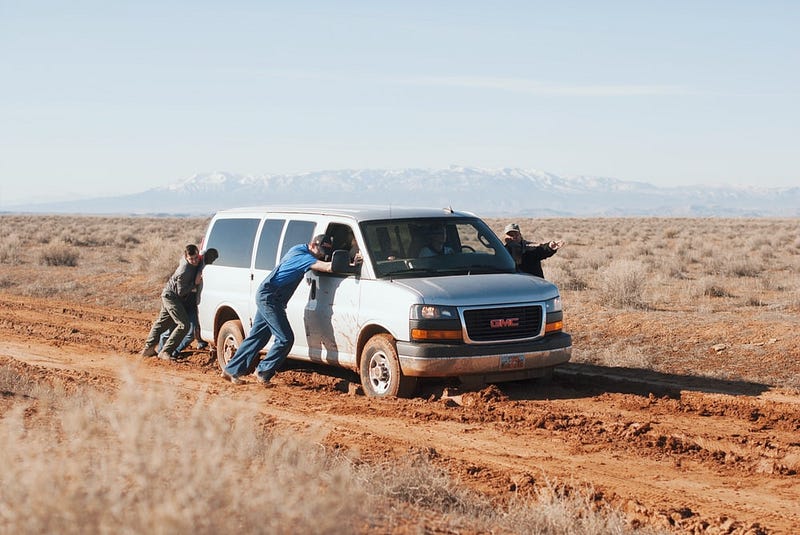
This leads us to how we get unstuck from that moment of hesitation. Recovering quickly from hesitation is vitally essential to move forward in all we do.
Learning to confidently make decisions is much like learning to drive. Sure, it can be scary and unnerving at first, but eventually, confidence in your skills and abilities will win.
Four steps may help you get unstuck.
- Feel the fear, but don’t give in to fear. Fear is not the truth. Fear is something that holds you back from performing at your absolute best. When you look fear in the eyes, fear always backs off. Identify what is causing the fear and then seek the truth about that fear. Maybe you want to launch a new business. Fear is going to say that you will fail and bankrupt your family. To overcome this fear, examine the truth about the business. Make a plan and write your thoughts down. Then begin to move forward.
- Start with something small. Start making little decisions every day. Before you know it, the big decisions will virtually make themselves as you become more confident in not hesitating.
- Live with no regrets. Some of your decisions may not work out for you. Don’t allow a temporary setback cause you to continually hesitate in moving forward. Accept the setback, figure out how to overcome it, and move in a different direction to get you to the place you want to be.
- Trust yourself. List all your strengths. Ask yourself how you can incorporate your strengths into your decision-making process in the endeavor you are attempting. As you face choices, look at your strengths and apply the right strength to the situation. You may just find you’re way more talented than you first thought.
Finally, accept that sometimes “good enough” also gets you where you want to go. Trying to do something perfectly won’t keep you on the trail that will lead to success. Sometimes, the trail in front of you is the trail that will lead you to the place you seek.


