
Hermit Lore
Ancient history has some tips for a society struggling to emerge from lockdown.
Early in the 4th century the Roman Emperor Constantine had a dream. He saw his army marching to victory with the symbol of an obscure desert religion painted on their shields. So he converted the empire to Christianity.
One immediate effect was life got easier for the early Christians. No more hiding out in catacombs full of bones. No more getting fed to lions. It set in motion a strange chain of events.
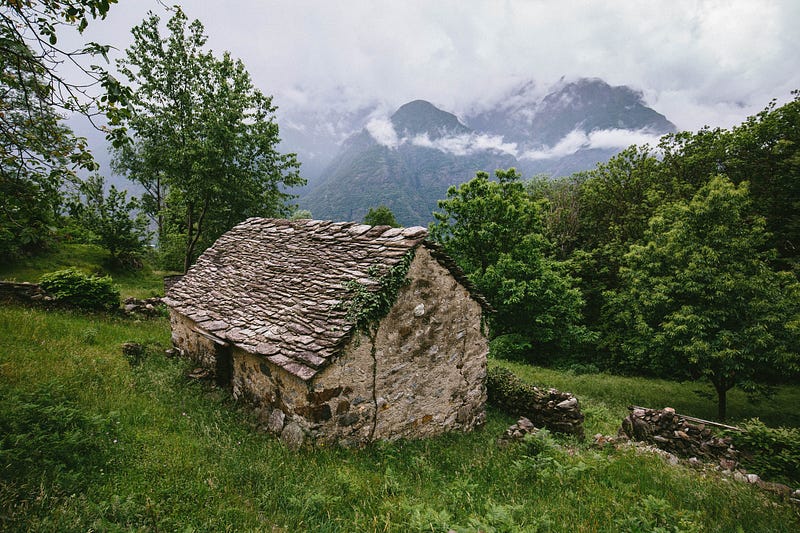
The end of martyrdom meant those who wanted to make some grand heroic gesture for their faith needed a new plan. Many found it by embracing lives of isolation and denial. Pretty soon the remote deserts were populated with hermits living in caves and huts. One man lived on top a pillar for 37 years. The hermits took on an aura of holiness. People sought them out for wisdom and healing.
The Hermit Life Is Back
Here we are in the 21st century, hermits again. This time a killer virus sent us fleeing from human company. Some had hoped it would all blow over quickly. The more realistic assessment is what we’re seeing now, as the pandemic ebbs in some places and hits back with a vengeance in others. Some people and parts of the world will get back to a relatively normal life. Others will continue dealing with various levels of lockdown and social distancing for months to come. At the very least a lot of us will go on working from home as companies exercise “an abundance of caution” about re-opening their offices.
We can learn a thing or two from those early hermits.
What they were doing wasn’t retreating. It was seeking. That’s an important adjustment in mindset. One you may find helpful if you end up dealing with an extended period of isolation.
Seeking means you’re not confined, even if you spend your days surrounded by the same four walls. You’re limited only by how far an energetic mind is willing to wander. Time spent seeking doesn’t feel like time stuck in limbo, just waiting for someone to let you out. I’ve found it puts a healthy measure of control back into the equation. For me that’s been a big part of not feeling so cooped-up as I report to the same buff-colored chair in my spare bedroom for work each morning.
A Coping Strategy
You can seek spiritual things. You can seek intellectual things. You can seek mindful things. You can seek that inner voice that so often gets drowned out by modern life.
In my case, I miss the face-to-face collaboration of working in a big ad agency creative department. But I’m discovering other, sometimes deeper kinds of creativity now that I’m surrounded by serenity instead of distraction.
Seeking is a mindset that says you’re going to come out of this experience different from the person who entered it. It’s not a miracle cure for the sense of loss that comes from being too long away from human company, but it helps. The ancients hermits understood that.
Seeking Answers
None one knows what the coronavirus has in store for us. We barely understand its biology. But this idea of seeking can help us understand the human response. It not only helps us deal with our own isolation. It gives us a better sense of what society might look like in the months to come.
What a lot of people are seeking right now is life. An interesting thing happened during the hermit-like existence of the lockdown. Our idea of social distancing enlarged. Originally it was about flattening the curve to avoid having the sick and dying overwhelm the healthcare system. Now many people are thinking it might be a way to get through this without dying at all. In particular, those who have the sort of health issues that quickly turn deadly when mixed with the coronavirus.
You can look up statistics for the underlying health conditions that make Covid-19 particularly dangerous. Things like heart disease or Diabetes. A recent study reported in The Lancet Global Health reported that 22% of the world’s population falls into that catagory. A little back-of-the-envelope math will tell you that no matter how loudly government leaders talk about the need to re-open the economy, a significant number of people will not be re-engaging any time soon.
Thinking Ahead
For a public health measure, social distancing has worked its way surprisingly deep into the culture. You can feel its gravitational pull in how we think and talk. I see it influencing design. It’s coming up in marketing discussions that look months down the road.
Some of this is self preservation. Sticking with a strategy that’s kept us relatively safe, no matter how much we complain about it. And there’s a subconscious element: the whole idea of #TogetherAtHome has brought with it a feeling of unity we haven’t felt in a while. People may be reluctant to let go of that.
So the actual re-opening of the country is likely to be fitful and uneven at best, especially now that many of the areas that were the quickest to reverse their stay-at-home orders are experiencing dangerous new outbreaks of the disease. We’ll do better in the coming months if we understand the reality of what we’re facing. Think about what adjustments might be necessary, and make the plans to deal with it.
That brings me back to the 4th century. It was a strange time, certainly according to our 21st century sensibilities. But it gives us reason for optimism as we come to understand just how deeply the coronavirus pandemic is affecting our society, our economy and our own mental well-being. They made living in isolation work as a part of the broader culture, giving it value and meaning. That’s the value of a seeking mindset.
The lore and wisdom that resulted had a long reach. Some of those early hermits living alone in caves founded the great monastic traditions that would be the keepers of Western learning for centuries to come.