
Here’s Why You’re Wrong About Elon Musk
The Elon Musk in your head isn’t anything like the real man
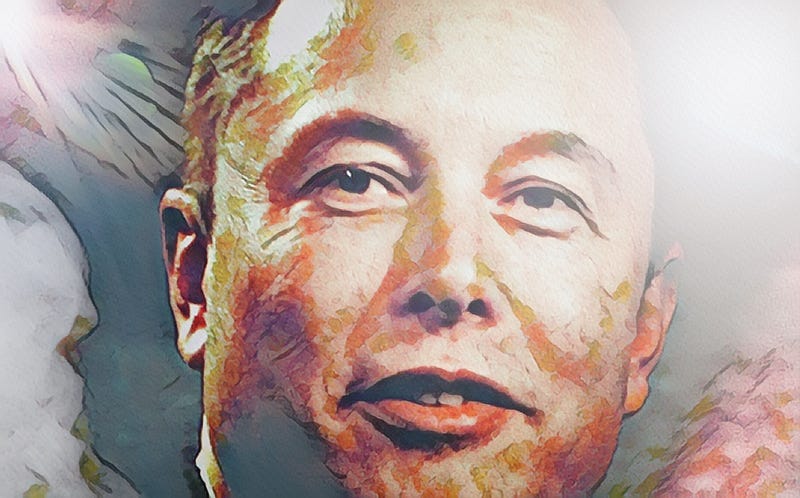

Elon Musk is at it again, hitting our TVs and timelines in a way that only he can. Tweets fire off around the world. Writers spin them into headlines. Sometimes entire markets react. Simultaneously, in millions of minds around the world, images and opinions of the man form, consolidate and strengthen. And all of those opinions and images are, to some degree, wrong.
He’s most recently been busy helping out Ukrainian citizens with Starlink so they can get internet when all else fails, and then challenging Putin to a fight to the death.
Recently, I’ve seen him called a four-letter word beginning with a C. I’ve seen him compared to God. I’ve seen some people want him to run the world while others call him a clown. And they all seem so completely sure of their opinions.
Musk is a fascinating character, especially to a psychology writer like me. But however much I read about him or think I know, I don’t have any idea what the real-life man is actually like.
And neither do you.
Nasty and nice
The man seems to fly between an inspiring force for good and utterly selfish. Sent Starlink to a desperate Ukraine? Yes, Elon! Fired his personal assistant of twelve years for asking for a raise? No, Musk! Propelled Dogecoin to ridiculous highs making a crap ton of money for the underdogs? Yes, Elon! Crashed Bitcoin soon after with rumours of manipulation of the market? No, Musk! Producing futuristic electric cars to help stave off a climate catastrophe? Yes, Elon! A space rocket hobby that could help cause a climate catastrophe? FFS, Musk.
What about the little things though? Nice guy or not? You read all sorts. Stories of intimidation and limited emotional intelligence. Stories of being helpful and listening to everyone, however low their position in the company.
Then you’ve got all the people who think they know the truth on social media either slamming him or, for want of a better word, worshipping him. Team Elon is a hero and team Elon is a dick. And then the others, who give no two shiny shits either way, and aren’t a team, but more like a load of disinterested cats only interested in letting others know they’re not interested.
With all the news about the man, we get a pretty good image of Mister Musk, don’t we? Except that’s just it.
We don’t.
That’s all just in your head
The thing is, no one knows - unless someone actually knows the guy and knows him well. Not team Elon nor team Anti-Elon, and certainly not team Cat. Even if we knew for sure about much of what we hear, which we don’t (Musk says he didn’t fire his assistant for asking for a raise), we still know nothing. Nothing in comparison to the vast totality that makes up a human.
Headlines, his profile and his online behaviour get us forming opinions. As soon as we have an opinion, facts start to distort subconsciously. The stronger the opinion, the more distorted the ‘facts’ in our heads become.
Some people seem to have really strong opinions of the man. But here’s the thing:
It’s not the man you have those opinions of, but a picture of the man – a picture you’ve painted yourself.
Here’s what goes on inside human heads:
People create pictures, images and stories about someone based on available information, however limited. They read stuff online and see stuff on TV and form a picture and a story of what a person is like. And then believe that story as if it’s hard facts and real life.
Except the picture and story of someone you can glean from a screen is just a vague outline of the real picture, like the outline of a child’s colouring-in book. Then we fill in that outline subconsciously based on what we want to believe, what’s in our interest to believe, our opinions, our prior beliefs about people in that/those demographics (white, male, middle age, billionaires, tech guys and rich people in the case of Musk), and use all this imagination to fill in the details of the picture we’re creating in our heads, having been fed just an outline from the internet and media. That’s called the perceptual set, in basic psychology.
Then we judge that picture we’ve created in our heads as if we know the real person, and believe we’re right because the picture we’ve created is so clear. Of course it’s clear – we created it. It’s still just a picture though. Our best guess. We’ve drawn the picture ourselves and then judged the man as if he’s that picture.
Then, we’ll let a cognitive quirk called confirmation bias do the rest. Once we’ve made this picture and formed our beliefs and opinions based on this picture that we’ve ourselves drawn, we’ll notice and believe anything that supports it, but ignore, reject or explain away anything that doesn’t match it. This makes us even more sure of the accuracy of our picture, making it clearer and stronger. But it’s still just a picture we’ve created. The picture in our heads of a man we really don’t know much about at all.
But we do know, it’s all public!
A lot of Musk’s life is public. We know he sent Starlink to Ukraine because it’s in the news. We know he challenged Putin to a fight because we can see it on Twitter. We know he fired his assistant (or did he?). We know about Tesla, and his Bitcoin tweets. But these things give us just the outline of the man, and some very vague suggestions of some colour for when we create our picture. The publicly available information of any human is always only enough for a rough outline, and we have to colour the rest in ourselves.
Because I’ve worked for over a decade now in film, TV, and theatre, I know a few celebrities, though I’m only friends with a couple. I’ve met and worked with an absolute ton of them. Do you know what the most common response from people I introduce them to is? “They weren’t like I expected at all!” Then there are variations of that. “He’s so much shorter in real life.” Or “I can’t believe how nice she actually is!”
Then there are the people who talk to me about these people without realising I know them, telling me about how they are as people, and always getting it wrong. I was once told about how one singer-actor is such an utter arsehole and a complete idiot in “real life.” That was the image, the picture he’d painted of the guy in his head, and the stories he told himself and believed for all the reasons above. But that singer-actor is a friend of mine who I’ve known for years, and I knew it to be completely false. These mental pictures almost always are. We don’t know shit about the celebrities we don’t know. We only know about the image of them we have in our heads – inaccurate images we’ve created ourselves, and then judged as if they’re a real person.
So Team Elon have created individual images of the man in their heads, and then admire that image. Team Anti-Elon have done the same, painting pictures and then judging those pictures as if they’re a real person. Then they disagree with each other because the pictures they’ve painted and the stories they tell themselves don’t look the same.
It’s all just pictures, colouring-in and stories, and we create them all ourselves, based on very limited information, and then believe it as fact.
The map is not the man
Here’s an idea from neurolinguistic programming (NLP): The map is not the territory. While some of NLP is questionable at best, some of it is spot on, and this is one of those parts.
The idea is that the world we perceive is not the real world, just as a map is not the real territory it conveys. We live by a mental map of reality we’ve created.
When we look at a map, we don’t believe it’s actually the territory, though we hope it’s accurate.
But what if you’d drawn that map based on very incomplete information? The finished thing will be full of guesswork. To judge a real town based on a map you’ve drawn through guesswork – and then believe to be accurate – just doesn’t make sense. It’s the same when we do it with people.
This puts it perfectly:
“What we think the world is is different to what the world really is.” – Institute of clinical hypnosis
That applies to the world as a whole, or just one part or person. What you think Mr Musk is is different to how Mr Musk really is.
The map is not the territory. Your image of Elon Musk is not Elon Musk.
A wildly different picture
One huge thing we colour the white spaces of these pictures with is parts of ourselves. We do this because when information is incomplete, which available information on someone we’ve never met always is, we fill the gaps with our strongest frame of reference. When it comes to how someone thinks, we only really know how we personally think in our own minds, and so apply that to our picture of someone else. But you probably don’t think like Elon Musk. Almost certainly not.
For a start, Musk is neurodivergent, publicly divulging he has Asperger’s syndrome. If you don’t have that then using the frame of reference from your own thought patterns is going to miss the mark by even further. Even if you have immediate family with Asperger’s syndrome, or have it yourself, then still it almost certainly won’t affect you in the same way.
“I wouldn’t say I have a lack of fear. In fact, I’d like my fear emotion to be less because it’s very distracting and fries my nervous system.” – Elon Musk’s nervous system is not your nervous system
We paint the outline of the man with limited info from our screens, then colour it in using knowledge about how we think with our own brains and nervous systems. But we don’t think the same way. Not at all. It’s just a further example of how inaccurate we are when forming our internal images of someone (and then believing them as if we’re right).
What if none of this is real?
Then, as a fun aside, there’s a theory which Musk believes, which is we’re all simulations anyway. Musk has stated that in his estimation, there’s a one in a billion chance we’re not living in a simulation. So if he’s right, then everything you thought you knew about the world is wrong anyway, about Elon Musk or otherwise.
Judging our own creations
Our individual images of Elon Musk and anyone else we haven’t met, and even those we have, are just images we’ve created based on very incomplete information, and then believed. If you drew a map of a town you knew very little about, it wouldn’t get you very far. But with people, we think we can do it.
If I took a look at your social media profiles, drew an outline of you, then filled in the rest myself and made up stories about how I believed your life to be, and then judged those stories, would I be correct? No.
Sure, we can judge actions and are all entitled to our opinions, however incomplete the information they’re based on. And we’re all entitled to be interested in or fascinated by whoever we choose.
But whatever you think about the man behind the actions, unless you really don’t think much at all, you’re almost certainly wrong.
Think you’re wrong about Elon Musk? You’re even more wrong about God: