Here’s Why You Probably Wouldn’t Survive in the Middle (Dark) Ages
You’d be lucky to make it past your fifth birthday.
Many people romanticize the dark ages. They think about armored knights on slow-moving horses, beautiful girls in long hats, dragons, chivalry, and courtly love. Nothing could be far from the truth.
The Dark, or Middle Ages, (between 500 CE and 1000 CE or 500 to 1500 AD), for most people, were very dirty, difficult, and threatening. As Hobbes wrote about the state of nature, the Middle (Dark) Ages, for a great many people today, would have been “nasty, brutish, and short.” Let’s find out why it was unlikely for you to stay alive and get on well and more likely for you to die quickly during that time.
Assume that you have arrived in 14th-century Medieval England, and because of a time slip, are trapped here. The first thing you would realize is that you would not understand a single thing anyone was saying.
The ordinary people spoke Middle English; the Posh spoke French, and the clergy spoke the Church Latin. You might be able to understand an odd word if you speak ordinary English. But conversation with anybody is almost impossible at this point. Even if you did pick up some language, life was still difficult.
Women were considered morally weak
If you had the “misfortune” of being a woman, you would know all about hardship. Because of the importance placed on St. Paul’s works, Medieval women were regarded as morally weak. This meant they were oppressed and made subservient to their husbands.
For the peasant women, the work was gendered, and they were made responsible for the household chores. Not only did they have to spin, brew, cook, weave, and take care of livestock and children, but also had to share the labor of the farm and fieldwork with the men. Marrying or becoming nuns was the first option that awaited the majority of women.
Marriage meant pregnancy, and that meant childbirth. The absence of modern pain relief or sterile hospital settings, which we now consider to be essential, could prove fatal for the Medieval mother and her child. Having money and status didn’t guarantee a safe birth, and a cesarian section was only performed if the mother was dying or already dead.
In the 1420s Florence, for example, one in five women died during labor. Death during childbirth was so prevalent that women were urged to write out a last will in the testament long before giving birth, which kind of takes the shine off what should have been a joyous occasion.
If you were born in the Middle Ages, you would be lucky to make it past your fifth birthday
Short life and early death were also a common phenomenon. Today, we consider the death of a child to be rare or unexpected. But if you were born during the Middle Ages, you would be lucky even to make it past your fifth birthday, as the child mortality rate was so high, and a significant percentage of the children died before that age.
The dangers would start while still being in the womb. Medieval women, who were unaware of the alcohol fetal syndrome, would be consuming high quantities of alcohol throughout their pregnancies. The nutrition, too, was dreadful. The death of a child is one of the most heartbreaking tragedies one could imagine.
In Medieval Europe, the mortality rate was thought to be between 20 and 30 percent dying under the age of seven, depending on the year. This includes children dying from incidents during birth, accidents, or because of war or famine and disease. Deadly illnesses included whooping cough, measles, influenza, stomach infections, and other sickness that can easily be treated today.
Sadly, the grief was the same for the parents living thousands of miles away. In Medieval Japan, 48% of the population died as children, which means almost one in every two children.
Another problem of the Middle Ages was that 85% of the population was in serfdom. It means that you would more likely be a part of that group than not. You, as a serf and being tied to a feudal and his lands, would not only have to grow food to sustain yourself and your family but also have to ensure that there was enough to pay the feudal.
You could not leave your land without his permission or even get married. Besides, you could have also been a slave. Similarly, you would have to rely too much on the weather. Too much rain or not enough could have been a catastrophe and caused the failure of crops, leading to malnutrition and, in the worst cases, starvation.
Malnutrition would lead to a weakened immune system and the body being more susceptible to diseases like dysentery, typhoid, and smallpox. Food, when available, would consist of bread made of barley, oats, rye or millet, and a thin stew called pottage. Medieval Europe had large numbers of consumable animals, such as rabbits and deer. But these belonged to the nobility, with the lower classes prohibited from hunting them. The penalty for violation was pretty harsh.
The clothing was too uncomfortable, being made from itchy wool. Houses were not spacious either, most having a room or two without a chimney and maybe one or two small windows. They were dark, smokey, and smelly due to frequently being shared with animals, especially during the winters.
It is no wonder that without running water, centralized heating, and lighting, Medieval lives were so short. The average life expectancy for a man between the years 1330 and 1479 was just 24. Women were ahead, with the average life expectancy being just 33 years.
You would have to scream loudly if victimized by a crime
Medieval crime and punishment were radically different from today as well.
The Church controlled every aspect of life, from what people wore to what they could eat and when. There was no police, and you would only have to scream loudly if had been victimized by a crime. Death was the punishment for serious crimes. These crimes were not restricted to murder or treason.
Forgery, arson, receiving stolen goods, robbery, and burglary were punishable by death. In fact, stealing anything worth more than 12 Penny, which was equivalent to three weeks’ wage, meant death by hanging. Trial by ordeal existed during the early period. Here, the guilt or the innocence of the accused was determined by subjecting him to a painful experience, such as walking over burning coals or immersing a hand in boiling water or oil.
If you were innocent, they believed God would perform a miracle and save you. Petty crimes, including gambling, using abusive language, or even playing football, were dealt with quite harshly. The punishment for such crimes ranged from public humiliation in stocks or pillories to imprisonment. Many people died in prison due to the unsanitary conditions and lack of decent, suitable food. Because there was a lot of poverty, most crime was linked to theft.
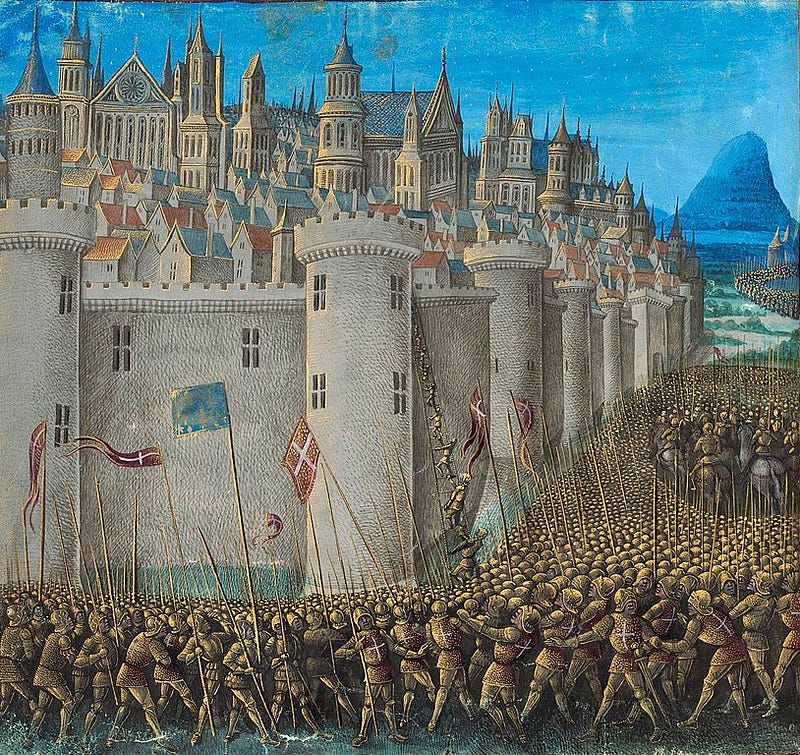
The Medieval people used to fight frequently as well. The list of wars during this thousand-year period is insane. In total, there were 370 wars against various empires, with the last one being the Italian War, which concluded in 1504.
Many were fought only to see which incompetent ruler would occupy the throne as King or Queen. Others were contested for noble reasons. These included the religious wars or the Crusades. But, as it is today, common people paid the ultimate price.
As a surf and because of the European feudal system, if you lived in a kingdom where two of the rich people wanted to fight one another, you would be obligated to fight. Peasants were supposed to render military service to their overlords on a regular basis.
Men were sent away for only short periods of time. So, if you were lucky enough not to die during the first four days, you could return home. A reason for this speedy return was also that if everyone were off to war, none would be left to serve the nobles. This meant no labormen, no crops, and no money for all the wealthy people. However, this resulted in the Medieval military being disorganized, leading to many deaths.
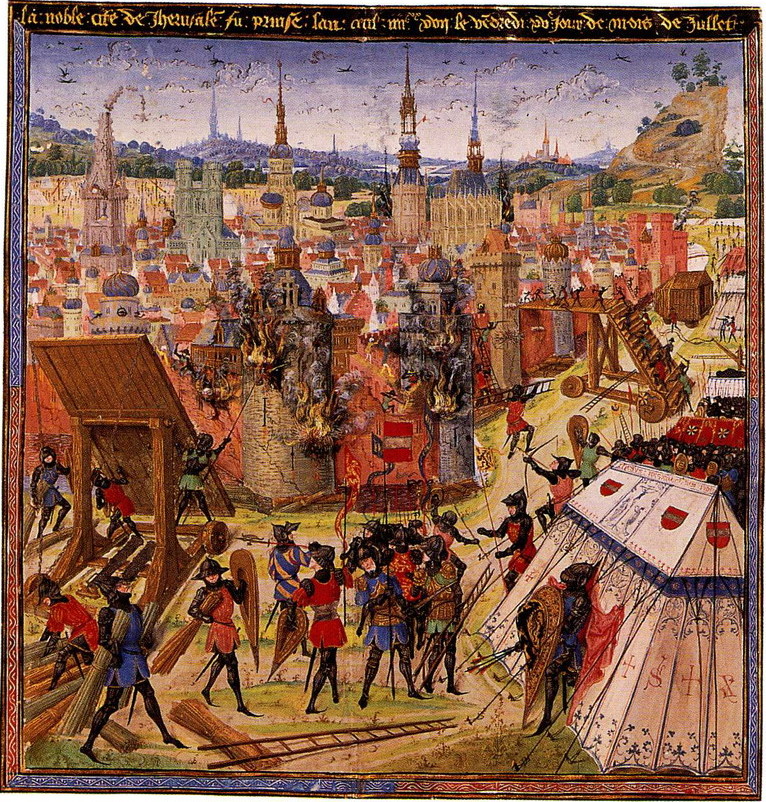
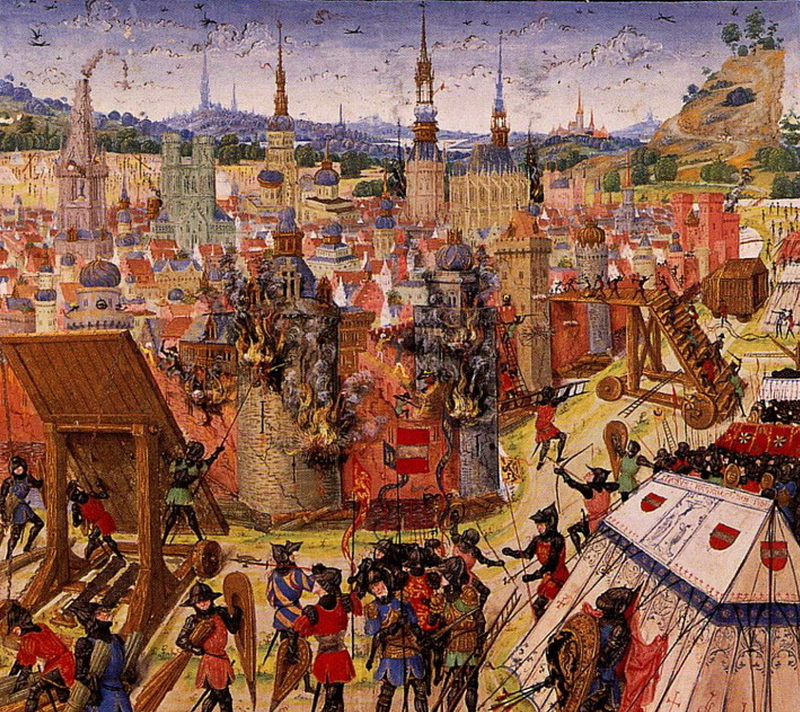
The noblemen were not able to escape death either. Around 30% of them died in one skirmish or the other. For commoners, no such numbers are available because they were considered so unimportant that no one kept a record, and we can only make an estimate from the total casualties during Medieval wars. At the siege of Jerusalem during the first Crusade, for example, there were around 90,000 deaths.
It seems fair to say that after journeying briefly through the Middle Ages, you would have realized that they were not as romantic as the movies make them out to be.