
Here’s why people believe doom and gloom science BUT NOT the green tech guys
We can ABSOLUTELY solve climate change over an around 15–20 year period (barring WW3) and it’ll be cheaper than running fossil fuel plants.
But nobody believes scientists and engineers this time around. Why? (There’s nine reasons, believe it or not IMO).
Everyone is just crazy pessimistic it seems.
If anything positive, people think that climate change is – with a lot of luck – going to be solved with a little help from EVs and through lots of austerity and at great cost. And it’ll happen in Brussels and by governments.
LOL.
Oh, governments will pretend it’s them making all the difference — and they have helped, don’t get me wrong. But from here on in, it’ll be done mostly by entrepreneurs and industry.
And it’ll cost us consumers almost nothing.
Two narratives
Most of us got convinced to take climate change seriously by scientists and environmentalists. For good reason. They did a great job. A bit oversold, but we needed the kick in the pants and nothing’s perfect.
But now we’re continuing to listen to some of the overly doom and gloom science guys.
We’re now ignoring other science and engineer guys like Tony Seba, Elon Musk and Bill Gates who have the technology solutions and realistic plans to solve it. (Gates, is too reliant on nuclear, the other two, and I, mostly, do not think it’s necessary).
Why ignore them? It’s engineer-type scientists and industrialists we must listen to now.
Surely?
And Cathie Wood of ARK Invest has her pulse on this as a brilliant, far-sighted investment fund manager. Financial types? Listen to her! Forget the rest of Wall Street.
And there’s no austerity in sight in these plans. Sorry! LOL.
In fact, they’ve mapped out the plan in fine-detail — taking account of ‘globally all’ local climate variability records — and it’s doable, already happening and, it largely wont cost us consumers a cent. In fact, for the most part, it wont even cost governments.
Industry is and will invest in it, and profit from it.
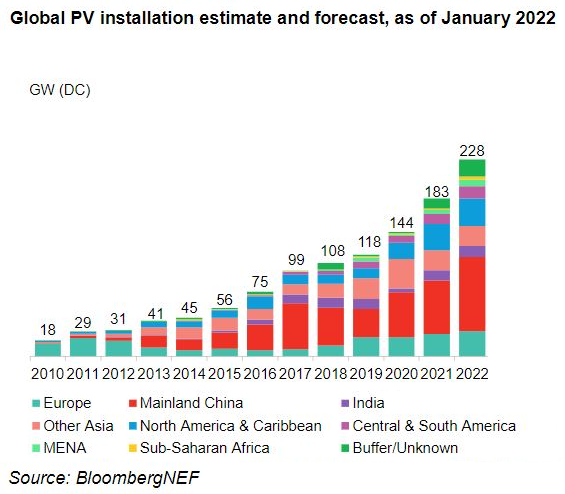
Its happening on economic grounds now: installing and operating global solar and wind and batteries is now cheaper than operating fossil fuel plants. Solar cells just halved in price again.
Why we don’t believe
Instead people seem to side with the camp that prefer austerity solutions. The public just doesn’t seem to want to believe us practical optimists.
Here’s why:
1. It’s partly a communication problem.
Seba and Gates and Musk have only just got started.
2. It’s easier to believe a fact about an unintended bad thing that has already occurred versus a good thing you can potentially orchestrate in the future
3. Solar-wind-battery has only just recently become cheaper than fossil fuels
4. Existing energy plants become ‘stranded assets’.
Climate denialist governments will even, only for a few more years, continue to approve new fossil fuel plants. It’s essentially insane. These should almost without exception be solar and wind plants.
It’s like people who can afford EVs still not buying them. This will soon stop happening as EVs are just about at price parity and the evidence about much lower TCO, total cost of ownership, will finally get through.
But compelling models do not exist yet at entry level. It’s coming.
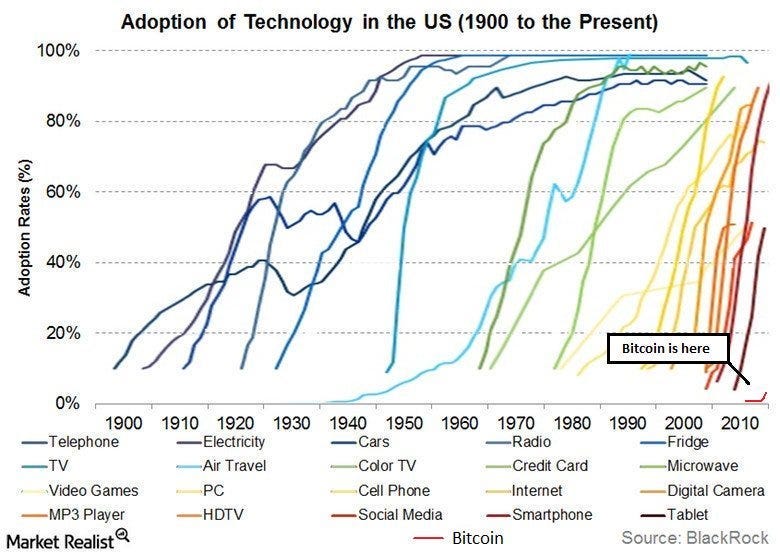
5. The public has never seen a transformation like this.
Or they think they haven't.
But as Tony Seba (RethinkX) points out, we all — or at least our parents and grandparents — have actually witnessed incredible single-decade adoptions of new technologies that have changed our lives:
- cars
- radio / TV
- computers
- internet
- cell phones
6. Regardless, people don’t fully realize that we are entering a new age of AI and robotics. (ChatGPT, and soon FSD (full self driving), is changing that perception).
I think anyone who hasn’t come to the realization that the world of the 2030s will 100% be teeming with androids and special-purpose recycling, civil, domestic, clean-up, construction and agricultural robots . . is maximally deluded. We already have all the building blocks for these things, especially motors, batteries and visual and language AI.
7. People think scientists and engineers can’t make global calculations or impacts.
Some say it’s too audacious to think we can reverse something that is affecting the whole world. But is that true? Of course not. If we caused this we can reverse it. And big things calculate almost as easily as little ones. High school physics students make calculations about the entire earth everyday. And (most of them) get it right.
Check out Tesla’s realistic $10T plan to 100% solve climate change over a 15-20 year period covering:
- Road transport (EVs)
- Air & sea transport
- Electricity grid — including all heating 100% heat pump-based
- Industrial use — high temperature processes (concrete & steel etc)
8. The politics cements non-belief. The left tends to believe in science. The right tends to believe in technology.
But this time, it’s hard to even get the right on side on their techno-angle because they first have to believe there’s a problem. And that’s a lefty thing! The right’s climate denialism is destroying minds and causing poor outcomes.
And some of the left are quite happy to focus on austerity solutions: telling people not to eat meat or not to use aircraft or air conditioners is, let’s be brutally honest, right up their alley.
But the austerity ‘solution’ is horrifically inadequate and divisive: it only would make a 5%-ish sort of difference, it unfairly holds back the developing world and you’re asking the developed world to regress in whatever their definition of progress is.
And it just stinks anyway.
9. People think it will require governments to be really smart or altruistic.
Nope. Luckily. (LOL)
Governments play a very secondary role from here on in IMO although energy independence is a coincident synergistic strategy.
Governments need to
- coordinate
- ensure competitiveness of energy provisions (otherwise it wont be cheap!)
- approve projects
- plus . . upgrade the electricity grid.
That’s pretty much it.
The ensuring of competitive landscapes when it’s not naturally occurring is utterly crucial. We’ve all seen what happens when electricity companies are not constrained by market forces: skyrocketing electricity prices. And this is demonstrably not primarily caused by green energy, but false ‘competitive’ paradigms.
Remaining challenges
The arm twisting is largely over. It really will happen on economic grounds now.
Mostly. There will be some challenges.
In the developing world: India? I think China is on board.
Recalcitrant developed nations will come on board fully as EVs and solar-wind-battery prove to be better and cheaper.
Now let’s just let the technologists be technologists.
(And let’s all try to avoid WW3, Big Brother and AI dystopia. Sorry, no link on stopping WW3, I’m all out of ideas on that one).


