
Here’s Who I’d Prefer For U.S. President: Unfortunately, He’s Dead
I’m among many Americans who believe that the 2016 Presidential candidates Hilary Clinton, and Donald Trump, were less than impressive. And now with the latter having been elected, our federal system has, in my opinion, evolved into a clown show of epic proportions.
Back in the eighties at the Catholic Jesuit high school I attended, every student had to recite the U.S. Presidents and their terms in office as a condition for graduation. In recalling this list the other day at the ripe old age of 55, I began to ponder who I’d rather have as POTUS.
Here’s who I came up with. Drum roll please. ……………
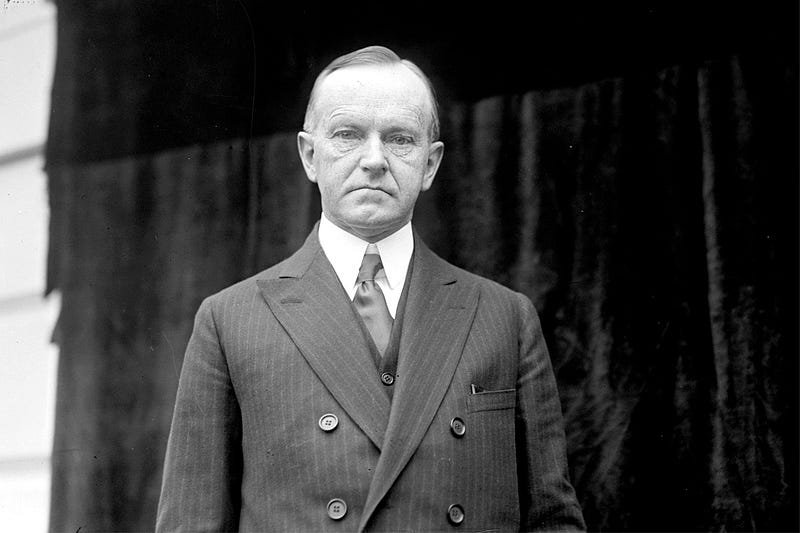
Calvin Coolidge, who was our 30th U.S. President
Referencing a book I’m currently reading as well some other backgrounder, I’ll make the argument as to why Calvin Coolidge would be an ideal president for our times.
I do, however, caution you about getting too excited about my Coolidge for President in 2020.
Why? Because he’s DEAD.
Why I’m Hot On Coolidge, Cool On Trump
As the 30th U.S. President, Coolidge was a principled, high integrity man — arguably the last true laissez-faire, political leader to see the Oval Office.
Libertarian in his orientation, he was a huge advocate of limited government, which he backed up with an impressive track record over the course of his presidency. He was a pivotal player in the Roaring Twenties, a period of unprecedented economic prosperity for the U.S. He reduced the national debt, had budget surpluses, and even achieved massive income tax cuts. He was deeply reticent about government regulation, offering proposals to minimize it at every turn.
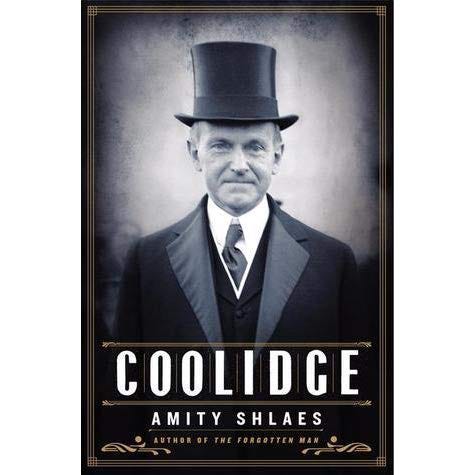
Amity Shlaes author of Coolidge: a full-length biography on our 30th president, offers these great insights in her book:
Coolidge served for sixty-seven months, finishing out Harding’s term after Harding died in early August 1923 and remaining until early March 1929. Under Coolidge, the federal debt fell.
Under Coolidge, the top income tax rate came down by half, to 25 percent. Under Coolidge, the federal budget was always in surplus.
Under Coolidge, unemployment was 5 percent or even 3 percent. Under Coolidge, Americans wired their homes for electricity and bought their first cars or household appliances on credit.
Under Coolidge, the economy grew strongly, even as the federal government shrank.
Under Coolidge, the rates of patent applications and patents granted increased dramatically.
Under Coolidge, there came no federal antilynching law, but lynchings themselves became less frequent and Ku Klux Klan membership dropped by millions.
Under Coolidge, a man from a town without a railroad station, Americans moved from the road into the air.
Under Coolidge, religious faith found its modern context: the first great White House Christmas tree was lit, an ingenious use for the new technology, electricity.
Under Coolidge, the number of local telephone calls went up by a quarter. In Silent Cal’s time, Americans learned to chatter. Under Coolidge, wages rose and interest rates came down so that the poor might borrow more easily.
Under Coolidge, the rich came to pay a greater share of the income tax.
Perhaps most impressive is that Coolidge and his predecessor Warren Harding played pivotal roles in reducing federal spending by a remarkable 43% from $5.1 billion to $2.4 billion. Even more impressive is that he reduced the national debt by nearly a third, from $24 billion to $16.9 billion.
Coolidge’s efforts to bring the country together was quite noteworthy. He was a huge advocate of individual rights and had some surprisingly enlightened views about race. Coolidge also championed support for outreach efforts to bridge the racial divide in the country at that time.
I’m a third of the way through Shlaes book and am impressed with her deep research about Coolidge. I’ll update you as I get further into it.


