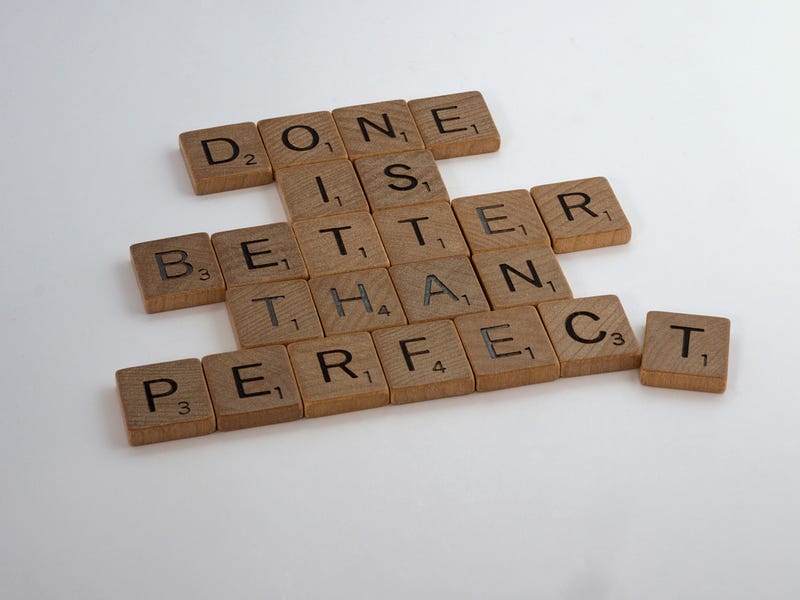
According to science
Here’s what you should do when you can’t decide according to science
The answer is more simple than you think

We’ve all seen those people at the gelato shop. The ones who can’t decide what they want. They try every single flavor and perseverate whether they want Vanilla or Chocolate until the queue behind them send glaring looks.
This kind of decision paralysis creep up not only in gelato parlors but also in our everyday work lives. Choosing between designs for your app, deciding what funding to accept for your company, and selecting what project to undertake among options can be difficult and take up hours, days, or even weeks to make a decision. Why are these decisions so damn hard? How can we make better decisions?
“More is lost by indecision than wrong decision. Indecision is the thief of opportunity. It will steal you blind.” — Cicero
Difficult decisions signal similar valued alternatives
Decisions are easy when the values of choices are clearly different. If you hate chocolate but love vanilla, it’s a no brainer to buy the vanilla ice cream. However, choices becomes difficult if you like both chocolate and vanilla.
This situation where two values are of similar value also suggests that the opportunity cost of a wrong decision is low. An opportunity cost is the difference in value between the chosen option and the foregone alternative. Therefore it is an economic axiom that you‘d want to minimize the opportunity cost when making decisions.
Interestingly, this also means that when the value of two choices are very similar it means that the consequences of choosing the wrong options is also very small. If you like both the chocolate and vanilla ice cream, does it really matter what flavor you eat right now? It’s relatively inconsequential whether you choose the slightly better option when the choices are similar in value. You’ll still enjoy the ice cream to a great deal!
The science
Researchers from University of Zurich and Princeton University investigated this behavior in a lab setting. They recruited participants to repeatedly choose between two snack options that they would later receive based on their choices. The snack options were varied such that participants were sometime presented with two snacks that they almost equally liked and others with snacks where one was a clear favorite. Participants were quick to choose when one of the options were clearly more valuable than the other. As hypothesized, participants took longer when choosing between snacks that they similarly preferred even though the relative added value from getting that option correct was small.
What they also found was that they could nudge people to make more optimal decisions by imposing a deadline. When participants were told they would be cut off if they didn’t made a decision within a certain time, they not only made decisions quicker but they also made more decisions ultimately maximizing their overall reward.
Deadlines can help you make better decisions
What we learned from the study above can be applied to real life decisions. If you are trying to decide between two designs for your app and if that decision is so difficult because the two seem very similar, remember that this actually means that whichever you choose is not going to make a huge difference. Rather, it would be better for you to quickly make a decision, test out the design and iterate if needed.
Great entrepreneurs learn this from experience. They know not to take too long in making decisions because the harder it is to make, it probably means that the consequence of getting it wrong is not as bad as one thinks. So next time you face a tough decision between choices, put a deadline on it and keep moving to make more important decisions in life.