
Here’s What You Need to Know About Snacking If You Want to Lose Weight
Does snacking lead to weight loss?
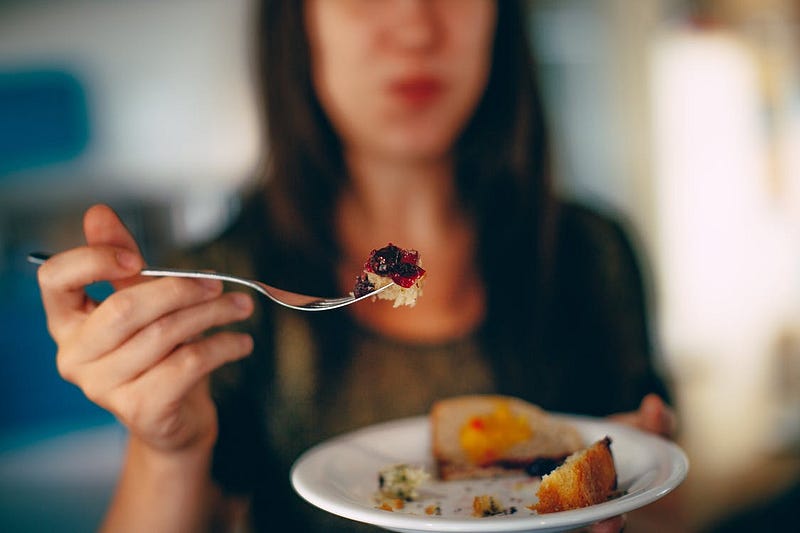
People looking to lose weight are often told to snack or have frequent, small meals, as it’s “good for the metabolism”.
However, as with a lot of topics in the sphere of nutrition, this is a complicated matter, and the current literature is leaning towards avoiding snacks if we want to not only lose weight, but also be healthy.
Here’s what you need to know about snacking, and what you can do.
The Problem with Snacking
There are two main issues with snacking:
1. Our body’s fat-making process stays on
The constant influx of food means the body forever stays in fat-making mode. According to Dr. Satchin Panda, fat-storing only turns off after 2 hours without food. Therefore, we want to aim for about 3–4 hours between food.
“As soon as we eat something, our pancreas releases insulin, which does two important jobs for metabolism: it helps absorb sugar from our blood into our liver, muscle, fat, and other tissues, and it signals these organs to convert some of the sugar to body fat. This process continues for up to 2 to 3 hours after we eat, every time we eat. So, as we keep on snacking, our body remains in fat-making mode.” — Dr. Satchin Panda, The Circadian Code
2. Our digestive systems never get a break
Always having food coming into the system also means the digestive system never gets a break. Even a small snack (even one bite!) will turn on the entire digestive process which will last for hours.
This can lead to myriad issues:
- Small Intestinal Bacterial Overgrowth (SIBO) from bacteria constantly replicating in the small intestine
- One study showed that a mid-morning snack led to decreased weight loss compared to not snacking
- Nighttime snacking can lead to sleep loss which leads to more snacking
- Snacking has been linked to greater abdominal fat
When the digestive system gets a break from digesting, it is allowed to perform other necessary functions, such as:
- A sweeping out of the small intestine to rid the system of bad bacteria
- Insulin levels decrease:
“Between meals, as long as we don’t snack, our insulin levels will go down and our fat cells can then release their stored sugar, to be used as energy. We lose weight if we let our insulin levels go down.” — Harvard Medical School
Note: This will be highly individual, and those with any metabolic or other health concerns should check with their health care professional to ensure this is right for them. Also, there is evidence that snacking can be beneficial for older adults to ensure adequate calorie intake.
What You Can Do
I’m not saying you need to cut out snack food entirely.
You can keep eating the same snacks, just try to focus them around a meal. For example, I’ll eat lunch and then I will immediately eat any snacks I want to have. Of course, you will have less room as you will likely be full from your meal. However, this isn’t necessarily a bad thing (unless you’re trying to gain weight, and then maybe you should check with your medical professional). You’ll probably find you end up eating less overall.
Aim to take a break from any calories for at least 2 hours at a time, but ideally closer to 3–4 hours. Ensure your meals are nutrient-dense and filling so that this 3 hour break isn’t difficult. Eating adequate healthy fats, protein, and fiber will ensure you stay full between meals.
Another trick I like to use is having a cup of black coffee. It has zero calories and also acts as an appetite suppressant. If you’re feeling hungry, try this.
And remember, biology works in averages. It’s what you do most of the time that matters most. If I’m hungry and I’m still a couple of hours away from my next meal, I’ll probably have a snack. Similarly, if I’m spending time with people and they are eating, I’ll probably eat something too. Life is for living, not for depriving ourselves.
With our current knowledge, the idea that frequent snacking is better for weight loss and the metabolism is untrue.
In fact, frequent snacking actually leads to greater fat gain due to the body constantly remaining in fat-making mode from the constant influx of food. Therefore, for optimal health, we want to avoid eating between meals. This allows our fat-making processes to switch off, and also gives the digestive system a well-needed break.
If you’re looking to lose weight, or optimize your health in general, try to take breaks between meals by avoiding snacking.
Want to improve your health, one habit at a time?
Sign up for my free weekly newsletter, Momentum. Each week you’ll receive one new habit to try. I’ll explain why it’s important and how to make it easy. This newsletter will help you to create the momentum you need to move towards a healthier and happier future.