avatarBebe Nicholson

Free AI web copilot to create summaries, insights and extended knowledge, download it at here

2658

Abstract

essels served the purpose. Parents or caregivers filled these bottles with milk that came from a variety of animals, including goats, sheep, donkeys, camels, pigs or horses.</p><figure id="4b93"><img src="https://cdn-images-1.readmedium.com/v2/resize:fit:800/1*_b-Od8_TspOz6cRETSTW9g.jpeg"><figcaption>Ancient baby bottle found in excavations of Louvre Castle: Wikimedia Commons</figcaption></figure><p id="013a">Eventually, cow’s milk became the most widely used because of its availability, although donkey’s milk was thought to be healthier since its appearance more closely resembled human milk.</p><p id="1b62">Doctors weren’t always in agreement about the best way to prepare milk. Some recommended giving it fresh from the animal, while others thought it should be boiled first or diluted with water and sweetened with honey.</p><p id="27c8"><a href="https://www.contemporarypediatrics.com/view/concise-history-infant-formula-twists-and-turns-included">After infants were weaned from breast milk or cow’s milk, they were given an infant food called pap, </a>which was boiled milk or water thickened with baked wheat flour and sometimes an egg yolk.</p><p id="d783"><a href="https://www.contemporarypediatrics.com/view/concise-history-infant-formula-twists-and-turns-included">Dr. Andrew J. Schuman, MD, </a>writes about this in his article, <i>A Concise History of Infant Feeding. </i>Recipes for various kinds of infant “paps” have been published in cookbooks throughout history, with one writer saying her grandmother boiled cow’s milk, diluted it and added sugar.</p><figure id="9bd6"><img src="https://cdn-images-1.readmedium.com/v2/resize:fit:800/1*z92SFPVThtzEcVr8n7QSAQ.jpeg"><figcaption>PHOTOGRAPHER: WELLCOME LIBRARY, LONDON.Donkeys nurse babies at a French hospital for sick infants; human-animal breastfeeding has a fairly rich history.</figcaption></figure><h2 id="70f7">Evaporated Milk and Early Formulas</h2><p id="3c3d">In the late 1800’s, evaporated milk, created through a process of evaporating water out of milk and sterilizing it, was a popular substitute for breast milk. It was usually mixed with sugar or corn syrup, and vitamin supplements were added to make up for any vitamin deficiencies that might result from these homemade “formulas.”</p><p id="756b">Until the mid-1950’s, some parents made their own “formula” with ingredients like Karo syrup and canned milk, with parents also feeding babies orange juice and cod liver oil.</p><p id="0f1e">A German chemist, <a href="https://www.bbc.com/news/business-40281403">Justus von Liebig,</a> invented the first known commercial infant formula in 1865. Motivated by a passion for

Options

improving nutrition after growing up in an area where food was in short supply, he called his powdered formula Liebig’s Soluble Food for Babies. It consisted of cow’s milk, wheat flour, malt flour, and potassium bicarbonate.</p><p id="084d">By the early twentieth century, scientists were working hard to create a formula that more closely resembled breast milk. Soy-based formulas became available for infants who couldn’t tolerate cow’s milk-based formula, although this formula lacked vital nutrients.</p><p id="d6a7">In the late 1960’s, the American Academy of Pediatrics released its first set of recommendations for the amount of vitamins and minerals that should be in formula, and in 1980 Congress passed the Infant Formula Act, which set quality controls, mandated testing, and regulated the amount of nutrients.</p><p id="304a">These days, infant formula is regulated by the <a href="https://www.fda.gov/food/people-risk-foodborne-illness/questions-answers-consumers-concerning-infant-formula">Food and Drug Administration</a> (FDA) which enforces quality and nutritional standards.</p><figure id="6d0c"><img src="https://cdn-images-1.readmedium.com/v2/resize:fit:800/1*0OKal0fIyAz55nR8VLoEHA.jpeg"><figcaption>Photo of infant formula: Wikimedia Comons</figcaption></figure><h2 id="59b7">The Current Formula Shortage</h2><p id="4e12">These days, many parents have grown to depend on formula as a reliable, safe source of food and nutrients for their babies. So what can they do in light of current shortages?</p><p id="a2fd">According to CBS news, milk banks across the country are collecting donated breast milk from lactating women and distributing it to babies struggling amid the national crisis.</p><p id="5660">President Biden has <a href="https://twitter.com/POTUS/status/1524883368206295069">called on the Federal Trade Commission</a> to investigate reports of price gouging.</p><p id="ba58"><a href="https://www.washingtonpost.com/health/2022/05/13/baby-formula-shortage-what-to-do/">The Washington Post </a>consulted several pediatricians and health experts to find out what parents can do, and their experts came up with a list of things parents shouldn’t do. Those pediatricians said <i>don’t </i>dilute formula, <i>don’t</i> buy it on the internet from someone you can’t verify, <i>don’t </i>buy recalled brands, and <i>don’t </i>add cow’s milk.</p><p id="6827">The experts also agreed that parents should talk to their pediatricians before altering a baby’s diet.</p><p id="2760"><i>But a look at the past 2000 years shows us parents have always found ways to feed their babies when experts weren’t available.</i></p></article></body>

Here’s What People Fed Babies Before We Had Formula

In the absence of experts, parents found a way
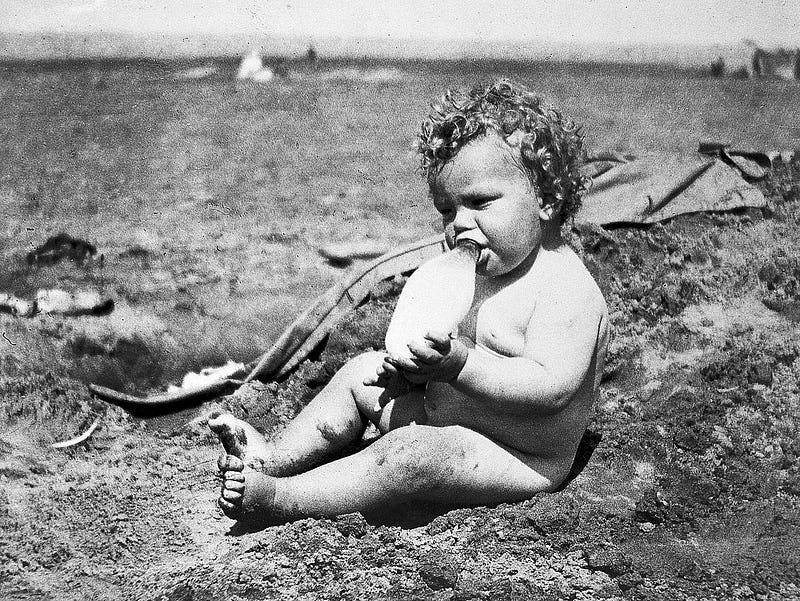
photo from Wikimedia Commons in the public domain

If you haven’t heard of the baby formula shortage, you either haven’t listened to the news or you don’t have a baby. According to news reports, the shortage is so severe some parents are driving hours at a time in search of it.

This wouldn’t have affected me when my children were infants, because I breastfed them, which made feeding them easy but leaving them impossible. I had to stick close by, because my children hated formula and would cry nonstop until I returned.

But what happens when moms don’t breastfeed, the grocery shelves are empty, and the cost of ordering formula on Amazon makes you feel like you’re taking out a second mortgage?

The Wet Nurse

A quick look at the history of baby feeding reveals that as early as 2000 BC, a wet nurse was the solution of choice for women who didn’t breastfeed. A wet nurse is a woman who breastfeeds another’s child, and from 950 BC to 1800 AD it became such a well-organized profession that there were contacts and laws to regulate it.

Sometimes women died in childbirth. Sometimes women gave birth and lived but didn’t produce enough milk.

One “medical” solution designed to increase milk flow was to warm the bones of a sword fish in oil and rub it on the new mother’s back. If that didn’t work, she could sit cross-legged and eat fragrant bread of soused durra, while rubbing her “parts” with the poppy plant. If the milk still wasn’t flowing, it was time to call in a wet nurse.

Women of higher status demanded a wet nurse, especially when breastfeeding among the upper classes was unfashionable because women worried about ruining their figures. Breastfeeding also interfered with social activities like attending theatre performances.

What Happens When a Wet Nurse Isn’t Available?

But breastfeeding, whether by mothers or wet nurses, wasn’t the only way to feed a baby. Ancient clay vessels for feeding babies have been discovered during archaeological digs.

Sometimes animal horns were used as bottles. Other times, carved wooden vessels served the purpose. Parents or caregivers filled these bottles with milk that came from a variety of animals, including goats, sheep, donkeys, camels, pigs or horses.
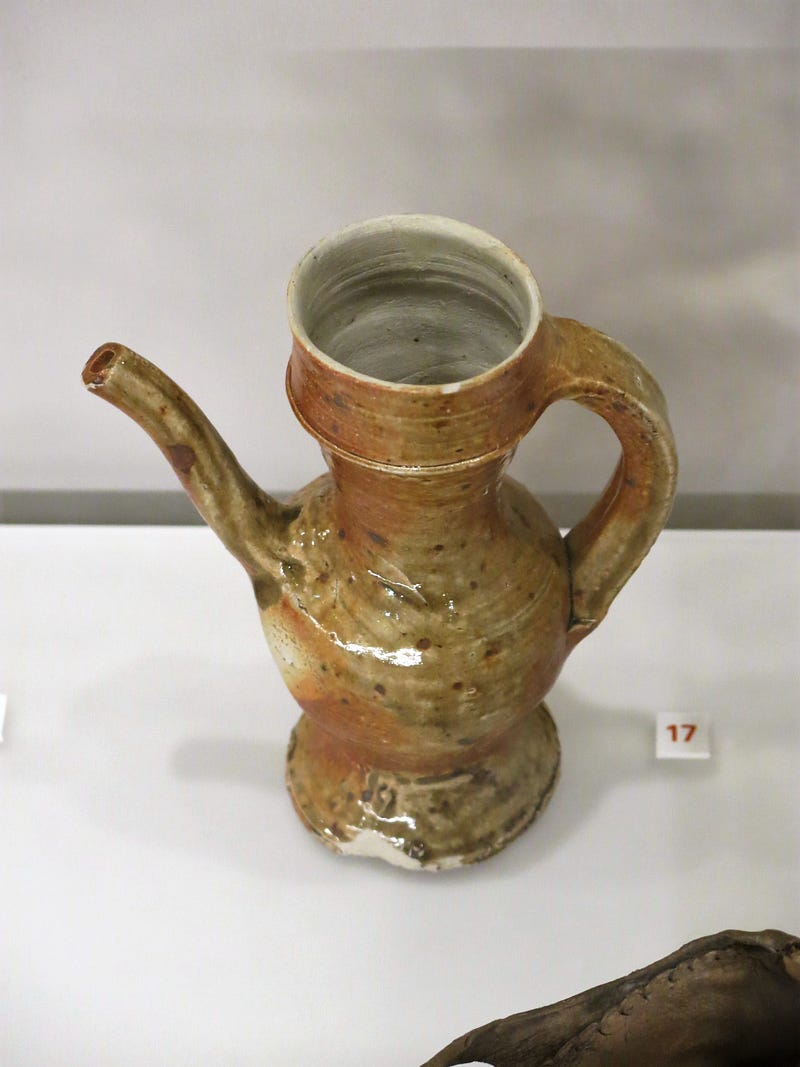
Ancient baby bottle found in excavations of Louvre Castle: Wikimedia Commons

Eventually, cow’s milk became the most widely used because of its availability, although donkey’s milk was thought to be healthier since its appearance more closely resembled human milk.

Doctors weren’t always in agreement about the best way to prepare milk. Some recommended giving it fresh from the animal, while others thought it should be boiled first or diluted with water and sweetened with honey.

After infants were weaned from breast milk or cow’s milk, they were given an infant food called pap, which was boiled milk or water thickened with baked wheat flour and sometimes an egg yolk.

Dr. Andrew J. Schuman, MD, writes about this in his article, A Concise History of Infant Feeding. Recipes for various kinds of infant “paps” have been published in cookbooks throughout history, with one writer saying her grandmother boiled cow’s milk, diluted it and added sugar.
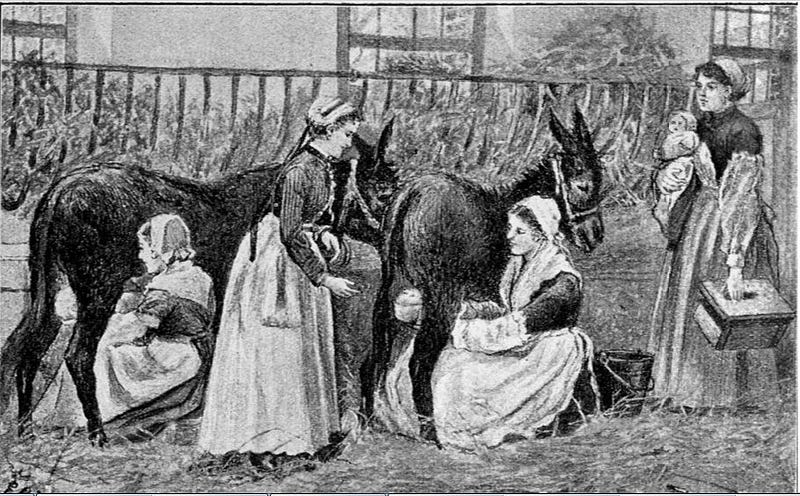
PHOTOGRAPHER: WELLCOME LIBRARY, LONDON.Donkeys nurse babies at a French hospital for sick infants; human-animal breastfeeding has a fairly rich history.

Evaporated Milk and Early Formulas

In the late 1800’s, evaporated milk, created through a process of evaporating water out of milk and sterilizing it, was a popular substitute for breast milk. It was usually mixed with sugar or corn syrup, and vitamin supplements were added to make up for any vitamin deficiencies that might result from these homemade “formulas.”

Until the mid-1950’s, some parents made their own “formula” with ingredients like Karo syrup and canned milk, with parents also feeding babies orange juice and cod liver oil.

A German chemist, Justus von Liebig, invented the first known commercial infant formula in 1865. Motivated by a passion for improving nutrition after growing up in an area where food was in short supply, he called his powdered formula Liebig’s Soluble Food for Babies. It consisted of cow’s milk, wheat flour, malt flour, and potassium bicarbonate.

By the early twentieth century, scientists were working hard to create a formula that more closely resembled breast milk. Soy-based formulas became available for infants who couldn’t tolerate cow’s milk-based formula, although this formula lacked vital nutrients.

In the late 1960’s, the American Academy of Pediatrics released its first set of recommendations for the amount of vitamins and minerals that should be in formula, and in 1980 Congress passed the Infant Formula Act, which set quality controls, mandated testing, and regulated the amount of nutrients.

These days, infant formula is regulated by the Food and Drug Administration (FDA) which enforces quality and nutritional standards.
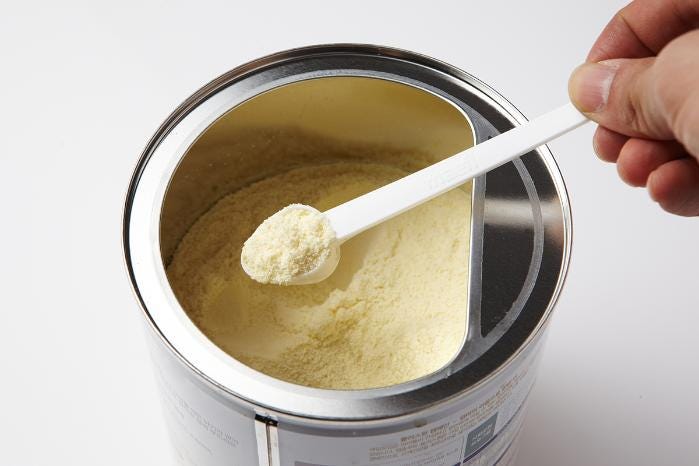
Photo of infant formula: Wikimedia Comons

The Current Formula Shortage

These days, many parents have grown to depend on formula as a reliable, safe source of food and nutrients for their babies. So what can they do in light of current shortages?

According to CBS news, milk banks across the country are collecting donated breast milk from lactating women and distributing it to babies struggling amid the national crisis.

President Biden has called on the Federal Trade Commission to investigate reports of price gouging.

The Washington Post consulted several pediatricians and health experts to find out what parents can do, and their experts came up with a list of things parents shouldn’t do. Those pediatricians said don’t dilute formula, don’t buy it on the internet from someone you can’t verify, don’t buy recalled brands, and don’t add cow’s milk.

The experts also agreed that parents should talk to their pediatricians before altering a baby’s diet.

But a look at the past 2000 years shows us parents have always found ways to feed their babies when experts weren’t available.

Baby Care
Society
Culture
Current Events
History
Recommended from ReadMedium