
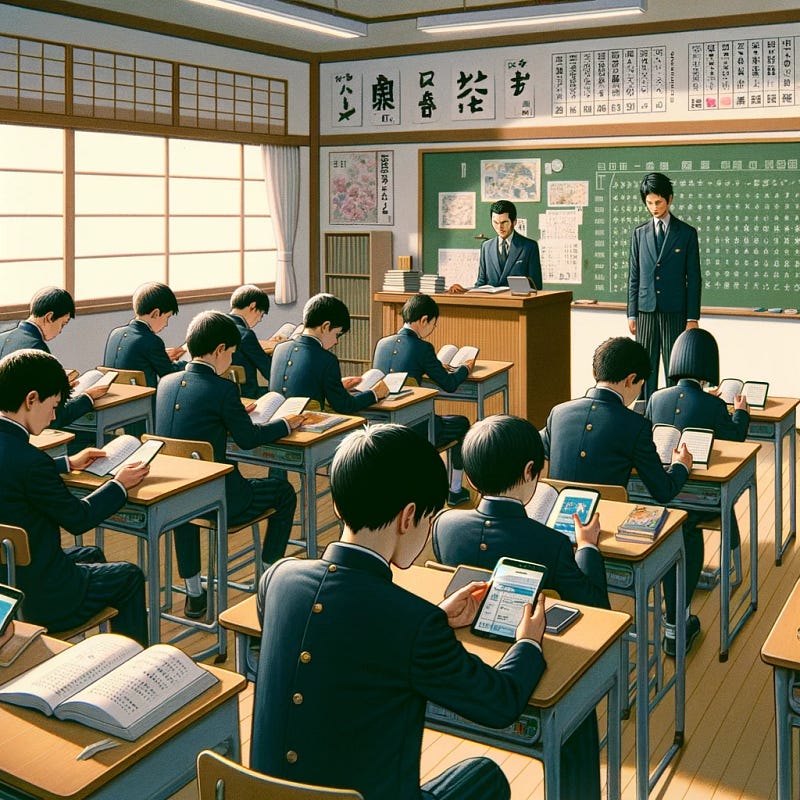
Here’s a question for you: Do you think middle school students in Japan should be allowed to use smartphones in school?
Hello everyone!
Today, I want to sincerely discuss “common smartphone rules in Japanese schools”.
I think this theme is very interesting in our modern digital society. The treatment of smartphones in Japanese schools sits at the intersection of education and technology, making it a topic of interest for many.
First, let’s start with a basic understanding of the Japanese education system. Japanese school education consists of elementary school (6 years), junior high school (3 years), and high school (3 years). Education until age 15 is compulsory. Importantly, schools are not just places to teach knowledge, but to learn social skills and discipline. This background strongly influences schools’ policies on smartphone use. By the way, Japan has many non-religious people, so religious events don’t really happen during classes, though tolerant accommodations are made for religious students.
Now, let’s look at the specific rules for smartphones in Japanese schools. In many schools, using smartphones during class is prohibited in principle. This is to prevent disruption to lessons and deterioration in the quality of communication between students. However, in recent years, the value of smartphones as learning tools has been recognized, so we may see changes to this rule.
Additionally, some schools prohibit bringing smartphones to school entirely. This is to maintain students’ focus and prevent troubles at school (such as bullying or privacy violations). However, recognizing the importance of smartphones for commuting safety and contacting family, opinions remain divided on this matter. Currently, junior high students are generally prohibited from bringing phones on premises. But the rules vary for high school students and above — some schools permit use during breaks, while others prohibit it entirely.
On the other hand, some schools are proactively incorporating smartphones into education. For example, using them for listening practice in English classes, or reading ebooks from the library. These demonstrate the benefits of integrating technology into education.
However, Japan’s unique cultural background must also be considered. Japan has a strong culture of “wa”(和), emphasizing group harmony. Thus, a culture of always considering how individual actions impact the group is reflected in the smartphone rules.
In my next article, I want to look at the influence of smartphones on education in Japan, and examine what issues they present.