
Here is Why You Should Embrace Your Ego
And 12 signs of an unhealthy ego

We live during a time in which self-worth has become synonymous with external validation, with how many compliments, content likes, or shares we get.
It has become easy for many to lose a grounded and sensible grip on reality and become absorbed into a hyper-sensitive self-awareness, a sort of self-absorption — an egotistical person.
An egotistical person isn’t just an extremely extroverted person who might seem so full of themselves, but also that introverted, self-conscious person who thinks everybody is judging them. In both cases, there is a distorted and misguided ego.
As you will soon learn, your ego isn’t bad; it isn’t something to restrain or discipline per se. Instead, it is something to understand and embrace.
The Meaning of Your Ego
The word “Ego” is the Latin word for “I.” So when we talk about the ego, we are talking about the I, the me, the mine, the self. Your ego manifests itself as your sense of self.
You experience life through the vantage point of your ego: your physical body (your location in space) and your conceptual body (your perceived identity).
Your five senses define your physical body. What you touch, smell, see, hear, and taste inadvertently create the barrier that separates you and everything else around you.
Your conceptual body holds your entire construct of reality; your beliefs, preferences, perceptions, and everything else that forms the basis by which you interact with the physical world around you.
In Freudian psychology, the ego is the conscious identification of self that mediates and referees the continuous internal conflict that takes place between the Superego (your conscience and moral voice — primarily influenced by the voice of the parents in early childhood) and the Id (your carnal desires and pleasures).
Is Your Ego Bad?
Contrary to what some spiritual teachers and self-help gurus say, your ego is not bad and is not something you should destroy — it has a purpose.
The purpose of your ego is to preserve your self-identity, both your perceived identity (who you believe you are) and your physical identity (your body).
For example, your ego is what activates the stress response (fight or flight) when you perceive a threat. When you mistakingly walk in front of a speeding car or find yourself in a burning building, this stress response gives you a boost of adrenaline to respond swiftly without thinking. But in reality, how often does a threat like that happen? I presume for most of us, not often at all, if ever.
Perhaps less existentially significant and more prevalent are threats to your perceived identity. When one of your core values or beliefs is compromised, you inadvertently see threats where no real threats exist. When that happens, you experience the same stress response instinctually activated by your ego to protect you — only it stays on and reduces the quality of your life.
In addition to the imperative of self-preservation, your ego allows you to function effectively in the physical world and become a contributing member of society. Also, through the ego, you can experience your humanity in both pleasure and pain — It is “I” that feels the sadness, or it is “I” that feels the happiness.
The ego is neither Inherently good nor bad. But is shaped through life-conditioning to either support a balanced and grounded life experience or a life laden with fears and insecurities.
But why do most of us have an ego that feels like it is constantly under attack and needs to defend itself?
Well, we are evolutionarily predisposed to identify worst-case scenarios and see the cup as half-empty rather than half-full. This predisposition helped human beings survive as a species at a time when snoozing meant becoming a wild animal’s lunch. However, this predisposition has led many away from fulfillment and happiness in today’s world.
12 Signs of an Unhealthy Ego

When you have an unbalanced ego that fails to see how it can support your journey toward self-actualization, you continue to live a life of fear and scarcity. It is only through honest inquiry into yourself that you can begin to uncover elements of your ego, such as conditioned beliefs, that stand in the way of your happiness.
Until you take a deep look at the aspects of your identity and scrutinize it, you will inadvertently continue to live by an identity that does not support your spiritual growth and personal evolution.
Here are some signs you may have an unhealthy ego:
- You constantly seek external validation from others
- You somehow make everything about you
- You always need to be right
- You feel inadequate and worthless
- You compare yourself to others
- You need to be the best at everything
- You lack empathy and compassion
- You always judge yourself and others
- You think people are out to get you
- You refuse to ask for help when needed
- You find every opportunity to brag about your achievements
- You frequently hurt others by being selfish and disregarding them.
This list is not exhaustive but to pique your curiosity into exploring significant aspects of your ego.
Embrace Your Ego
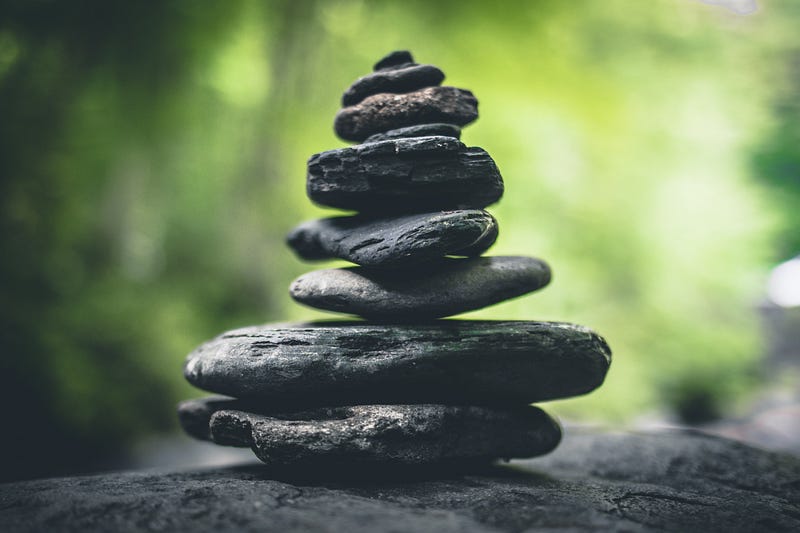
The reality is that we are egocentric in that we cannot break free from our personal framework of perceived reality; however, the crux is not in living an ego-less life but rather in being able to live a life in which the ego plays a healthy role in supporting our journey toward spiritual fulfillment and self-actualization.
We have needs, desires, and vices, which makes us human — a balanced ego accepts and appreciates the sensual elements of its experience without over-identification and over-indulgence. Moreover, a balanced ego understands its inherent worth and has a healthy esteem and confidence level.
There is a big myth that I must debunk: spirituality and materialism are mutually exclusive, and one cannot occur with the other.
But you can be spiritual, even super-spiritual, and still enjoy, even identify, with elements of your physical and carnal existence. Because in reality, your optimized blissful existence is based on how profoundly you can marry the three dimensions of your existence, that is, the mind, the body, and the soul, in your unique unfolding. That is in contrast to embracing one while shunning the others, undoubtedly leading to repression of the crucial aspect of your existence.

Here are some ways embracing your ego looks like:
- Own the experience of your body and cherish its needs.
- Do the inner-work to uncover aspects of your identity that stand in the way of loving yourself, and lead to undesirable patterns and behaviors.
- Realize what brings you the most joy and go out and do it.
- Develop and refine yourself through doing the things that terrify you — you will then learn that the world, and the people in it, are not as scary as you first thought.
- Challenge your preconceptions about others — your ego is afraid of what it doesn’t understand.
- Feel more into your heart — this will expand your awareness of an experience of yourself beyond your physical body.
- Develop your spiritual practice — that will help put your ego into perspective.
Final Thought
We all go through life seeking happiness and more meaning to our existence, and it is through the refinement of our ego that we can attain such a thing.
Thanks for reading my article. Consider joining my free weekly newsletter on Substack.
If you are not a Medium member yet then consider joining using my referral link below.


