
Here is My ‘Oppenheimer’ review. And I am Japanese
In Japan, the release date for the film Oppenheimer is undecided: 6th August is the date of the atomic bombing of Hiroshima, 9th August is that of Nagasaki and 15th August is the anniversary of the end of the war, when memorial services and ceremonies will be held, so it will not be shown, at least until then. At present, not even a trailer for the Japanese version has been released.
The director, Christopher Nolan, was born in London and is a dual citizen, with a British father and an American mother. It was not hard to imagine that this film about Oppenheimer, the ‘father of the atomic bomb’, was made from that side.
I have never been one to voluntarily watch war films. Furthermore, I am not a big fan of Christopher Nolan, so I had no intention of watching Oppenheimer. However, many American and British friends would love to read reviews from a Japanese point of view, which brought me to cinema in London yesterday.
Note that most of the reviews in the major British media give it around four stars. So, what is my verdict as a Japanese person…?
What I liked about the film
Let’s start with what was good. Killian Murphy’s performance as Oppenheimer was undoubtedly excellent — the film was three hours long, and I think I would not sit it through without his brilliant acting skills. He was a very real Oppenheimer.
Also, many Japanese men who watched Oppenheimer in Europe seem to think that the most impressive part of the film was when the actress of the moment, Florence Pugh, stripped nude (laughs).
There were other good cast members (Matt Damon and Gary Oldman were in it) and the music and visuals were of high quality overall, if not mind-blowing.
Now, let’s turn our attention to the story. My biggest fear as a Japanese was that Oppenheimer would be portrayed as a hero or charismatic figure, but I was deeply relieved that this was not the case. Oppenheimer was shown as a rather weak, shallow person who was a womaniser too. I guess that’s the kind of person he was.
Einstein also appears in the film, and he is full of human warmth and wisdom. I personally would have preferred to see a story with him or another scientist with a conscience as the protagonist☺️
Another thing I appreciate is that wars and weapons of mass destruction were not celebrated with open arms. To be honest, I thought, “Oppenheimer is a genius! America is awesome for bringing peace to the world by dropping the atomic bombs! Oh Yeah!!!” type of film might have sold well in the US. So I was really relieved that it didn’t turn out to be that bad.
What I did not like about the film
Although there were a fair few things to praise, I wondered how many people, other than Americans and British, would really enjoy this film.
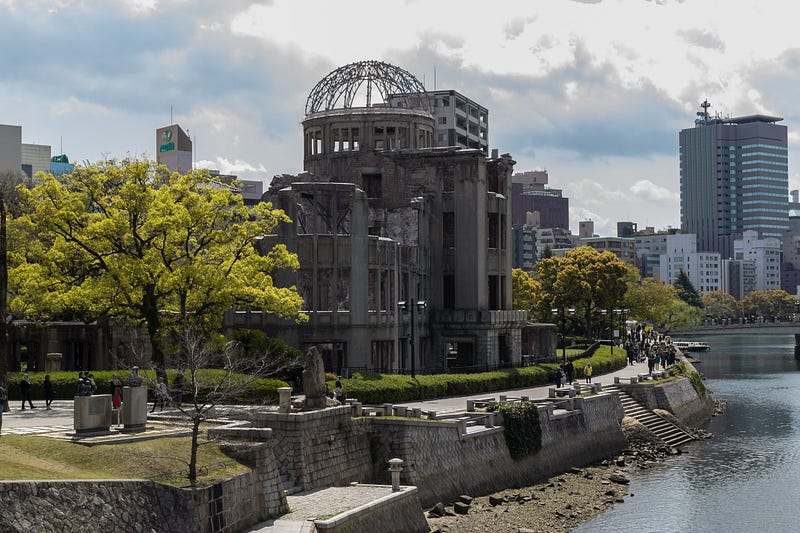
First of all, the director said that he wanted to depict Oppenheimer’s point of view, and that is why there was almost no mention of the actual damage caused by the atomic bombs in Hiroshima and Nagasaki in the film. Even in the scene where Oppenheimer sees slides showing such damage, the audience never sees it. Needless to say, Japanese people do not appear in the film at all, and I saw zero respect or sympathy for Japan.
I was not impressed by the depiction of the atomic bombs as “simply bombs with great destructive power” either. Although the number of people who died immediately or within a few days of the Hiroshima and Nagasaki bombings was briefly mentioned, Oppenheimer did not seem to be aware of the people who subsequently died of leukaemia and cancer due to radiation, the people who suffered from keloid scars for the rest of their lives, or the communities that were lost after all the infrastructure was ruined.
I don’t know if Oppenheimer and his team were really ignorant of that (is that possible???), or if Nolan wanted to minimise such description so as not to provoke the Americans. But as a Japanese, I was naturally angry.
Although Oppenheimer was driven by remorse, and said “I feel like my hands are covered in blood” in front of President Truman, that was not the main point of the film. What looked more important is the scenes where he was blamed for his past links with the Communist Party. Those scenes were so long and persistent that I started to think, oh… really… hmmm…
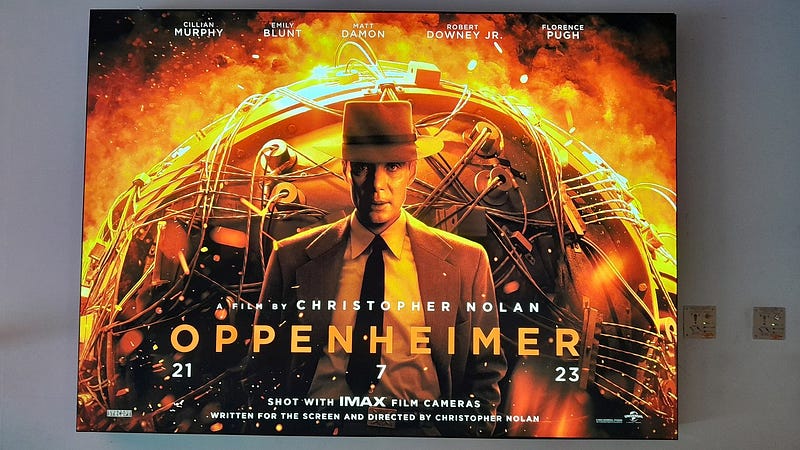
So, what is my verdict?
Here are the people I think who might enjoy watching the film Oppenheimer.
(1) Those who liked Christopher Nolan’s previous films. (2) Those who are interested in Oppenheimer. (3) Those who are interested in physics.
There is no more information about the production process of the atomic bomb than has been known so far, so there is no learning in that sense. Also, there are probably only a few Japanese who will love this, because the Japanese are completely, utterly and unfairly excluded. Also, it’s not an exciting film from a modern woman’s point of view, because it’s really depicted from the point of view of a white man (Oppenheimer) from the past.
So, well, I didn’t really need to see it, but it didn’t do me any harm, and perhaps I’ll forget all about it after a week. If I had to rate it on a five-star scale, I’d give it three stars ☆☆☆. I hope this is not too harsh.
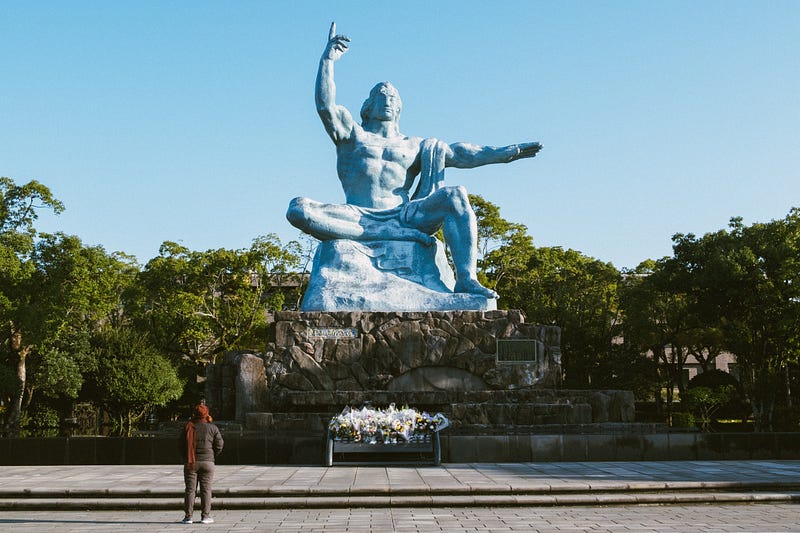
If you are interested in Hiroshima and Nagasaki, I have some recommendations!
Here are three works accurately depicting what happened in these two cities. I highly recommend them all. They are not easy to digest, and maybe I will never be able to digest it fully, but remember that this is a reality.
Comics: Barefood Gen
It recounts the bombing of Hiroshima from the perspective of a young boy, Gen, and his family. But the book’s themes (the physical and psychological damage ordinary people suffer from war’s realities) ring chillingly true today.
Film: Hiroshima (1953)
https://www.amazon.co.uk/Hiroshima-Blu-ray-Eiji-Okada/dp/B08762J4D7/
Hiroshima (1953) is a powerful evocation of the devastation wrought by the world s first deployment of the atomic bomb and its aftermath, based on the written eye-witness accounts of its child survivors compiled by Dr. Arata Osada for the 1951 book Children Of The A Bomb: Testament Of The Boys And Girls Of Hiroshima.
Play: The Mistake (Many cities in the UK, September/October 2023)
Interweaving the stories of a young woman in war-time Hiroshima, a brilliant Hungarian scientist, and the American pilot who flew the plane that dropped the bomb, THE MISTAKE is a powerful drama that confronts the dangers that arise when humans dare to unlock the awesome power of nature.
Thank you for reading. If you enjoyed it and would like to support me, there are several ways, all of which I would greatly appreciate. Arigato Gozaimasu!
- Engage with this article by liking, commenting, highlighting and sharing it.
- Subscribe my articles. You will receive a notification once a new article is published.
- If you feel super generous, buy me a tea! That will make my day🎉


