avatarDark Energy Articles

Free AI web copilot to create summaries, insights and extended knowledge, download it at here

2323

Abstract

, who conquered death, defeated the guardian of the underworld, Cerberus, and was rejuvenated by consuming apples from the Hesperides’ tree. On the other hand, he represented sin. At times, he was portrayed more ambivalently as a mortal hero, not a god.</p><figure id="67f0"><img src="https://cdn-images-1.readmedium.com/v2/resize:fit:800/1*e7_w0sVJd2EGlN48392V3g.jpeg"><figcaption>[Photo: The Cerne Abbas Giant by Sarah Charlesworth, <a href="https://creativecommons.org/licenses/by-sa/2.0">CC BY-SA 2.0</a>, via <a href="https://commons.wikimedia.org/wiki/File:The_Cerne_Abbas_Giant_-_geograph.org.uk_-_1869104.jpg">Wikimedia Commons</a>]</figcaption></figure><h1 id="8f16">Medieval Cerne — The Perfect Meeting Place</h1><p id="6888">At least until the 10th century, the village of Cerne was under the control of ealdormen (nobles) in southwestern England. It served as a good gathering place for the military. From the hilltop where the geoglyph was created, there is a magnificent view of the entire area. This makes the figure visible from a distance as well.</p><p id="92ef">Major trade routes also passed nearby, and there was access to fresh water. All these features indicate, according to the researchers, that it was an ideal meeting place for the armies of Alfred the Great, considered the first king of England. However, it’s challenging to precisely identify who commissioned the creation of the representation.</p><p id="2aec">The age of the giant was determined through recent research to be from the 9th or early 10th century. This was made possible by malacological analyses, studying snail shell deposits within the sculpture. The age of the last sunlight falling on the earth forming the sculpture was also determined. Here, the range of years was slightly broader, from 700 to 1100 CE, thanks to optically stimulated luminescence (OSL).</p><p id="28f3">This came as a surprise to the scientific community, which was divided on the giant’s age. Some pointed to prehistoric eras, the Roman period, or even the 17th century. Certainly, the sculpture underwent changes and improvements over the years, making it difficult to accurately estimate its age.</p><figure id="edaf"><img src="https://cdn-images-1.readmedium.com/v2/resize:fit:800/1*Hbd-fXt8gT5gjzwC7QAsHg.jpeg"><figcaption>[Photo: View to the Cerne

Options

Abbas giant by Gareth James, <a href="https://creativecommons.org/licenses/by-sa/2.0">CC BY-SA 2.0</a>, via <a href="https://commons.wikimedia.org/wiki/File:View_to_the_Cerne_Abbas_giant_-_geograph.org.uk_-_5425138.jpg">Wikimedia Commons</a>]</figcaption></figure><h1 id="d8b0">Diverse Interpretations of the Giant</h1><p id="4dff">Throughout history, the chalk sculpture has been interpreted in various ways. For instance, in the 11th century, monks residing in a monastery at the foot of the hill regarded it as their saint, the hermit St. Eadwold (835–900). Meanwhile, in modern times, it was erroneously considered some form of unknown deity.</p><div id="5352" class="link-block"> <a href="https://readmedium.com/discovery-in-greenland-unveiling-a-cambrian-beast-as-formidable-as-present-day-sharks-32f2954826b6"> <div> <div> <h2>Discovery in Greenland: Unveiling a Cambrian Beast, As Formidable as Present-Day Sharks</h2> <div><h3>A team of scientists from the United Kingdom discovered fossils of a gigantic predatory creature dating back to the…</h3></div> <div><p>medium.com</p></div> </div> <div> <div style="background-image: url(https://miro.readmedium.com/v2/resize:fit:320/1*Y5sQcOcPDpSQ8sM7o9j-PA.jpeg)"></div> </div> </div> </a> </div><h1 id="9e21">Attention all readers!</h1><p id="bb38"><b><i>As content creators on Medium.com, we face minimal compensation for our hard work. If you find value in my articles, please consider supporting me on my “<a href="https://www.buymeacoffee.com/oconnel">Buy Me a Coffee</a>” page. Your small contributions can make a big difference in fueling my passion for creating quality content. Thank you for your support!</i></b></p><figure id="1057"><img src="https://cdn-images-1.readmedium.com/v2/resize:fit:800/0*Pm9TOr-5svmNuuXB.png"><figcaption><a href="https://www.buymeacoffee.com/oconnel">https://www.buymeacoffee.com/oconnel</a></figcaption></figure><figure id="71ef"><img src="https://cdn-images-1.readmedium.com/v2/resize:fit:800/0*KJc52P2X8j4VSRWK.png"><figcaption><a href="https://www.buymeacoffee.com/oconnel">https://www.buymeacoffee.com/oconnel</a></figcaption></figure></article></body>

Herculean Guardian: The Enormous Controversial Figure of Cerne Abbas

He is depicted naked, holding a club in his hand, with his member in an erect state. The colossal figure of the Cerne Abbas Giant in Dorset County, England, is thought to be Hercules, serving as a rallying point for forces combating the Vikings, according to Oxford researchers.
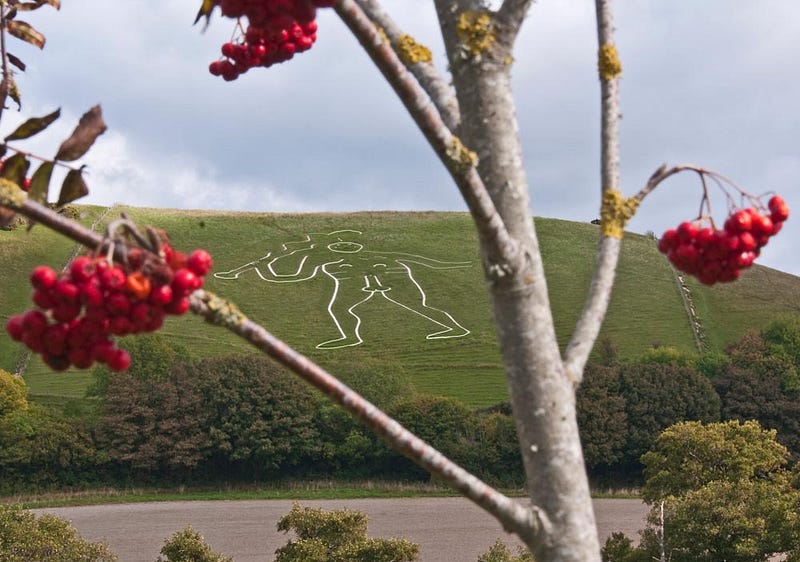
[Photo: Cerne Abbas giant by Roger May, CC BY-SA 2.0, via Wikimedia Commons]

The Cerne Abbas figure is a geoglyph, a monumental earth sculpture standing at a height of 55 meters. It portrays a nude man with schematically marked ribs, nipples, and an erect penis. The execution resembles somewhat the famous Nazca Lines in South America.

The weapon he holds indicates a combative stance. The sculpture was formed by carving trenches into the chalky ground, hence its white appearance, although parts of the material were transported. For years, there has been debate about the creation date of the geoglyph.

Hercules of Dorset against the Vikings

Oxford University researchers — Professor Helen Gittos and Dr. Tom Morcom — decided to delve into the early medieval history and archaeology of this region.

What conclusion did they draw? According to them, this figure represents Hercules. It was intended to signify a rallying point for assembling the West Saxon armies when Dorset was under attack by Viking forces.

“It became clear to us that the giant of Cerne Abbas is the most visible early medieval feature in the [nearby — editor’s note] landscape,” says Professor Helen Gittos.

Why Hercules? During the medieval period, he was well-known, and interest in him peaked in the 9th century. The memory of this hero didn’t confine itself to ancient times.

In the medieval period, Hercules had two faces. He was a figure akin to Christ, who conquered death, defeated the guardian of the underworld, Cerberus, and was rejuvenated by consuming apples from the Hesperides’ tree. On the other hand, he represented sin. At times, he was portrayed more ambivalently as a mortal hero, not a god.
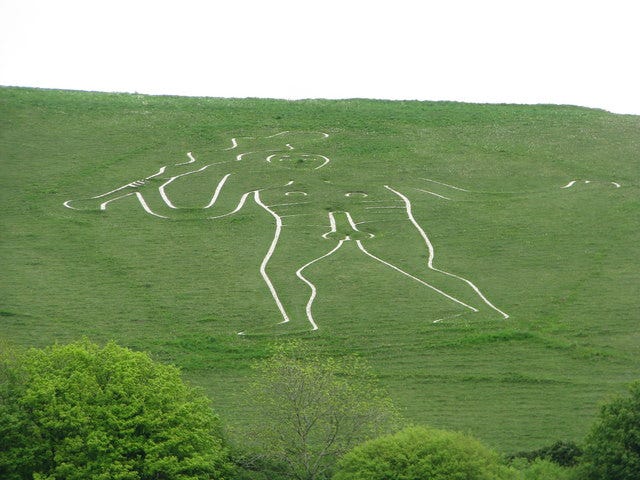
[Photo: The Cerne Abbas Giant by Sarah Charlesworth, CC BY-SA 2.0, via Wikimedia Commons]

Medieval Cerne — The Perfect Meeting Place

At least until the 10th century, the village of Cerne was under the control of ealdormen (nobles) in southwestern England. It served as a good gathering place for the military. From the hilltop where the geoglyph was created, there is a magnificent view of the entire area. This makes the figure visible from a distance as well.

Major trade routes also passed nearby, and there was access to fresh water. All these features indicate, according to the researchers, that it was an ideal meeting place for the armies of Alfred the Great, considered the first king of England. However, it’s challenging to precisely identify who commissioned the creation of the representation.

The age of the giant was determined through recent research to be from the 9th or early 10th century. This was made possible by malacological analyses, studying snail shell deposits within the sculpture. The age of the last sunlight falling on the earth forming the sculpture was also determined. Here, the range of years was slightly broader, from 700 to 1100 CE, thanks to optically stimulated luminescence (OSL).

This came as a surprise to the scientific community, which was divided on the giant’s age. Some pointed to prehistoric eras, the Roman period, or even the 17th century. Certainly, the sculpture underwent changes and improvements over the years, making it difficult to accurately estimate its age.
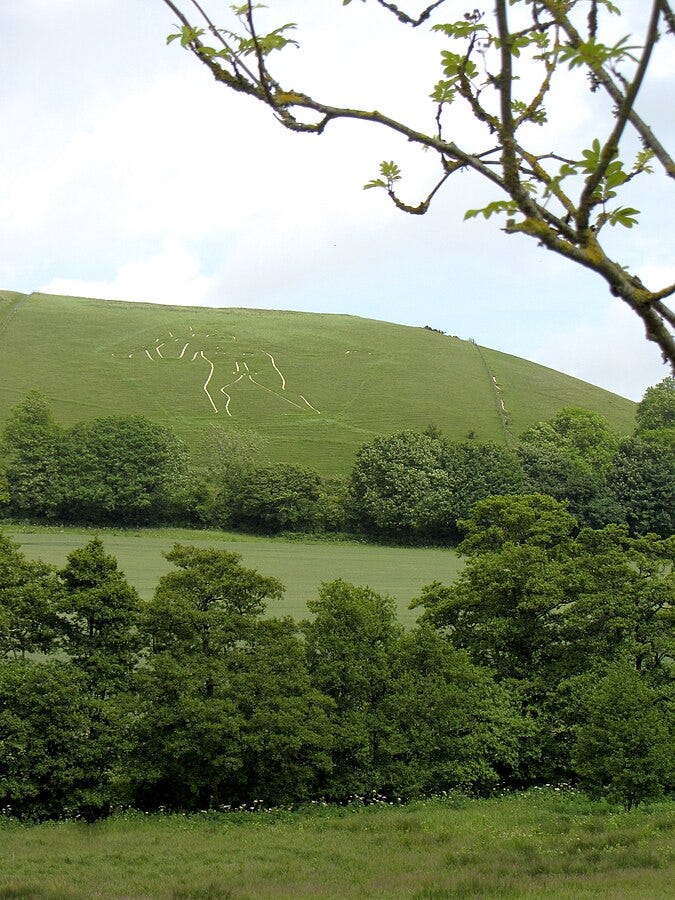
[Photo: View to the Cerne Abbas giant by Gareth James, CC BY-SA 2.0, via Wikimedia Commons]

Diverse Interpretations of the Giant

Throughout history, the chalk sculpture has been interpreted in various ways. For instance, in the 11th century, monks residing in a monastery at the foot of the hill regarded it as their saint, the hermit St. Eadwold (835–900). Meanwhile, in modern times, it was erroneously considered some form of unknown deity.

Attention all readers!

As content creators on Medium.com, we face minimal compensation for our hard work. If you find value in my articles, please consider supporting me on my “Buy Me a Coffee” page. Your small contributions can make a big difference in fueling my passion for creating quality content. Thank you for your support!

https://www.buymeacoffee.com/oconnel
History
Science
Culture
Travel
Life
Recommended from ReadMedium