Her Eyes were Wide Open
The Terry Schiavo Story
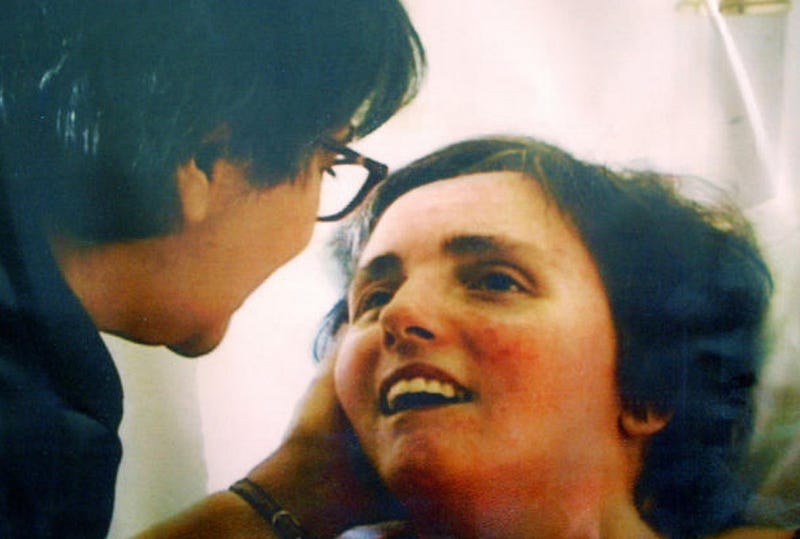
The Terri Schiavo case was a right-to-die legal case in the United States involving Theresa Marie Schiavo (1963–2005), a woman in an irreversible persistent vegetative state. Her family had argued that Schiavo would not have wanted prolonged artificial life support without the prospect of recovery, and elected to remove her feeding tube.
The courts sided with husband Michael Schiavo, but the Florida state legislature passed a bill, known as Terri’s law, giving Gov. Jeb Bush authority to prevent the removal of the feeding tube. After navigating through the legal process involving state and federal courts, Terri’s feeding tube was finally removed. Terry died on 31 March 2005 at the age of 41.
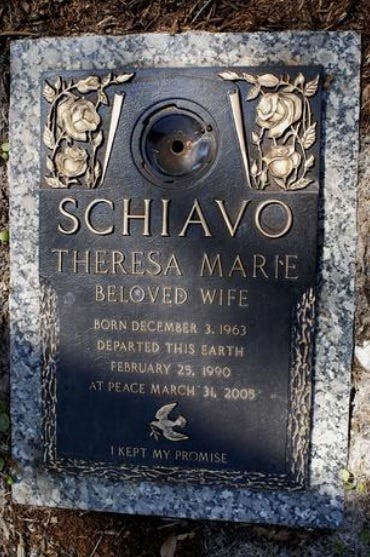
In her life and death, Terri Schiavo unpacked an intensely emotional national and global debate over the quality of life, right-to-die, and end-of-life issues.
“Her eyes are open”. So reported Alice Chasan of CBS News.
Terry Schiavo’s wide-eyed expression which personified her “persistent vegetative state” captured the hearts and empathy of so many about her condition and turned her plight to become associated with anyone’s stricken loved one — the lost daughter, the beloved best friend, the popular co-worker, the catatonic spouse — who lurks and resides in the dark corners of our greatest fears.
Her wide eyes seemed to call out to one and all, for our deeper understanding beyond ideological and religious urgings. Our natural instinctive urge was to protect, preserve and prolong her vegetative existence, even as we ignored and refused to acknowledge her pain which inadvertently escaped and blinded by our pursuit of selfish good conscience.
Terri Schiavo’s legal battle was a struggle motivated by genuine tough love, between her husband who fought to remove her life support, and her parents who insisted their daughter can be rehabilitated. Their dilemma became our struggle with our own self-justifying choice between the “right to die” vs “right to life”. Most unfortunately, the debate sadly moved from her best interests to become all about us.
There was no “right” decision. It was an existential question, not a metaphysical argument. For some, it calls for a practical, even pragmatic, or financial decision, not a moral or ethical one. Her condition provides cogent and convincing facts to support all sides of any argument. She is the projective test for that elusive existential questions “what is life’s purpose?” and “what is the meaning of living?”. And “what therefore is the value, if any, of the living dead?”.
Many readers at some point must have, or will, face life and death decisions to withdraw artificial life support from their loved ones. For me, it was an easy private choice between prolonging her pain or accepting her return home to eternity. A deeply personal loss, no less, and one not without the immobilising unbearable pain in the aftermath.
The recent death of a Mentor stirred up memories of countless loved ones who have departed, some pre-maturely like his friendship. The Terry Schiavo story popped up from deep inside my memory, to remind and rekindle reflections and introspection about how we often take our loved ones for granted, neglect to cultivate and grow our love for one another, fail to nurture the quality of our relationships, and how we should measure the inherent quality of our lives in terms of people instead of things.
Terry Schiavo was unable to speak for herself when alive. The silence of her memory and the memories of loved ones remind us loudly not to simply occupy space and waste valuable oxygen, but to actively add value to those around us especially the vulnerable, weak, sick, young, and needy in our communities, society, and the world.
Please enjoy my recent Articles.
You can also subscribe to my stories and social media posts via your email.
Enjoy more interesting Articles by signing up to Medium here: https://thefuturistoracle.medium.com/membership