avatarJillian Enright

Free AI web copilot to create summaries, insights and extended knowledge, download it at here

3551

Abstract

1.readmedium.com/v2/resize:fit:800/1*YigAH7H4fGDLwymakOG0ew.png"><figcaption>Created by author</figcaption></figure><p id="4d89">For more about classical conditioning and how positive associations can help reduce your dog’s fear, check out our blog post on <a href="http://pawsitivepooch.blogspot.com/2016/02/remember-pavlov.html">Pavlovian Conditioning (<b>Classical Conditioning</b>), called “Remember Pavlov?”</a>.</p><p id="083f"><b>Desensitization and Counter-Conditioning. </b>This refers to helping to change how your dog feels about the loud noises. Providing your dog treats and other things that he enjoys (play, attention, food, etc.) during fireworks and thunderstorms can help your dog realize “this isn’t so bad after all”. You can also do desensitization exercises by playing recordings of fireworks at a very low level (so low that your dog can barely hear it and does not react negatively), and pair this with reinforcing things (treats, toys, games, pets, whatever your dog enjoys).</p><p id="81b2"><b>Note:</b> This generally only works with pets who are mildly uncomfortable or anxious because animals who are in a fight or flight state will not eat. If your dog won’t take treats that they normally love, they are not yet ready for this step. Additionally, sound desensitization may work with fireworks, but it likely won’t work with thunder. The main reason for this is that animals can sense the change in barometric pressure and can anticipate an oncoming thunderstorm long before there are any actual sounds.</p><p id="c238"><b>Distract </b>your dog and provide pleasant distractions to redirect his attention. <a href="https://twoemb.medium.com/the-art-of-kong-stuffing-14641a5dcf74">Stuffed Kongs</a> or other stuffable interactive toys are a great tool. Visit our <a href="https://readmedium.com/our-best-boredom-busters-for-pets-2518e64626ef">Boredom Busters<b></b></a><b> </b>blog for more information on interactive toys.</p><h1 id="65d6">Kongs!</h1><figure id="f3b3"><img src="https://cdn-images-1.readmedium.com/v2/resize:fit:800/0*bSSA1XaSq2xMyfWr.JPG"><figcaption></figcaption></figure><p id="3d1a">Measure out one meal for your dog.</p><figure id="7d85"><img src="https://cdn-images-1.readmedium.com/v2/resize:fit:800/0*4N1-_xGSknOYWaY9.JPG"><figcaption></figcaption></figure><p id="f984">Mix in about a 1 /2 can of canned wet food.</p><figure id="76ad"><img src="https://cdn-images-1.readmedium.com/v2/resize:fit:800/0*c-r4aX6dlM-YLaXQ.JPG"><figcaption></figcaption></figure><p id="f8b2">No canned food on hand? No problem, simply pour a small amount of water over your kibble — just enough to soften it — then let it sit for a few minutes while the water is absorbed.</p><figure id="39fc"><img src="https://cdn-images-1.readmedium.com/v2/resize:fit:800/0*Gy_rVnmn5YLGNHbf.JPG"><figcaption></figcaption></figure><p id="6a95">Spoon the mixture into Kongs and place in the freezer. You can add a spoonful of peanut butter over the top to seal it off if you like. I prefer to use all-natural peanut-butter with no sugar added.</p><p id="5654"><b>Why the freezer? </b>This way the mixture freezes and takes longer for your dog to work through. The bonus is that you can make up as many Kongs as you have as far in advance as you want and they will stay fresh in your freezer and are ready to go any time you need them. This is fantastic for unexpected thunderstorms or any situation in which you need your dog to keep busy or distracted.</p><p id="bb29">If your dog gets frustrated with the frozen Kong and gives up, o

Options

r if your pet finds the cold unpleasant, you can keep them in the fridge. You can also freeze it while it’s half-full and then add fresh when you take it out of the freezer. By the time your pet works their way through to the frozen part, it will have begun to thaw and will be easier to eat.</p><p id="2bdf">(For Reference, our Maddy would get 1 1/2 cups of kibble per meal. This mixed with a 1/2 can of wet food filled two large Kongs and two small Kongs, plenty to keep her busy for quite some time!)</p><p id="18f4">Other options for filling Kongs or other stuffable toys:</p><ul><li>canned pumpkin — high in fibre (make sure you get 100% pure pumpkin and not pie filling!)</li><li>all-natural peanut butter (keep in mind this is high in fat and be sure it does not contain xylitol)</li><li>all canned wet food (without the kibble) can be done up more quickly if needed</li><li>anything safe that your dog enjoys — treats, left-over turkey, etc.</li></ul><p id="e3b4"><b>Final step:</b> serve and watch your dog enjoy :)</p><figure id="b52e"><img src="https://cdn-images-1.readmedium.com/v2/resize:fit:800/0*4u_m-dqemIplTeCd.jpg"><figcaption></figcaption></figure><figure id="c263"><img src="https://cdn-images-1.readmedium.com/v2/resize:fit:800/0*6kZtqwvnDN5jUBb0.png"><figcaption></figcaption></figure><p id="919a"><b>What NOT to do:</b></p><ul><li>Please never punish your dog for being afraid, even if he has an accident in the house. An angry owner is scary and will only increase your dog’s fear. You want to be the source of comfort and reassurance for your dog.</li><li>Please never force your dog to “face his fear” by forcing him to be flooded by the fearful stimulus all at once. Gradual counter-conditioning and desensitization can be done with the help of a compassionate and competent trainer and this process involves keeping your dog under threshold (comfortable enough that they are not showing signs of fear) and should be done with the guidance of a trained professional.</li><li>Please <b>never</b> make your dog drowsy with sedatives. Imagine you are afraid of spiders and one is crawling towards you, but you have been given a very strong medication and are so sleepy you are unable to get up and move. Your dog may appear outwardly calm but could be panicking internally.</li><li>There are some more appropriate medications that can certainly help with noise phobias, please talk to your veterinarian about these, but please never use sedatives. A good, more in-depth article on this topic is available on Debbie Jacobs’ <a href="http://fearfuldogs.com/acepromazine"><b>Fearful Dogs website</b></a>.</li></ul><figure id="4b5b"><img src="https://cdn-images-1.readmedium.com/v2/resize:fit:800/0*Ec0LKHjqnt8zMyIM.png"><figcaption></figcaption></figure><figure id="1c8c"><img src="https://cdn-images-1.readmedium.com/v2/resize:fit:800/0*YWILR-V7Nihs5mFt.jpg"><figcaption></figcaption></figure><figure id="2bf9"><img src="https://cdn-images-1.readmedium.com/v2/resize:fit:800/1*IpqaqbE3xHP8FVbWd9X2WA.png"><figcaption></figcaption></figure><h2 id="5b92">About The Author</h2><p id="cde6">Please <a href="https://PawsitiveCare.ca">visit our website</a> for more information about <a href="https://pawsitivecare.ca/about-the-owner">our trainer</a> and about <a href="https://pawsitivecare.ca">Pawsitive Pet Care</a>.</p><p id="f00c"><i>Originally published at <a href="https://pawsitivepooch.blogspot.com/2014/07/thunder-phobia-fireworks.html">http://pawsitivepooch.blogspot.com</a> </i>on July 1, 2014<i>.</i></p></article></body>

Animal Behaviour

Helping Your Pet Through Noise Phobias

Fear of Thunder Storms and Fireworks

Photo by Ryan Stone on Unsplash

Many Pets are Fearful of Thunder Storms & Fireworks

Originally posted July 1, 2014

As much as many Canadian humans enjoy the festivities that come along with celebrating our nation’s birthday, many dogs are afraid of the fireworks that are often part of the celebrations.

While we cannot prevent the fireworks, we can certainly make this potentially stressful night much easier on our fearful pets. Below are a few suggestions, and please feel free to add your own in the comments:

  1. Close your windows and play the radio, TV, or some form of white noise to help drown out the noise of the fireworks. Some studies have shown that talk radio, classical music, and other calm & soothing music works best to reduce stress.
  2. Keep your pets indoors to prevent them from panicking and running away. If your dog absolutely needs to go out, please go out with him on leash and/or ensure your yard’s gate is fully secured. If possible, take your dog for a nice, long walk earlier in the day to tire him out and let him get all his business done before dark.
  3. Kennel train your dog so they have a safe place to go and hide. If they are not kennel trained, allow them access to a safe, comforting area. Our old girl, Maddy, liked to go in her kennel, but she would also curl up under the couch if we were sitting on it, or hide under our bed at night. She even had curled up in the closet on a number of occasions. Some dogs hang out under the kitchen table or in their owner’s lap. Allow your pets to choose a preferred location and make it as quiet and comfortable as possible.
  4. A Thunder Shirt can be helpful for some dogs. I won’t go into this at length in this blog post, but I encourage you to do your own research on this and/or ask your veterinarian or professional dog trainer if you think this may be a good option for your dog.
  5. Please do not be afraid to comfort your dog! It is a myth that comforting a scared pet (or comforting anyone when they are scared) will “reward” their fear. It is not possible to operantly condition fear, meaning we cannot punish the fear out of the dog, nor can we reward the fear and make it worse. If your dog finds petting and cuddling comforting, please go right ahead. If your dog prefers to be left alone and curl up somewhere quiet, please allow him to do so.
Created by author

For more about classical conditioning and how positive associations can help reduce your dog’s fear, check out our blog post on Pavlovian Conditioning (Classical Conditioning), called “Remember Pavlov?”.

Desensitization and Counter-Conditioning. This refers to helping to change how your dog feels about the loud noises. Providing your dog treats and other things that he enjoys (play, attention, food, etc.) during fireworks and thunderstorms can help your dog realize “this isn’t so bad after all”. You can also do desensitization exercises by playing recordings of fireworks at a very low level (so low that your dog can barely hear it and does not react negatively), and pair this with reinforcing things (treats, toys, games, pets, whatever your dog enjoys).

Note: This generally only works with pets who are mildly uncomfortable or anxious because animals who are in a fight or flight state will not eat. If your dog won’t take treats that they normally love, they are not yet ready for this step. Additionally, sound desensitization may work with fireworks, but it likely won’t work with thunder. The main reason for this is that animals can sense the change in barometric pressure and can anticipate an oncoming thunderstorm long before there are any actual sounds.

Distract your dog and provide pleasant distractions to redirect his attention. Stuffed Kongs or other stuffable interactive toys are a great tool. Visit our Boredom Busters blog for more information on interactive toys.

Kongs!
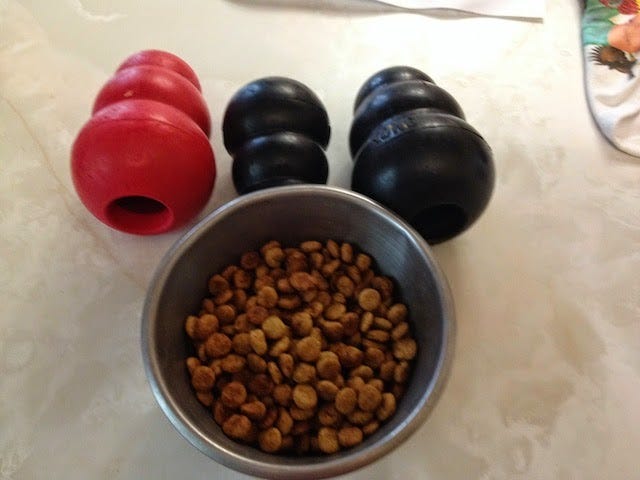
Measure out one meal for your dog.
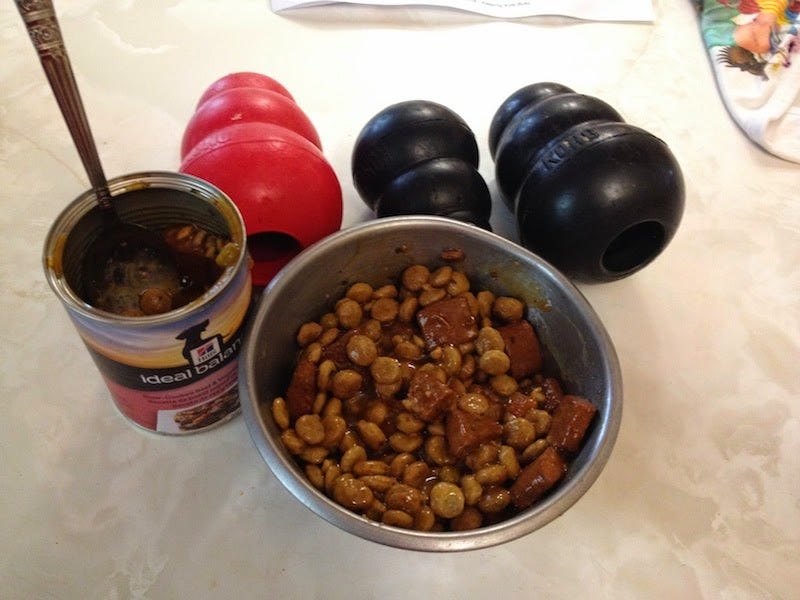
Mix in about a 1 /2 can of canned wet food.
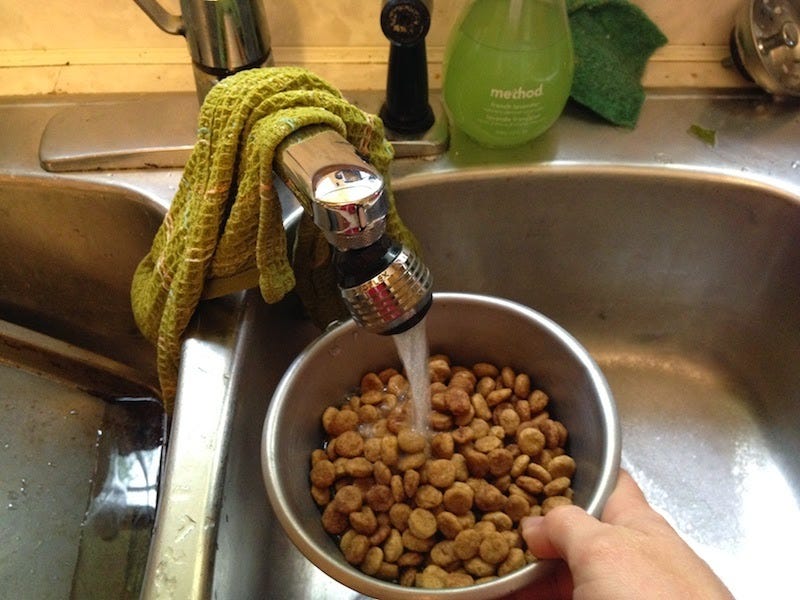
No canned food on hand? No problem, simply pour a small amount of water over your kibble — just enough to soften it — then let it sit for a few minutes while the water is absorbed.
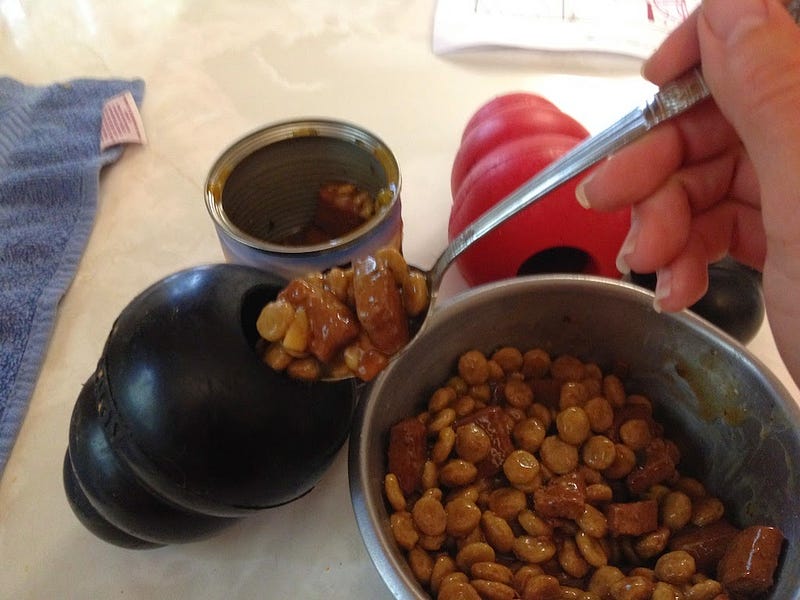
Spoon the mixture into Kongs and place in the freezer. You can add a spoonful of peanut butter over the top to seal it off if you like. I prefer to use all-natural peanut-butter with no sugar added.

Why the freezer? This way the mixture freezes and takes longer for your dog to work through. The bonus is that you can make up as many Kongs as you have as far in advance as you want and they will stay fresh in your freezer and are ready to go any time you need them. This is fantastic for unexpected thunderstorms or any situation in which you need your dog to keep busy or distracted.

If your dog gets frustrated with the frozen Kong and gives up, or if your pet finds the cold unpleasant, you can keep them in the fridge. You can also freeze it while it’s half-full and then add fresh when you take it out of the freezer. By the time your pet works their way through to the frozen part, it will have begun to thaw and will be easier to eat.

(For Reference, our Maddy would get 1 1/2 cups of kibble per meal. This mixed with a 1/2 can of wet food filled two large Kongs and two small Kongs, plenty to keep her busy for quite some time!)

Other options for filling Kongs or other stuffable toys:

  • canned pumpkin — high in fibre (make sure you get 100% pure pumpkin and not pie filling!)
  • all-natural peanut butter (keep in mind this is high in fat and be sure it does not contain xylitol)
  • all canned wet food (without the kibble) can be done up more quickly if needed
  • anything safe that your dog enjoys — treats, left-over turkey, etc.

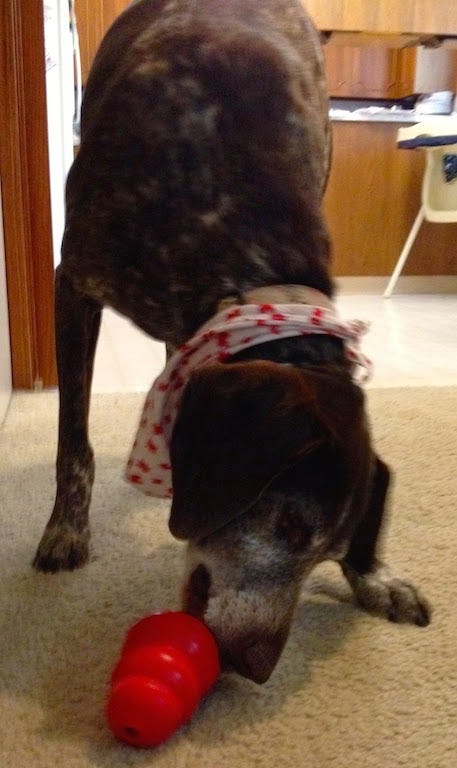
Final step: serve and watch your dog enjoy :)
What NOT to do:

  • Please never punish your dog for being afraid, even if he has an accident in the house. An angry owner is scary and will only increase your dog’s fear. You want to be the source of comfort and reassurance for your dog.
  • Please never force your dog to “face his fear” by forcing him to be flooded by the fearful stimulus all at once. Gradual counter-conditioning and desensitization can be done with the help of a compassionate and competent trainer and this process involves keeping your dog under threshold (comfortable enough that they are not showing signs of fear) and should be done with the guidance of a trained professional.
  • Please never make your dog drowsy with sedatives. Imagine you are afraid of spiders and one is crawling towards you, but you have been given a very strong medication and are so sleepy you are unable to get up and move. Your dog may appear outwardly calm but could be panicking internally.
  • There are some more appropriate medications that can certainly help with noise phobias, please talk to your veterinarian about these, but please never use sedatives. A good, more in-depth article on this topic is available on Debbie Jacobs’ Fearful Dogs website.


About The Author

Please visit our website for more information about our trainer and about Pawsitive Pet Care.

Originally published at http://pawsitivepooch.blogspot.com on July 1, 2014.

Dog Training
Pets
Pets And Animals
Pet Care
Dogs
Recommended from ReadMedium